
A first appointment is a starting point
The starting condition matters: a first booking may involve catch-up tasks that will not recur every week.
Sutton / Care around daily living
Restart without underestimating the first visit
If cleaning has paused for a while in Sutton, a recurring timetable alone does not describe the first workload. Explain the gap and identify what has accumulated.
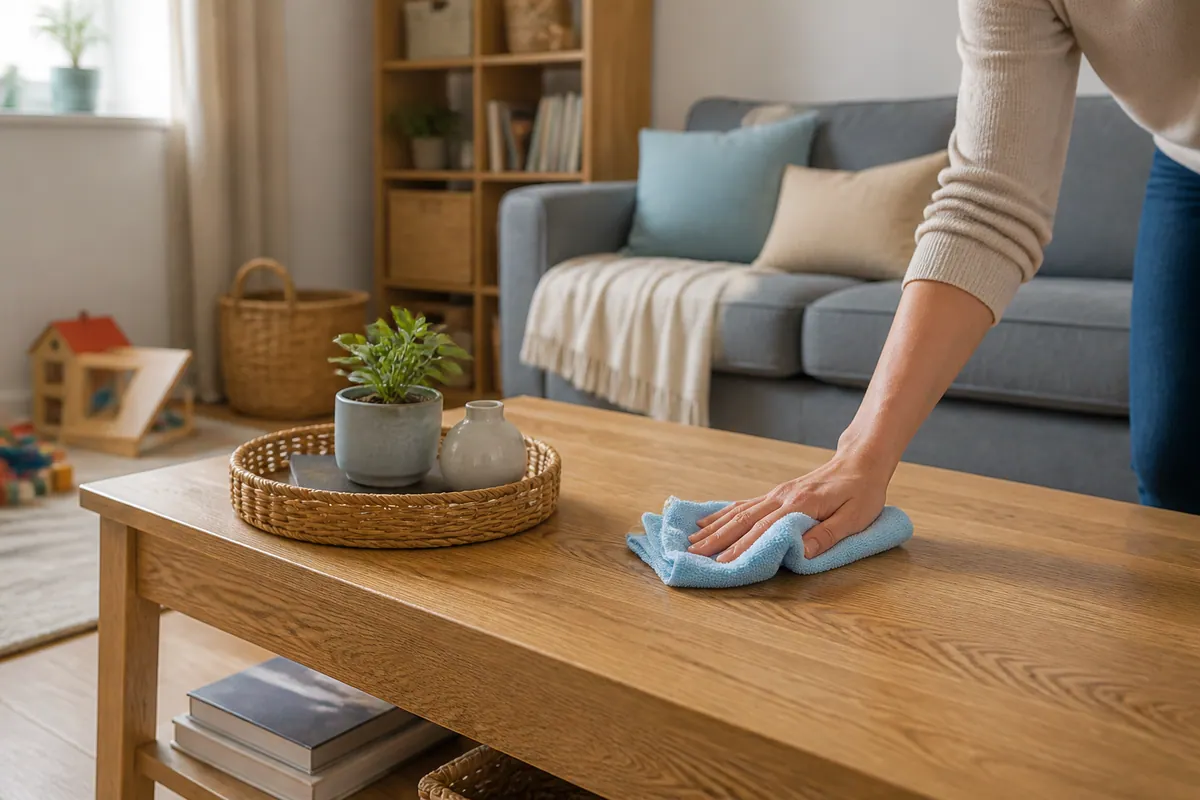
Kitchen · Bathroom
Living areas · Bedrooms
Sutton / household planning
If cleaning has paused for a while in Sutton, a recurring timetable alone does not describe the first workload. Explain the gap and identify what has accumulated.
A later upkeep appointment can be lighter without making the initial catch-up an unlimited service.
Talk through the present condition before choosing the eventual rhythm. Once the starting tasks are understood, the recurring brief can be reviewed sensibly.
Describe any difference between a regularly used bathroom and a room that has remained untouched. The starting workload should be clear in the enquiry.
Plan to review the maintenance list after the initial priorities are understood. There is no need to treat every first-visit task as a permanent recurring request.
Visit frequency
A weekly booking and a fortnightly visit can serve different needs; consider what accumulates between appointments.
| Planning point | Weekly | Fortnightly |
|---|---|---|
| Best suited for | A home with a regular workload | Intermittent help with ordinary maintenance |
| Core focus | A repeatable set of household priorities | Discuss the condition after two weeks |
| Priority planning | Work from a manageable regular brief | Decide which accumulated tasks should lead |
| Visit scope | Clarify the work before confirming | The team must confirm room coverage |
The starting condition matters: a first booking may involve catch-up tasks that will not recur every week.
The routine should reflect the home as it is now. Tell the team when rooms become busier or a task no longer matters.
Room coverage
A kitchen and a bedroom need different preparation. Review the relevant tabs before setting out your household list.
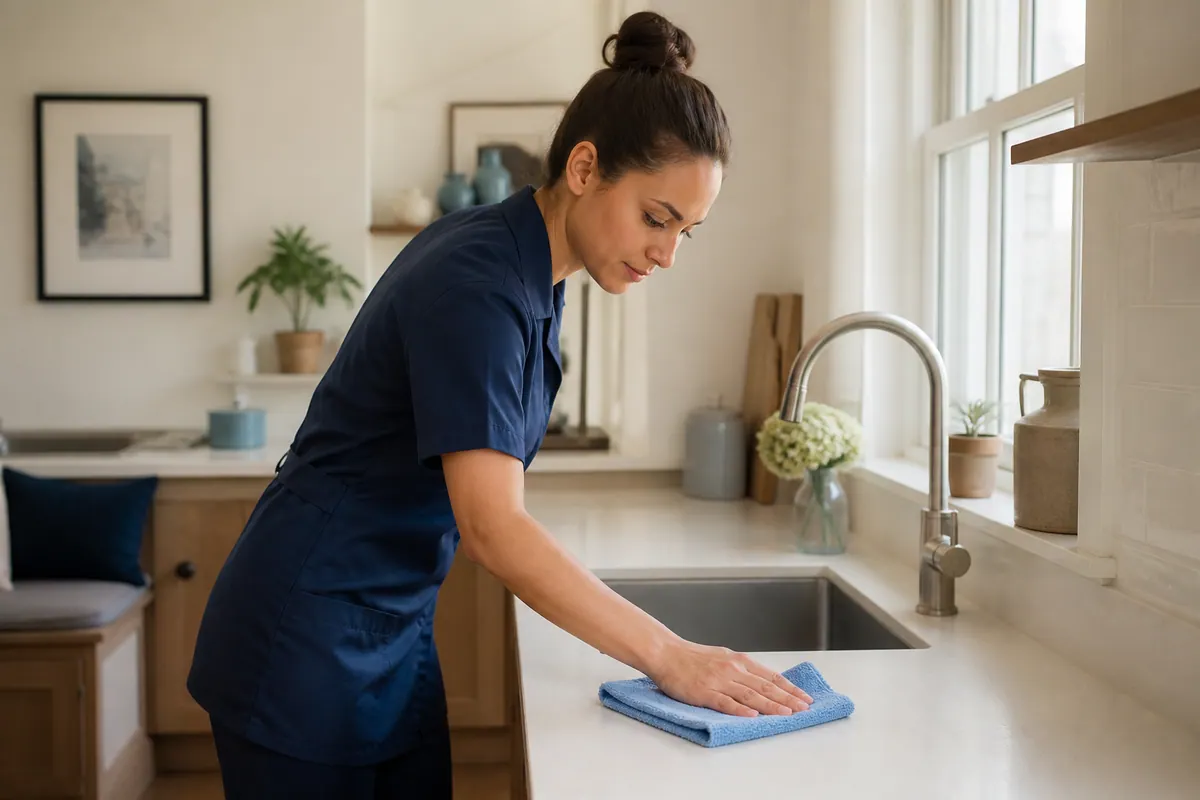
Kitchen
Keep the brief focused on the working kitchen: reachable counters, sink, splashback and the agreed exterior surfaces around them.
Remove papers and loose belongings from work surfaces before arrival. Detailed oven cleaning is not part of an exterior wipe.
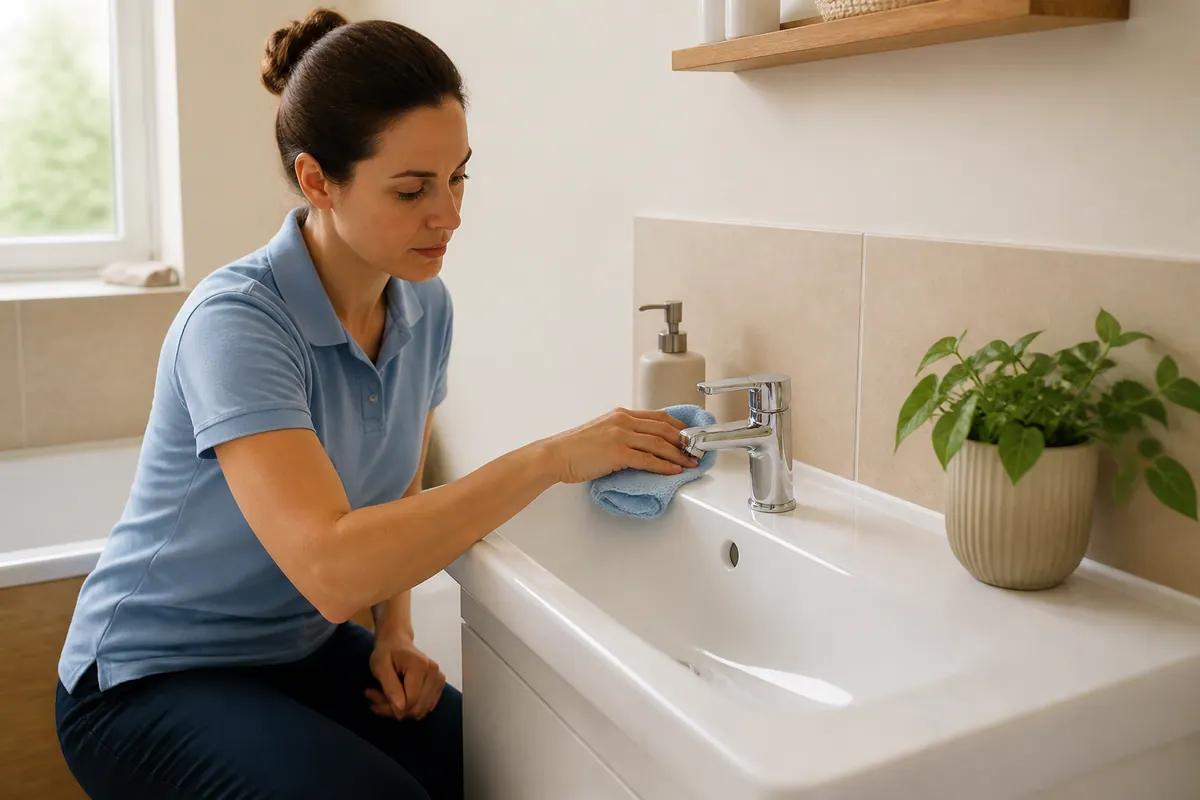
Bathroom
Describe the sanitary fittings and shower area, then identify accessible tiling and mirrors for the bathroom brief.
Do not leave damaged seals or unusual stone finishes unexplained; the cleaner needs those details before starting.
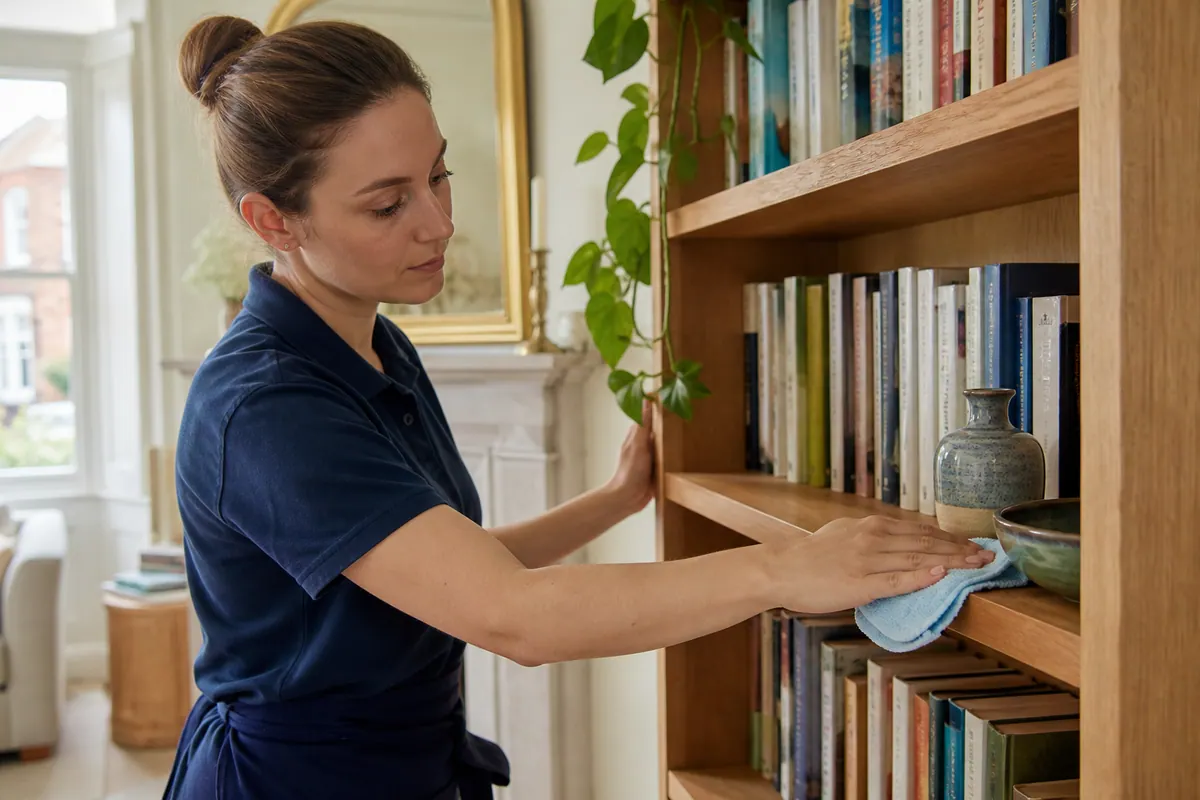
Living spaces
For living areas, establish the reachable dusting surfaces and floor route. Vacuuming and finish-appropriate cleaning follow the confirmed brief.
Store fragile objects and paperwork yourself, and identify belongings the cleaner must leave alone.
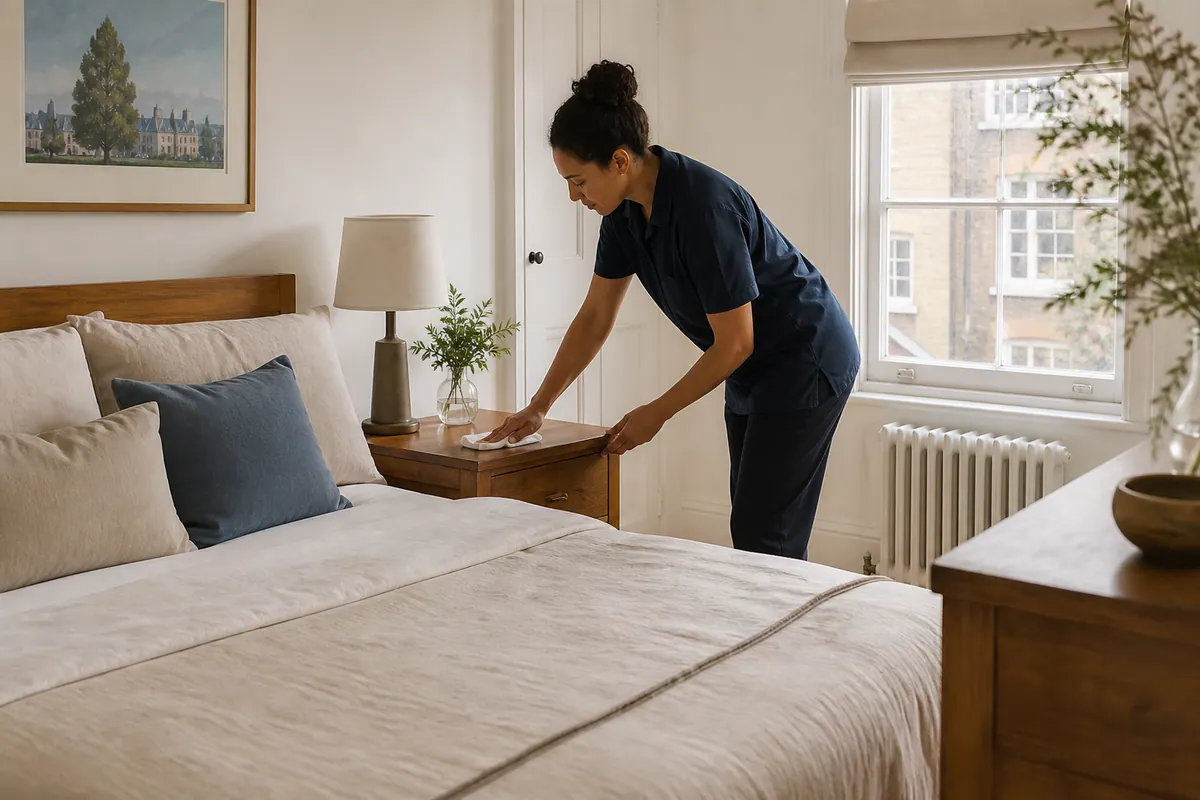
Sleeping rooms
Set out which bedroom surfaces and floor areas are available for ordinary dust removal and compatible cleaning.
Name excluded sleeping rooms and store personal items securely before the cleaner arrives.
Booking process
Describe the spaces, their condition and how the household will use them during the appointment.
Discuss the intended interval together with the essential household maintenance list.
Agree the necessary supplies and access details, including sensitive surfaces and departure instructions.
The planned sequence keeps attention on the included rooms and suitable cleaning methods.
Discuss outstanding requests without assuming they can be absorbed into the next routine visit.
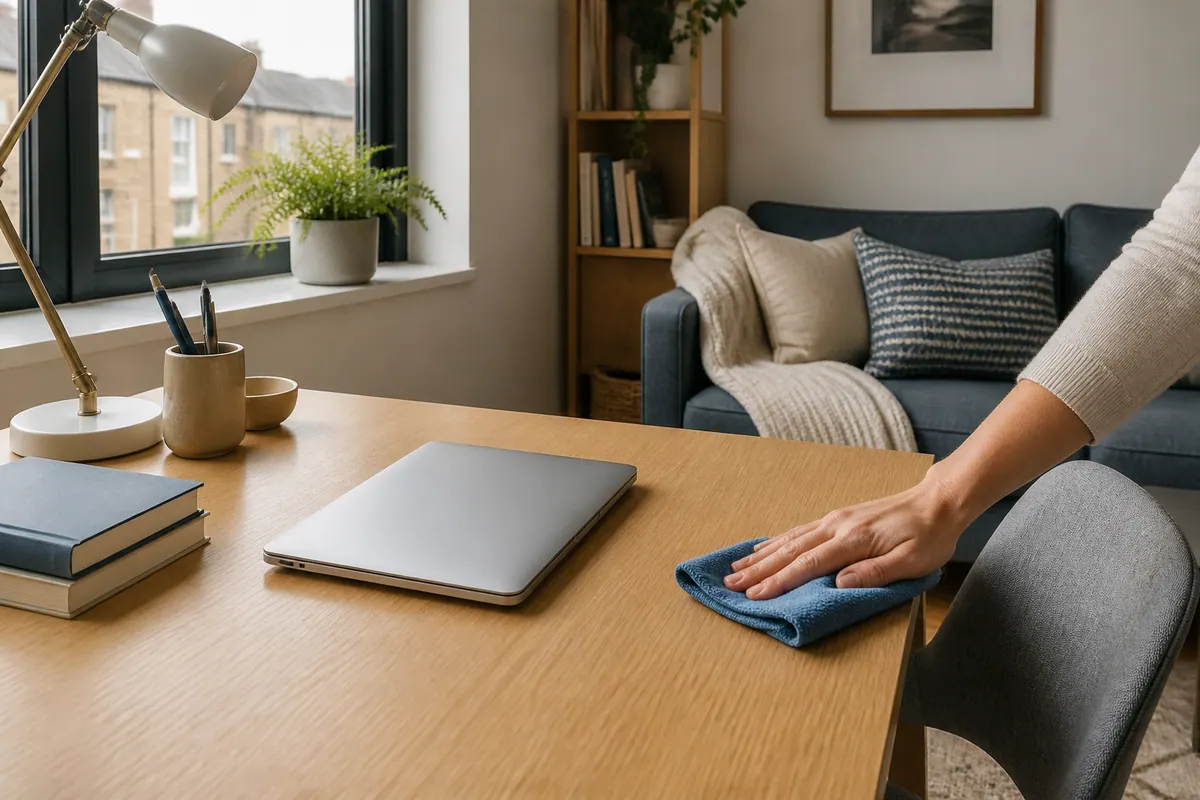
Prepare access and the leading tasks.
The room brief becomes practical work.
A household baseline worth maintaining.
Images are used to explain the process, not document an actual customer transformation.
Sutton / local enquiry
Sutton bookings need the full postcode and the intended rooms. Ask about room coverage, products, duration and entry before accepting a booking; postcode availability must also be checked.
For the wider service scope, see Domestic Cleaning, or ask the team about your address.
Map reference
This is an area reference, not a marked Alesta branch or booking guarantee.
Open map in a new tabRoutine planner
The form helps you explain what matters at home. Alesta must confirm the schedule and final cleaning brief separately.
Essential upkeep
Give the necessary upkeep a clear place in the list before considering a finishing detail; the confirmed time remains the limit.
Rotating tasks are useful only when they remain manageable. Discuss any larger addition before it becomes an expectation.
Household arrangements
The examples help describe access and room use.
Name the areas you use after work and confirm how entry will happen during the booking.
Put high-use family spaces into the core list and leave them prepared for the work you have requested.
Plan the animal’s location for the visit and check whether the intended room sequence remains workable.
Tell the team which room cannot be interrupted so another area can lead the appointment.
If someone else manages the property, establish which person can confirm priorities for this occupied-home visit.
An authorised household contact should settle any changed priorities before the team arrives.
Material guidance
Share material-care information before products are selected. Moisture or a method that suits one finish may damage another.
Ask for the approach to be matched to the known stone and its maintenance guidance.
A timber floor or furnishing should be treated according to its finish, not its appearance alone.
A glossy coating may require specific care; identify lacquered pieces in advance.
Explain which steel finish is present and the exterior areas you want considered.
Point out flaking or marked painted surfaces so their condition is understood before cleaning.
Separate services
Ordinary household maintenance has limits; the linked services cover requests needing a different assessment or equipment.
If extraction is needed, use the dedicated carpet service instead of extending a domestic floor request.
Treat a detailed oven interior as its own service rather than an assumed part of exterior appliance care.
Request a separate mould assessment instead of presenting treatment as a standard maintenance task.
The external side of glazing is a different service from maintaining the occupied rooms.
Dust left by construction can require another scope and should be disclosed before booking.
Raise concentrated catch-up work as a separate one-off discussion before planning the recurring maintenance.
Quick answers
Price guides
Ask what the proposed booking includes, not just which starting rate applies to it.
| Service | Price | Main factors |
|---|---|---|
| Regular domestic cleaning | From £20/hour | Scope, supplies, minimum duration, frequency and location |
| First / one-off domestic visit | From £90 | The accumulated work and the priorities for the first booking |
| Specialist / intensive scope | Separate assessment of the price | Separate service needs and intensive or high-access work |
Size, condition, timing and frequency shape the quote, with equipment, entry, parking and separate tasks considered too.
Task order
The arrows help organise a brief, but any change to the actual cleaning plan must be agreed directly.
Practical access
Agree the handover and return privately; do not put key instructions in public correspondence.
Confirm the concierge arrangement rather than assuming a reception desk can authorise access.
Agree the alarm procedure directly so entry and leaving the property are covered.
Plan the animal’s location for the visit and check whether the intended room sequence remains workable.
Tell the team which room cannot be interrupted so another area can lead the appointment.
Describe any limitation on parking or unloading before a time is agreed.
Make the no-entry list part of the agreed brief, including anything not to be moved.
An understood scope and a checked arrival plan make the booking clear; ask about any request outside that routine.
Booking questions
Describe the accumulated work separately from rooms already maintained. The first booking may need a different duration; a later recurring plan can then be reviewed against the actual workload.
The household should prepare the working space and secure private items. Give clear access and excluded-room instructions beforehand.
Alesta’s guides start at £20/hour for regular domestic work and £90 for first/one-off care. Supplies and the minimum visit need checking.
Explain the workload you expect at the next visit. A weekly or fortnightly request should be considered together with time and current condition.
Ask directly about the revised priority and identify any additional work. Reordering on this page does not submit that change.
The first appointment can involve catch-up work that will not recur. Agree those tasks and the necessary time before settling ongoing maintenance.
Products are a booking detail to agree in advance. Explain surfaces and available equipment rather than waiting until the cleaner arrives.
Yes, explain when the room is unavailable and agree whether it is omitted or entered later. A cleaner should not have to interrupt work to find out.
An ordinary carpet vacuum does not include extraction. Ask for the dedicated service when that is the work required.
The address and schedule must be checked by the team. Confirm the included work and practical arrangements rather than relying on the page controls.
Your next step
Describe the lapse in maintenance. Agree a separate first-visit priority list. Use that outline to start the booking conversation.
