
Main maintenance tasks
- Kitchen working surfaces and sink care
- The bathroom work you have agreed
- Dusting where surfaces are reachable
- Included floors to be vacuumed
- Floor care with material guidance
Orpington / Everyday rooms, clearly planned
Start where the room is available
For an Orpington home occupied throughout the day, an available starting room is a useful piece of the brief. Explain which spaces remain in use and when that may change.
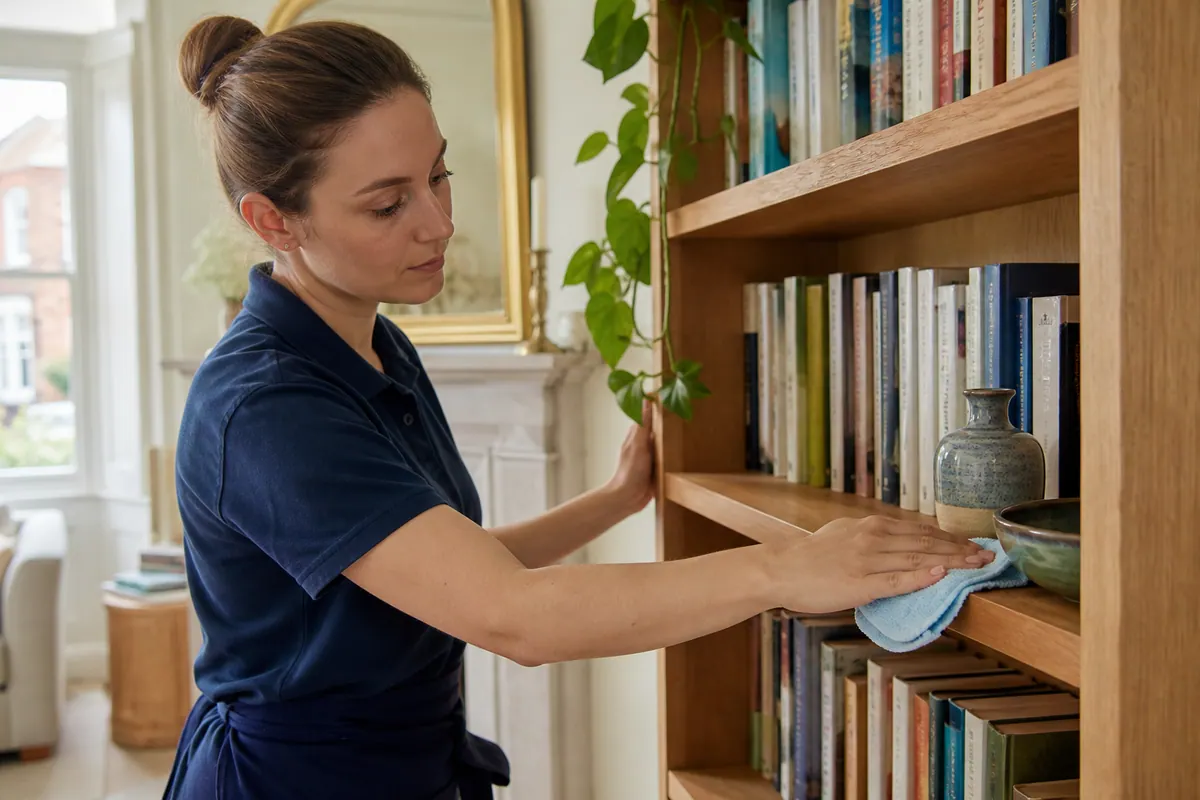
Kitchen · Bathroom
Living areas · Bedrooms
Essential upkeep
A routine should remain workable from one booking to the next. Agree the main tasks before considering switches, skirting or glass.
A selected skirting or glass task belongs in the brief before arrival; it must not silently replace an agreed core task.
Orpington / household planning
For an Orpington home occupied throughout the day, an available starting room is a useful piece of the brief. Explain which spaces remain in use and when that may change.
The cleaner should know the room sequence before encountering an unexpected closed door.
If a room cannot be entered during the booked period, say so directly. Another room can be discussed without assuming the appointment will run longer.
Give the available times for the rooms concerned and identify a clear no-entry instruction where appropriate. Avoid leaving the cleaner to negotiate access with each occupant.
Prepare the chosen starting room in advance. If the remaining area never becomes available during the appointment, treat it as excluded rather than assumed work.
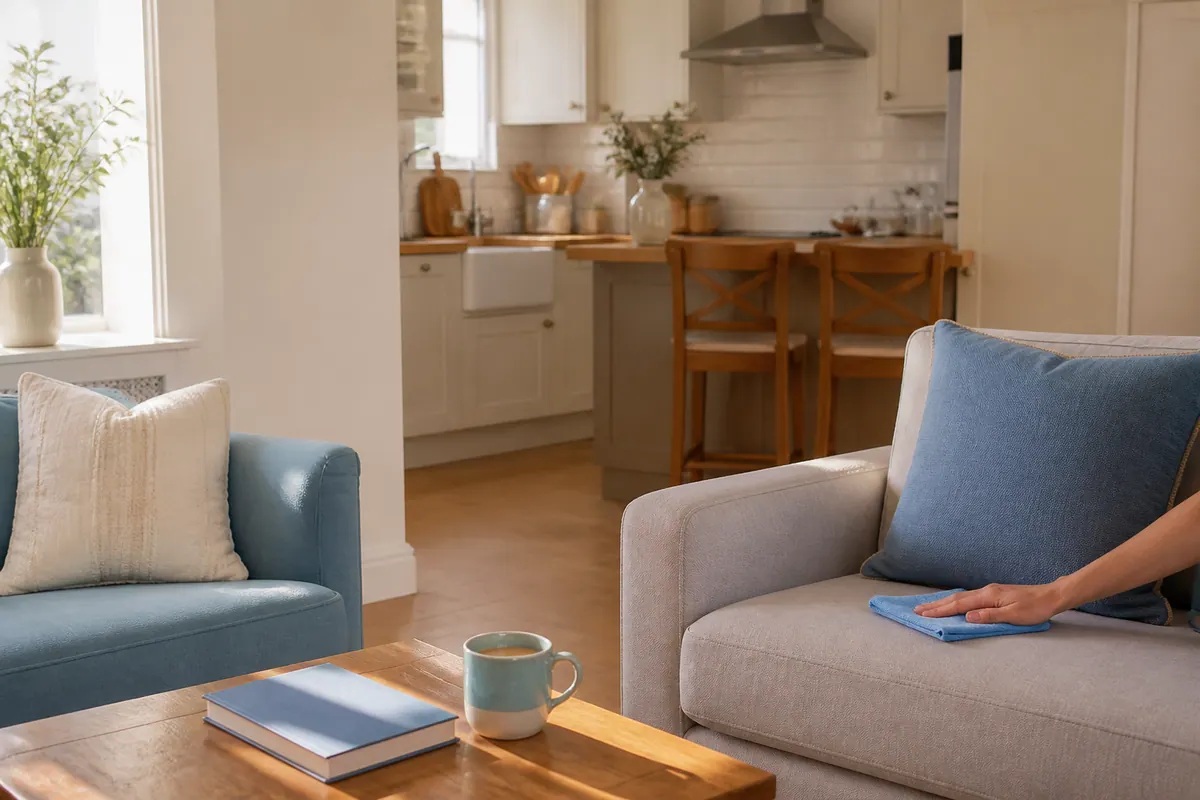
Visit frequency
Look at the household’s work between appointments before deciding how frequently support is useful.
| Planning point | Weekly | Fortnightly |
|---|---|---|
| Best suited for | Areas needing frequent upkeep | Rooms needing less frequent support |
| Core focus | Regular attention to the chosen areas | Allow the brief to reflect accumulated tasks |
| Priority planning | Make a short core list clear | Rank the work that matters after the gap |
| Visit scope | Set the room list with the team | Confirm the brief for that timetable |
An initial appointment may need more time to address accumulated work. Describe the present condition before using later maintenance as the benchmark.
Review the recurring list if room use changes. A new occupant, extra room or larger task request can affect the time required.
Separate services
A recurring domestic brief does not absorb lifting, high-access or treatment work; confirm specialist needs separately.
Vacuuming maintains the surface; extracting a carpet requires a separate service and equipment.
Wiping an appliance outside is not the same as cleaning the oven cavity and its internal parts.
Keep mould-related work distinct from general bathroom maintenance and discuss the treatment scope.
Keep exterior glazing on a separate enquiry, including how the windows can be reached.
Explain construction residue as another cleaning context before assuming household maintenance covers it.
The one-off service may be the appropriate discussion for a focused reset; confirm its scope directly.
Price guides
Check the proposed coverage before comparing rates. These guides do not fix a total for the address.
| Service | Price | Main factors |
|---|---|---|
| Regular domestic cleaning | From £20/hour | Minimum booking, timetable, space, products, entry and address |
| First / one-off domestic visit | From £90 | Starting condition, rooms, duration and leading tasks |
| Specialist / intensive scope | Separate quotation required | Unusual soil, material needs, equipment or difficult access |
Discuss the minimum booking together with room count and condition, frequency, supplies and parking; specialist additions are not assumed.
Room coverage
Open each room tab for the kinds of work to discuss. Access, materials and the agreed duration determine the final coverage.
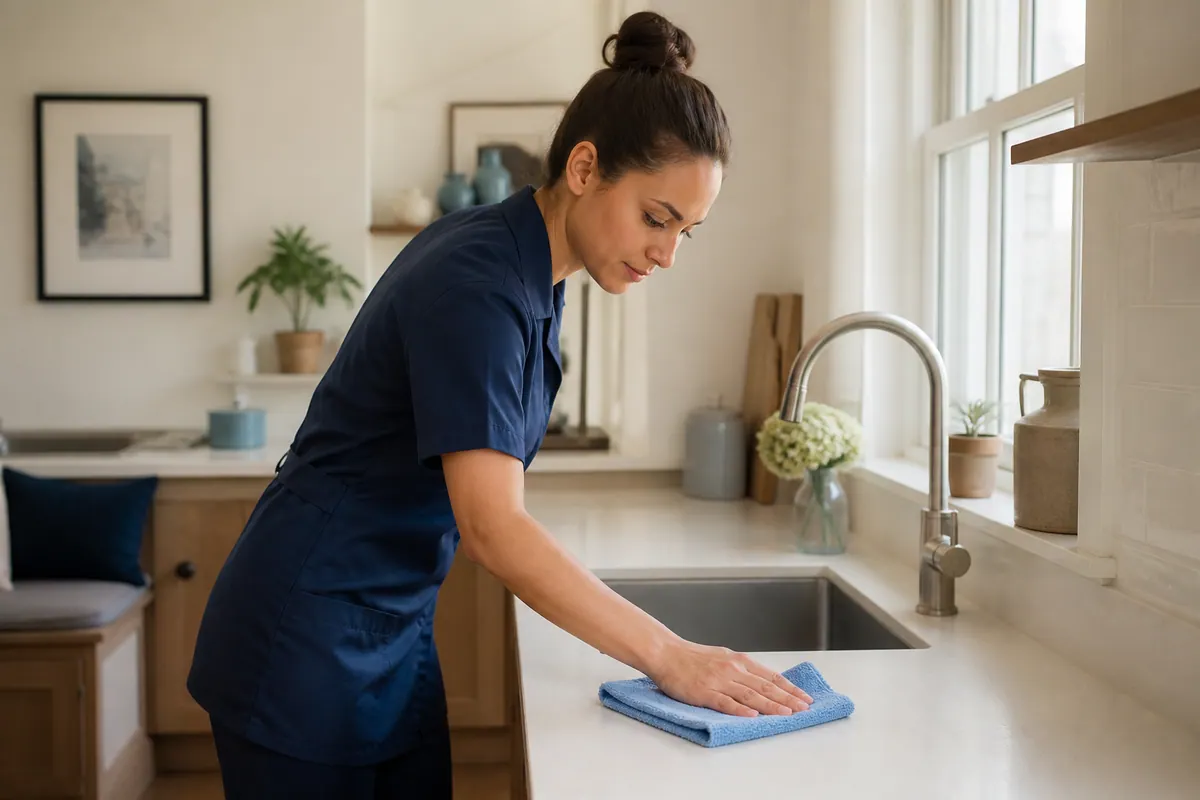
Kitchen
Routine kitchen care can cover reachable worktops and sink surfaces, plus the splashback, fronts and outside of listed appliances.
Prepare the sink and counter area by storing loose items; oven-cavity cleaning remains a separate request.
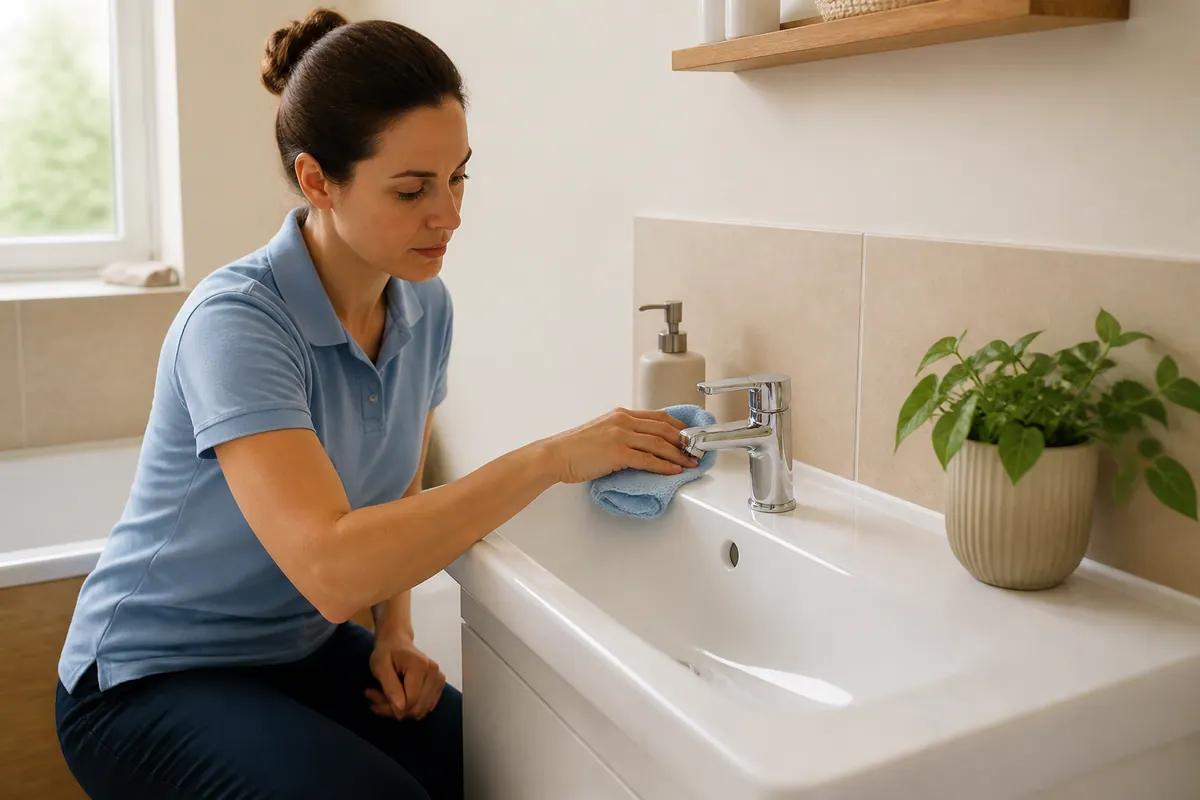
Bathroom
Include the sanitary fittings, shower and taps in your description, alongside mirrors and tiling accessible within the agreed work.
Mention stone, worn seals and damaged fittings so ordinary cleaning is not mistaken for repair.
Living spaces
Describe the furniture surfaces that can be reached and the floor area to maintain; vacuuming and appropriate floor cleaning can be included.
Decide where fragile and personal items will stay before the visit; a surface clean is not a storage arrangement.
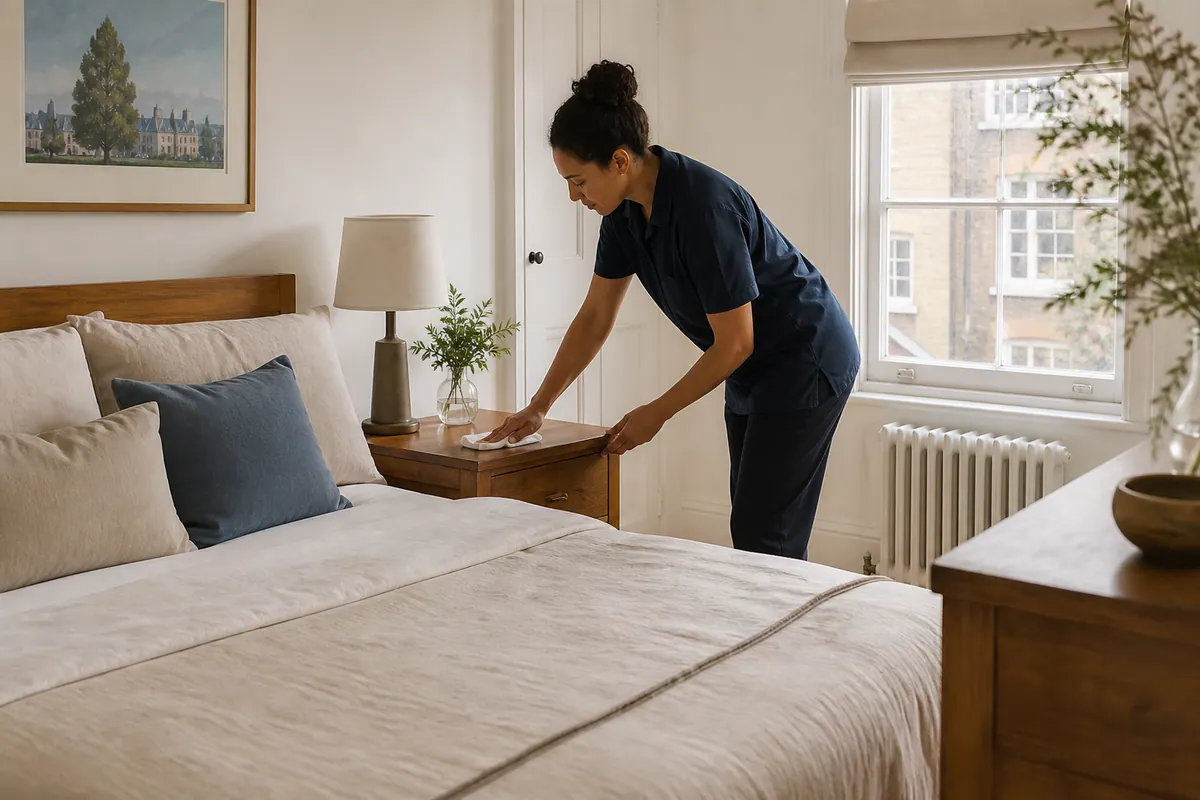
Sleeping rooms
Bedroom upkeep concerns the agreed room surfaces and floors. Dusting and vacuuming depend on access and the confirmed list.
Store medicines and personal possessions, then clearly identify sleeping rooms left outside this visit.
Household arrangements
Use the examples to explain practical household needs.
Explain whether you will be at home and which everyday areas need attention while you are out.
Keep everyday household areas ahead of occasional rooms, and ensure belongings do not block the agreed work.
Decide who will manage the pets and identify doors or areas requiring particular care.
An in-use desk should have a clear boundary, with any later room access agreed beforehand.
A tenancy does not turn domestic maintenance into end-of-tenancy work. Agree who can approve the room list.
Coordinate alterations through the agreed decision-maker so the cleaner receives a single usable instruction.
Routine planner
Use the controls to organise your enquiry. A useful outline still needs a conversation about duration and availability.
Material guidance
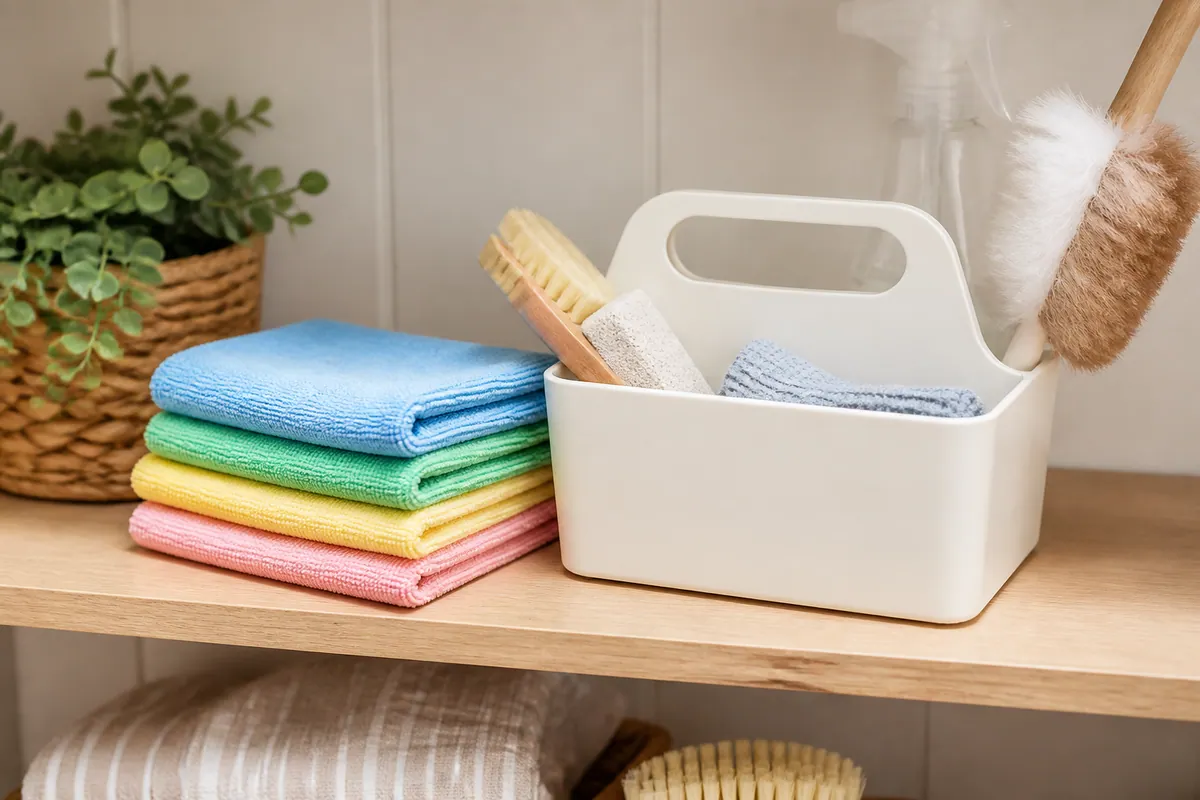
Point out the materials in the included rooms, including worn or sensitive areas, before an approach is agreed.
Share the stone’s care instructions and flag uncertainty about what the finish tolerates.
Wooden surfaces need their finish identified before an approach to cleaning is agreed.
Coated furniture needs its finish recognised rather than being treated as an ordinary hard surface.
Identify stainless surfaces and keep exterior cleaning distinct from servicing the appliance inside.
Tell the team where paint is vulnerable or already marked so maintenance is not confused with repair.
Quick answers
Task order
Move a task higher when it matters more, keeping the total work realistic for the agreed appointment.
Booking process
Describe the condition of the included areas and any limits on when they can be entered.
Work out the priority rooms and preferred rhythm with the team, subject to availability.
Settle material-care notes and access before the day, rather than leaving them to arrival.
The visit works through the authorised room list with surface-compatible care.
Review what was covered and raise work needing a separate service, additional time or repair.
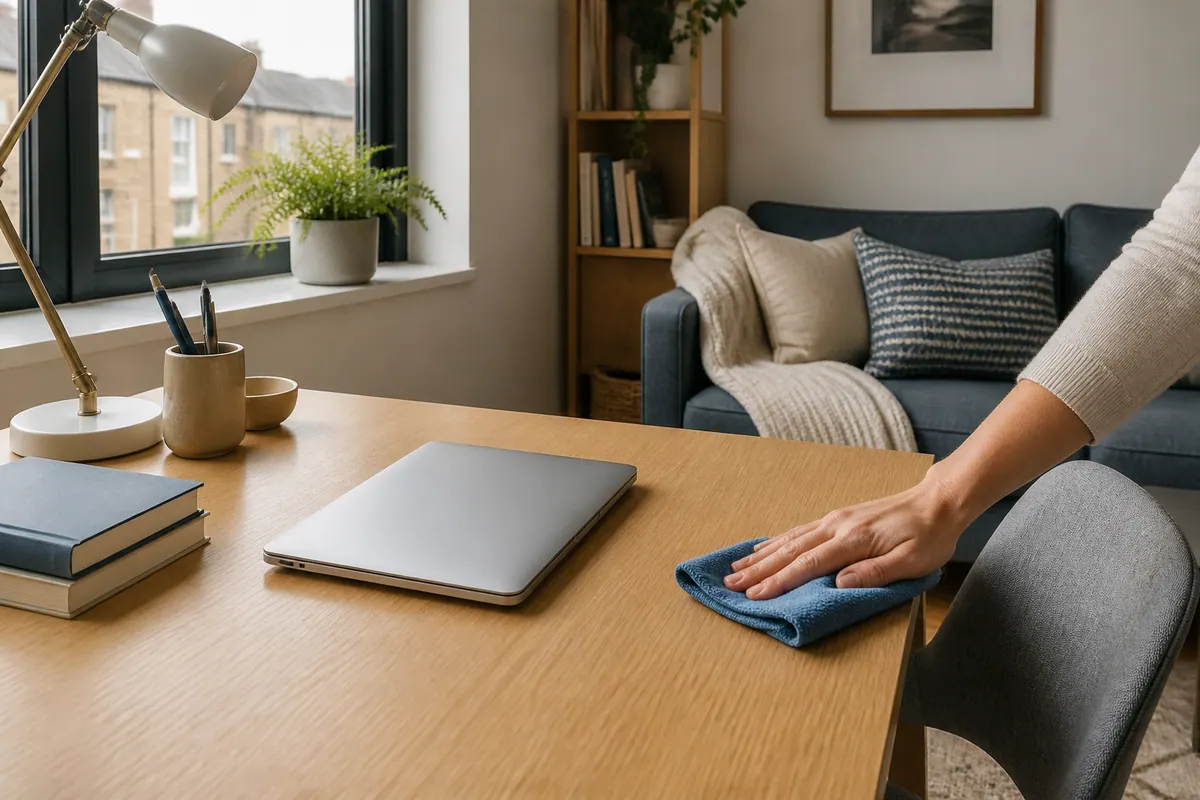
Prepare access and the leading tasks.
The room brief becomes practical work.
A household baseline worth maintaining.
Images are used to explain the process, not document an actual customer transformation.
Practical access
Confirm a workable exchange of keys with the team and identify the person responsible.
Check the building’s procedure and the person authorised to admit the cleaner.
Set out the relevant security steps for arriving and leaving through a direct private channel.
Decide who will manage the pets and identify doors or areas requiring particular care.
An in-use desk should have a clear boundary, with any later room access agreed beforehand.
Share any known stopping or loading limitation when the address is discussed.
A no-entry room needs a clear instruction before arrival, together with any untouched items.
Settle the practical details with the team so the intended work is clear before anyone arrives at the property.
Booking questions
Make the available areas clear and decide whether any occupied room is excluded. An access window does not itself extend the visit, so the proposed sequence still needs agreement.
Make the confirmed work areas reachable and give clear private-room instructions. The cleaner should not have to choose storage for your belongings.
The advertised starting guides are £20/hour for recurring domestic cleaning and £90 for first/one-off work. Ask Alesta to confirm the booking minimum and total.
Consider what the household can maintain during the gap. Neither weekly nor fortnightly care automatically fits every property or workload.
The household can request a changed priority, but the team needs to know whether this also enlarges the brief.
Describe the initial condition in detail. Once that starting work is understood, you can review what ordinary repeat visits should maintain.
Settle the product and equipment arrangement directly. A household preference does not replace checking compatibility with the actual surface.
Identify the office as unavailable or give its actual access period. Arrange a different leading area if needed, within the appointment you have agreed.
Carpet extraction requires an independent scope rather than an assumed addition to ordinary domestic floor maintenance.
The team must check the address and available schedule, then settle the visit details. An on-page selection is only an outline.
Orpington / local enquiry
Orpington bookings need the full postcode and the intended rooms. Explain the actual condition as well as the room count, so products, timing and the entry arrangement can be discussed together.
For the wider service scope, see Domestic Cleaning, or ask the team about your address.
Map reference
The map gives area context while you discuss the property access.
Open map in a new tabYour next step
List occupied rooms and time windows. Prepare one available starting space. Use that outline to start the booking conversation.
