
A workday away from home
Arrange the practical handover around your workday without assuming the cleaner can collect keys elsewhere.
Weybridge / An achievable weekly brief
A handover that works without an explanation
If the main household contact is away during a Weybridge visit, leave the team an agreed room sequence. Someone should still be available to answer a genuine scope question.
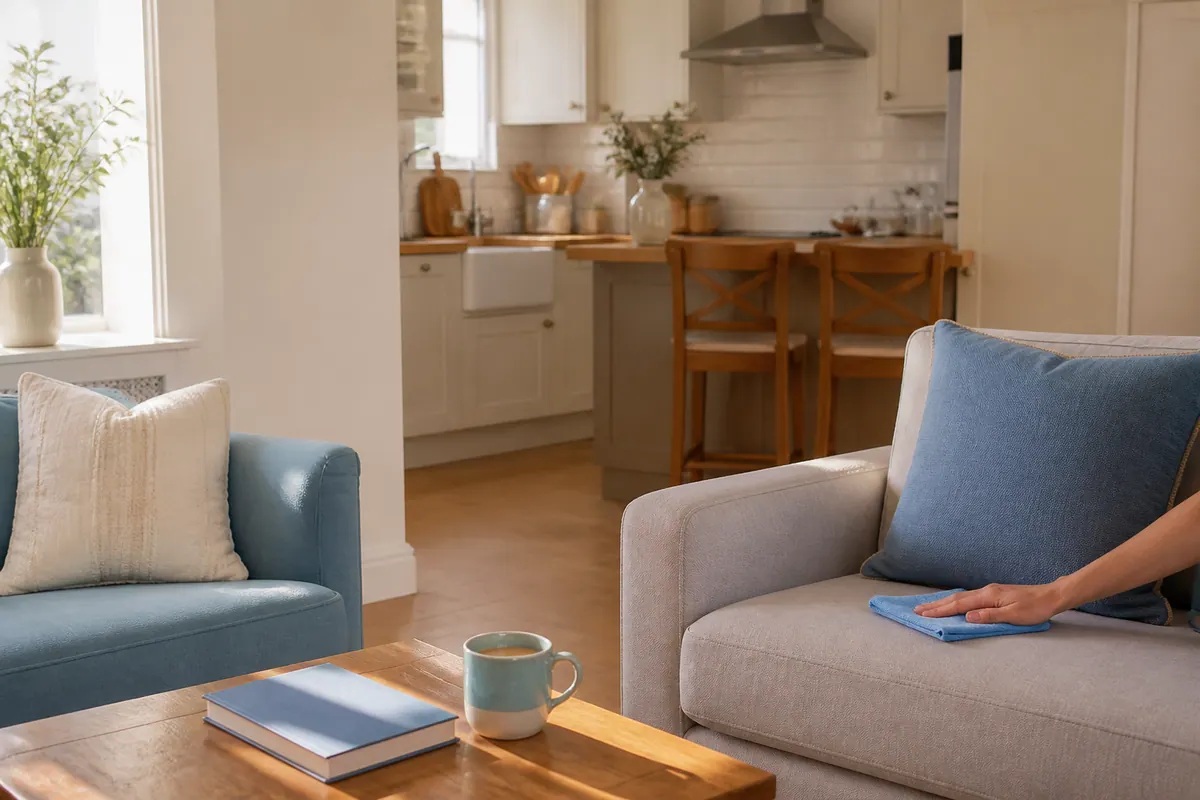
Kitchen · Bathroom
Living areas · Bedrooms
Household arrangements
These are prompts for discussion, not preset packages.
Arrange the practical handover around your workday without assuming the cleaner can collect keys elsewhere.
Clear the areas selected for cleaning instead of expecting personal items to be sorted during the visit.
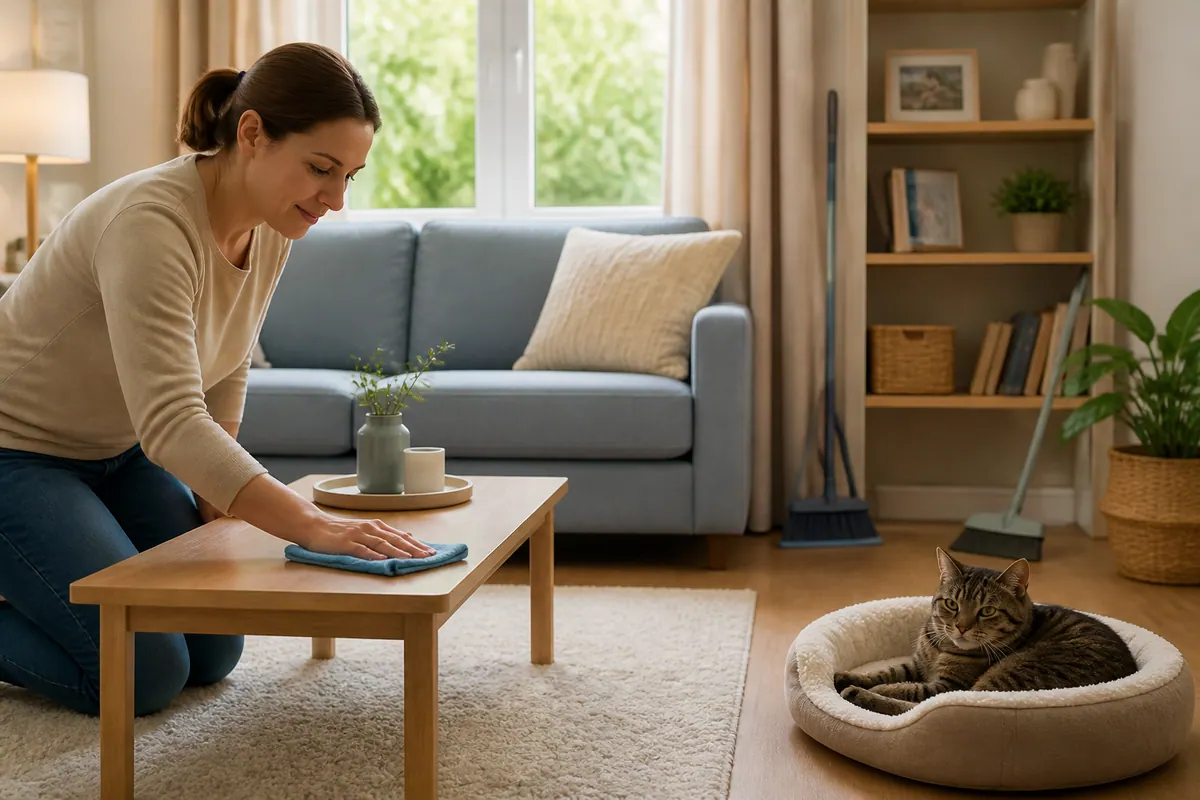
Plan the animal’s location for the visit and check whether the intended room sequence remains workable.
Arrange room availability around work commitments instead of expecting the cleaner to judge when to interrupt.
A tenancy does not turn domestic maintenance into end-of-tenancy work. Agree who can approve the room list.
A managed home benefits from a named decision-maker for access, room coverage and last-minute changes.
Quick answers
Weybridge / household planning
If the main household contact is away during a Weybridge visit, leave the team an agreed room sequence. Someone should still be available to answer a genuine scope question.
A written brief should make the priorities understandable without inviting unlimited extra work.
Check access and departure arrangements with the same person coordinating the room list. Put private belongings away and identify any spaces that remain excluded.
Give the available contact the same task order and room exclusions as the team. They can then clarify a question without creating an alternative brief.
Confirm the practical leaving instructions as well as the entry arrangement. Keeping both with the room list makes the handover easier to understand while you are away.
Price guides
These published guides help start the enquiry; minimum visit and supply arrangements still require confirmation.
| Service | Price | Main factors |
|---|---|---|
| Regular domestic cleaning | From £20/hour | Property size, minimum appointment, access and agreed supplies |
| First / one-off domestic visit | From £90 | Initial condition alongside the room and time requirements |
| Specialist / intensive scope | Quote after the scope is checked | Work outside routine care, including difficult access |
Room size, condition and frequency affect the work, alongside duration, supplies, entry and parking. Extra or specialist tasks need their own consideration.
Booking process
Describe the actual room needs, including people or animals who may affect the visit.
Set the core work alongside the intended frequency instead of choosing a timetable in isolation.
Agree the necessary supplies and access details, including sensitive surfaces and departure instructions.
The cleaner follows the confirmed scope rather than an unlimited list of possible extras.
Review the completed scope and separate any new requirement from the established routine.
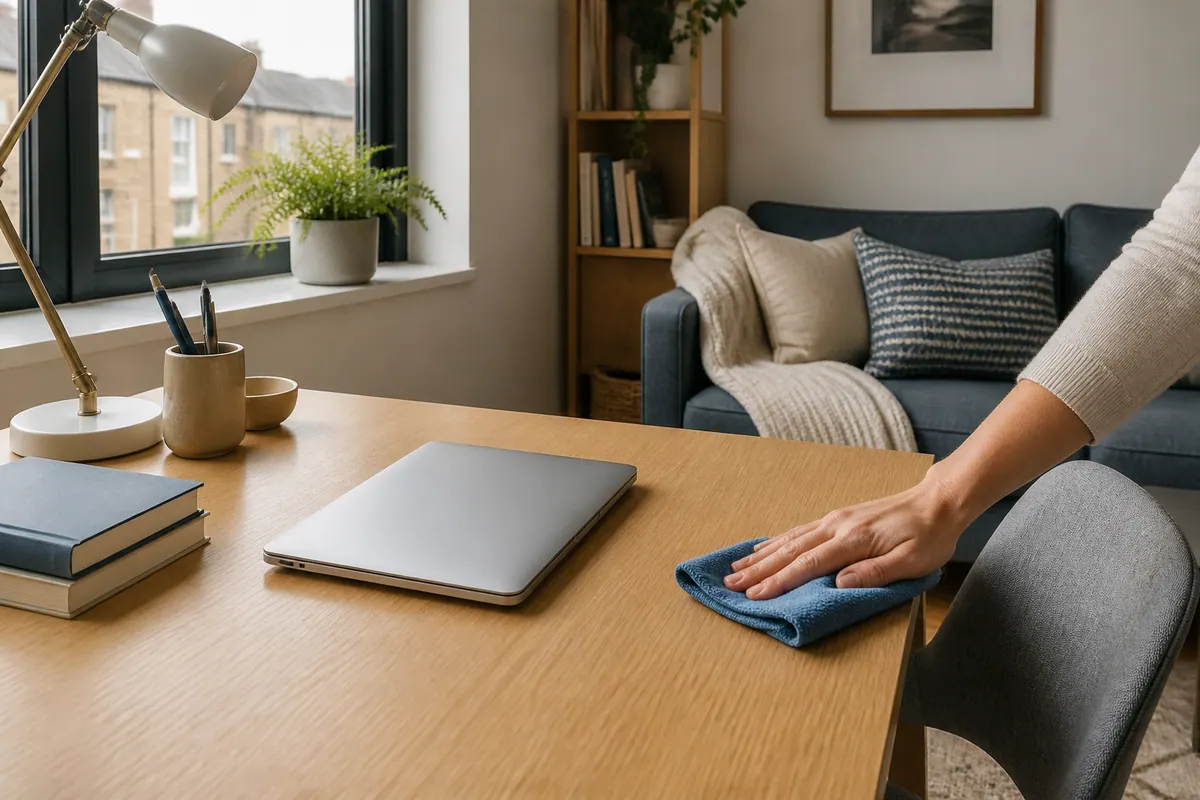
An understood list before the day.
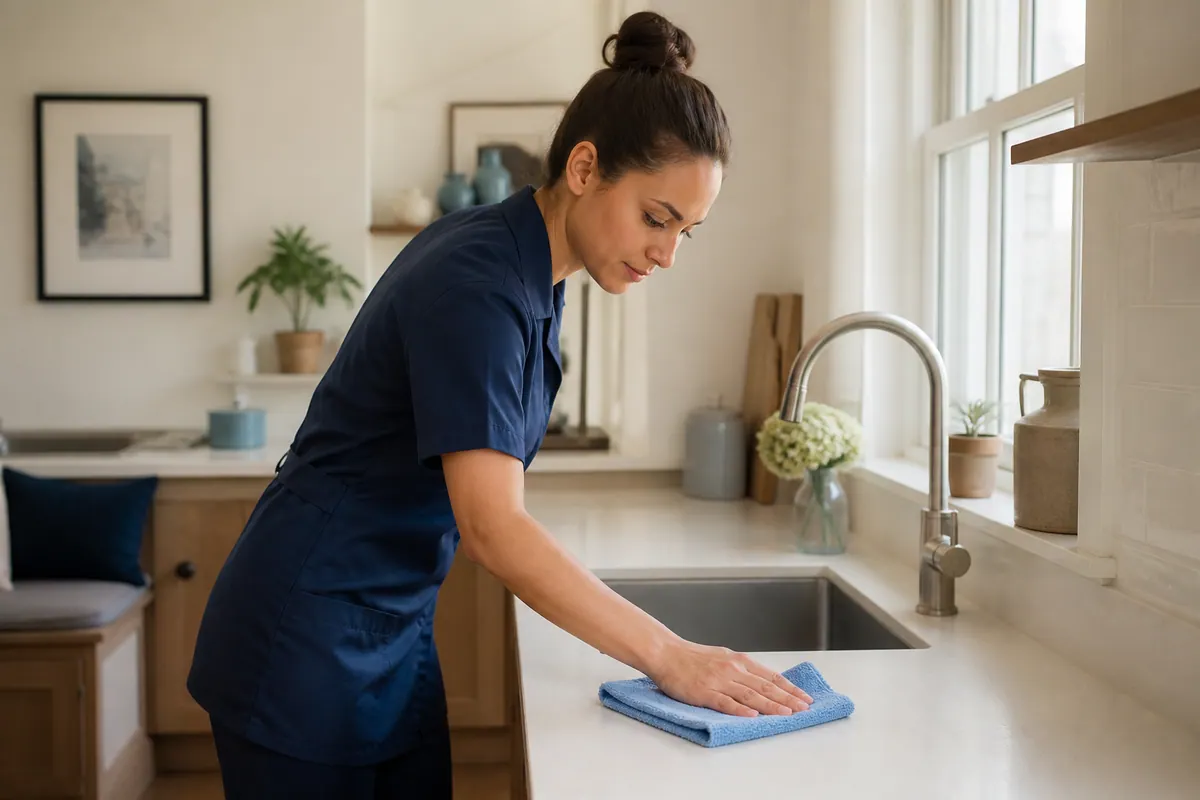
The confirmed room work takes place.
The recurring list remains understandable.
The photographs are illustrative scenes, not evidence of a customer job or transformation.
Room coverage
Review the examples for the spaces you intend to include, then agree a realistic room scope with the team.
Kitchen
Routine kitchen care can cover reachable worktops and sink surfaces, plus the splashback, fronts and outside of listed appliances.
Leave the listed preparation surfaces reachable, and raise internal oven work separately if you need it.
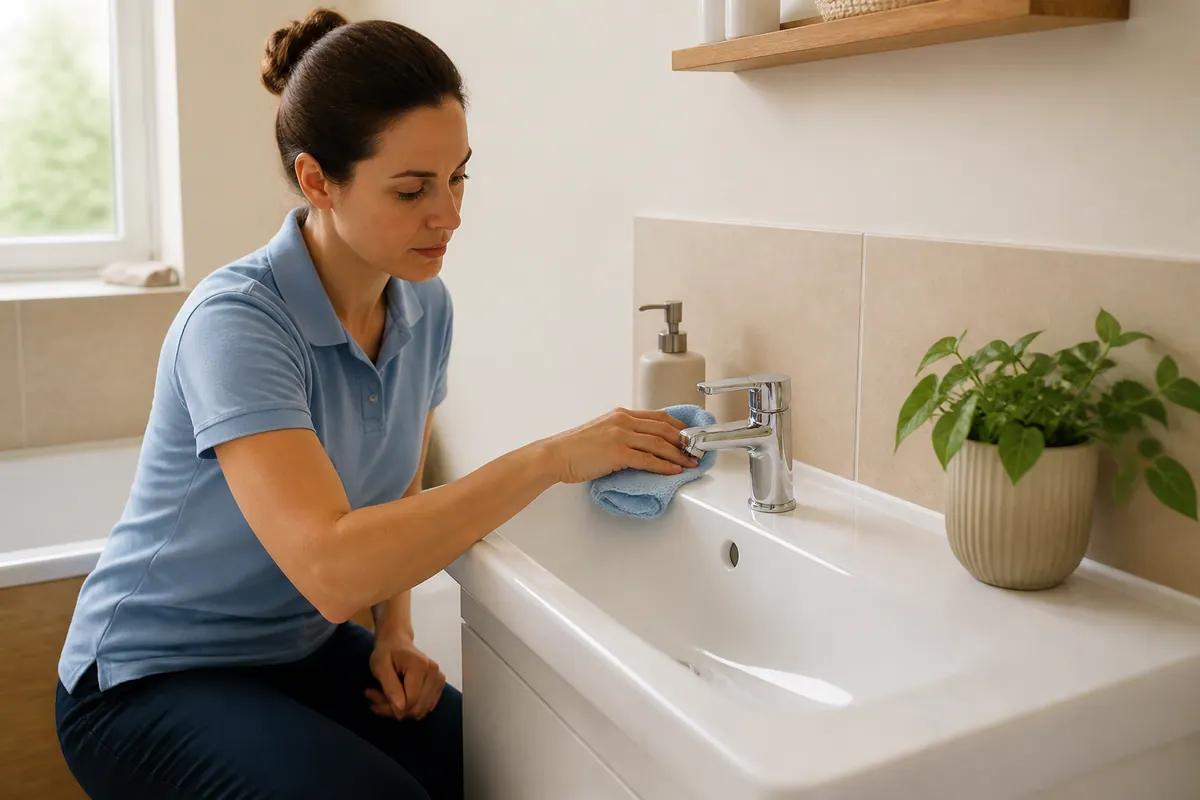
Bathroom
The bathroom list may cover taps, sanitaryware and shower surfaces together with mirrors and tiles that can be reached safely.
Disclose worn seals and sensitive stone so cleaning expectations do not become repair expectations.
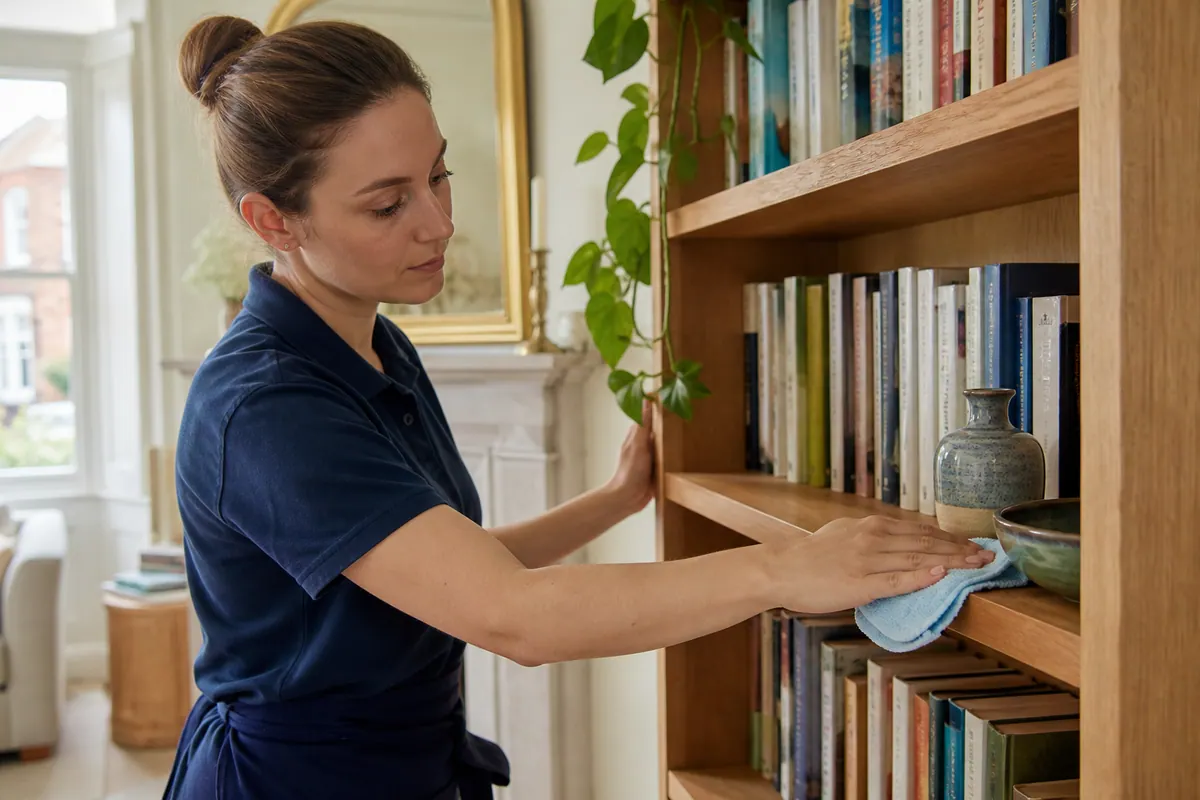
Living spaces
List accessible furniture and the usable floor space rather than asking for every hidden corner. Ordinary dusting and floor care belong here.
Secure fragile possessions and specify items that must stay untouched instead of expecting the cleaner to decide.
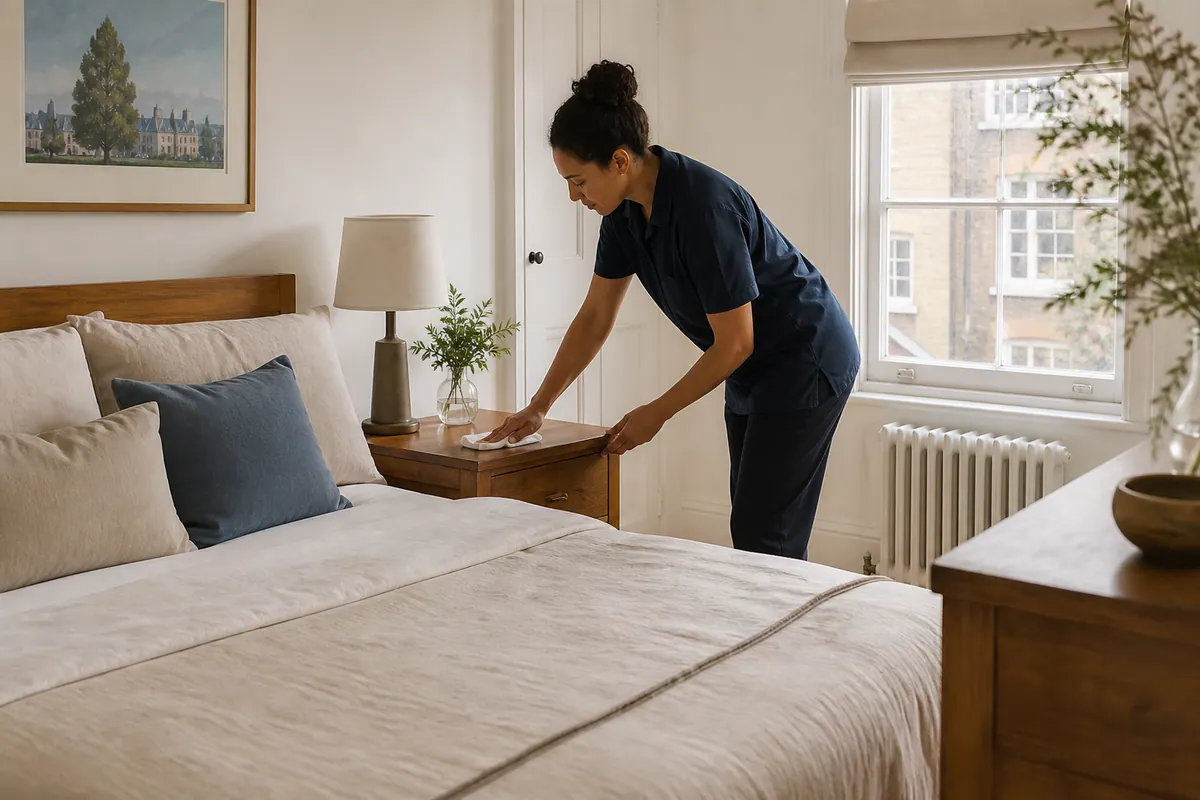
Sleeping rooms
A maintained sleeping room needs a defined scope: reachable dusting, selected surfaces, vacuuming and appropriate floor care.
The household should remove medication from accessible surfaces and explain any no-entry instruction.
Visit frequency
The relevant question is how the home is used during the gap. Frequency alone does not establish a suitable duration.
| Planning point | Weekly | Fortnightly |
|---|---|---|
| Best suited for | A home with a regular workload | Intermittent help with ordinary maintenance |
| Core focus | A repeatable set of household priorities | Discuss the condition after two weeks |
| Priority planning | Work from a manageable regular brief | Decide which accumulated tasks should lead |
| Visit scope | Clarify the work before confirming | The team must confirm room coverage |
Initial accumulated tasks may change the time required, so explain them before comparing the first visit with later upkeep.
Retain a clear recurring core, then revisit its scope when rooms or household needs change.
Routine planner
Use the controls to organise your enquiry. A useful outline still needs a conversation about duration and availability.
Essential upkeep
Protect the rooms that motivated the booking before selecting a smaller finishing task. Detail work has to fit the remaining agreed time.
Make the choice explicit: which detail, which surface, and whether the visit has room for it after ordinary upkeep.
Material guidance
Bring available care notes into the briefing because the appropriate method depends on the surface, not just the task.
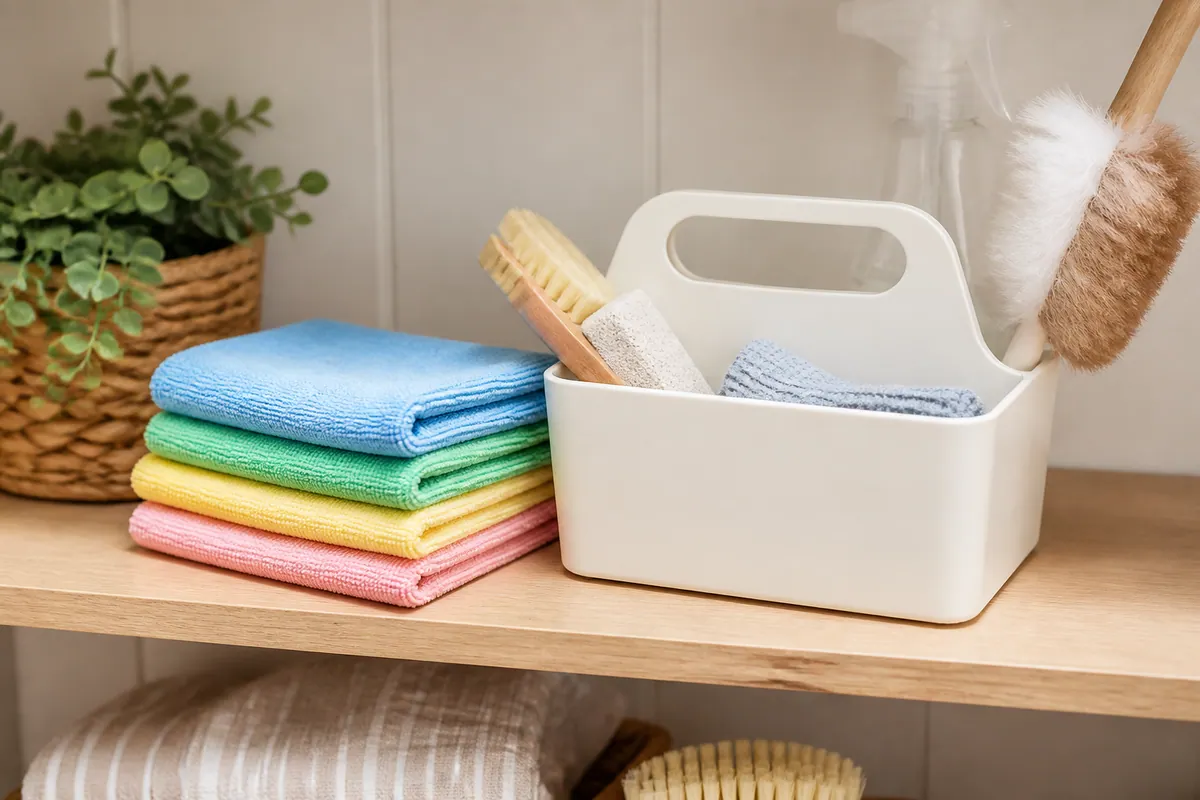
A stone countertop needs its material recognised; give the team any instructions you hold.
Wooden surfaces need their finish identified before an approach to cleaning is agreed.
Coated furniture needs its finish recognised rather than being treated as an ordinary hard surface.
Identify stainless surfaces and keep exterior cleaning distinct from servicing the appliance inside.
Existing paint damage should be recorded in the discussion, not mistaken for removable dirt.
Task order
The arrows help organise a brief, but any change to the actual cleaning plan must be agreed directly.
Practical access
Establish the authorised key exchange without leaving the arrangement for the cleaner to discover.
Confirm any managed-entry instructions before the appointment rather than leaving reception to decide.
Explain the authorised alarm steps through a private conversation with the team.
Plan the animal’s location for the visit and check whether the intended room sequence remains workable.
Arrange room availability around work commitments instead of expecting the cleaner to judge when to interrupt.
Flag practical vehicle-access restrictions early instead of leaving them for arrival.
Make the no-entry list part of the agreed brief, including anything not to be moved.
A clear room list, suitable materials and workable entry instructions make the booking understandable. Ask about anything outside normal upkeep.
Separate services
A separate cleaning method or difficult-access request must be assessed, rather than assumed to fit ordinary upkeep.
Extraction involves different work from maintaining a carpet with a vacuum; it needs its own enquiry.
Interior oven work should be quoted as a dedicated requirement rather than inferred from kitchen surface care.
Describe suspected mould as a separate assessment need, not ordinary dirt to wipe away.
A room-cleaning list does not authorise exterior glazing work; check its separate scope.
A home following construction needs its residue assessed independently of normal domestic upkeep.
A concentrated reset can need an intensive one-off brief rather than the recurring maintenance list.
Booking questions
Confirm who can answer questions while the main contact is away. The written task order should remain specific enough to guide the visit without an extra on-the-day tour.
Clear loose belongings from the booked areas, secure delicate items and tell the team about room boundaries before arrival.
From £20/hour is the regular guide, while a first or one-off visit starts at £90. The confirmed scope determines the actual booking.
A fortnightly gap can leave a different workload from a weekly one. Describe the real maintenance needs when comparing them.
Discuss the revised instruction rather than simply leaving it for arrival. Extra coverage may change how much time the booking needs.
Do not use the intended future routine as an automatic estimate for the first booking. Accumulated work needs to be explained first.
Products are a booking detail to agree in advance. Explain surfaces and available equipment rather than waiting until the cleaner arrives.
Give the team a clear office exclusion or availability window in advance, with another area chosen to start if necessary.
Extraction is outside the normal vacuuming brief. Describe the carpet requirement separately before expecting it in the appointment.
The team must check the address and available schedule, then settle the visit details. An on-page selection is only an outline.
Weybridge / local enquiry
Weybridge bookings need the full postcode and the intended rooms. Before treating a date as agreed, settle the room coverage, minimum visit, equipment provision and entry instructions directly.
For the wider service scope, see Domestic Cleaning, or ask the team about your address.
Map reference
Use the map to help explain access, not as confirmation of a local office.
Open map in a new tabYour next step
Confirm the order before the day. Name an available household contact. Discuss the intended visit directly with the team.
