
Homeowners
Explain which pieces remain and arrange any requested moving or dismantling separately.
LEYTON · ADDING STORAGE
Make the addition work with what stays.
A new cabinet can solve a storage problem only if the room can accommodate its build and daily use. For Leyton enquiries, show the existing furniture alongside the new product details.
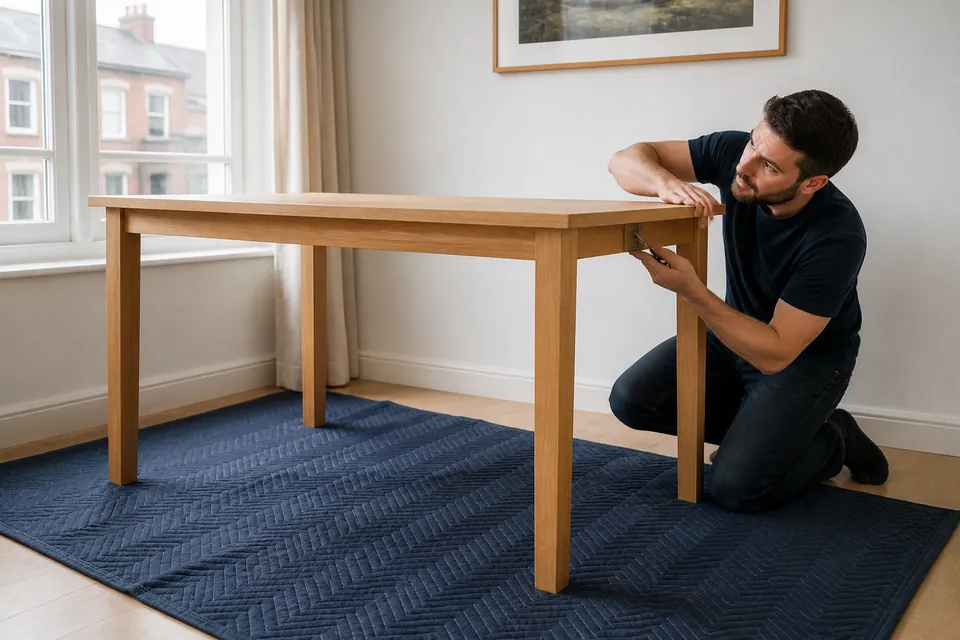
WHO PREPARES THE UPDATE?
The booking should distinguish the person providing entry from whoever decides about old furniture and required wall attachment.
Explain which pieces remain and arrange any requested moving or dismantling separately.
Provide the new model, access contact and a clear room. Include any old-item work explicitly in the request.
Check relevant permission for required restraint before booking. A freestanding description does not cancel an anti-tip instruction.
BEFORE THE ROOM UPDATE
Explain which existing pieces can be cleared and which must remain throughout the work.
Provide a cabinet reference, door choices and internal modules; the collection name alone may cover several designs.
MODEL · QUANTITY · INSTRUCTIONSKeep delivery labels readable and identify any missing or damaged cartons before making room for a complete build.
PACKAGE COUNT · DELIVERY COMPLETEShow the floor that will actually be available, plus stairs, lifts and doorways on the access route.
FINAL POSITION · SPACE · ACCESSTHE NEXT PIECE OF FURNITURE
Use the relevant category to describe the new item precisely; existing furniture does not become included work by default.
Provide the wardrobe configuration and intended wall, with existing pieces visible. Include all interior packages and manufacturer restraint instructions.
Show the new storage product ↗Check the wardrobe’s height, opening system and internal fittings against the space left by furniture that will remain.
BEDROOM / FRAME & MECHANISMSState the bed frame and any storage mechanism. Drawer access matters when another cabinet sits nearby.
BEDROOM / SMALL FURNITURECount bedside units and their drawers, leaving operating space alongside the bed.
STORAGE / RUNNERS & ALIGNMENTIdentify the chest model and anti-tip requirement; fronts are adjusted after the main carcass is checked.
DINING / LIVING SPACEDescribe extensions or folding sections and allow a protected area for the tabletop.
HOME OFFICE / WORKSPACEInclude the desk’s storage attachments and the chair’s movement space.
DINING / HOME OFFICEGive chair quantities and models, rather than treating a whole set as one component.
LIVING ROOM / MODULAR STORAGEList each cabinet and the required connections between them. Matching finishes do not make separate units a single kit.
SUITABLE FREESTANDING FURNITURESend the freestanding shelf reference and restraint requirements; built-in shelving needs separate assessment.
MORE THAN ONE ROOMProvide the complete furniture list before sequencing work around the existing room.
LEYTON ROOM UPDATES
If an old chest occupies the destination, explain how it will be removed. Dismantling, moving and disposal are separate requests, not consequences automatically covered by a new-product quote.
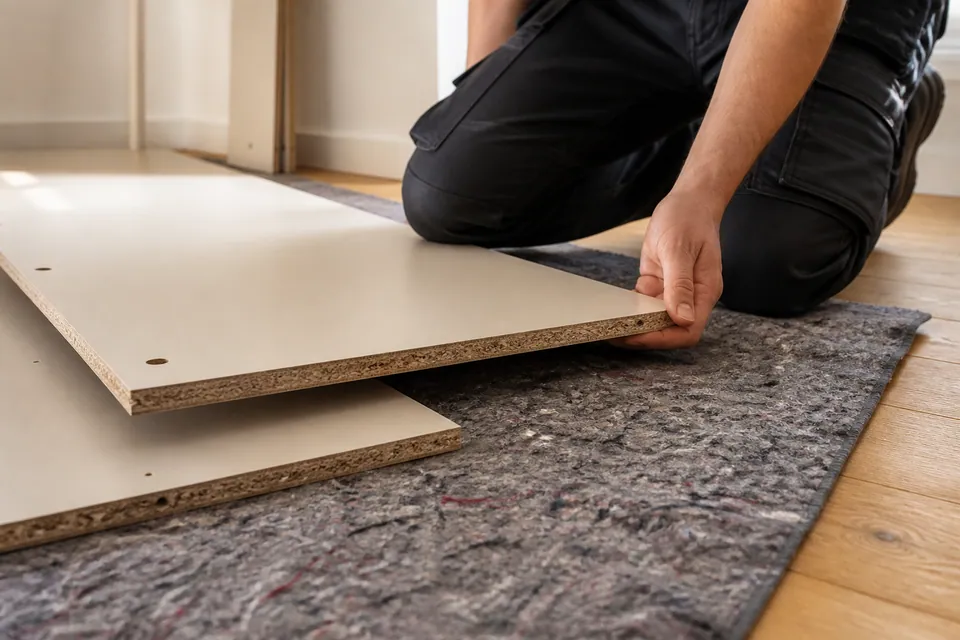
Photograph what remains after your planned preparation. A clear wall alone does not show whether the new cabinet’s panels can be supported and assembled.
ASSESS → PREPARE → BUILD → FIT
Match the new product and supplied parts to its instructions.
Protect a suitable area after agreed preparation, preserving the access route.
Support panels and construct the unit in the specified sequence.
Check the frame before aligning doors, runners and shelves.
Test normal operation and stability, explaining any incomplete component or restraint.
THE BIGGEST ADDITION
A wardrobe arrives flat but usually cannot follow the same route after construction. Consider a suitable build in its final room, preserving space for the manufacturer’s sequence.
Check ceiling clearance and the area needed to raise panels or fit doors. Existing furniture can constrain these stages even where the finished cabinet fits.
A unit that is too large is not automatically altered during assembly. Cutting, old-furniture dismantling and other changes need separate consideration.
UPDATE WITHOUT LOSING THE LAYOUT
A larger chest may fit the old one’s wall space but need more drawer clearance and assembly floor. Show the room with the existing bed.
Include both the chest position and its opening area.
Discuss my room update ↗When adding a wardrobe, avoid filling the assembly area with bedside units or the belongings it will eventually contain.
Photograph the proposed storage wall from across the room.
LIVING ROOMA new sideboard should not trap the opening of another cabinet. Check its doors alongside existing seating and tables.
Show neighbouring furniture, not only the empty gap.
HOME OFFICEA desk pedestal can fit under a top yet restrict the chair. Send the complete desk arrangement and intended storage position.
Include the chair pulled back in the layout.
DINING AREAA larger table changes chair positions and the available assembly area. Identify extensions and the total seating quantity.
Show the dining floor before cartons are placed there.
CAPACITY DOES NOT SHOW THE BUILD
Drawers, connectors and door systems can make a modest-looking storage addition more involved.
| Furniture type | Construction factors | Information that clarifies scope |
|---|---|---|
| Wardrobe | Internal partitions and door hardware | Cabinet model, options and carton total |
| Bed | Underbed drawers or moving base | Bed reference and opening directions |
| Desk | Pedestal modules and support frame | Desk design with storage accessories |
| Storage | Linked units and adjustable components | Individual references and connection instructions |
BUDGETING A ROOM ADDITION
These figures are guides for the new furniture. Your model, access and agreed scope determine the quotation, including any separately requested handling.
Starting guide for a small straightforward build.
Typical bracket for a bed, desk or medium storage item.
Starting category for large wardrobe or multiple-item assembly.
| Service scope | Price guide | What the quotation considers |
|---|---|---|
| Small furniture item | From £30 | Hardware and construction of the small item |
| Bed, desk or medium storage | Typically £60–£150 | Panels, mechanisms and access to the room |
| Large wardrobe or multi-item project | From £300 | Large assemblies, interior fittings and agreed restraint |
Supply, delivery, carrying, removal of the old item and packaging disposal are not automatic inclusions. Describe any dismantling or other handling explicitly before agreeing the job.
ROOM UPDATE ESSENTIALS
MAKING STORAGE USEFUL
A chest’s drawers should travel correctly without forcing. The carcass and runner installation are checked before attempting cosmetic front adjustments.
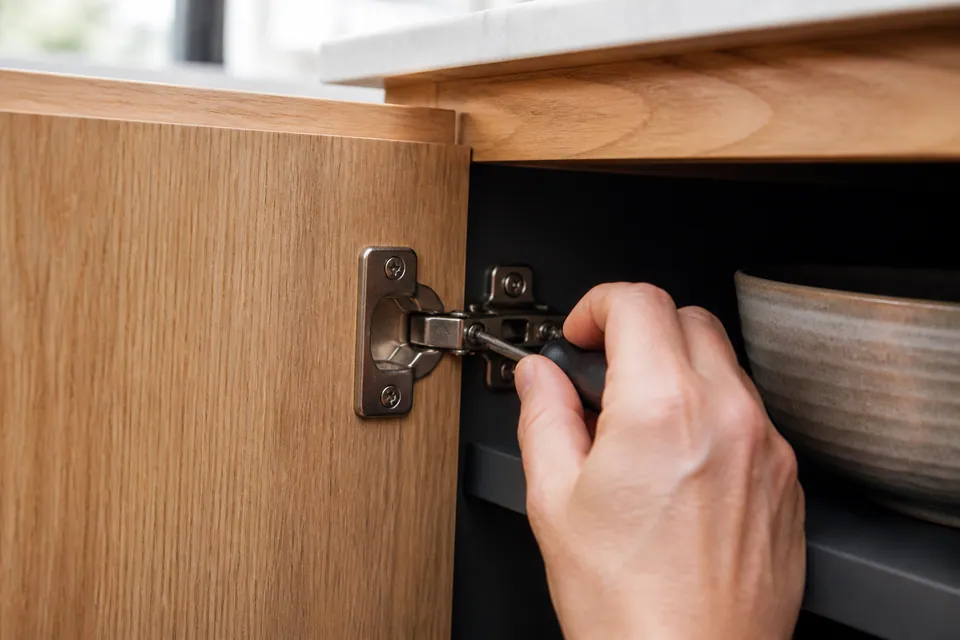
Set door gaps using the intended hinge adjustment.
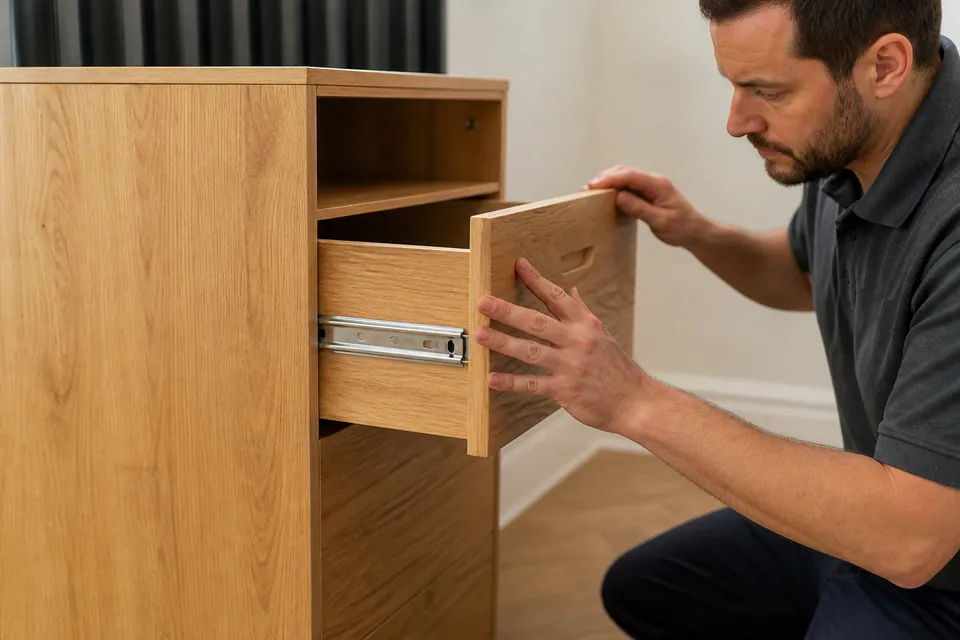
Verify runner engagement before testing movement.
The manufacturer’s levelling features and correct fittings help establish alignment. Review the furniture in its intended place, including ordinary operation.
RESTRAINT FOR THE NEW STORAGE
An existing hole or bracket is not proof of suitability for the new product. Provide its anti-tip instructions so the proposed restraint can be assessed.
Anchoring is subject to suitability and agreement. If required restraint is outstanding, do not treat the new furniture as ready for use against its instructions.
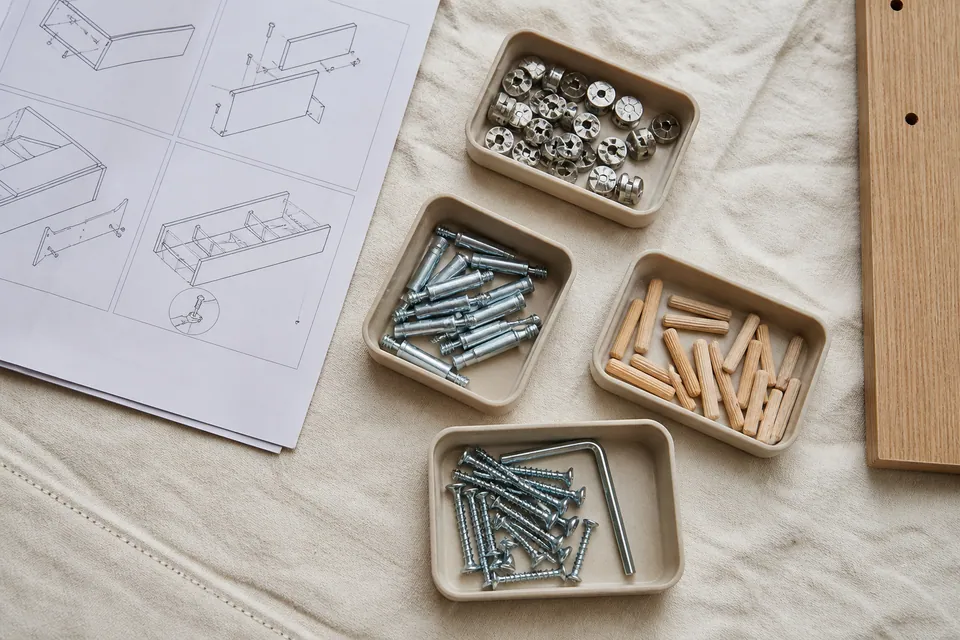
The correct manufacturer part may be required where a panel is damaged or a fitting absent. Retain labels and instructions to identify the affected component.
Hardware removed from the old cabinet is not automatically compatible with the new one.
FROM NEW BOXES TO NEW STORAGE
The stages cover more than fitting the final handle.
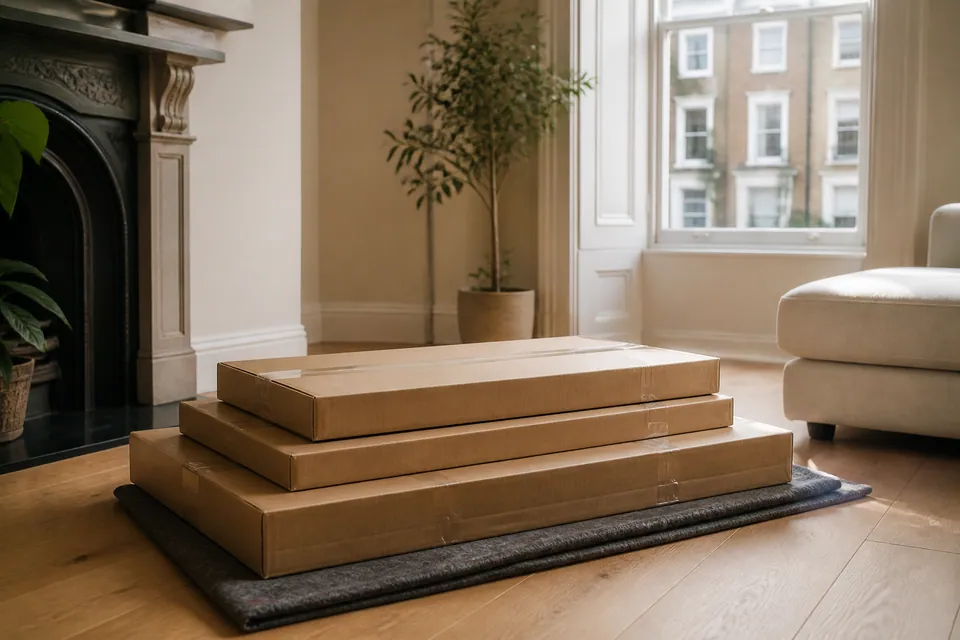
Identify every carton for the new product.
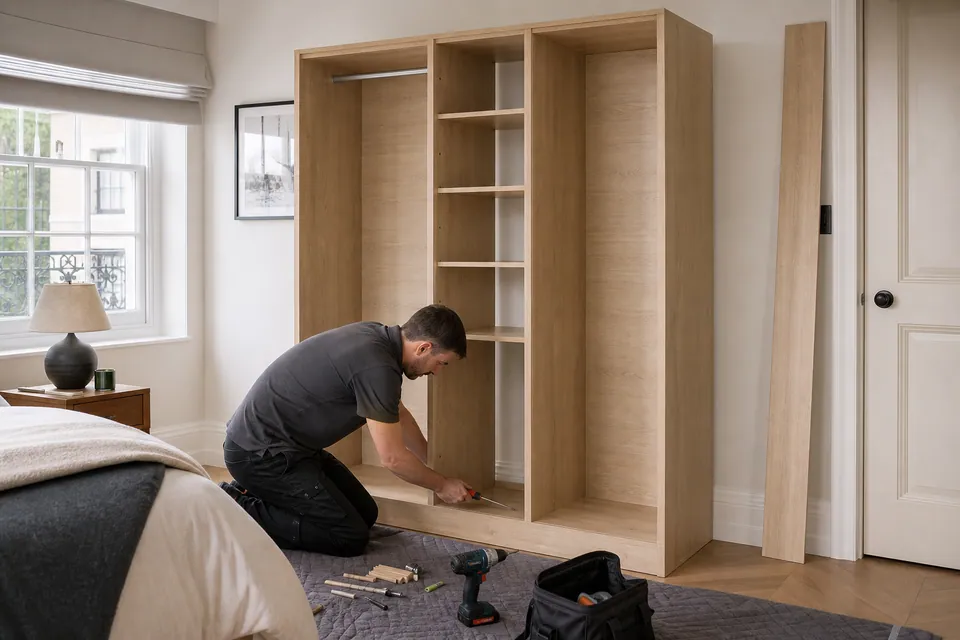
Keep panels supported and hardware organised.
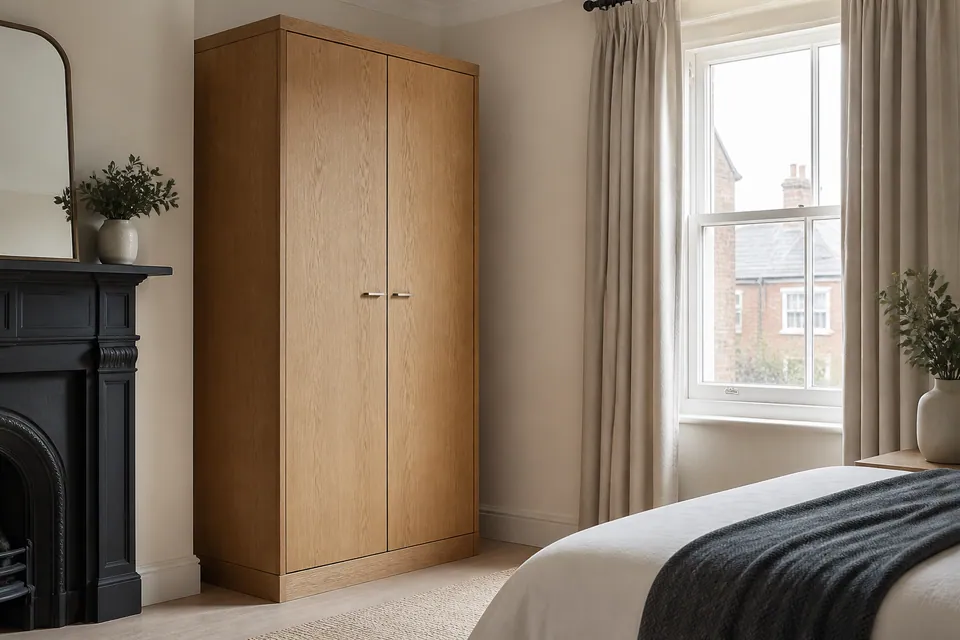
Check adjustment and any remaining safety conditions.
The images are assembly illustrations, not documented customer results.
PLANNING AT YOUR LEYTON ADDRESS
Provide postcode, floor and entry arrangements, with the current package location. Mention stairs, lifts and any carrying still required.
Send my storage and access notes ↗Service-area map
Map selection requests Google Maps content.QUESTIONS ABOUT ADDING STORAGE
A useful Leyton enquiry describes the product being assembled and the existing room it must fit into.
Yes, a wider view helps assess the working area and opening clearances. A close-up of an empty wall can hide an obstructing bed or sofa.
No automatic inclusion should be assumed. Moving, dismantling and disposal are distinct tasks to request and agree alongside the new assembly.
Medium storage, beds and desks are typically £60–£150; small items start from £30 and large wardrobes or multi-item projects from £300. The final quote depends on model, agreed work and access.
Not necessarily. Check its own reference and package schedule; matching appearance does not establish identical hardware or configuration.
Its completed dimensions may prevent moving it in. A suitable area in the final room is normally preferable, with enough space for the instructed build.
Yes. Drawers and lifting mechanisms alter construction and operating clearance. Supply the precise bed model, not just its mattress size.
No. Keep new kits intact and identifiable; old hardware should not be mixed into them as potential substitutes.
Declare it before the scope is confirmed. Several items can be assessed together, but an extra cabinet adds handling, components and possibly restraint work.
Give their actual location and the route to the destination, including stairs or lift restrictions. Additional carrying needs agreement.
It must be assessed, not assumed suitable. Follow the new manufacturer’s instructions, verify wall and fixing compatibility, consider concealed services and confirm relevant permission.
Identify the panel and product reference. A correct manufacturer replacement may be necessary before completion rather than hiding the damage or modifying unrelated components.
PLAN YOUR NEXT STORAGE ADDITION
Send the new model, a current room photograph and any separately requested old-item handling.
