
Leaves
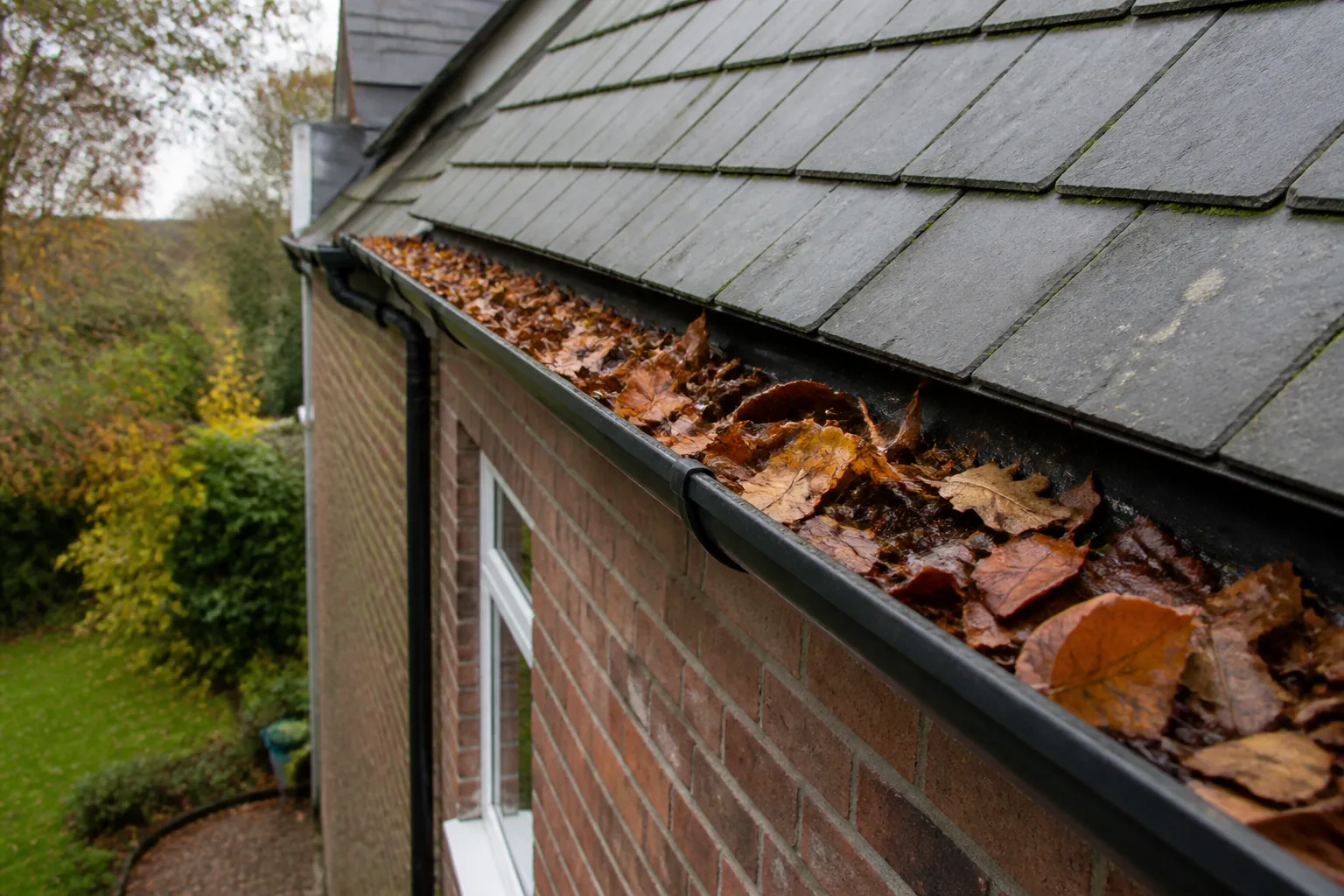
Wet leaves can settle into layers and slow water moving towards an outlet.
Rainwater routes · access · clear scope
Leaves, loose moss and settled silt can obstruct the route along a gutter well before the whole channel looks full. Our Chigwell cleaning visit is limited to accessible sections agreed in advance, with reachable outlet openings included where specified. Repairs, concealed downpipe blockages, below-ground drainage and any unusual access requirement remain separate from routine debris removal.
Common causes
Light material can travel along a roofline and settle at a bend or outlet. Once wet, leaves and moss trap smaller particles, creating a heavier layer of silt. Routine cleaning lifts that build-up where the channel is accessible and included in the agreement.
Wet leaves can settle into layers and slow water moving towards an outlet.
Loose roof moss can collect in the channel and hold other material in place.
Small twigs can bridge narrow points and trap lighter debris behind them.
Loose surface material may wash down from the roof during wet weather.
Older material can become dense and reduce the channel available for runoff.
Fine deposits can gather beneath larger debris and close to an outlet.
Local property context
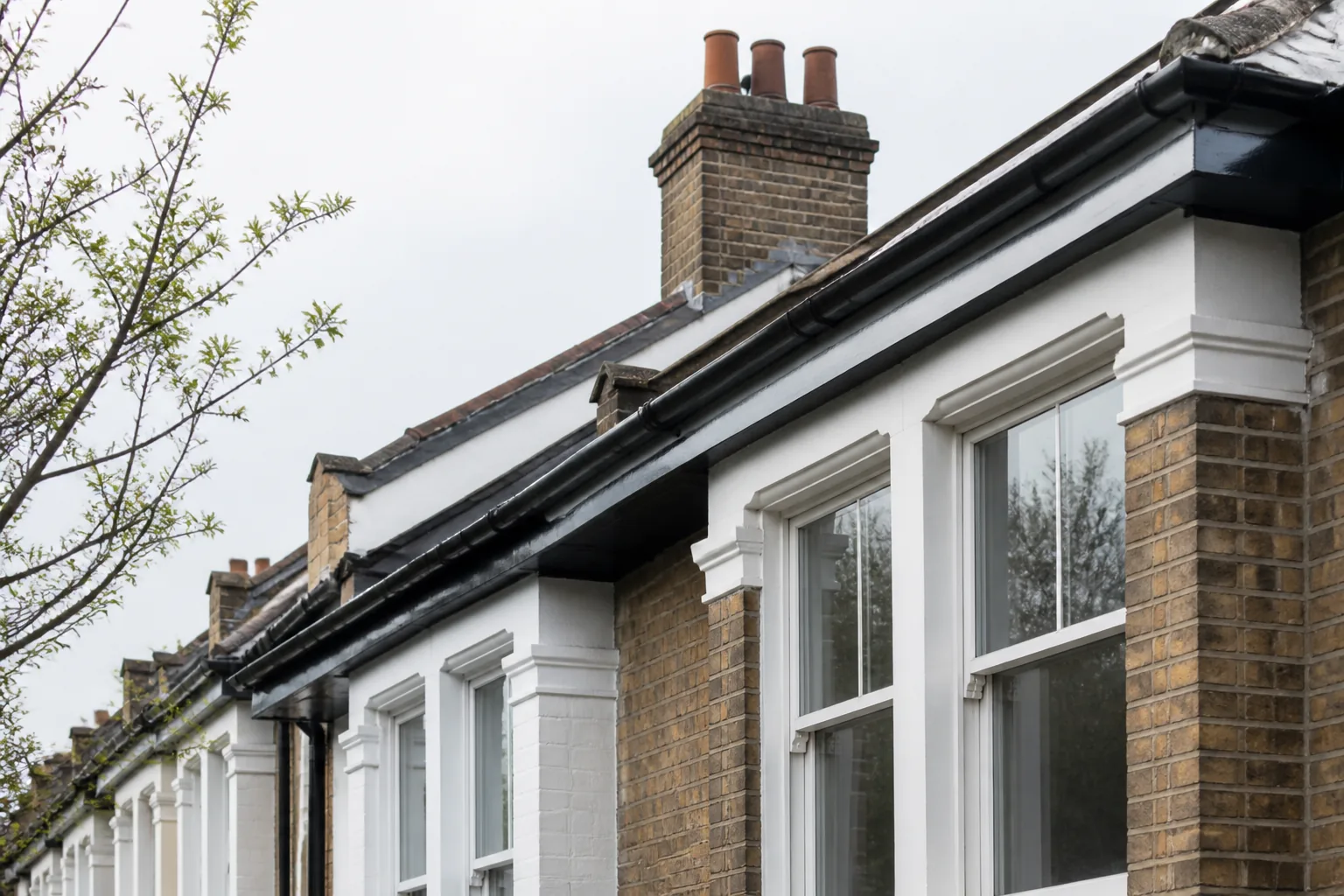
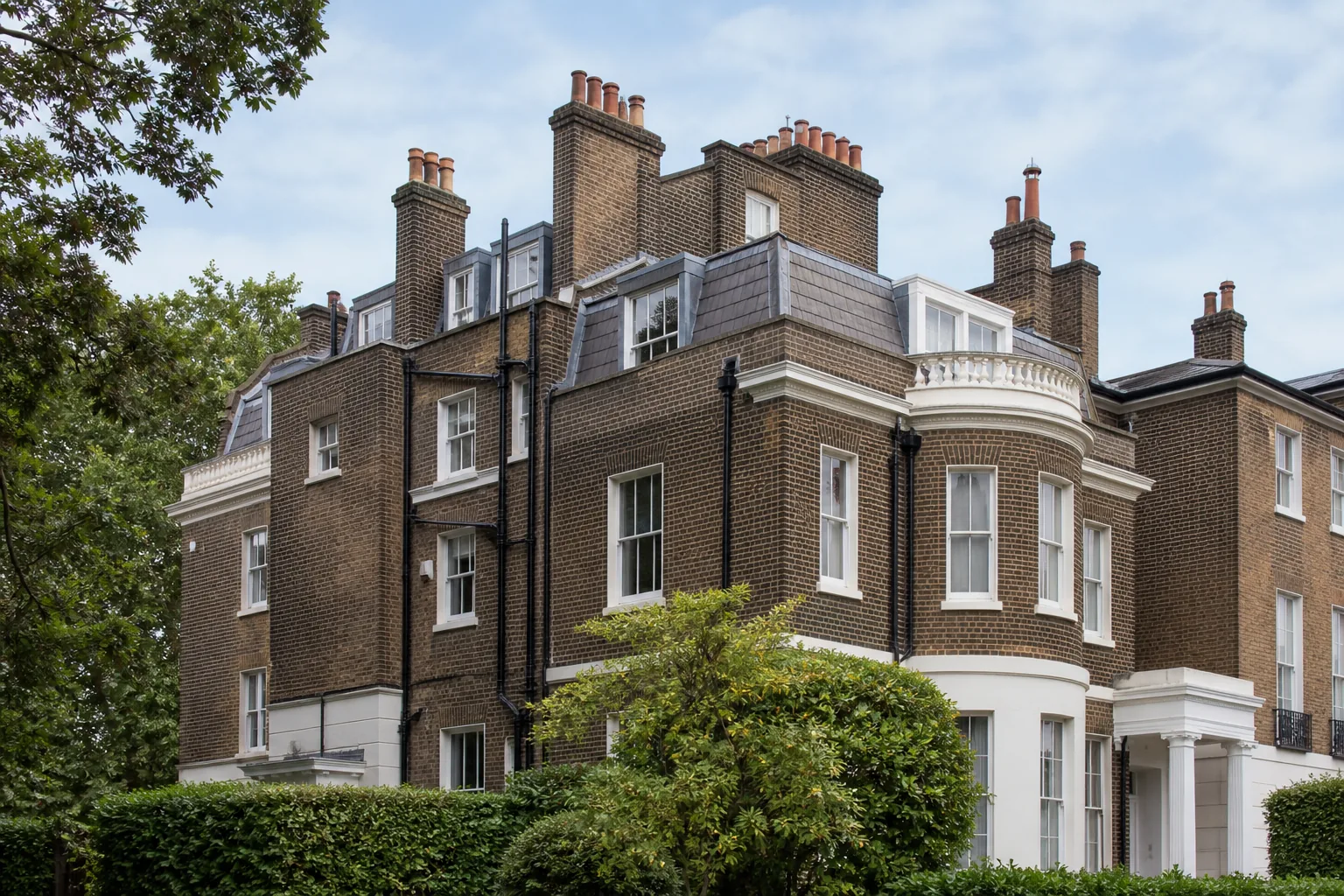
Homes in Chigwell may have several rooflines, garden-facing elevations or planting close enough to influence where leaves and seeds settle. Those possibilities are not facts about every address, so the individual layout must lead the discussion. Note changes in ground level, narrow paths, walls, additions and separate buildings. A channel may be easily visible yet screened from practical access by a lower roof. Naming the areas of concern, rather than requesting an undefined whole-house clean, allows each run to be considered honestly.
Different symptoms deserve different responses. Vegetation rooted in sediment points towards accumulated material, while a regular drip from a union may continue after the run is cleared. Water that disappears slowly at an outlet could indicate debris at its mouth or resistance further down. The agreed clean removes routine build-up from accessible channels and any reachable openings specified. It does not repair a split, change the gutter's angle or investigate underground discharge. Any remaining problem should therefore be assessed separately using what is observed at the property.
The route around the building determines what can be included. Conservatories, lower roofs, dense borders, walls and adjoining land may affect individual sections. Mention gates, slopes and shared spaces before booking, along with any garage or outbuilding that requires attention.
| Property situation | Access or gutter consideration |
|---|---|
| Homes with multiple rooflines | Upper and lower runs should be listed individually because reach and outlets may differ. |
| Properties near garden planting | Shelter and wind may concentrate organic debris in only part of the system. |
| Houses with conservatories | The structure may restrict the approach to an original rear channel. |
| Shared or converted buildings | Confirm responsibility, permission and the exact communal sections requested. |
Structured service guide
| Element | What may be done | What is separate |
|---|---|---|
| Accessible named channel | Clear routine organic debris | Component work or realignment |
| Reachable outlet mouth | Remove loose covering material | Investigate lower pipework |
| Underground route | Excluded from cleaning | Drainage assessment |
Structured service guide
| Finding | Cleaning contribution | Other consideration |
|---|---|---|
| Silt with small plants | Remove accessible build-up | Check damage only if indicated |
| Gap at a connection | Clear nearby contents | Repair the connection |
| Open channel with poor discharge | No debris-based remedy | Downpipe or drain investigation |
Structured service guide
| Property detail | How it affects scope |
|---|---|
| Total named channels | Determines the clearing area |
| Mixed roof heights | Each level needs access consideration |
| Walls and lower roofs | May screen a visible run |
| Condition of contents | Wet silt differs from scattered leaves |
Structured service guide
| If a property includes | Then establish |
|---|---|
| A garden-facing upper run | Whether lower structures restrict reach |
| Several small projections | Which short channels need cleaning |
| A shared boundary | Permission for the required approach |
| Nearby planting | Where debris actually gathers |
A clear service sequence
Seasonal context
Leaves may be most noticeable later in the year, while seed debris and roof moss can enter channels in different months. Rain can then compress the material. Check according to visible condition and previous behaviour, particularly where one elevation repeatedly fills before the others.
Nearby trees, roof moss, gutter shape and exposure can all affect how quickly material accumulates. A visible symptom is more useful than applying one fixed timetable to every address.
Quick answers
Routine work covers leaves, moss, silt and similar loose debris in accessible agreed channels. Reachable outlet mouths may also be cleared when included, but hidden pipework and repairs do not follow automatically.
Plant growth indicates retained material and moisture, but any damage must be assessed rather than assumed. Removing the accessible growing medium is cleaning; correcting a distorted or cracked channel is separate repair work.
Upper, lower and outbuilding gutters can have different outlets and access. Listing each one prevents a visible but unreachable section from being assumed and ensures smaller requested runs are not overlooked.
No. A leak from the pipe or its connections is a separate fault. The clean may include loose matter at a reachable outlet opening, but not concealed sections or damaged components.
It need not be. Moss, seeds and fine sediment can gather outside leaf fall. The most useful timing reflects what the individual channels contain and how they perform during rainfall.
Building height, changing ground, deep additions, narrow boundaries, walls and shared routes may all affect reach. Provide these details early so the agreed scope reflects the actual property.
Chigwell service area
Nearby gutter-cleaning pages
Before booking
Routine cleaning excludes broken or misaligned parts, obstructions deeper within downpipes, underground drains and sections that are not accessible under the agreement. It also does not include every roofline by default; the relevant areas must be identified and confirmed.
Not always. Flow also depends on the channel fall, outlet, downpipe and the route below ground. If accessible debris has been removed but water still pools or escapes, another part of the system may require separate investigation.
Planting may contribute leaves, seeds or small twigs, but wind and shelter determine where they settle. A nearby tree does not set a universal cleaning interval. Observe which channels collect material and adjust checks to the actual pattern.
That depends on the exact arrangement and whether the upper run is accessible without relying on the conservatory surface. Its depth, position and surrounding space all matter. Share a clear view before the section is promised within a routine visit.
Treat it as a repair concern. Loose leaves around an accessible opening can be removed if agreed, but cleaning cannot seal or replace the cracked component. Mention the visible damage so the two requirements are scoped separately.
Wind, roof shape, channel fall and outlet position can all move material unevenly. A sheltered bend may retain wet leaves while the remainder looks open. Identifying the exact corner helps focus the enquiry without assuming a whole-system blockage.
They may be, once responsibility, permission and access have been established. State the precise communal section requiring attention. Connected rooflines do not remove the need to agree boundaries, and unavailable shared access may prevent that area being included.
Rain itself does not create organic debris, although it can move loose roof material into a channel. New leaves or moss may arrive after cleaning. Severe rainfall can also expose capacity or alignment issues unrelated to the cleared build-up.
Yes. A garage, garden room or other building can have its own height, access and drainage arrangement. Include it expressly if its channels need cleaning, rather than assuming that a request for the house covers every structure on the address.
A section relying on that route may have to remain outside the visit. Arrange keys or permission in advance where appropriate. The stated outcome should cover only areas actually reached, with any excluded channel left for a separate access discussion.
Discuss the actual roofline
The requested channel length is only one cost factor. Roof levels, separate sections, surrounding obstacles and the condition of the debris also matter. An accurate enquiry distinguishes routine clearing from leaks, damaged fittings and suspected pipe or drain restrictions needing another service.
