
Leaves
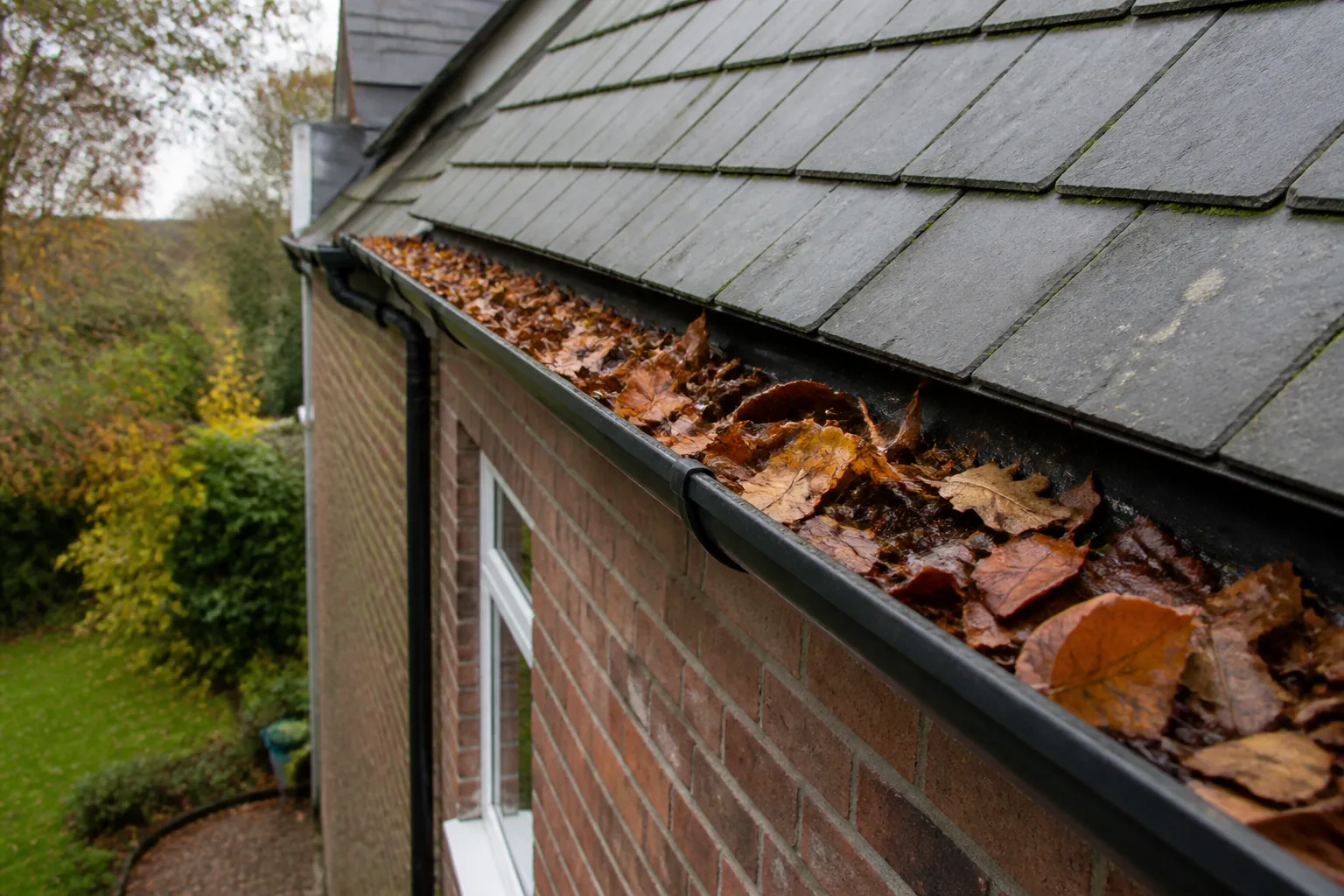
Wet leaves can settle into layers and slow water moving towards an outlet.
Rainwater routes · access · clear scope
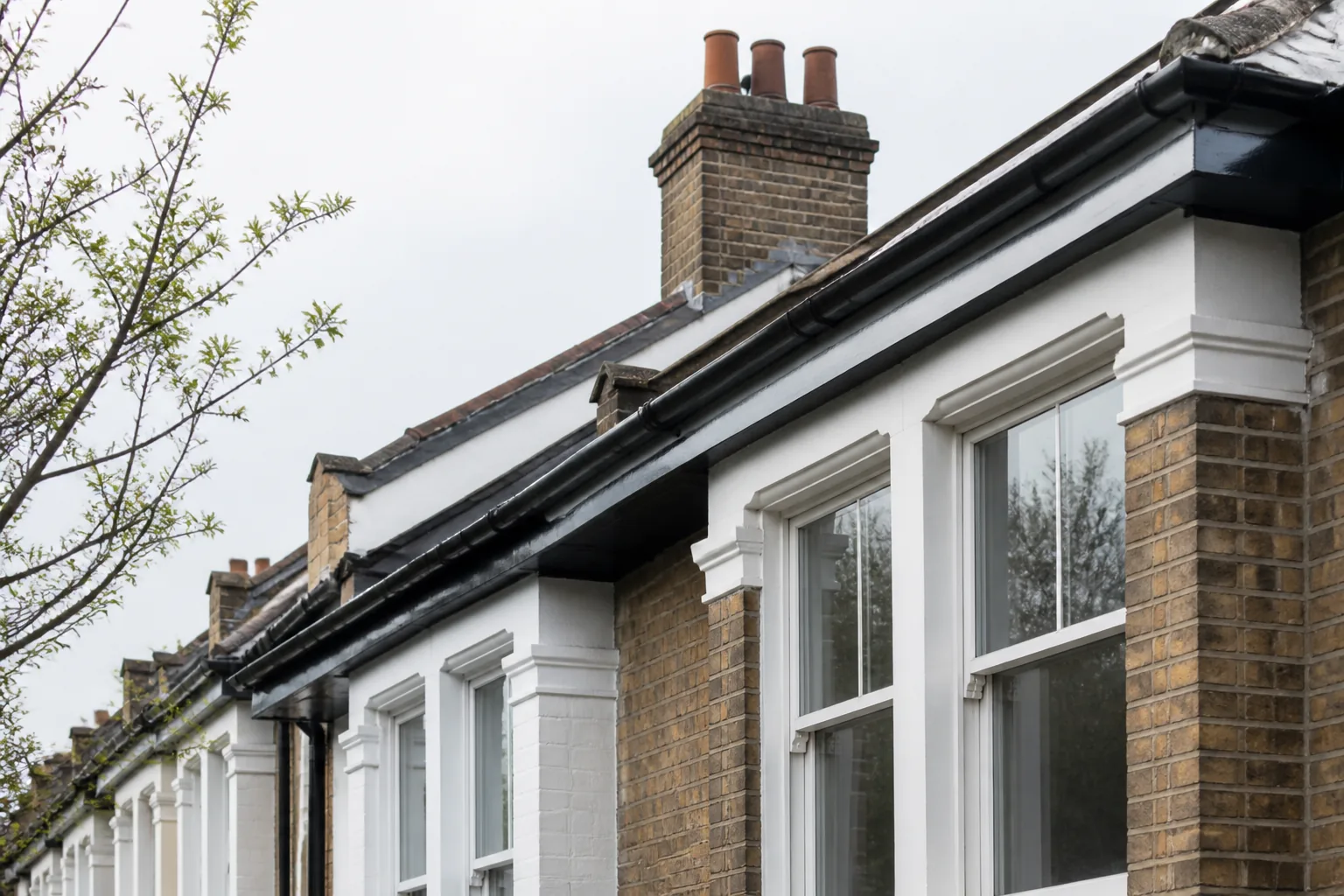
The same building can have an open front gutter and a rear run complicated by different levels or restricted space. Gutter cleaning in Woodford is therefore planned by elevation. Agreed accessible channels can be cleared of leaves, moss, silt and routine loose debris, while repairs, deeper downpipes, underground drainage and specialist access remain separate decisions.
Seasonal context
Accumulation may rise after leaf fall, yet a channel can also receive moss, silt and small roof fragments throughout the year. Nearby vegetation, exposure and the design of each run influence the pace. The condition observed and the home's previous pattern offer a sounder guide than choosing one recurring date for every address.
Nearby trees, roof moss, gutter shape and exposure can all affect how quickly material accumulates. A visible symptom is more useful than applying one fixed timetable to every address.
Common causes
Windblown fragments can lodge against twigs, after which leaves and moss create a denser layer that traps fine silt. Build-up often matters most where the channel narrows or meets an outlet. Clearance of the accessible run does not guarantee that the concealed continuation of a pipe is open.
Wet leaves can settle into layers and slow water moving towards an outlet.
Loose roof moss can collect in the channel and hold other material in place.
Small twigs can bridge narrow points and trap lighter debris behind them.
Loose surface material may wash down from the roof during wet weather.
Older material can become dense and reduce the channel available for runoff.
Fine deposits can gather beneath larger debris and close to an outlet.
Local property context
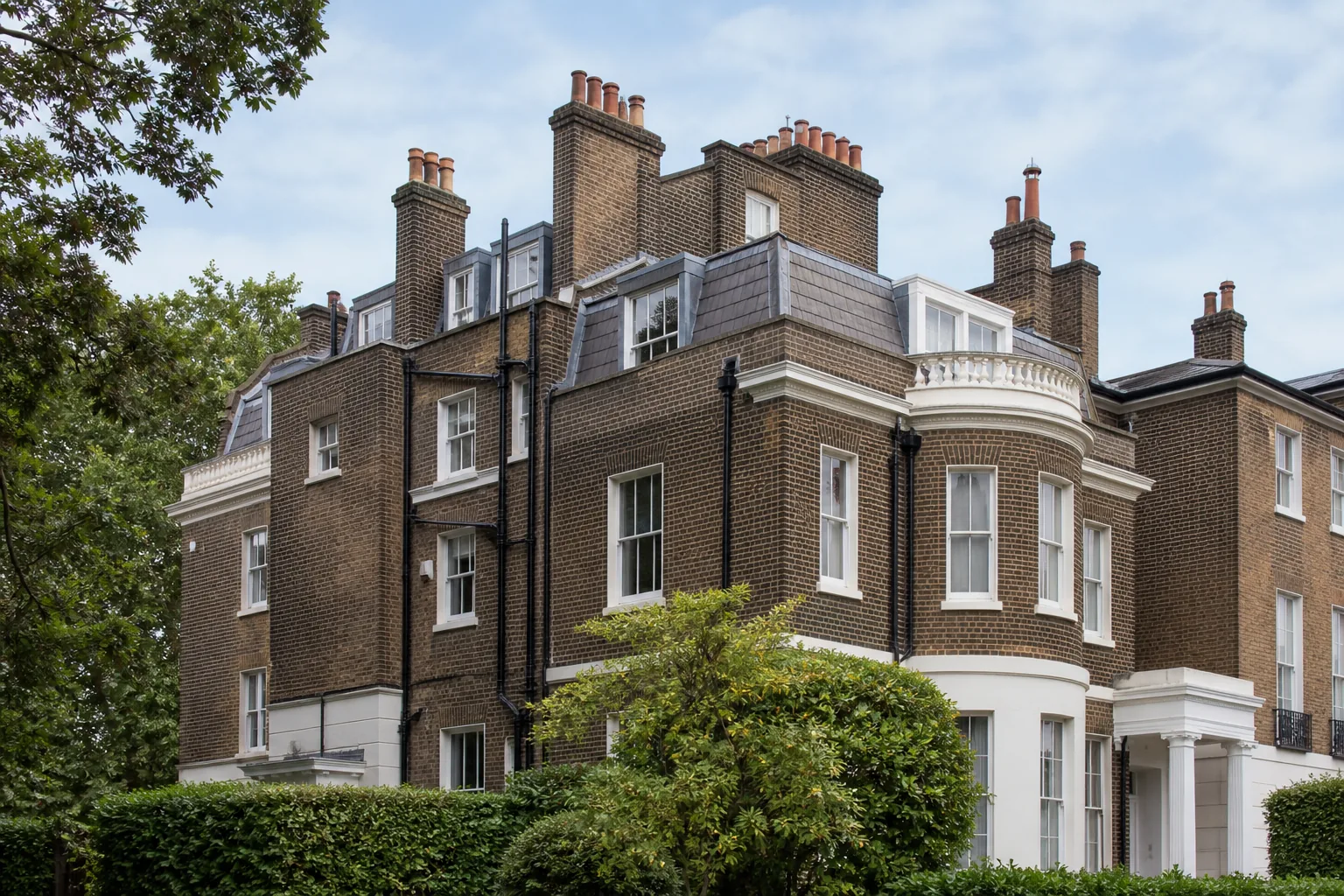
Some Woodford properties may have a straightforward frontage but a side passage, projecting lower roof or rear addition that changes the approach elsewhere. Others may divide rainwater between several outlets or channel levels. These are conditional examples rather than claims about a particular street. The practical scope begins with the actual building: which side shows the symptom, what lies beneath that run, and whether a boundary affects the available space. Looking at each elevation separately prevents an easy front channel from setting unrealistic expectations for the rest of the roofline.
The position of a symptom can help separate likely tasks. Water spilling along a long stretch may be consistent with debris reducing the channel, while movement at a bracket or a gap at a joint points towards repair. Accessible agreed runs can be cleared of leaves, moss, silt and similar loose material. Reachable outlet openings are covered only where confirmed. Internal pipe restrictions, damaged components and drainage after the pipe enters the ground need another assessment, because ordinary gutter cleaning does not establish their condition or provide a structural remedy.
Access depends on more than the nominal height of a home. Lower roofs, setbacks, sloping or delicate surfaces, tight boundaries and separate channel levels can each change what is reachable. The included runs are confirmed after those conditions are considered, with any specialist arrangement left for its own assessment.
| Property situation | Access or gutter consideration |
|---|---|
| Detached home with several elevations | Front, rear and side channels can differ in height and surrounding space, so the quote should identify each included run. |
| House with an attached lower roof | The lower structure may carry its own gutter and affect access to the channel above; both need separate review. |
| Terrace near an adjoining boundary | A continuous-looking channel still requires a clear agreed endpoint and suitable access on the relevant side. |
| Home with mature growth nearby | If branches overhang a particular elevation, that run may collect material differently, but its actual condition should guide timing. |
A clear service sequence
Structured service guide
| Area of concern | Included when agreed and accessible | Needs another route |
|---|---|---|
| Open gutter run | Removal of leaves, moss, silt and loose fragments | Repair of cracks, sagging or detached parts |
| Outlet entrance | Clearance of reachable routine material | Investigation farther inside the downpipe |
| Rainwater fitting | Debris beside the fitting can be removed | Replacement, sealing or realignment |
| Underground drain | Not included in channel work | Separate drainage assessment |
Structured service guide
| Observation | Cleaning may address | Repair may address |
|---|---|---|
| Debris visible above the edge | Loose build-up occupying the channel | Any distortion remaining once debris is removed |
| Water escaping at a joint | Material diverting flow towards that point | A failed seal, split or displacement |
| Long section holding water | Silt reducing the route to the outlet | Incorrect fall or a sagging run |
| Pipe receives little water | A covered reachable opening | Damage or obstruction deeper in the route |
Structured service guide
| Input | Effect on planning | What to provide |
|---|---|---|
| Count of distinct runs | More sections may require separate access decisions | List the sides and lower roof gutters requested |
| Vertical arrangement | Upper and lower channels may not share an approach | Photograph the entire elevation where possible |
| Surrounding space | Boundaries and projections can alter reach | Describe additions, narrow gaps and surfaces below |
| Visible symptom | The location helps distinguish channel, outlet and fitting concerns | Say where and when water escapes or slows |
Structured service guide
| When the home has | What must be clarified | Potential outcome |
|---|---|---|
| Several open elevations | Are all sides requested and independently accessible? | The scope may list some runs and exclude others |
| An addition beneath a main run | Can the upper channel be reached without affecting the lower roof? | Upper and lower levels may require different plans |
| Vegetation close to one side | Where is build-up actually visible? | Checks can focus on the affected run rather than a fixed whole-house cycle |
| A shared endpoint | Which part of the channel is authorised and accessible? | Clearance can stop at the agreed boundary |
Quick answers
Leaves, loose moss, silt, small twigs and comparable material sitting in an accessible agreed channel are routine debris. Broken fittings, roofing faults and material concealed deep in a pipe are different matters.
Yes. A defined front, rear or side run can form the scope if it is accessible and agreed. Other elevations remain outside the work unless they are reviewed and specifically included.
Only when the outlet opening is accessible and included in the agreement. Work at the opening does not extend automatically to a concealed downpipe or the drainage route beneath it.
Different levels can create separate runs with their own height, length and working space. A lower channel may be accessible while an upper one needs another review, even on the same elevation.
No. Removing debris restores available channel space but does not alter alignment. Water that continues to sit in a clear run may indicate a fall or fitting concern requiring repair assessment.
Note which side is affected, what happens during rain, the approximate levels and any restricted space. Wide photographs from safe ground positions can show the relationship between runs, outlets and additions.
Woodford service area
Nearby gutter-cleaning pages
Before booking
The scope covers channels confirmed as accessible and agreed, removing routine deposits such as leaves, moss and silt. Reachable outlet openings can be included when stated. Repairs, concealed downpipe restrictions, underground drainage and any special access requirement are considered as separate work.
Yes. Material may be concentrated out of view near an outlet, but alignment, a joint fault, downpipe restriction or intense rainfall can also affect flow. A clear-looking stretch does not diagnose the whole route, and cleaning cannot substitute for any repair that is needed.
It suggests that organic material and moisture have remained there long enough to support growth. That makes clearance reasonable for an accessible run, but it says nothing certain about joints, the downpipe interior or drainage below. Those parts retain their own assessment needs.
Not automatically. More elevations can mean more differences in height, setbacks, boundaries and surfaces below. Each requested run should appear in the agreed scope. A channel that cannot be reached under the planned conditions stays separate even when another side is accessible.
Material can be removed from an outlet opening when it is reachable and that task has been agreed. This deals only with the accessible entrance. If water still cannot pass, a deeper internal obstruction or underground issue may need an appropriate separate review.
It can remove debris that is diverting water towards the joint, but it cannot renew a failed seal or replace a cracked connector. If the drip comes from damaged material or continues after clearance, the location should be treated as a repair concern.
That space forms part of the access assessment. A lower roof, addition, narrow boundary or sensitive surface may change what can be reached safely. The effect can vary by elevation, so general building height alone is not enough to confirm the cleaning scope.
A fixed timetable is not always useful. The kind and position of nearby growth, wind exposure, roof moss and channel shape can affect accumulation differently. Observed build-up and previous overflow at the address give better grounds for deciding when another check is worthwhile.
That section requires a repair assessment. Accessible loose debris elsewhere may still be cleared if the agreed work can proceed, but cleaning does not restore damaged material or fix it to the building. The defect and any resulting scope change should be handled distinctly.
Close-ups help show debris or a suspected fault, but they may hide the channel's level and surroundings. Wider images, the address and a description of access limits are also useful. The final quote still depends on the runs and conditions accepted into scope.
Discuss the actual roofline
A clear quote takes account of requested elevations, channel lengths and levels, reachable outlets, working space and any feature beneath the roofline. Sharing wide exterior images and the location of symptoms supports that review. Fault repair, concealed pipe work, drainage below ground and specialist access are not bundled into the cleaning price.
