
Leaves
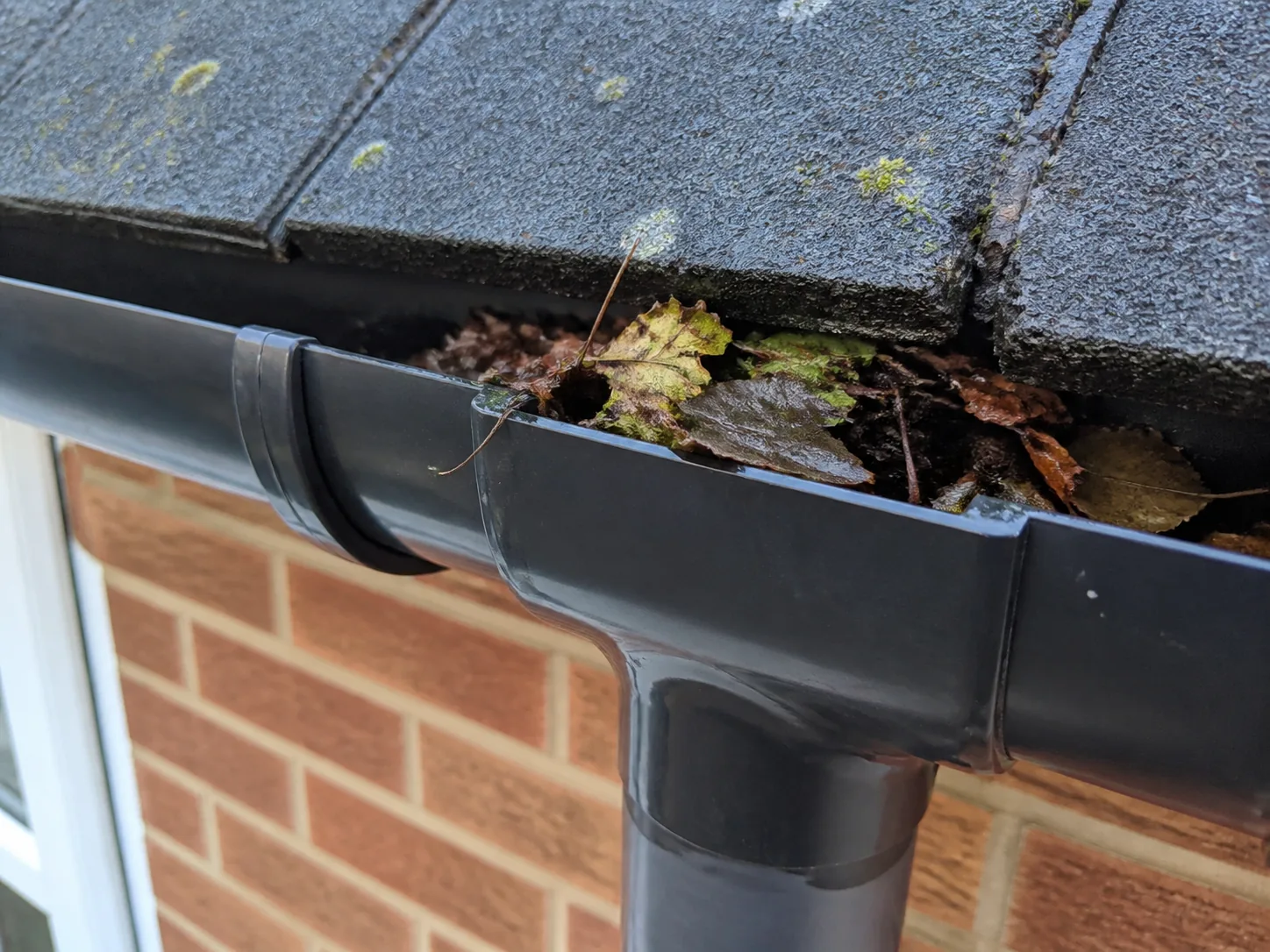
Wet leaves can settle into layers and slow water moving towards an outlet.
Rainwater routes · access · clear scope
A useful gutter-cleaning enquiry starts with where the water is misbehaving, not with an assumption that every channel needs the same treatment. For a Wanstead property, the agreed work can remove leaves, moss, silt and everyday debris from accessible runs, including reachable outlet openings where confirmed. Faulty guttering and hidden downpipe problems need separate consideration.
Visible clues
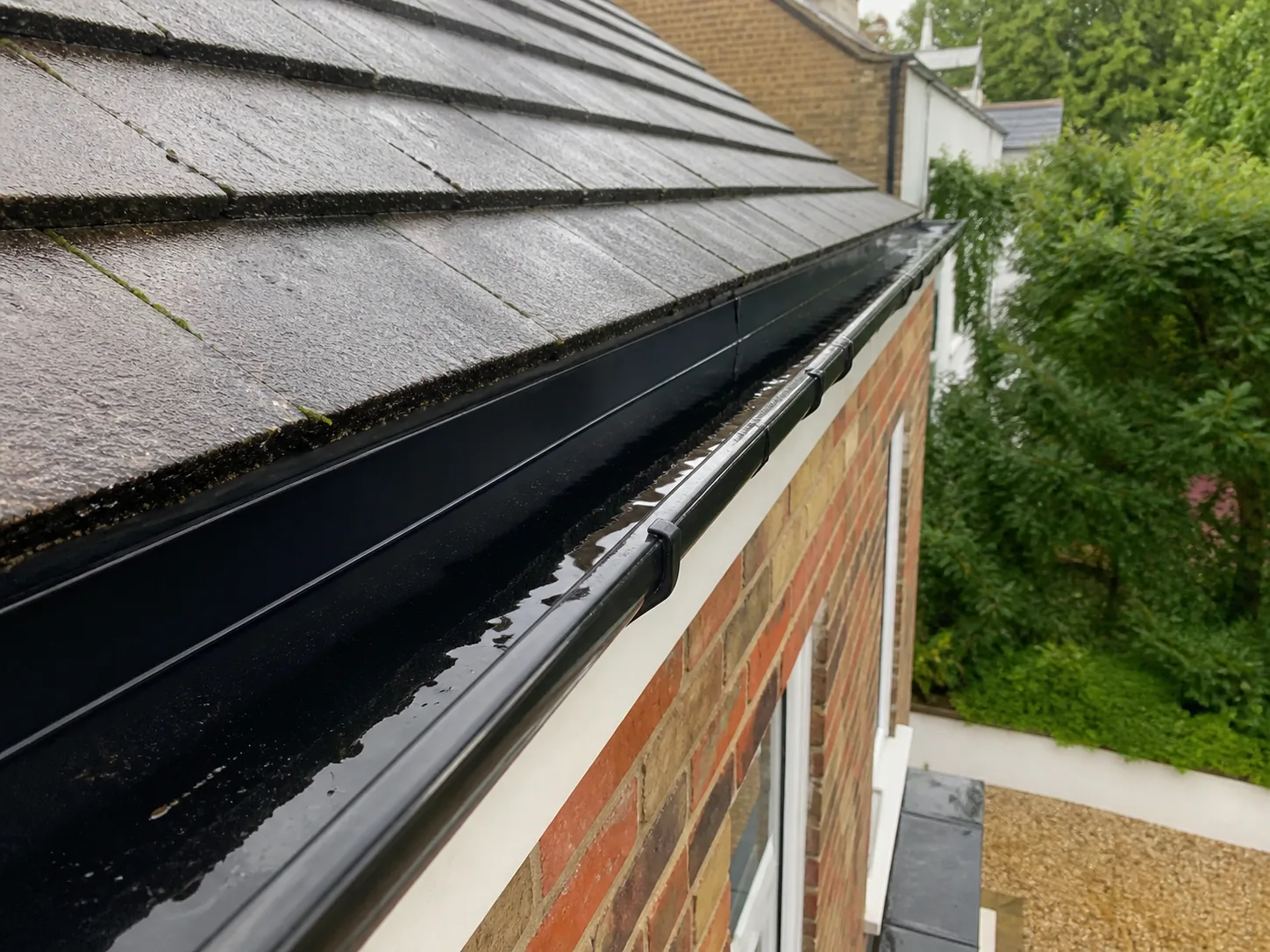
A stream over the edge during rain, debris visible in the channel, staining beneath one area or water lingering near an outlet can justify inspection. These observations locate the concern but do not decide whether clearance, repair or pipe work is needed. That distinction follows the condition found at the property.
Local property context
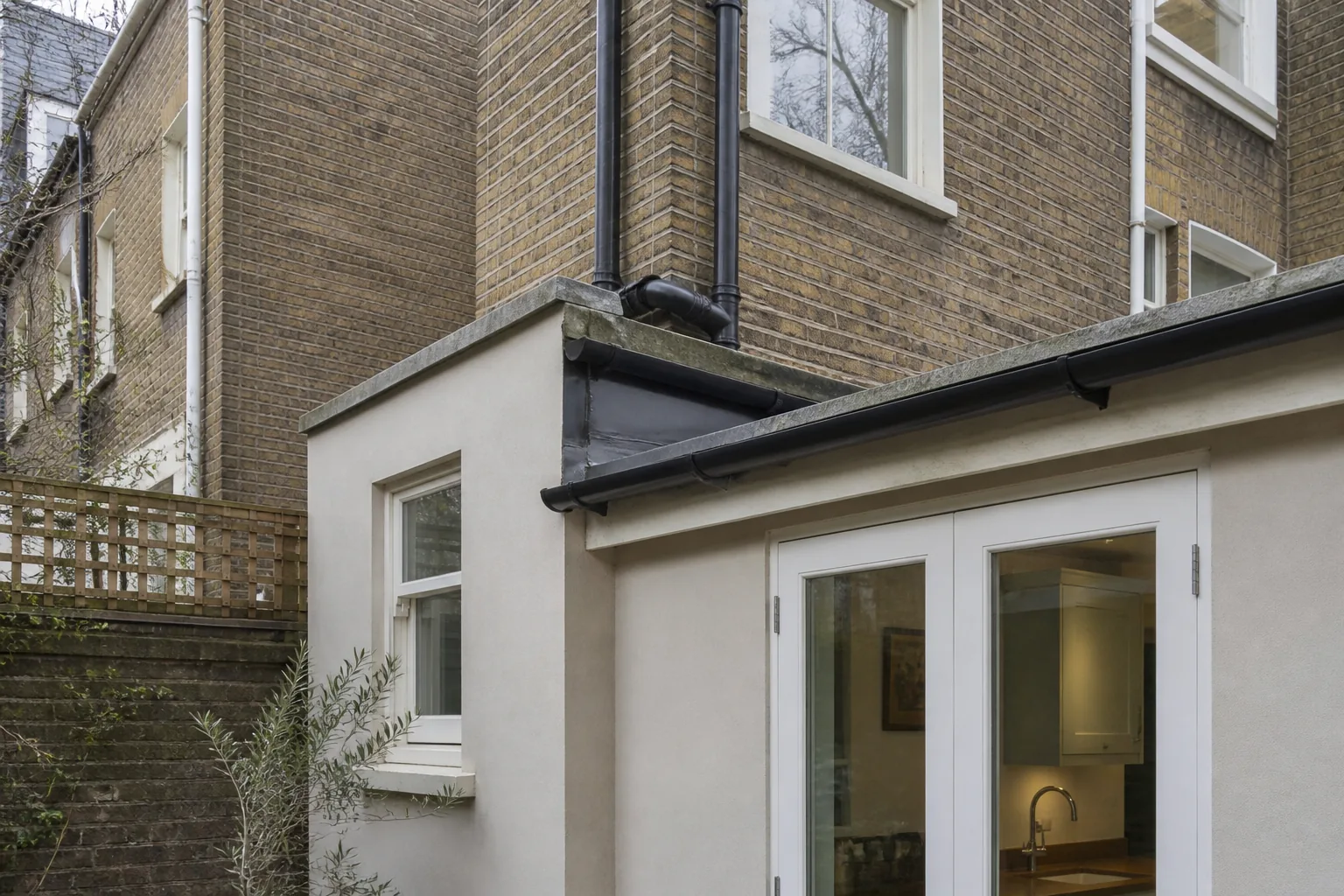
A property in Wanstead may have one continuous front channel, several short runs, or a rear roofline altered by an addition. Those possibilities are not area-wide facts; they are examples of why the address and affected elevation matter. Side space, boundaries and surfaces beneath the gutter can also differ around the same building. A helpful first description identifies where spillover occurs and whether the channel sits above open ground, a lower roof or another obstruction. This gives the access review something concrete to address before any section is promised.
Visible plant growth or a line of dark residue can indicate that routine build-up has remained in a channel, though appearance alone cannot reveal the full rainwater route. Leaves, moss and silt can be cleared from the accessible runs that have been agreed, and an outlet opening may be attended to when reachable and included. By contrast, leaks from cracked material, sections pulling away from a fascia, deeper downpipe restrictions and drainage beneath ground level do not become cleaning tasks. They should be identified as separate concerns with a suitable next assessment.
The practical question is whether each requested run can be reached within an agreed plan. Height is only one factor: setbacks, lower roofs, neighbouring boundaries and restricted passages may matter as well. Where normal access is unsuitable, that section and any specialist requirement are assessed apart from the routine scope.
| Property situation | Access or gutter consideration |
|---|---|
| Home with an offset rear roofline | If an addition creates upper and lower runs, each level needs its own access and inclusion decision. |
| Terraced property | A channel near an adjoining boundary may require the agreed limit to be identified clearly before clearance begins. |
| House with a narrow flank | Restricted space beneath a side gutter can affect that elevation even when front and rear areas are open. |
| Property with a porch or bay | A projecting lower roof may create another channel and alter the space beneath the main run, so the sections should not be grouped automatically. |
Structured service guide
| Part | May be included | Falls outside routine clearance |
|---|---|---|
| Gutter channel | Agreed accessible runs with routine loose deposits | Unreachable sections or damaged channel material |
| Outlet opening | The opening when reachable and expressly included | A restriction continuing into the concealed pipe |
| Downpipe | Visible context can inform the review | Internal clearance unless separately assessed |
| Below-ground route | Its symptoms can be described | Investigation and drainage work |
Structured service guide
| Symptom | Debris-related possibility | Fault-related possibility |
|---|---|---|
| Overflow at several points | Leaves or silt occupy much of the run | The channel falls away from its outlet |
| Leak at a single joint | Build-up diverts water towards the connection | The joint has opened or its seal has failed |
| Gutter pulling from the fascia | Accumulated material may add weight | Brackets or fixings need repair |
| Outlet area remains full | Loose material covers the reachable opening | A concealed restriction prevents discharge |
Structured service guide
| Review point | What it helps establish | Information to share |
|---|---|---|
| Channel arrangement | How many distinct runs are requested | Show front, side, rear and lower rooflines |
| Height changes | Whether one plan suits every section | Identify the level where the symptom occurs |
| Ground and obstructions | Which elevations are practically accessible | Mention additions, narrow routes and sensitive surfaces |
| Nature of the concern | Whether cleaning alone is a reasonable scope | Describe overflow, dripping, movement or low flow separately |
Structured service guide
| If this is present | Question for the review | Why the answer matters |
|---|---|---|
| A lower projecting roof | Does it obstruct the upper channel or form another requested run? | The two levels may need different access decisions |
| A boundary close to the gutter | Which portion is within the agreed work? | The service must stop at a clear limit |
| A guard over the channel | Can routine material beneath it be reached? | Removal or refitting may not be part of cleaning |
| A pipe entering a concealed route | Is the symptom at the opening or farther below? | Pipe or drainage work may need separate assessment |
Common causes
Leaves may settle across a shallow section, with silt collecting underneath and moss lodging near an outlet. Even a modest deposit can redirect water when it occupies the route through a narrow point. Material that has travelled into a concealed pipe cannot be assumed reachable from the channel.
Wet leaves can settle into layers and slow water moving towards an outlet.
Loose roof moss can collect in the channel and hold other material in place.
Small twigs can bridge narrow points and trap lighter debris behind them.
Loose surface material may wash down from the roof during wet weather.
Older material can become dense and reduce the channel available for runoff.
Fine deposits can gather beneath larger debris and close to an outlet.
Seasonal context
Falling leaves are only one source of build-up. Moss, fine dirt and loose surface fragments may arrive at other times, while exposure and nearby growth can affect one elevation more than another. A schedule should respond to the property's observed condition and recurring symptoms instead of relying on a fixed seasonal rule.
Nearby trees, roof moss, gutter shape and exposure can all affect how quickly material accumulates. A visible symptom is more useful than applying one fixed timetable to every address.
Quick answers
Growth and the routine debris supporting it can be removed from channels agreed as accessible. Its presence does not show whether a pipe is clear or whether the gutter itself is sound.
No. Front, rear, side and lower runs may present different access. The agreed scope should name the sections included rather than treating one reachable gutter as permission for every elevation.
No. Gutter-channel cleaning deals with accessible agreed runs and, when confirmed, reachable outlet openings. Any restriction after the downpipe enters the ground needs a separate drainage assessment.
Wide exterior views can show roof levels, channel positions and space below them, while closer images may locate staining or spillover. Photographs support planning but cannot guarantee access or diagnose hidden restrictions.
No. Reducing the weight of build-up does not restore failed brackets, alignment or damaged material. A sagging run is a repair matter even if accessible loose debris can also be cleared.
Use the address's own pattern of accumulation, nearby growth, roof moss and visible symptoms. One elevation may need attention sooner than another, so a universal calendar is not a reliable answer.
Wanstead service area
Nearby gutter-cleaning pages
Before booking
It removes leaves, moss, silt and comparable routine material from the channel runs agreed as accessible. A reachable outlet opening may also be cleared where included. It does not cover repairs, concealed sections of downpipe, underground drainage or access arrangements that require another assessment.
No. A mark can remain after earlier overflow, or it may relate to a joint, crack or another source of water. Its position is useful when describing the concern, but the present condition and rainwater route still need to be considered before choosing clearance or repair.
Yes, an enquiry can focus on a particular elevation. The run still needs to be identified and assessed for access, and nearby sections are not automatically included. Limiting the request can make the scope clearer when the symptom is confined to one part of the property.
Standing water may relate to channel alignment, a restriction farther along the route or another fault. Clearing routine debris is still useful where present, but it cannot correct the fall or mend a damaged fitting. Any continuing issue should be assessed separately.
The boundary and agreed portion should be understood before work starts. A physically continuous channel does not remove questions about access or responsibility. Only the accessible section within the confirmed arrangement should be treated, unless the adjoining part has also been properly included.
Yes. A porch, bay or rear addition may sit beneath an upper channel and change the available working space or surfaces involved. The upper and lower runs are reviewed individually. Neither is promised simply because the other appears straightforward from one viewpoint.
Debris at a reachable outlet opening can be dealt with when that is part of the agreement. Once material has moved deeper into a concealed pipe, its position and access are uncertain. Further pipe work therefore requires a separate assessment.
Not necessarily. Repeated spillover may come from rapid debris accumulation, but it could also reflect alignment, capacity, a damaged joint or a deeper restriction. Establishing the likely cause is more useful than shortening the cleaning interval without examining the wider route.
The affected run stays outside routine cleaning until a suitable approach is assessed. No particular access method should be assumed from a photograph or description. Any specialist arrangement, revised scope or related cost needs to be considered separately before work is confirmed.
State the address, requested sides, approximate levels, visible signs and anything that restricts the space beneath the roofline. Full exterior photographs are useful when available. The property review then determines the accessible scope and highlights issues that belong to repair or drainage work.
Discuss the actual roofline
The quote reflects the number and arrangement of requested channels, their levels, the working space around each elevation and whether a reachable outlet is included. Images of the whole exterior are often more helpful than close-ups alone. Repairs, concealed downpipes, underground drainage and specialist access are priced only after separate assessment.
