
What does a clear scope name?
It names the elevations and levels included, the accessible channel work, any reachable outlet opening to be attended to, and exclusions such as repair, concealed pipework or underground drainage.
Rainwater routes · access · clear scope
Gutter cleaning is most useful when everyone knows which roof edges, outlets and access areas are involved. At a Dagenham property, accessible agreed channels can be cleared of leaves, moss, silt and everyday debris, with reachable outlets included where specified. Leaks caused by damage, deep pipe restrictions and drainage below ground require separate assessment.
Visible clues
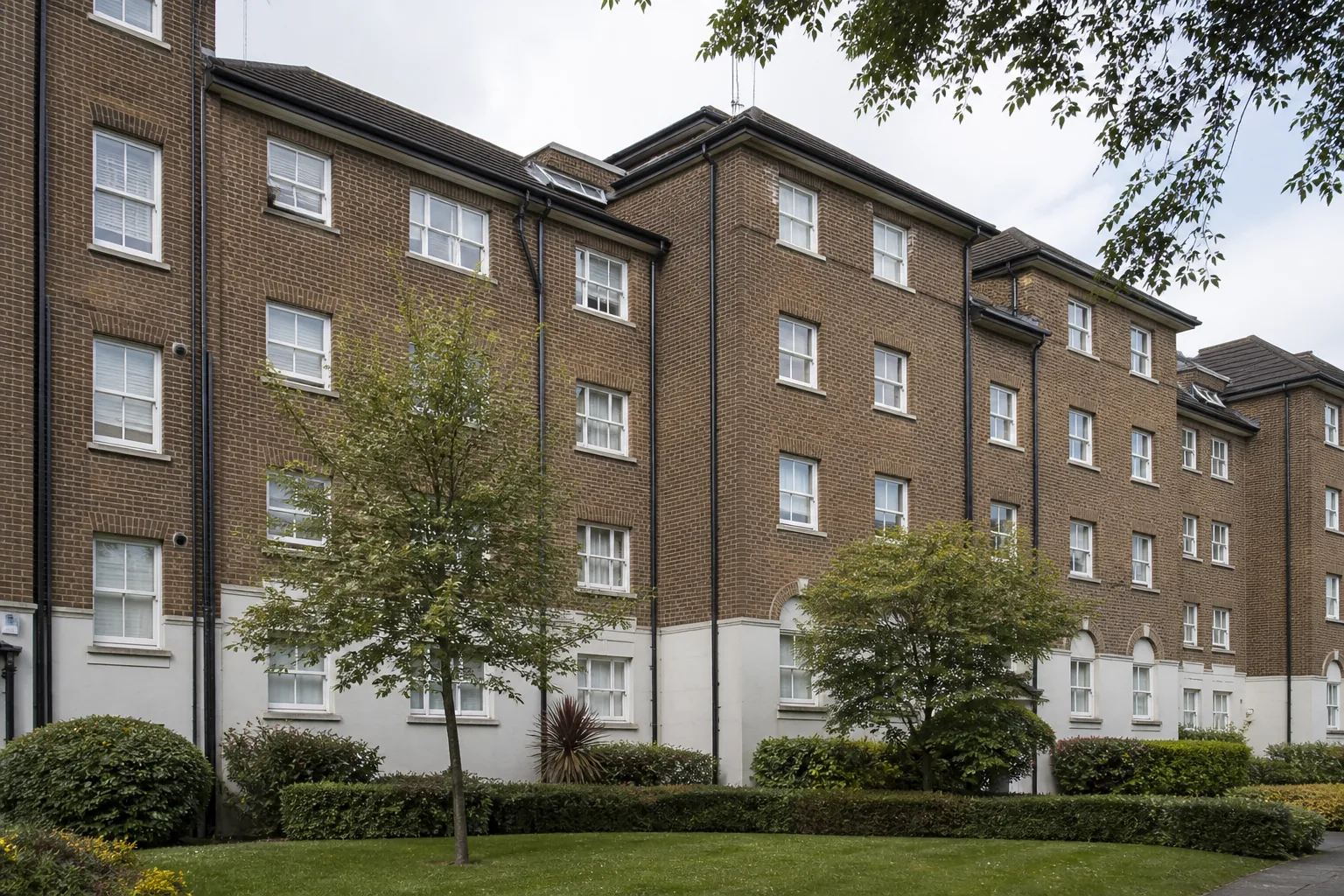
Water missing the outlet, spilling at a concentrated point or leaving a line beneath the eaves suggests that the rainwater route deserves attention. A visibly bowed channel, separated joint or loose component instead raises a repair question. More than one condition can exist at the same time.
Local property context
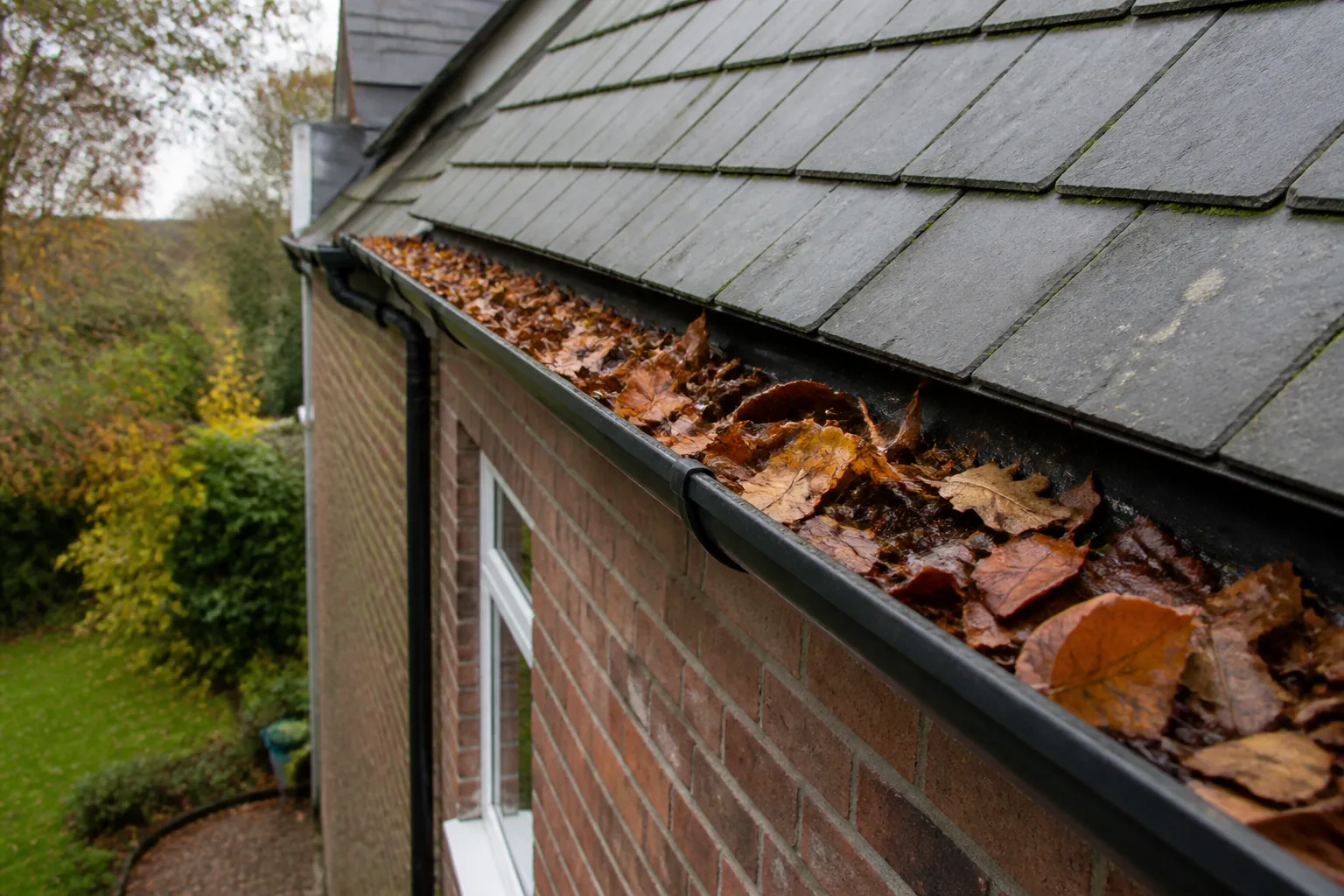
For a Dagenham home, a front channel may differ from the rear in length, height, outlet position and available space below. Some addresses may also have a porch, garage, rear addition or altered roof area creating extra short runs. None of those features should be presumed; the actual property decides the layout. A clear booking conversation names the troublesome edge, notes any changes in level and explains how the side or garden is reached. That information helps separate straightforward accessible clearance from sections needing another access decision.
The route continues beyond the open gutter, yet each part needs the right response. Leaves and moss can be lifted from an accessible run, and silt or small loose fragments can be removed around a reachable outlet when agreed. A blockage concealed lower in the downpipe cannot be treated as though it were surface debris. Likewise, a leaking union, broken fitting, detached length or drainage issue beneath the ground remains outside gutter cleaning. Keeping those boundaries visible reduces confusion if more than one cause is present.
A route that looks open from the street may not continue around the property. Gates, close boundaries, lower structures, sloping areas and items beneath the eaves can affect individual runs. Access is reviewed before inclusion, while any specialist arrangement is discussed and assessed separately rather than promised as standard.
| Property situation | Access or gutter consideration |
|---|---|
| Home with a porch canopy | A short lower channel and the main roof gutter may need separate descriptions, particularly if one discharges into the other. |
| House beside a close boundary | Side access cannot be assumed where the wall or gutter line sits near adjoining land. |
| Property with front and rear additions | Several lower edges may exist, while an addition can also alter access to the original upper run. |
| Two-storey home with a lower outlet connection | The reachable top opening and any restriction farther down must be treated as different parts of the scope. |
Structured service guide
| Component | Routine action | Boundary |
|---|---|---|
| Named accessible run | Clear common loose material | No work on omitted or inaccessible elevations |
| Reachable outlet opening | Remove gathered surface debris when agreed | No assumption about the pipe below |
| Joint, bracket or channel body | Avoid confusing clearance with repair | Damage requires its own assessment |
| Drainage beneath the property | Outside this service | Separate drainage enquiry required |
Structured service guide
| Clue | Channel cleaning addresses | It does not address |
|---|---|---|
| Visible leaf mat | Loose material within the accessible run | Any broken support beneath it |
| Water escapes at a union | Build-up causing water to back up | A failed or misfitted union |
| Outlet area remains full | Debris covering a reachable opening | Obstruction farther inside the pipe |
| Run has an obvious bow | Routine debris only if cleaning is suitable | Restoring alignment or replacing fittings |
Structured service guide
| Element | Question considered | Reason |
|---|---|---|
| Separate roof edges | Which ones show build-up or overflow? | Keeps the task relevant |
| Levels above ground | Are channels lower, upper or mixed? | Supports an accurate access review |
| Space at each side | What lies directly beneath the run? | May change whether that side is included |
| Flow beyond the outlet | Is the concern reachable or concealed? | Separates cleaning from pipe or drainage work |
Structured service guide
| Property condition | What to establish | Conditional outcome |
|---|---|---|
| If a porch has its own channel | Does it have a separate outlet? | Treat it as an individual lower run |
| If a side wall meets a boundary | Is arranged access possible without crossing it? | Include, exclude or assess another access option |
| If a lower roof blocks the approach | What material and projection are involved? | Review the upper run separately |
| If several pipes connect below | Where does reduced flow first appear? | Keep concealed and underground routes outside cleaning |
Seasonal context
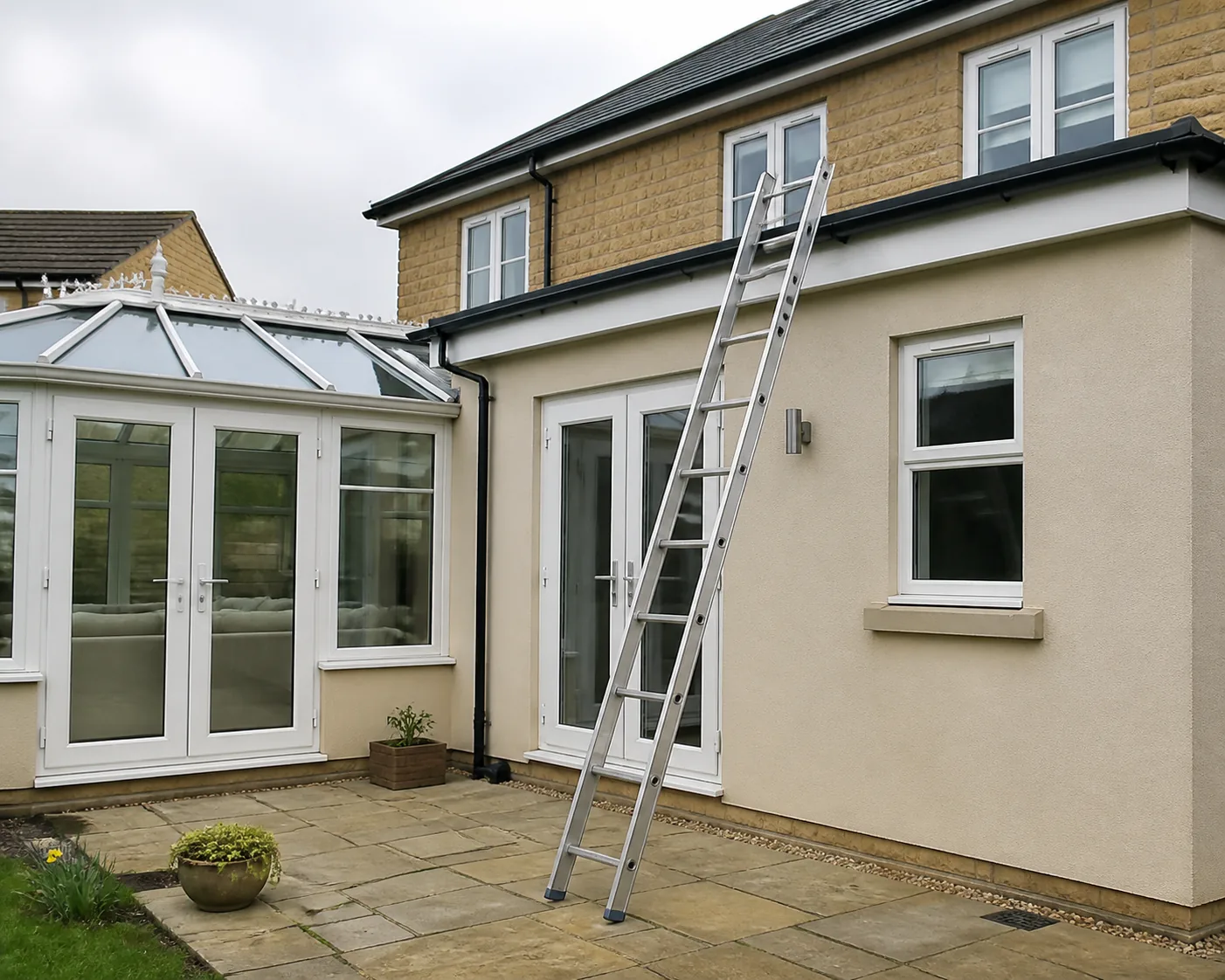
Debris can arrive in bursts after windy weather or build slowly as silt and organic matter settle. Different sides of the same home may fill at different rates. Watching for actual spillover, visible accumulation and previous problem points gives a better maintenance cue than choosing a date solely from the season.
Nearby trees, roof moss, gutter shape and exposure can all affect how quickly material accumulates. A visible symptom is more useful than applying one fixed timetable to every address.
A clear service sequence
Quick answers
It names the elevations and levels included, the accessible channel work, any reachable outlet opening to be attended to, and exclusions such as repair, concealed pipework or underground drainage.
Yes. A front, rear, side or lower channel can be scoped independently when it is accessible and clearly identified. Other roof edges do not have to be included without a reason.
Their positions should be identified against the relevant channels. Reachable openings can be included by agreement, but any blockage extending into a downpipe remains a separately assessed issue.
Loose debris may be cleared if the section is suitable and agreed, but the crack itself needs a repair decision. Cleaning must not be described as restoring a damaged component.
Ground-level photographs of each relevant side can show gates, additions, boundaries and roof levels. Add a short description of anything not visible, such as locked routes or shared areas.
Roof condition, nearby growth, exposure, channel shape and rainfall can vary between elevations. Those factors influence how material arrives, so one side may need attention before another.
Dagenham service area
Nearby gutter-cleaning pages
Before booking
Leaves, moss, silt, small twigs and similar routine loose material can be removed from the accessible channels agreed for the service. Reachable outlet openings are included only where specified. Unusual material may require the scope to be reviewed first.
Only reachable outlet openings connected to the agreed runs and named in the scope are included. An outlet that cannot be accessed, or a restriction that continues down inside the pipe, needs separate consideration rather than an automatic promise.
That is a structural concern involving the channel, brackets, fascia or their connections. Debris weight may contribute, but removing it does not complete a repair. The condition should be assessed separately and may affect whether cleaning is suitable first.
The lower roof's material, angle, size and position all affect the access decision, as do alternatives around the building. No conclusion should be drawn from a description alone. The upper run is included only after property-specific assessment.
A partly restricted channel may cope with low flow but spill when more water arrives. Channel capacity, outlet flow, alignment and rainfall intensity can all be involved. Cleaning removes accessible debris; persistent symptoms may point to another issue.
Not as part of routine channel clearance. The service concerns material inside agreed accessible gutters and specified reachable outlets. Washing fascia, soffits, walls or exterior gutter faces is a different task and should not be assumed from the cleaning description.
Reduced discharge can arise from a concealed pipe restriction or drainage beyond it, among other possibilities. Neither can be diagnosed through channel cleaning alone. The lower pipe and any underground route need an appropriate separate assessment.
That depends on their design, condition and whether the channel beneath can be reached. A guard may need separate handling and can change the time or access required. Its presence should be raised before the work is scoped.
They can be listed by location and considered alongside their separate outlets and access areas. Several short runs may not behave as one continuous channel. The quote reflects what is actually included rather than counting only the building's storeys.
Describe what can be observed safely from the ground: where water appears, when it happens, whether debris or damage is visible, and which route seems quiet. The enquiry can then distinguish likely channel cleaning from a separate diagnostic or repair need.
Discuss the actual roofline
Cost follows a defined task, including the selected elevations, channel length, roof levels, reachable outlet work and access around the building. Images and an accurate description can reduce uncertainty at the enquiry stage. Any repair, concealed downpipe clearance, underground drainage work or specialist access requires its own assessment and agreement.
