
Leaves
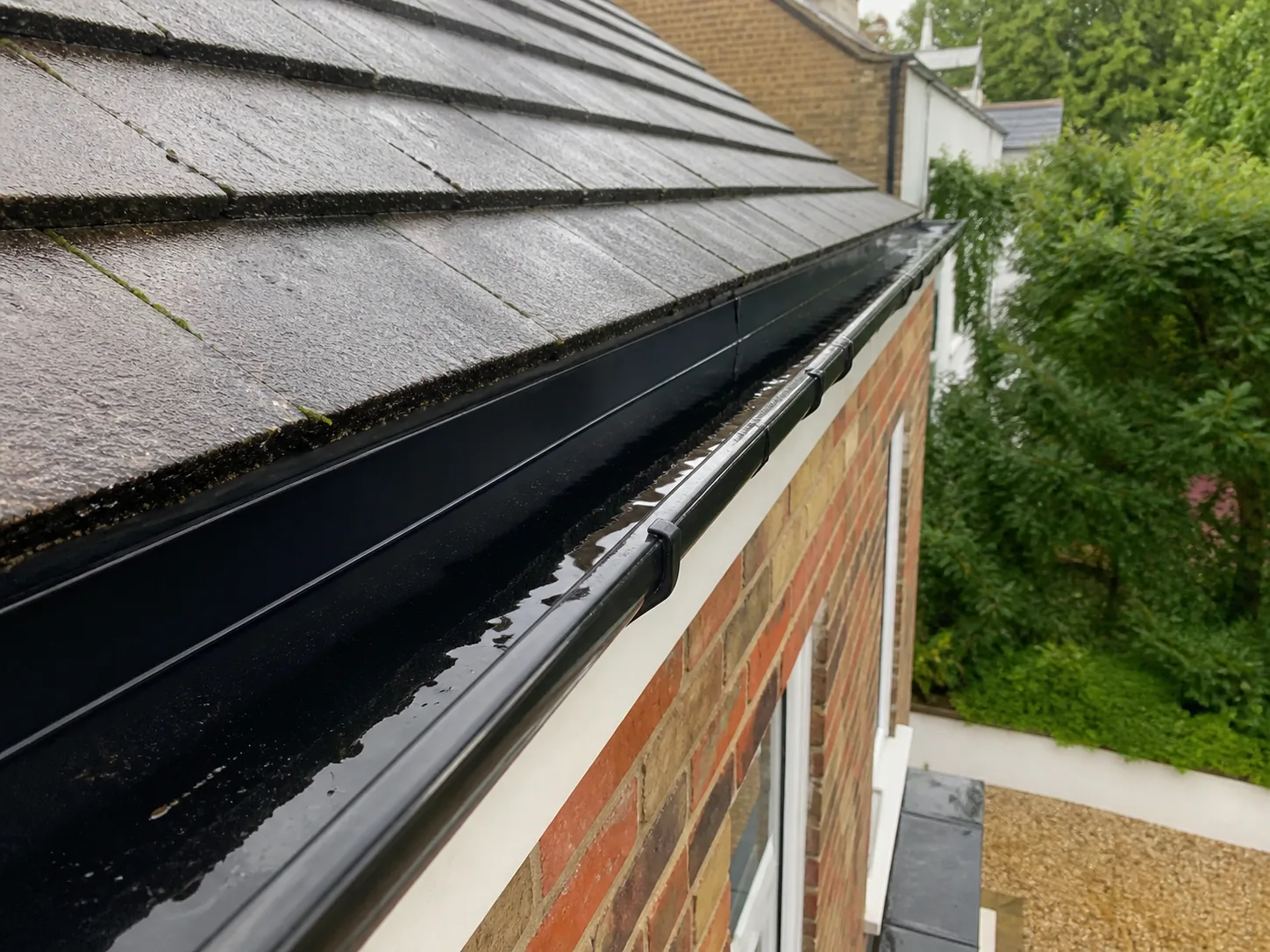
Wet leaves can settle into layers and slow water moving towards an outlet.
Rainwater routes · access · clear scope
When rainwater escapes from a roof edge, the useful first step is to identify the affected run rather than guess at the cause. Our Upminster gutter-cleaning service covers agreed accessible channels, removing routine leaves, moss and silt. Reachable outlets can be included where agreed, while damaged fittings, deeper downpipes, underground drainage and specialist access need separate assessment.
Common causes
A few leaves can trap smaller fragments, creating a damp layer that catches moss and silt. Accumulation often matters most where the channel narrows, turns or meets an outlet. Clearing accessible loose material restores space in the agreed run, but does not establish the condition of concealed pipework below.
Wet leaves can settle into layers and slow water moving towards an outlet.
Loose roof moss can collect in the channel and hold other material in place.
Small twigs can bridge narrow points and trap lighter debris behind them.
Loose surface material may wash down from the roof during wet weather.
Older material can become dense and reduce the channel available for runoff.
Fine deposits can gather beneath larger debris and close to an outlet.
Local property context
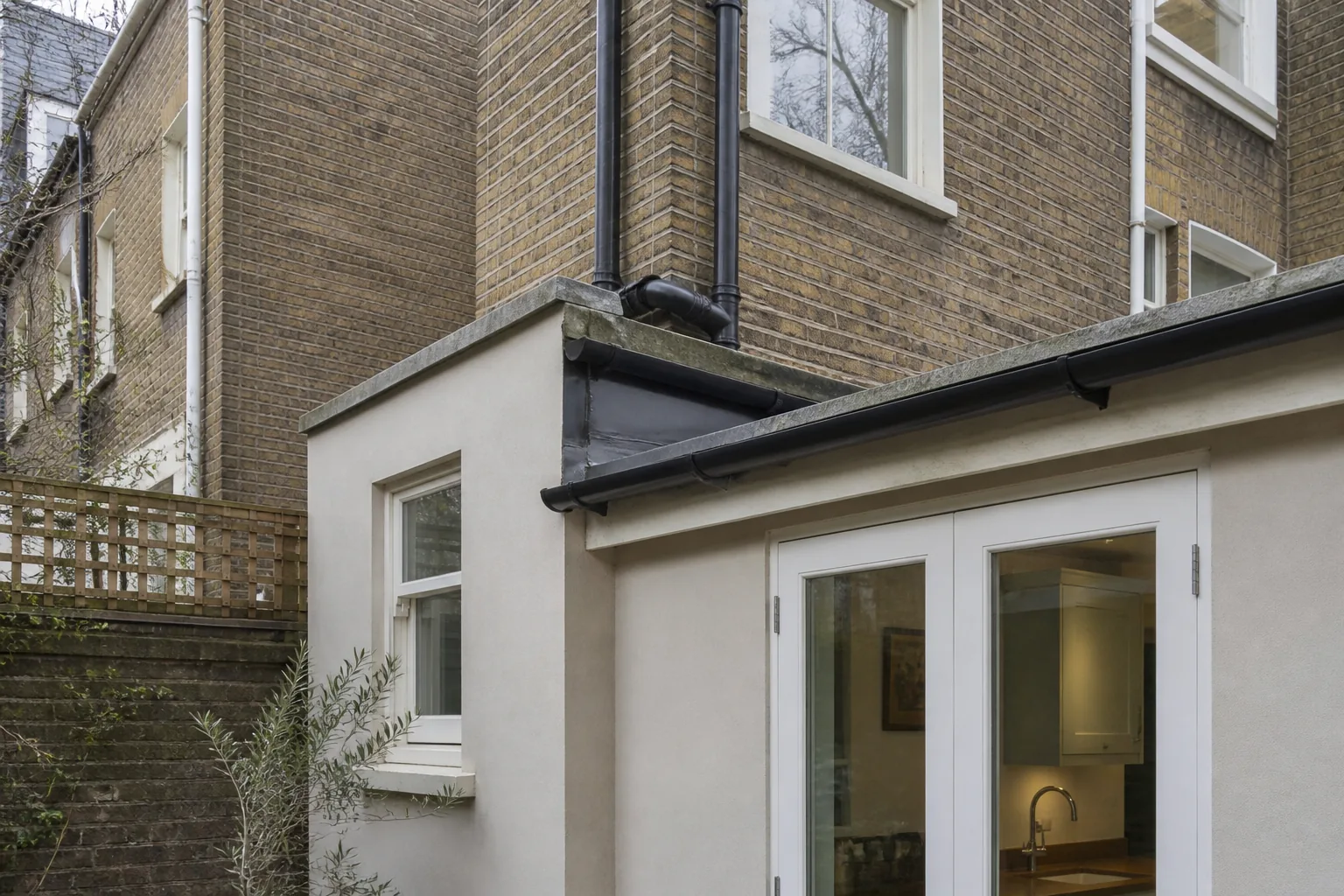
An Upminster address may have a simple continuous eaves line, or it may include lower sections around a porch, garage or later addition. Those are possibilities, not assumptions about a particular home. The important details are which side is spilling, whether the channel changes level and what occupies the space beneath it. A front run and a garden-facing run can present very different access conditions. Describing each affected section separately helps establish a practical scope without treating every elevation as automatically reachable.
Overflow does not identify its own cause. Leaves may cover an outlet, moss can hold fine silt in place, or a shallow deposit may reduce the channel's usable depth. Similar symptoms can also come from a failed joint, poor alignment or a restriction farther down the pipe. Cleaning therefore concentrates on accessible agreed channels and reachable outlet openings where included. Physical repairs, concealed downpipe work, underground drainage and any specialist access remain separate so that debris removal is not mistaken for a wider remedy.
Access is considered one roof edge at a time. A lower structure, narrow return, planting, boundary or delicate surface may affect one elevation while leaving another straightforward to assess. Only runs found accessible within the agreed plan are included; any need for specialist access is considered and quoted separately.
| Property situation | Access or gutter consideration |
|---|---|
| Home with a projecting porch | The porch may have its own lower channel or alter the clear space beneath the main front run, so both levels should be described separately. |
| Property with an attached garage | A garage edge may feed a different outlet from the principal roof and should not be assumed to form one continuous task. |
| House with a rear addition | The addition can create another channel while changing access to the original eaves above; inclusion depends on the actual layout. |
| Address close to a side boundary | A side run may have limited working space or require permission for an adjoining route, which must be resolved before it is agreed. |
Structured service guide
| Rainwater element | Within routine scope | Separate matter |
|---|---|---|
| Accessible named channel | Remove leaves, moss, silt and loose debris | Repair its alignment, joints or supports |
| Reachable outlet mouth | Clear surface material when agreed | Investigate a restriction deeper in the pipe |
| External gutter face | Not included in channel clearance | Arrange washing as a different service |
| Drainage below ground | Outside the gutter-cleaning scope | Obtain a suitable drainage assessment |
Structured service guide
| Observation | Clearance may help if | Repair assessment may be needed if |
|---|---|---|
| Water crosses the outer edge | Loose material reduces the open channel | The run is bowed or poorly aligned |
| Drip appears at a union | Backed-up water reaches the connection | The seal or fitting has failed |
| Outlet corner stays wet | Debris covers the reachable mouth | Flow remains restricted inside the pipe |
| Channel pulls from the fascia | Debris can be removed if suitable | Brackets or fixings have moved |
Structured service guide
| Detail | Why it changes the task | Helpful starting information |
|---|---|---|
| Number of roof edges | Each included run adds clearing and access needs | Name the front, rear, side or lower sections |
| Changes in level | Upper and lower gutters may need separate decisions | Share a wide view of the roofline |
| Space under the eaves | Structures or boundaries can limit inclusion | Mention anything directly beneath the channel |
| Outlet behaviour | A surface build-up differs from a concealed restriction | Describe where water gathers during rain |
Structured service guide
| If the property has | Question to settle | Possible effect on scope |
|---|---|---|
| A projecting porch | Does it create a separate channel or block space below? | Assess the porch and main run independently |
| An attached garage | Where does its outlet discharge? | List the garage edge as its own section |
| A full-width addition | How can the original rear eaves be approached? | Include only after an access review |
| A close side boundary | Is permitted working space available? | Agree, omit or reassess that elevation |
A clear service sequence
Seasonal context
Leaves may arrive quickly during unsettled weather, while silt and loose moss can build more gradually. A sheltered section can behave differently from an exposed roof edge at the same home. Actual condition, recurring symptoms and nearby growth are more useful maintenance guides than applying one fixed month to every property.
Nearby trees, roof moss, gutter shape and exposure can all affect how quickly material accumulates. A visible symptom is more useful than applying one fixed timetable to every address.
Quick answers
Routine loose material such as leaves, moss, silt and small twigs is removed from the accessible channels named in the scope. Reachable outlet openings are attended to only where they have also been agreed.
Yes. A front, rear, side or lower run can be considered on its own when that is where the symptom appears. Its height, surroundings and outlet still need an access review.
Only a reachable opening may be included by agreement. A blockage extending farther into a downpipe is outside routine channel clearance and needs a separate assessment of the concealed route.
No. Removing material may relieve backed-up water around the joint, but it cannot mend a failed seal, crack or displaced fitting. Continued dripping should be treated as a repair concern.
Images taken safely from ground level should show the affected roof edge and the area beneath it. Wider views can also reveal changes in height, additions, gates and boundaries relevant to access.
Not necessarily. Exposure, roof condition, nearby growth and channel shape can differ around one property. Each run's visible build-up and previous overflow pattern provide more useful timing clues.
Upminster service area
Nearby gutter-cleaning pages
Before booking
The service covers the accessible gutter channels agreed for the property, clearing leaves, loose moss, silt and comparable routine debris. Reachable outlet mouths can be included where specified. Repairs, concealed downpipes, underground drainage and separately arranged specialist access are not automatically included.
Debris may have gathered around the nearby outlet, or the channel may be carrying water towards a low point. A restricted pipe, displaced fitting or alignment fault can appear similar. Clearance addresses loose channel material, while other causes require separate assessment.
It may be possible, but the addition's projection, surface and position beneath the eaves all affect access. Surrounding space and the upper height matter too. The run is included only after those address-specific conditions have been assessed and agreed.
Sagging suggests a support, alignment or fitting issue rather than a cleaning need alone. Loose material may still be present, but removing it will not restore the channel's position. Suitability for clearance and any repair requirement should be considered separately.
Their presence should be mentioned before booking. The design and condition can affect whether debris beneath them is reachable and whether separate handling is needed. A guard does not guarantee a clear channel, but its treatment cannot be presumed.
Yes, when its opening is accessible and included in the agreed work. Loose material can be removed from that reachable area. This does not mean the full downpipe is clear; continuing poor flow may indicate a deeper restriction.
Permission and availability should be settled before the visit. A shared passage, locked gate or adjoining land cannot be assumed available for working access. If the route is uncertain, the affected elevation may need exclusion or a different assessment.
No. Staining can follow past overflow, a leaking joint, water tracking behind the channel or another defect. Its position is useful when describing the concern, but the current cause should be distinguished before cleaning is presented as the answer.
No. Routine gutter cleaning concerns debris inside the accessible agreed channels and specified reachable outlets. Washing exterior channel faces, fascia boards, soffits or walls is a different service and should not be inferred from a channel-clearance booking.
Provide the address, affected elevations, approximate roof levels, outlet symptoms and safe ground-level photographs. Mention additions, narrow passages, locked gates or boundaries. These details help identify a realistic scope while leaving any concealed fault for separate assessment.
Discuss the actual roofline
The quote is shaped by the number and length of included runs, their levels, reachable outlets and the usable space around the property. Clear exterior photographs and a description of the affected side can support an initial discussion. Repairs, deep pipe restrictions, drainage below ground and specialist access are separate cost considerations.
