
Why identify the affected elevation first?
It links the reported symptom to a particular channel and access route. Front, rear, side and lower-level runs can involve different heights, obstacles and outlets, even at one property.
Rainwater routes · access · clear scope
A useful gutter-cleaning plan starts with where rainwater is escaping and how the relevant run can be reached. For Romford homes, we define the elevations included, clear routine leaves, moss and silt from accessible agreed channels, and consider reachable outlets where agreed. Structural faults and concealed restrictions follow a separate route.
Local property context
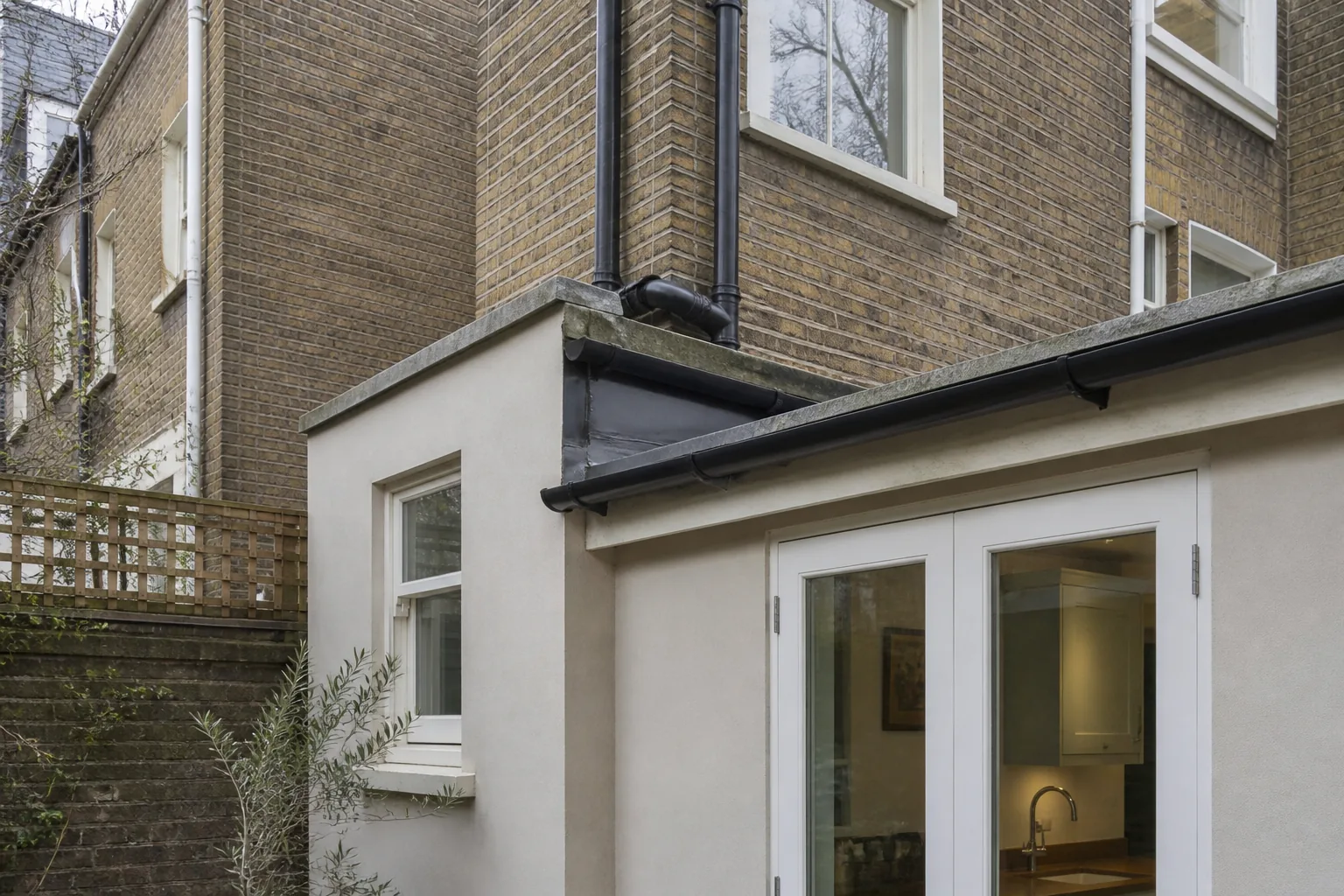
Across Romford, the relevant issue is the individual building rather than a presumed local house type. A home may have one continuous roof edge, several short runs, a garage line or an addition beneath an upper channel. Gates, planted areas and shared approaches may also change the space available below. These possibilities are checked conditionally at the address. Describing which elevation spills, how many storeys are involved and whether the route around the property is clear gives a more useful starting point than requesting an unrestricted whole-house service.
Rainwater appearing in the wrong place can have several explanations. A compacted patch of organic material may slow the channel, yet a twisted section, open connection or deeper downpipe obstruction can create a similar symptom. The cleaning scope is deliberately narrow: accessible agreed channels, routine leaves, moss and silt, plus reachable outlets where included. Any defect, concealed pipe blockage, underground drainage concern or need for specialist access is assessed on its own terms rather than assumed to be part of debris clearance.
The front run may be straightforward to consider while side or rear sections have different constraints. Roof level, setbacks, additions, gates and the ground or surfaces below all matter. The service includes only elevations assessed as accessible and agreed beforehand; any specialist access requirement is priced and planned separately.
| Property situation | Access or gutter consideration |
|---|---|
| House with an attached garage | The garage gutter and the main roof run may be at different levels and should be scoped as separate sections. |
| Detached home | Four elevations do not guarantee four accessible runs; gates, planting and additions can change the approach around each side. |
| End-of-terrace address | The exposed side may add a return or outlet that is not present on an internal terrace, subject to the actual layout. |
| Property with several roof levels | Upper and lower channels can show different symptoms and require independent access decisions. |
Visible clues
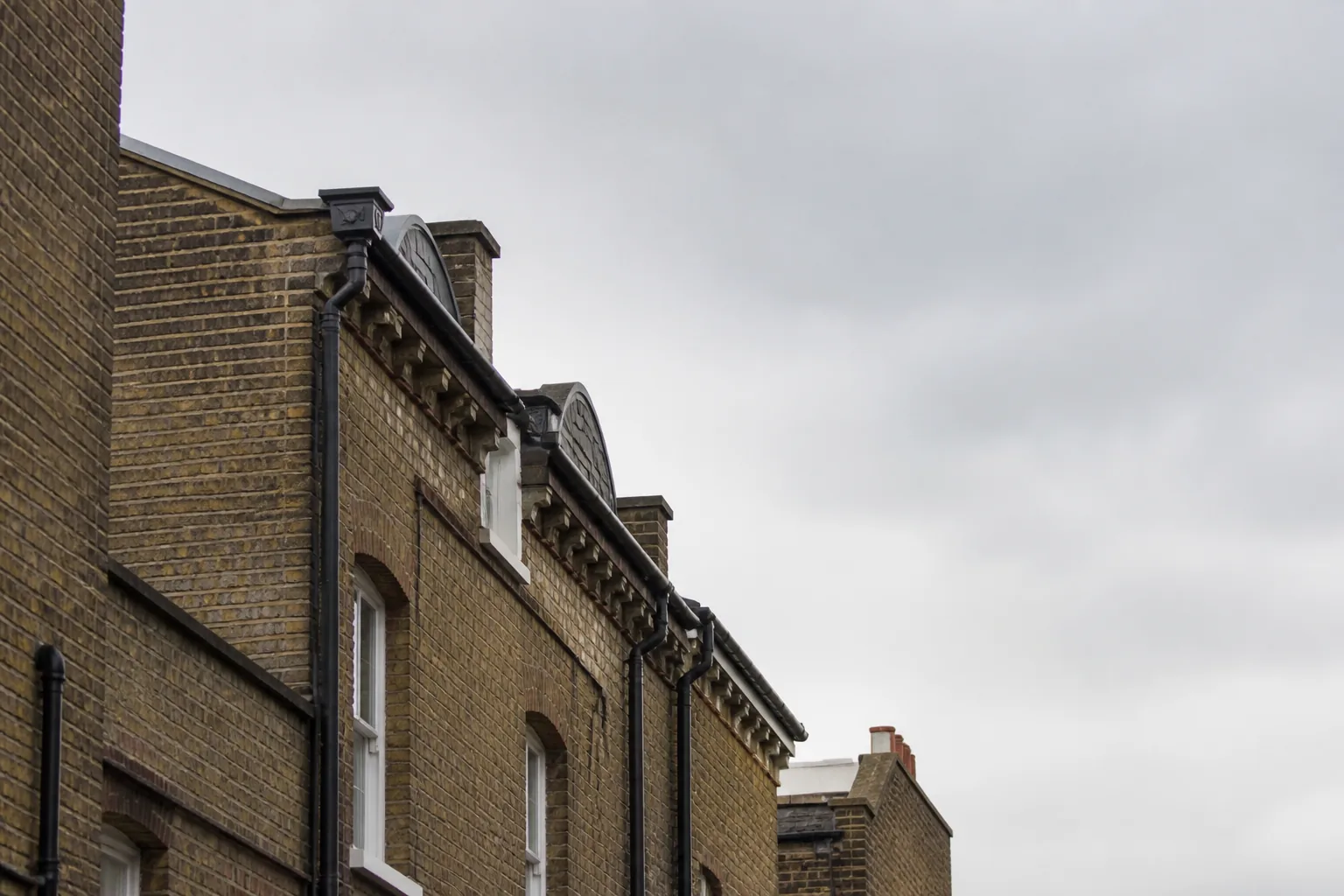
Look for water tracking behind a gutter, spilling from one point, leaving marks beneath a joint or gathering near an outlet during rainfall. Vegetation visible from the ground is another prompt. Each sign helps identify where to assess, though damage and deeper restrictions can imitate a channel blockage.
Structured service guide
| Item | Within an agreed clean | Outside the routine scope |
|---|---|---|
| Open gutter channel | Removal of routine loose debris where accessible | Unreachable sections or structural alteration |
| Outlet at channel level | Reachable opening attended to when specified | Obstruction concealed farther down |
| Downpipe | Its visible relationship to the outlet can inform assessment | Deep clearance, dismantling or repair |
| Ground drainage | No cleaning work included | Investigation and drainage treatment |
Structured service guide
| Situation | Clearance response | Separate response |
|---|---|---|
| Leaves fill a sound channel | Remove accessible routine material | None indicated unless another symptom remains |
| Section pulls away from fascia | Do not treat debris removal as a fix | Assess fixing and supporting components |
| Water escapes through a crack | Clear surrounding material if agreed | Assess replacement or repair of the damaged part |
| Channel remains full after outlet opening is clear | Confirm agreed surface work is complete | Assess the concealed pipe route |
Structured service guide
| Detail | Effect on planning | Example answer |
|---|---|---|
| Affected roof edge | Focuses the scope on the relevant run | Rear upper channel near the outlet |
| Building and gutter levels | Helps separate lower and upper access | Main roof plus a garage run |
| Route around the house | Reveals gates, boundaries or enclosed areas | Side route is narrow past the extension |
| Nature of the symptom | Distinguishes spillover from visible damage | Water drips at one connection during rain |
Structured service guide
| Conditional feature | Access question | Scope decision |
|---|---|---|
| If a garage sits below the main eaves | Can upper and lower runs be approached independently? | List each level separately |
| If planting fills a side route | Is suitable working space available below? | Review or exclude that elevation |
| If rooflines meet at a corner | Which channel and outlet receive the water? | Target the affected route |
| If a boundary is directly below | Can access remain within the arranged area? | Do not assume neighbouring land is available |
A clear service sequence
Quick answers
It links the reported symptom to a particular channel and access route. Front, rear, side and lower-level runs can involve different heights, obstacles and outlets, even at one property.
A reachable outlet opening can be included when agreed. A restriction farther down the pipe is a different task, so its cause and suitable response need to be assessed separately.
Leaves, loose moss, silt, small twigs and comparable material gathered in an accessible channel are routine. Building waste, nesting concerns or unusual contamination may change the scope and require review.
Photographs can clarify levels, roof edges and obvious access limits, making an initial quote more informed. They may not reveal concealed routes or every obstacle, so confirmation still depends on the property.
No. Removing weight from debris may reduce strain, but a sagging channel, failed bracket or incorrect fall is a repair concern. Its condition must be considered outside the cleaning scope.
Check when spillover, visible growth, staining or reduced outlet flow appears, and consider the address's exposure to falling material. There is no single interval that suits every roofline.
Seasonal context
A windy period may move loose material quickly, whereas moss and silt can accumulate more gradually. The side of a roof near planting may behave differently from a more exposed run at the same address. Maintenance decisions should follow observable condition, previous build-up and property context rather than a rigid seasonal promise.
Nearby trees, roof moss, gutter shape and exposure can all affect how quickly material accumulates. A visible symptom is more useful than applying one fixed timetable to every address.
Romford service area
Nearby gutter-cleaning pages
Before booking
The included parts are the agreed gutter channels that can be accessed under the property-specific plan. The scope may cover some elevations and exclude others. Reachable outlets can be added where agreed, while concealed pipework and specialist access remain separate.
They may sit at different levels or have very different space underneath. A rear addition, enclosed garden, narrow gate or fragile surface can change access even when the channel lengths appear similar. Each elevation is therefore considered on its own circumstances.
No. Gutter cleaning concerns loose moss already collected within accessible agreed channels. Treating or clearing the roof surface is a different service and is not implied. Material that later moves from the roof can cause the channel to fill again.
It may indicate spillover, a gap between components, poor alignment or another defect. The position during rainfall is useful, but it does not identify the cause by itself. Channel debris can be cleared, while fitting or alignment problems require repair assessment.
Yes, when the outlet opening is reachable and included in the agreed task. Material at that opening can be removed as part of channel cleaning. If flow remains restricted deeper inside, the downpipe needs a separate assessment rather than repeated surface clearance.
Each level is identified and assessed for its own height, approach and surrounding surfaces. A lower run being accessible does not mean an upper run is automatically included. The quote should state clearly which levels form part of the service.
That constraint needs to be raised before the work is agreed. Permission and a suitable access arrangement cannot be assumed. The affected run may be excluded, rescheduled after arrangements are made, or considered through a separately assessed access option.
No. Staining can indicate where water has travelled, but cleaning the exterior wall, fascia or gutter face is not the same as clearing the channel. The agreed task focuses on routine debris within accessible runs and any included outlet openings.
A restricted route below ground can contribute to water backing up through connected pipework, although other causes are possible. Underground drainage is outside routine gutter cleaning. It requires a separate assessment suited to that part of the system.
Confirm the elevations and roof levels included, any reachable outlets to be attended to, known access restrictions and the exclusions. This keeps routine channel clearance distinct from repairs, concealed downpipe work, underground drainage and separately arranged specialist access.
Discuss the actual roofline
Pricing follows the work that can actually be defined: affected runs, length, level, outlet involvement and the available space beneath them. Clear images and notes about additions or restricted routes help establish that picture. Separate costs may apply if assessment identifies repairs, a deep pipe restriction, underground drainage or specialist access needs.
