
Leaves
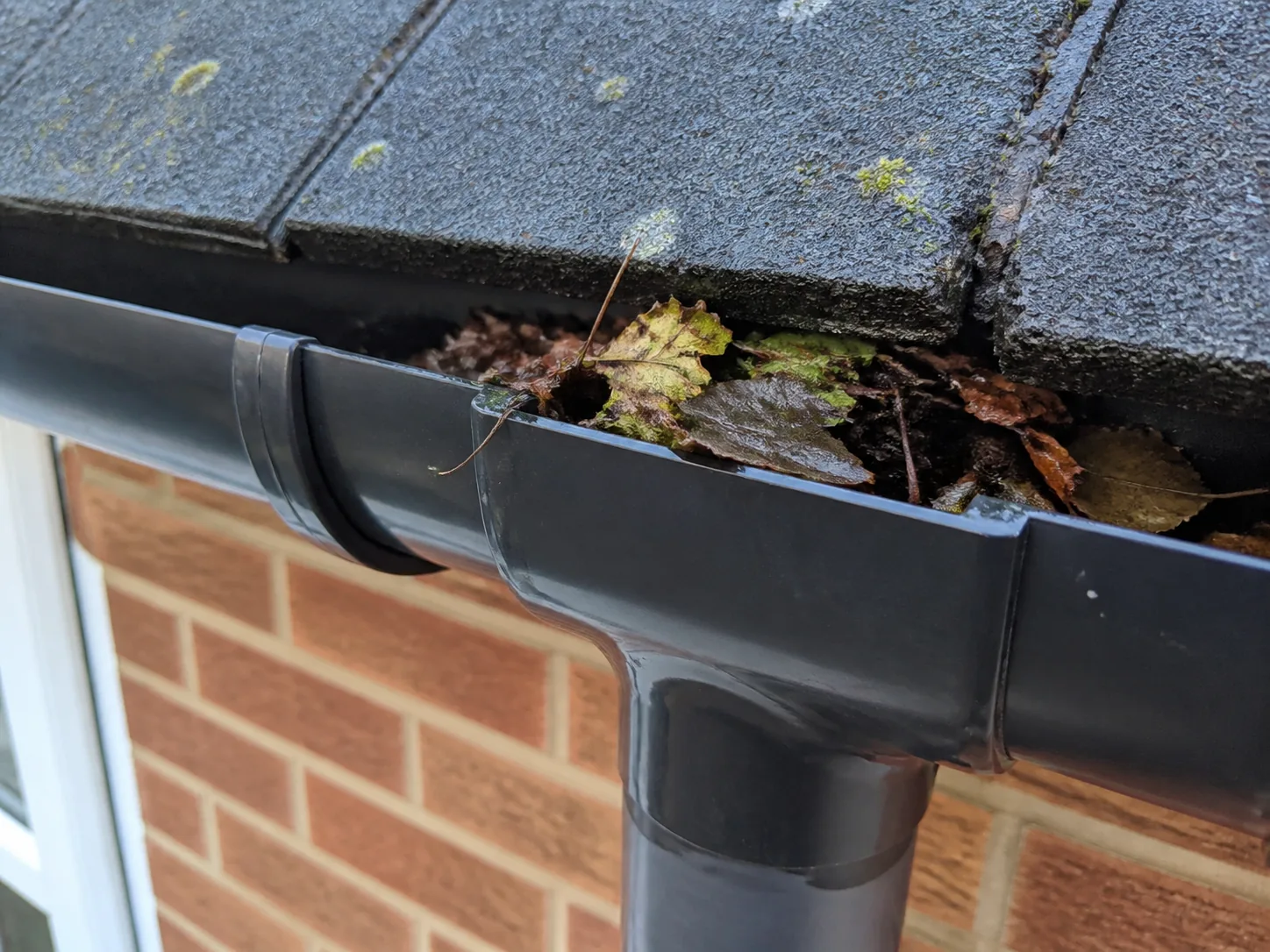
Wet leaves can settle into layers and slow water moving towards an outlet.
Rainwater routes · access · clear scope
A sensible cleaning plan reflects what is happening at the individual roofline. For a Finchley home, that means identifying the channels with leaves, moss, silt or routine debris, confirming which are accessible, and agreeing any reachable outlet attention. Concealed downpipe restrictions, damaged components, underground drainage and separately arranged access remain distinct from the channel clean.
Seasonal context
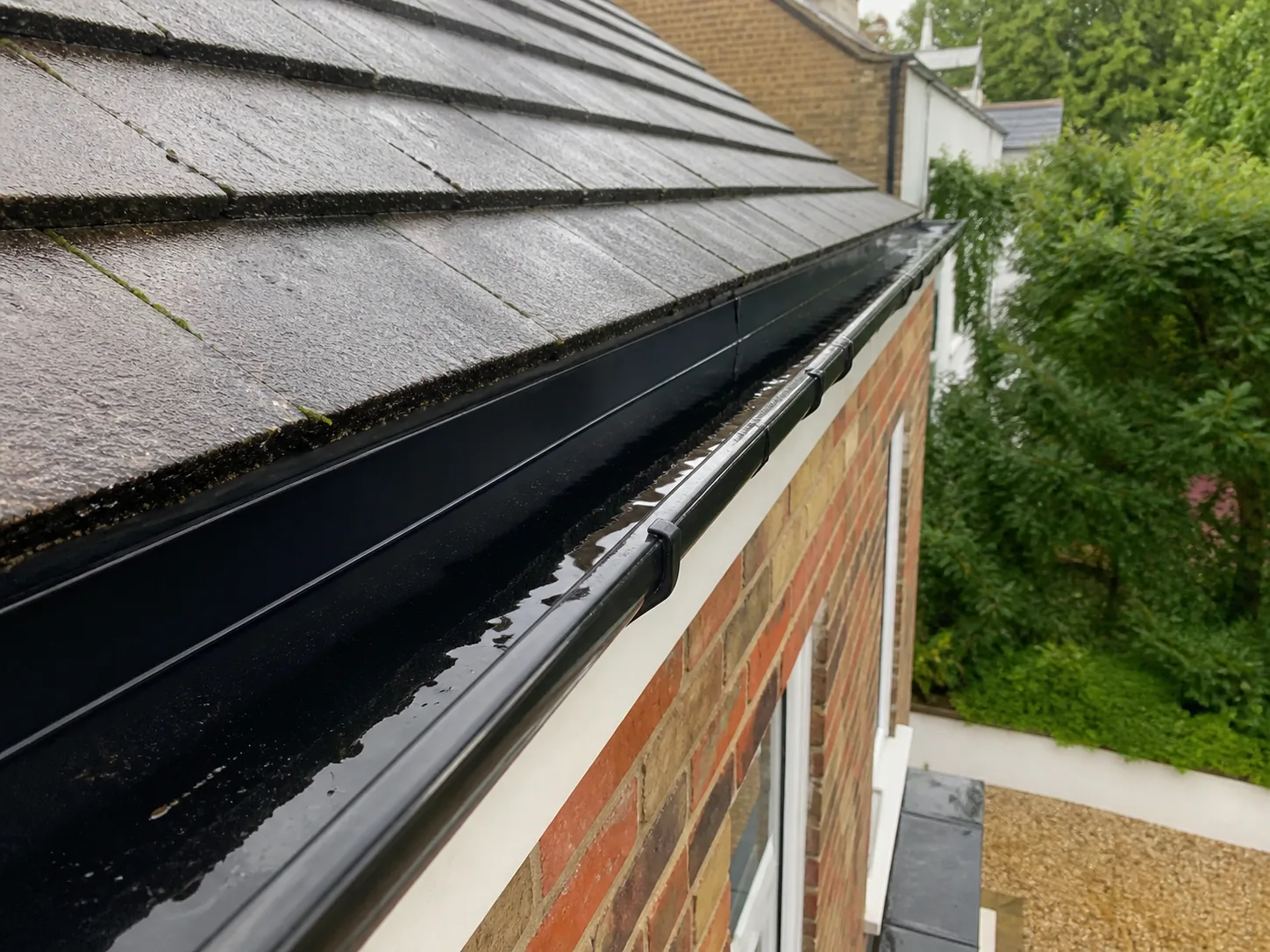
Maintenance timing is best guided by the address rather than a fixed calendar rule. Leaf fall may create a sudden increase, while moss fragments and fine deposits can build gradually. Previous accumulation, nearby vegetation, recent weather and fresh overflow all help indicate when another check would be useful.
Nearby trees, roof moss, gutter shape and exposure can all affect how quickly material accumulates. A visible symptom is more useful than applying one fixed timetable to every address.
Common causes
Loose leaves can settle over moss and silt, forming a dense patch near a corner or outlet. The rest of the run may still look open from below. Cleaning addresses routine material within the accessible channels agreed, not obstructions hidden farther along a pipe or drain.
Wet leaves can settle into layers and slow water moving towards an outlet.
Loose roof moss can collect in the channel and hold other material in place.
Small twigs can bridge narrow points and trap lighter debris behind them.
Loose surface material may wash down from the roof during wet weather.
Older material can become dense and reduce the channel available for runoff.
Fine deposits can gather beneath larger debris and close to an outlet.
Local property context
A Finchley property may have channels that collect material at very different rates. One elevation could sit near overhanging growth while another remains comparatively open, and a porch or garage may create a short lower run with its own outlet. The practical starting point is to note where overflow, visible growth or accumulated debris appears and whether the concern returns in the same place. That history helps define a relevant set of channels without assuming that every roof edge needs identical attention or that one timetable suits the entire building.
The condition below each roof edge matters as much as the debris above. A clear path beside the house may support one access plan, while planting, a locked gate, an addition or stored items can change another elevation. If a guard or cover is fitted over a channel, its type and condition should also be mentioned because it can affect what is reachable. These details allow the proposed cleaning to name included sections precisely, with any inaccessible area or separately assessed access requirement made clear before booking.
Access is considered separately for every requested elevation. Roof height, available ground, gates, side passages, lower structures and anything directly beneath the eaves may change what can be included. A run is only part of the visit after its reachability and cleaning scope have been agreed.
| Property situation | Access or gutter consideration |
|---|---|
| House with a separate garage | The garage channels should be named independently, including whether their outlets and access are part of the request. |
| Home with fitted gutter guards | The guard design and condition may affect whether the channel beneath can be reached within routine cleaning. |
| Property with trees near one elevation | That side may collect material sooner, but the actual build-up should guide whether other runs are added. |
| House with a gated side passage | Gate width, opening arrangements and items along the route may affect access to rear or side channels. |
A clear service sequence
Structured service guide
| Part or condition | Routine response | Limit |
|---|---|---|
| Accessible named channel | Remove ordinary loose build-up | Only the listed roof edges are covered |
| Leaves, moss and silt | Clear from the channel where reachable | Fixed or unusual material needs review |
| Reachable outlet mouth | Attend when included beforehand | The pipe below is not automatically covered |
| Underground connection | No routine gutter action | A separate drainage assessment is needed |
Structured service guide
| Observation | Cleaning may address | Separate issue to consider |
|---|---|---|
| Wet leaf layer | Loose material reducing channel space | No repair implied |
| Water escaping at a union | Debris causing local backing-up | Failed seal or displaced fitting |
| Channel visibly bows | Accumulation if cleaning remains suitable | Alignment, bracket or fascia condition |
| Split end section | Loose debris around the area | Replacement or corrective work |
Structured service guide
| Detail | Useful information | Effect on planning |
|---|---|---|
| Selected roof edges | Front, rear, side, porch or garage | Defines the amount of channel work |
| Different levels | Which runs sit above lower structures | Informs the access review |
| Surface covering | Whether guards or mesh are fitted | May change what can be reached |
| Outlet request | Which openings show build-up | Clarifies included attention |
Structured service guide
| If you notice | Consider | Possible next step |
|---|---|---|
| One side gathers leaves quickly | Whether build-up is visible elsewhere | Request that side or add other affected runs |
| A guard traps material above it | Whether the channel beneath is reachable | Review the covering before confirming cleaning |
| Overflow continues after the opening is clear | Whether the pipe or fitting may be involved | Arrange separate assessment |
| A garage has its own outlet | Whether it is part of the same request | List it as an individual lower run |
Quick answers
No. Individual runs can be considered according to visible build-up, previous problems and access. The booking should list the elevations included so an unaffected or inaccessible section is not assumed to form part of the work.
Leaves, loose moss, silt, small twigs and similar everyday deposits can be removed from accessible agreed channels. Unusual material, fixed coverings or anything beyond the channel may require another assessment.
Yes. Its design, fixings and condition can affect access to debris beneath it. Mention the guard before booking so any handling and the reachable channel sections can be considered properly.
Only when outlet attention has been agreed. Loose material at an accessible opening can then be removed, but the concealed downpipe below is a different part of the rainwater route.
A recurring patch can help focus attention on the relevant run, corner or outlet. It does not prove the cause, but it provides a more useful basis for planning than a general request.
Images taken safely from ground level can show roof levels, additions, gates, nearby growth and visible symptoms. They support the access discussion without guaranteeing that every pictured section will be reachable.
Finchley service area
Nearby gutter-cleaning pages
Before booking
It covers removal of leaves, loose moss, silt and comparable debris from the accessible channel runs agreed for the property. Reachable outlet openings may be included when specified. Repairs, pipe interiors, underground drainage and separately assessed access are outside that routine work.
Consider where material is visible, where overflow has occurred and which sections have needed attention before. Also note roof edges near vegetation or below mossy roof areas. Those observations guide the discussion, while access and final coverage still need agreement.
It may help if accumulated material is causing water to back up at the connection. A worn seal, displaced union or cracked component will not be repaired by removing debris, so continued leakage may require a separate repair assessment.
They can be included if requested, accessible and listed in the agreed scope. Explain whether the garage is attached or separate, how its roof edge is approached and whether its outlets are also of concern.
Different exposure, nearby growth, roof condition and channel shape can lead to uneven accumulation. It is reasonable to review that side sooner, using visible condition and past behaviour as guides rather than assuming every elevation needs the same interval.
No. Agreed outlet attention covers loose material at a reachable opening. The pipe continues through a concealed route, and a suspected obstruction lower down needs its own assessment rather than being treated as part of channel cleaning.
Some guards limit access to the channel or require handling before debris underneath can be reached. Their fixings may also be damaged or unfamiliar. Describing the system beforehand helps establish whether suitable cleaning can be agreed without assuming removal.
Possibly, but the route must be considered first. Gate width, turns, stored objects, planting and structures near the eaves can all influence reachability. The rear channel should only be confirmed after those address-specific details have been reviewed.
Fine material can wash into a channel and settle below leaves or moss, especially where water moves slowly. Removing only the obvious upper layer may miss that deposit, so routine cleaning should address reachable loose build-up within the agreed run.
The proposed cost reflects the number and length of included runs, their levels, access around the property, likely debris and any agreed outlet attention. Fault repairs, deeper pipe restrictions, underground drainage or separately planned access are quoted under another scope.
Discuss the actual roofline
The quotation depends on the channels selected, their length and level, the space around each elevation, expected accumulation and any reachable outlet work. A recurring concern in one short run can therefore be scoped differently from a whole roofline. Repairs, pipe investigation and unusual access are considered separately.
