
Leaves
Wet leaves can settle into layers and slow water moving towards an outlet.
Rainwater routes · access · clear scope
Where a building has several households or shared exterior areas, permission can be as important as access. Gutter cleaning in Hampstead is defined around authorised, accessible channels, routine leaves, moss and silt, plus reachable outlets when agreed. Responsibility for the roofline should be settled first, while defects, deep downpipe restrictions and underground drainage remain separate matters.
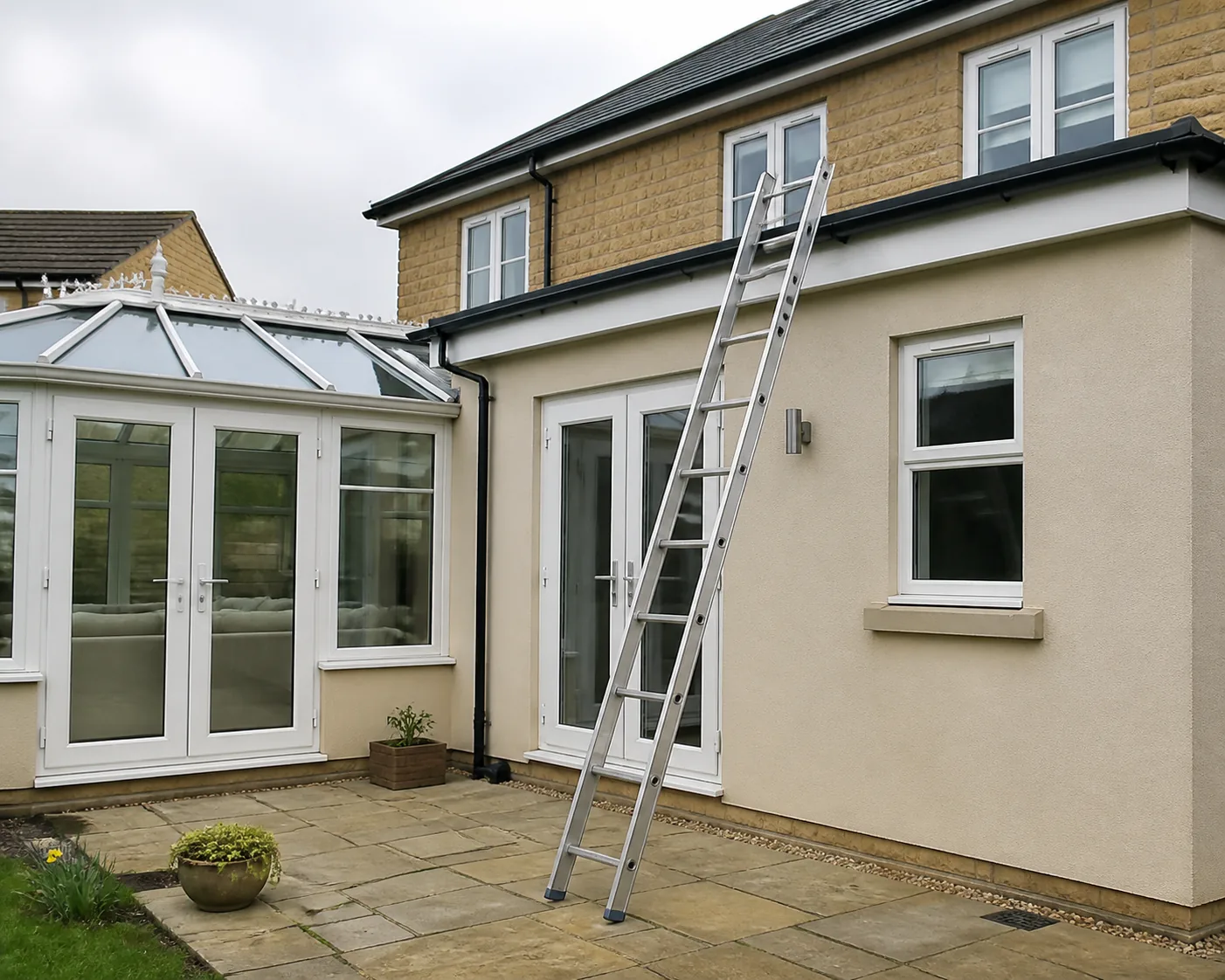
Visible clues
Residents may notice overflow from different windows, staining near one elevation or water reaching a communal path. Combining those observations can help locate the affected run. The reports still cannot determine whether debris, damage or a restriction farther along the route is responsible.
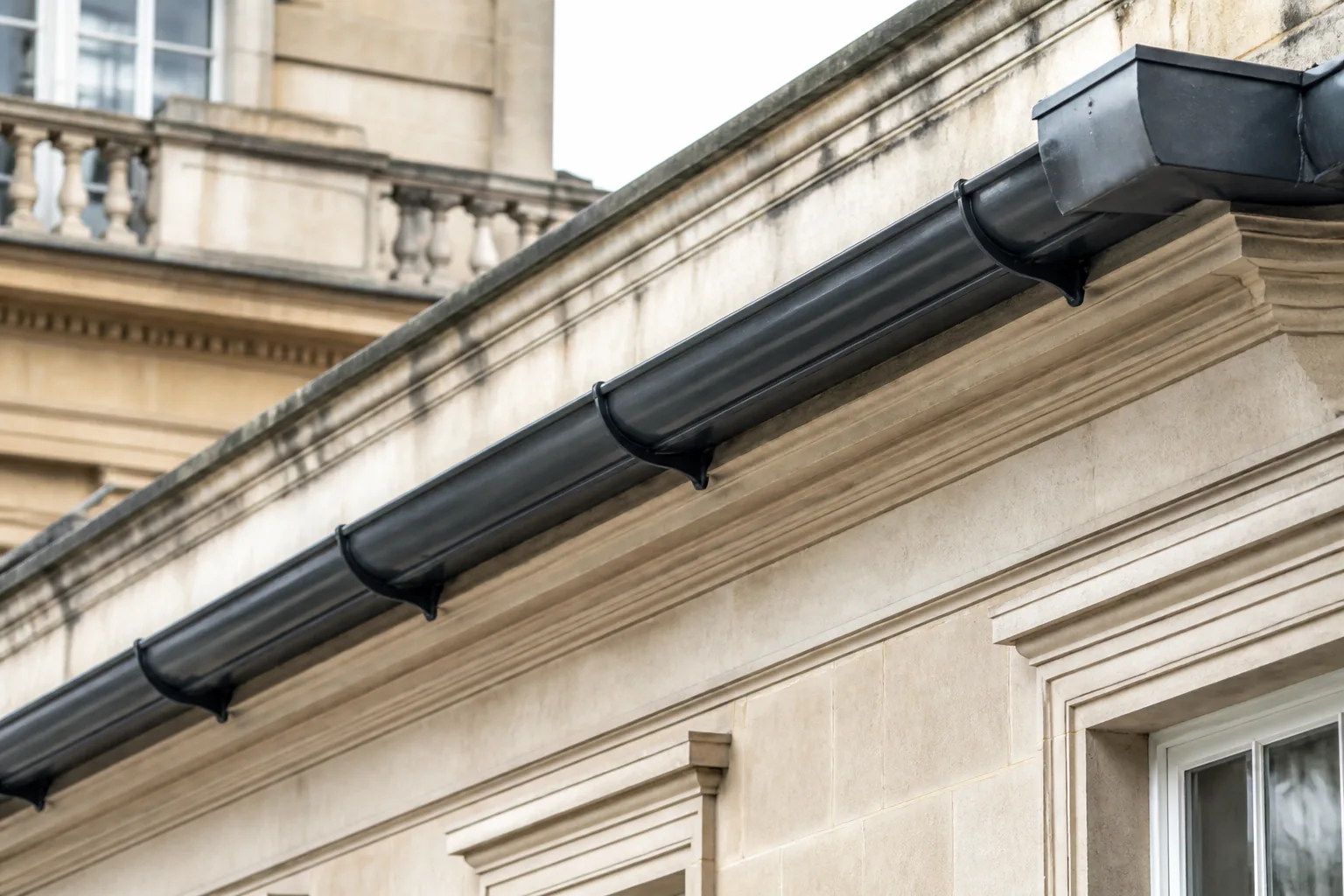
Local property context
A Hampstead property may be occupied as one home, divided into flats or managed with communal gardens and entrances. Those are possible arrangements rather than assumptions about any address, and each changes who may approve exterior maintenance. Before gutter cleaning is booked, the responsible person should identify the relevant roof edges, confirm permission and explain how the necessary outside areas can be entered. This avoids a resident promising access that belongs to another household and helps ensure that the proposed work reflects the authorised part of the building.
With those arrangements established, routine scope remains precise. Accessible agreed channels can be cleared of leaves, loose moss, silt and comparable debris. A reachable outlet opening may be included where named. If the channel is cracked, a joint leaks or a bracket has moved, correction is repair work rather than cleaning. Likewise, an obstruction concealed inside a downpipe or connected drainage requires another assessment. Clear boundaries are particularly valuable when several people share responsibility, because any further work may need a new decision from the appropriate owner or managing party.
Communal gates, private gardens, locked side routes, roof levels and additions can all shape access. Permission to enter an area is separate from whether its channel is reachable. Both points should be settled for each requested elevation before the cleaning scope is confirmed.
| Property situation | Access or gutter consideration |
|---|---|
| Single-owner house | Separate roof levels and gardens can still give the front and rear different access conditions. |
| House converted into flats | The lease or management arrangement may determine who authorises work on shared rainwater goods. |
| Purpose-built block | Communal entry, relevant elevations and the party responsible for the exterior should be confirmed. |
| Rented maisonette | An occupier may need landlord or agent approval before arranging gutter work or shared access. |
Structured service guide
| Item | Status |
|---|---|
| Named and accessible roof-edge channel | Included |
| Leaves, loose moss and silt | Cleared from that channel |
| Reachable outlet opening | Included by prior agreement |
| Hidden downpipe restriction | Separate assessment |
| Repair or underground drainage | Not routine cleaning |
Structured service guide
| Observed condition | Category |
|---|---|
| Loose organic debris | Routine cleaning |
| Fine deposits beside an outlet | Cleaning when agreed |
| Connector no longer sealed | Repair decision |
| Gutter pulled from support | Repair decision |
| Cracked corner section | Repair decision |
Structured service guide
| Agreed detail | Why it counts |
|---|---|
| Authorised channel sections | Establishes permitted coverage |
| Length and roof levels | Sets the scale of cleaning |
| Entry to each elevation | Confirms practical availability |
| Amount of accumulation | Affects work involved |
| Reachable outlets named | Clarifies the finishing point |
Structured service guide
| If the building is | First confirm |
|---|---|
| If converted into flats | Who controls exterior maintenance |
| If entered through communal grounds | Who arranges access |
| If one garden is private | Whether entry is permitted |
| If only part is authorised | Which exact channels form the scope |
Common causes
Shared responsibility does not change what routine clearance covers. Loose material in authorised accessible channels can be removed, with reachable outlet attention added by agreement. Concealed obstructions, damaged components and inaccessible roof edges remain outside the visit unless separately assessed and arranged.
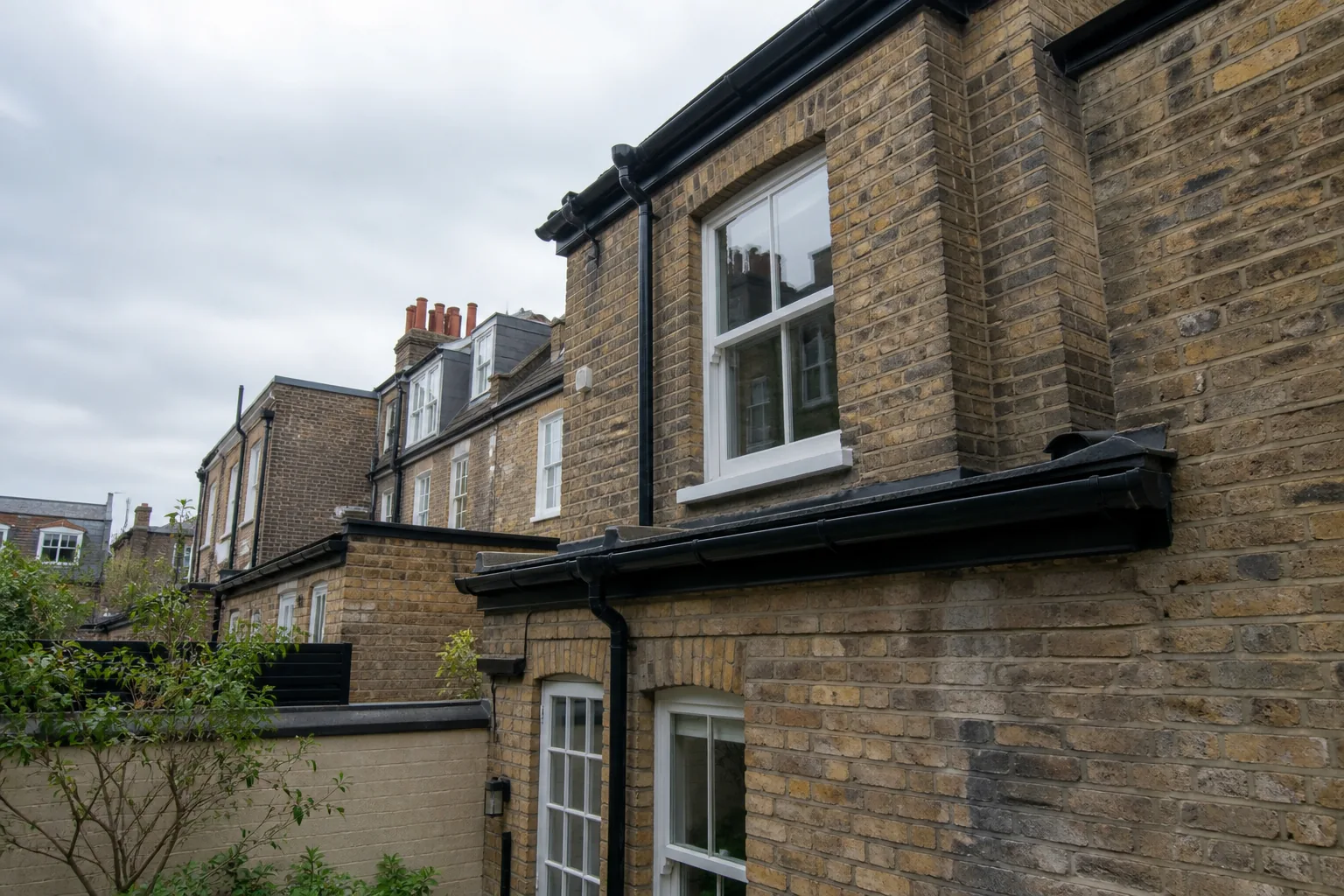
Wet leaves can settle into layers and slow water moving towards an outlet.
Loose roof moss can collect in the channel and hold other material in place.
Small twigs can bridge narrow points and trap lighter debris behind them.
Loose surface material may wash down from the roof during wet weather.
Older material can become dense and reduce the channel available for runoff.
Fine deposits can gather beneath larger debris and close to an outlet.
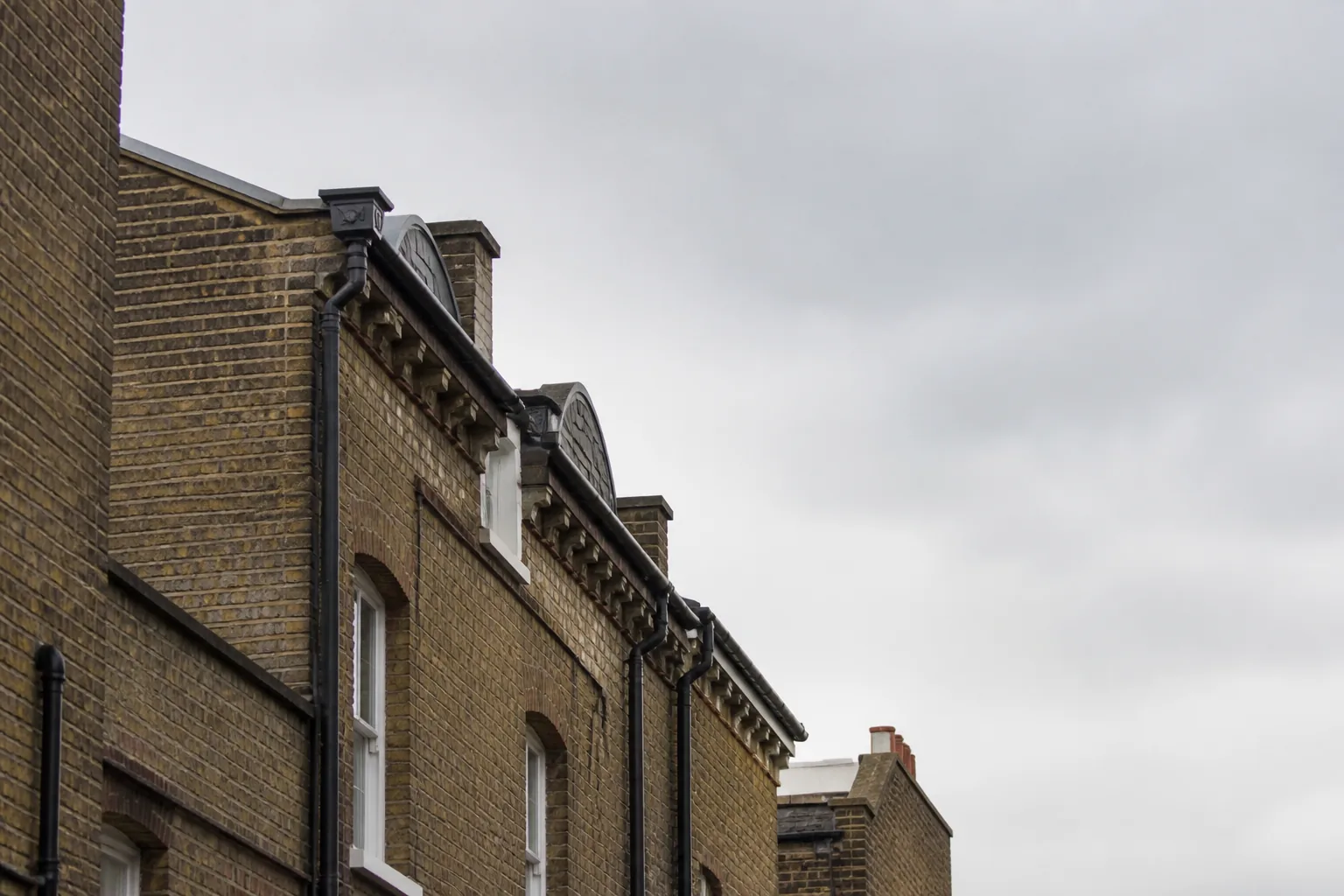
Seasonal context
Autumn leaves are conspicuous, but settled silt and moss fragments can remain after other weather. For a shared building, a simple route for reporting overflow may be as useful as a calendar reminder. Timing should reflect previous accumulation and current symptoms at the property.
Nearby trees, roof moss, gutter shape and exposure can all affect how quickly material accumulates. A visible symptom is more useful than applying one fixed timetable to every address.
Quick answers
The person or organisation responsible under the property’s ownership and management arrangements should authorise it. Residents can report symptoms, but they should not assume they control shared exterior maintenance.
No. Authority to arrange work and practical reachability are separate questions. Locked routes, private areas, roof levels and structures beneath a channel must still be considered for the requested elevation.
It removes loose leaves, moss, silt and similar debris from authorised accessible channels agreed beforehand. Reachable outlet openings can also be included if that part of the work is specified.
Possibly, if the responsible party authorises the exact accessible channel and a partial service makes sense. Connected or neighbouring runs remain outside scope unless they are also clearly included.
No. Cleaning may remove debris near the connection, but resealing, refitting or replacing a defective part is repair work. That needs separate assessment and the appropriate approval.
Collect each location and the conditions in which it appears. Several observations may clarify the affected roof edges, but they do not by themselves prove whether cleaning or another service is needed.
Hampstead service area
Nearby gutter-cleaning pages
Before booking
They should check the lease or ask the landlord, freeholder or managing party who controls exterior maintenance. The answer may also clarify how access is arranged and who can approve separate work if damage is found.
That depends on the tenancy and the building’s maintenance arrangements. A tenant should confirm authority with the landlord or agent before booking, especially where the gutter serves shared areas or access crosses any communal space.
They should identify the authorised elevations, approximate roof levels, access routes, structures beneath the channels, visible accumulation and any outlet concern. This helps define the proposed clean without assuming responsibility for unrelated sections or repairs.
A shared building can have channels serving different elevations or roof levels, and access may vary between them. Naming the runs prevents uncertainty about what was authorised and ensures excluded areas are not silently treated as included.
Only loose material at an agreed reachable outlet opening may be included. A restriction inside the shared pipe is outside channel cleaning and needs separate assessment, along with suitable authority for any proposed further work.
The relevant occupier or owner must agree to the entry arrangement before attendance. General approval for exterior maintenance does not automatically permit access through a private area, so that elevation remains conditional until access is settled.
No. Staining may help locate repeated water escape, but it does not determine ownership, maintenance duties or even the precise fault. Responsibility comes from the property arrangements, while the actual cause needs appropriate practical assessment.
Its repair is not part of removing routine debris. The condition can prompt a separate repair assessment, and the person with authority for the exterior should decide whether and how any corrective work is commissioned.
The calculation reflects authorised gutter length, roof levels, accessible sides, debris, entry requirements and agreed outlet openings. Investigation, repairs, specialist access and underground drainage are separate because their scope cannot be inferred from routine channel clearance.
They can report overflow locations and visible changes from ground level to the responsible party. Comparing those observations with previous accumulation helps inform the next check without asking occupants to inspect or work at height themselves.
Discuss the actual roofline
A quotation depends on the authorised channel lengths, building levels, reachable elevations, accumulation, entry arrangements and included outlet openings. It does not absorb repair work or investigation inside pipes and drains. Those tasks may also require separate consent from whoever manages the exterior.
