
Leaves
Wet leaves can settle into layers and slow water moving towards an outlet.
Rainwater routes · access · clear scope
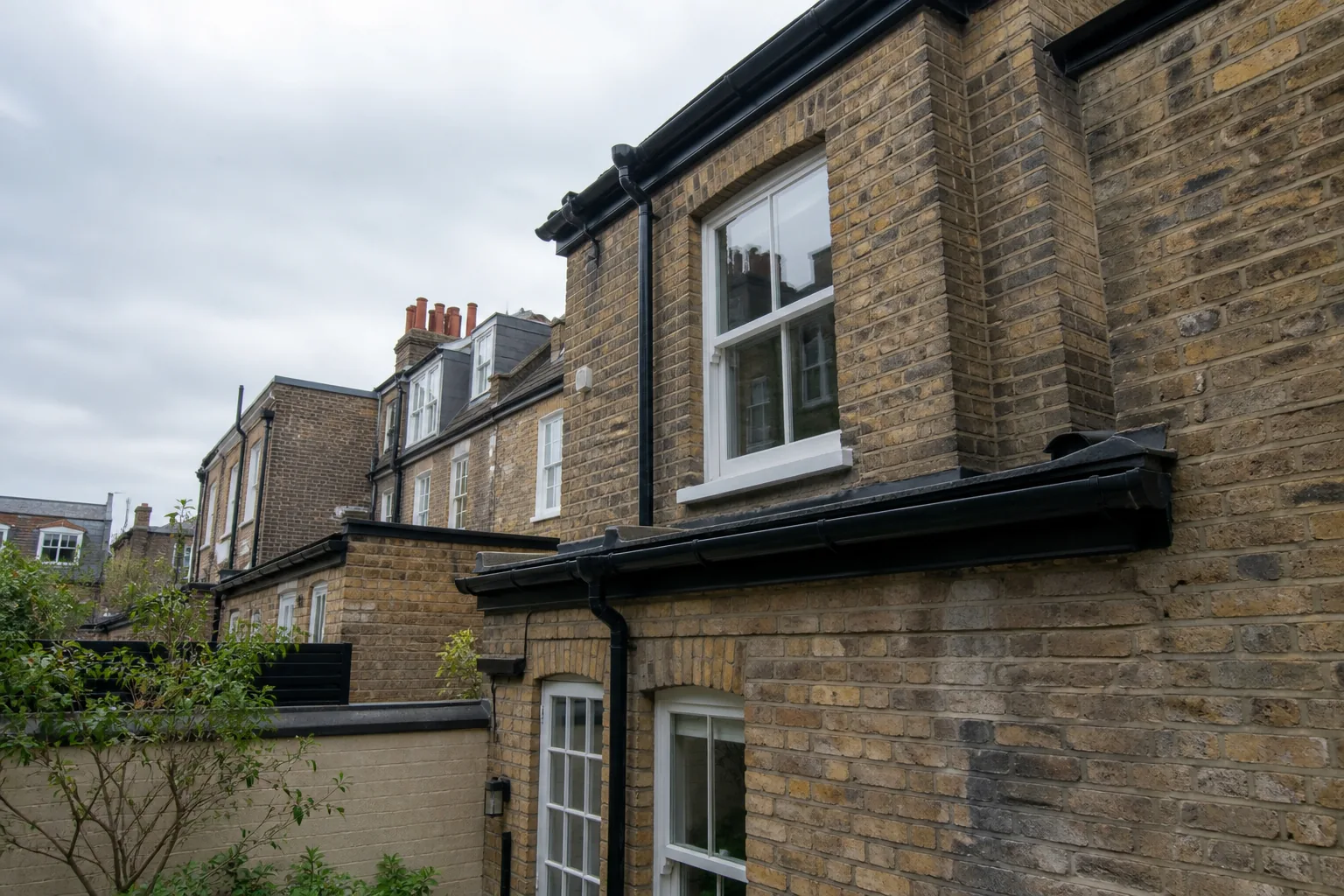
A gutter clean should answer a simple maintenance need without blurring into repairs or drainage work. For Watford homes, the visit can cover accessible agreed channels, routine leaves, moss and silt, plus reachable outlets where specified. Building layout and obstacles decide what can be included. Any failed components, hidden pipe blockage or below-ground concern needs separate consideration.
Structured service guide
| Part | Routine action | Boundary |
|---|---|---|
| Main channel | Remove common loose debris | No realignment or component repair |
| Outlet opening | Clear reachable material | No promise for deeper pipework |
| Separate roofline | Include when named | Not assumed from the main house |
Structured service guide
| Condition | Cleaning response | Repair response |
|---|---|---|
| Leaves filling the run | Remove accessible build-up | Usually not relevant unless damage exists |
| Split fitting | Clear surrounding debris only | Assess the failed part separately |
| Sagging section | Remove loose contents if agreed | Review support and alignment |
Structured service guide
| Variable | Possible effect |
|---|---|
| Number of roof levels | More sections to assess for access |
| Length requested | Larger area to clear |
| Conservatory or lean-to | Some runs may be obstructed |
| Heavy compacted build-up | More clearing than scattered leaves |
Structured service guide
| When the home has | Check before agreeing scope |
|---|---|
| A projecting front roof | Whether its short run has a separate outlet |
| A rear lean-to | Whether it blocks the upper channel |
| Communal access | Whether entry and permission are arranged |
| Gutter guards | Whether the channel remains reachable for clearing |
Common causes
Moss fragments, leaves and windblown particles can gather behind a joint or around an outlet. Water then has less room to travel along the run. Clearing accessible deposits addresses this common restriction; it cannot confirm the condition of concealed pipework or drainage beyond it.
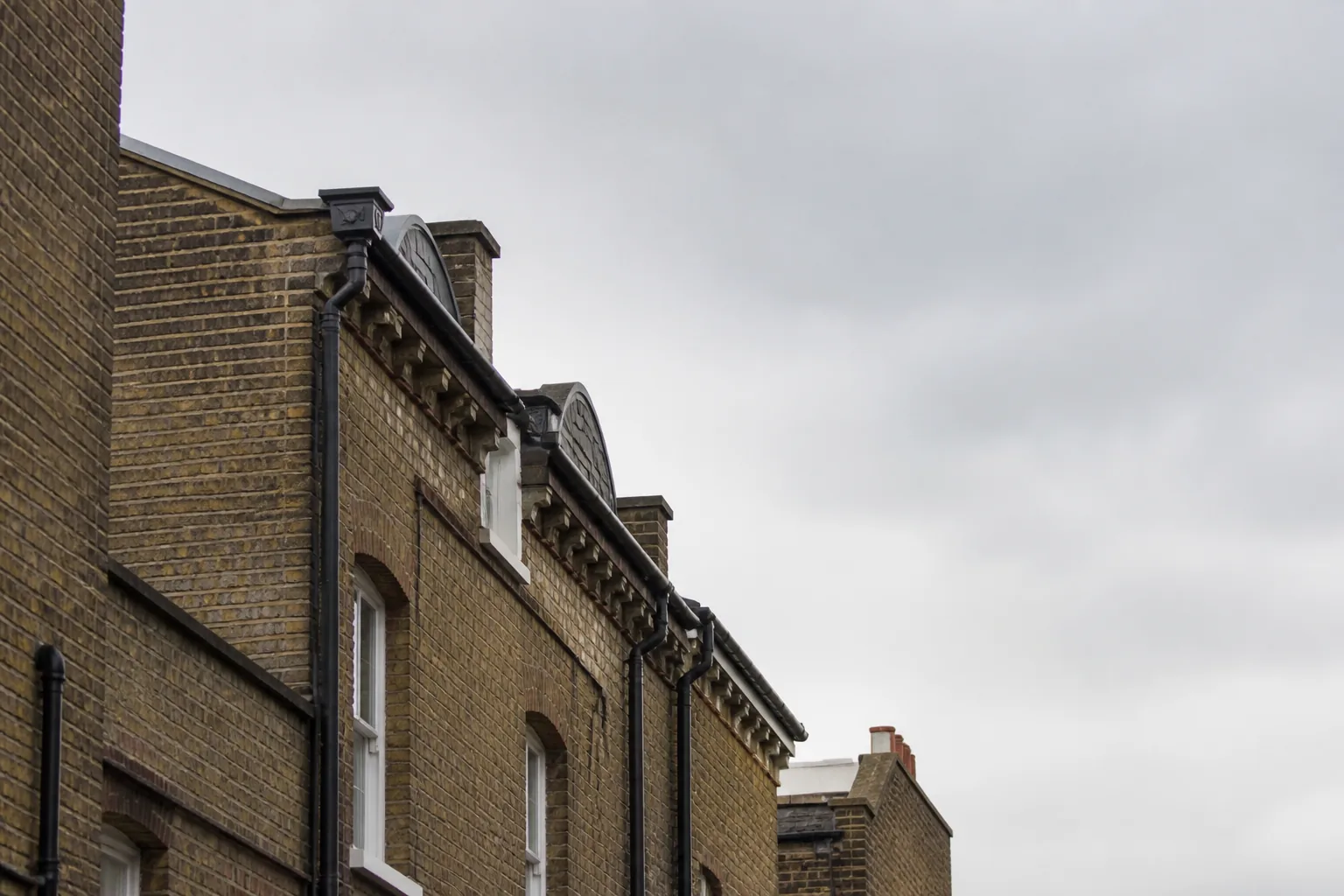
Wet leaves can settle into layers and slow water moving towards an outlet.
Loose roof moss can collect in the channel and hold other material in place.
Small twigs can bridge narrow points and trap lighter debris behind them.
Loose surface material may wash down from the roof during wet weather.
Older material can become dense and reduce the channel available for runoff.
Fine deposits can gather beneath larger debris and close to an outlet.
Local property context
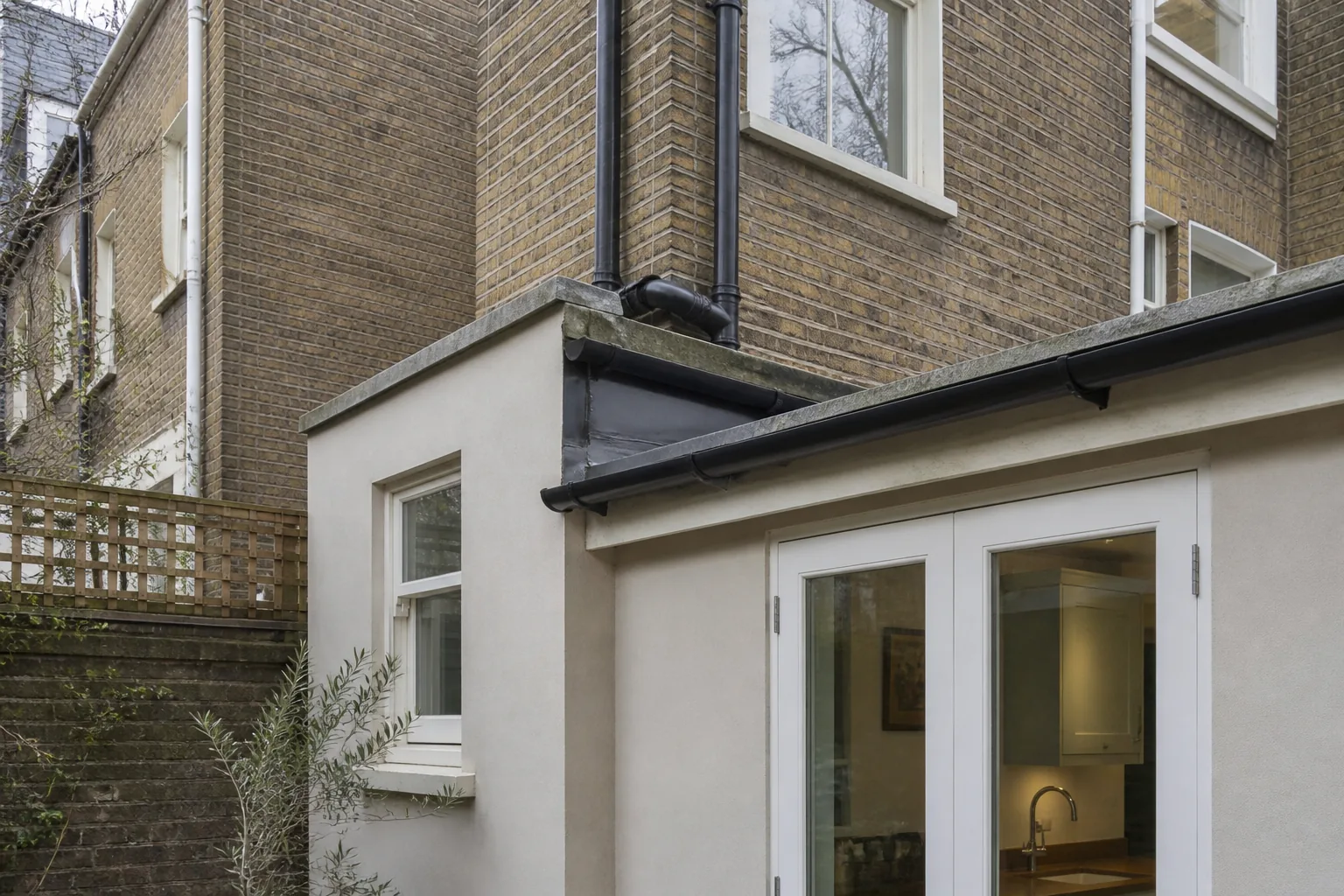
Properties in Watford may present very different rooflines even when they have the same number of storeys. A side return, projecting window, lean-to roof, garage or rear addition can alter both the gutter arrangement and access. Rather than assuming that every elevation is included, identify where water spills and which runs contain visible debris. The actual site conditions then determine the useful scope. For a shared or converted building, establish who is responsible for the roofline and who can arrange entry to communal areas.
A channel full of damp leaves has an obvious cleaning need. Other situations are less direct: a clear gutter may still drip through a worn joint, hold water because of its alignment or overflow when the downpipe cannot discharge. Routine clearing creates space within accessible channels and around agreed reachable outlets. It does not change the slope, replace fittings, investigate concealed pipe sections or open underground drainage. Keeping those limits visible helps homeowners choose the next step if a symptom remains after common debris has gone.
Access is assessed section by section. A clear front elevation does not mean a rear run beyond an addition is equally reachable. Gates, shared passages, changes in ground level and obstacles close to the wall should all be raised during the initial conversation.
| Property situation | Access or gutter consideration |
|---|---|
| Two-storey family houses | Front, side and rear elevations may have different access and debris levels. |
| Bungalows | Lower height does not remove obstacles such as additions, planting or narrow boundaries. |
| Converted houses | Communal responsibility and entry arrangements should be resolved before cleaning. |
| Properties with bay or projecting roofs | Separate short channels and outlets may need to be named in the scope. |
Seasonal context
An autumn clear can suit a property affected by falling leaves, but some channels accumulate moss or fine silt outside that period. Check after weather that reveals the problem and consider earlier experience at the home. Maintenance should respond to conditions rather than a universal annual date.
Nearby trees, roof moss, gutter shape and exposure can all affect how quickly material accumulates. A visible symptom is more useful than applying one fixed timetable to every address.
Quick answers
There is no single first sign. You may see gathered leaves, small plants, slow movement towards an outlet or overflow in rain. Each can support a closer look at the accessible channel.
No. Height is only one factor. Extensions, planted borders, narrow gaps, delicate surfaces and adjoining structures can make a lower channel inaccessible, so the actual surroundings must be considered.
Repairs are not part of routine channel clearing. If damage is suspected or noticed, it should be described separately and assessed before any repair work is agreed.
Moss can arrive from the roof and settle in a damp channel. Once it gathers with silt and leaves, it may slow water, making removal from accessible agreed areas a useful maintenance task.
If the reachable opening is clear, a deeper restriction or drainage issue may be involved. Those areas fall beyond routine gutter-channel cleaning and need a separate assessment suited to the suspected location.
Only the channels named in the agreement and found to be accessible form part of the cleaning. A general enquiry should not be taken to include separate garages, additions or hidden elevations automatically.
A clear service sequence
Watford service area
Nearby gutter-cleaning pages
Before booking
The normal scope is removal of leaves, moss, silt and similar routine debris from agreed accessible channels. Reachable outlets can be included when specified. Deep downpipe restrictions, broken components, underground drainage and any special access arrangement require separate assessment.
Keeping gutters clear is sensible maintenance, but an internal damp patch can have many causes. Cleaning should not be presented as a diagnosis or guaranteed remedy. If moisture persists, the building should be assessed for the actual route and source of water.
Debris around an outlet can slow discharge, while the position or fall of the channel can also leave standing water. Cleaning addresses removable build-up only. If pooling remains in a clear run, support, alignment or outlet design may need separate attention.
A focused scope may be possible when the outlet is reachable and the relevant channel can be included. Explain the exact position and symptom. If the blockage sits lower in the pipe, the task changes from routine outlet clearing to further investigation.
Guards may change what enters a channel, but fine material can still gather and debris may sit on top. Their presence can also affect access to the channel. They should therefore be mentioned before a visit, rather than treated as proof no maintenance is needed.
Do not assume ordinary cleaning can proceed around an active nest. Describe what you have observed so legal, welfare and access considerations can be checked before planning work. Routine debris removal should not disturb wildlife or be used to bypass those concerns.
Mention gates, side passages, rear additions, conservatories, garages, planting, changes in ground level and shared areas. State which elevation each feature affects. A few wide photographs can help show relationships that a close image of the gutter alone would miss.
External surface washing is different from clearing debris inside gutter channels and should not be assumed. If appearance is your concern, state that separately so the desired work can be considered without confusing it with functional channel cleaning.
Conditions may show that a section is not accessible under the agreed arrangement, or that the issue is damage rather than loose debris. Work should remain within safe, confirmed scope. An excluded area can then be discussed with accurate information about the constraint.
Use the home's own pattern as a guide. Nearby planting, roof moss, earlier build-up and visible water behaviour all matter. If channels refill quickly, checks may need to be closer together; if they remain open, a different interval may be reasonable.
Discuss the actual roofline
Cost reflects the job at the address: the total agreed runs, their height, how much debris is present and the access available. A small but obstructed section may not resemble a longer open roofline. Describe every requested elevation so the discussion starts from the full picture.
