
Leaves
Wet leaves can settle into layers and slow water moving towards an outlet.
Rainwater routes · access · clear scope
Upper and lower gutters at one property can collect different material and present different access conditions. Our Northwood service begins by listing the roof levels that need attention, then clears routine debris from the accessible agreed channels. Reachable outlet openings can be added where suitable and agreed. Repairs, concealed pipe blockages, underground drainage and specialist access remain separate matters.
Structured service guide
| Section | Included when agreed | Outside routine cleaning |
|---|---|---|
| Accessible upper or lower channel | Removal of ordinary loose deposits | Alteration of fall or supports |
| Reachable outlet entrance | Surface clearance where specified | Work deeper within the downpipe |
| Joint or stop end | Debris around the component | Sealing or replacement |
| Drainage after ground entry | No channel-cleaning action | Separate below-ground investigation |
Structured service guide
| Situation | Relevant to clearance | Relevant to repair |
|---|---|---|
| Upper run holds leaves | Remove accessible loose layers | Address damage if also visible |
| Lower channel stays wet | Clear silt reducing its route | Check alignment if pooling remains |
| Water escapes at a corner | Uncover an agreed outlet mouth | Assess a split corner or failed seal |
| Channel edge has dropped | Cleaning only if suitable | Review brackets and fixing points |
Structured service guide
| Variable | Useful description | Why it matters |
|---|---|---|
| Roof levels | Main eaves, garage, bay or addition | Keeps distinct channels visible |
| Run extent | Approximate start and end points | Defines the clearing task |
| Outlet openings | Position and current symptom | Clarifies any agreed outlet work |
| Surrounding approach | Open area, structure or close boundary | Informs accessibility |
Structured service guide
| Conditional feature | Point to clarify | Planning response |
|---|---|---|
| If a bay creates a lower gutter | Does it drain independently? | List it apart from the main front run |
| If a garage lies below an upper edge | What space and surfaces surround it? | Review both levels separately |
| If a rear addition spans the elevation | Which original channels remain approachable? | Include only assessed sections |
| If outlets join out of sight | Where is the reachable boundary? | Keep concealed connections outside scope |
Common causes
Material often settles differently at each level. A lower edge may receive fragments from a nearby roof junction, while an exposed upper run may catch wind-blown leaves. Accessible channels can be cleared of this ordinary loose build-up, with no assumption that an unseen connection or downpipe is also clear.
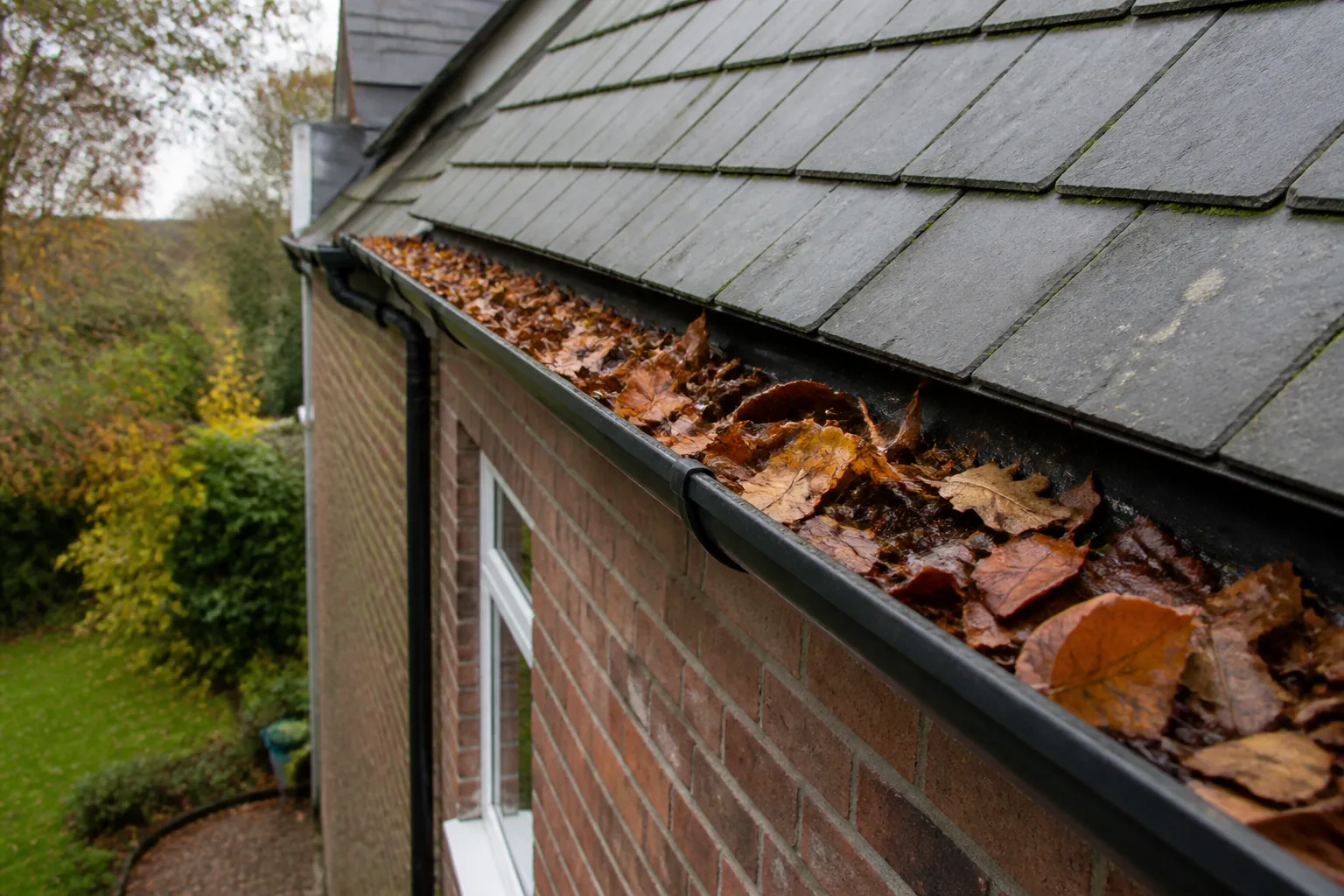
Wet leaves can settle into layers and slow water moving towards an outlet.
Loose roof moss can collect in the channel and hold other material in place.
Small twigs can bridge narrow points and trap lighter debris behind them.
Loose surface material may wash down from the roof during wet weather.
Older material can become dense and reduce the channel available for runoff.
Fine deposits can gather beneath larger debris and close to an outlet.
Local property context
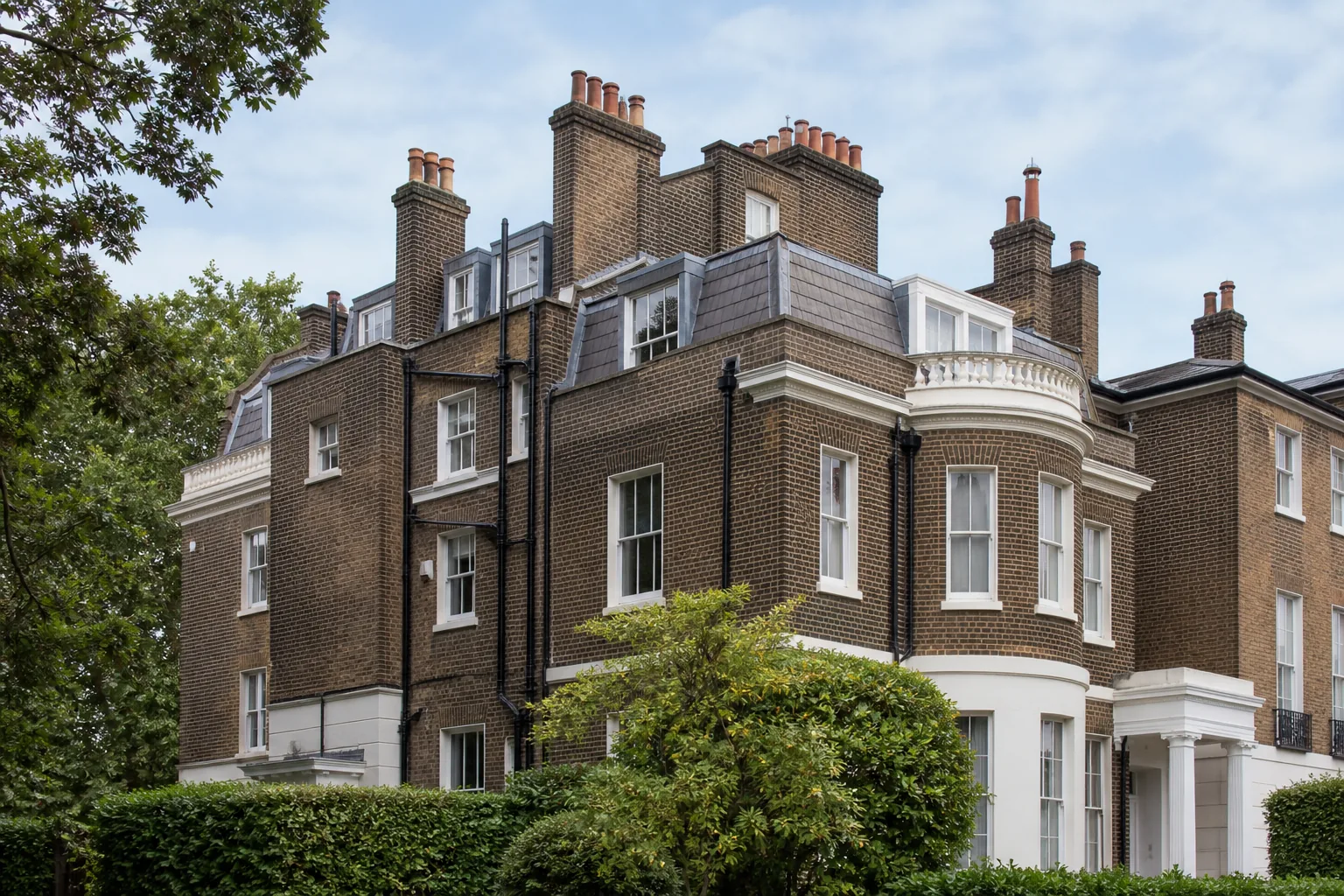
Some Northwood homes may have a main eaves line plus lower gutters around a garage, bay, canopy or rear addition. Others may have a simpler shape. Rather than presume a building type, the enquiry should map the actual levels and indicate where the symptom occurs. A lower front edge might be straightforward to describe while an upper rear run has a structure beneath it. Listing them separately shows which channels are relevant and prevents accessible sections from being confused with those needing another approach.
Height alone does not explain whether cleaning will solve a problem. A low gutter can have a broken joint, while an upper run may simply contain loose leaves and silt. The agreed service removes routine debris from channels assessed as accessible and may cover reachable outlet openings when stated. It does not correct a sag, replace a bracket or clear concealed pipework. If water continues to collect after the open route has been cleared, that remaining behaviour helps identify the next assessment rather than expanding the cleaning automatically.
Each level is considered with the ground, roof surfaces and structures around it. A garage, canopy or rear addition can alter the approach to a channel above. Runs are included only where the address-specific review supports access; any additional provision is assessed and agreed separately.
| Property situation | Access or gutter consideration |
|---|---|
| Home with an integral garage roof | The garage may create a lower rainwater edge or sit below an upper channel, so its relationship to both levels should be explained. |
| House with a projecting bay | A bay can introduce a short lower channel whose outlet and access differ from the main front eaves. |
| Property with a broad rear addition | The addition may have its own gutters and can also affect access to the original roof edge above. |
| Home with several downpipe connections | Each reachable outlet should be matched to its channel, without treating the concealed pipe network as part of routine clearance. |
Seasonal context
An upper run exposed to wind may collect material after one unsettled spell, whereas a sheltered lower channel can retain damp silt for longer. The two may not need attention together. Visible condition, known trouble points and changes in water behaviour are sensible guides for each level.
Nearby trees, roof moss, gutter shape and exposure can all affect how quickly material accumulates. A visible symptom is more useful than applying one fixed timetable to every address.
Quick answers
Yes. Lower channels can be listed independently from main roof edges when their extent and access are clear. The quote should also say which reachable outlet openings, if any, are included.
No. Accessibility depends on the actual height, surrounding space, lower structures and other property conditions. Each requested run is reviewed individually before it is accepted into the scope.
Leaves, loose moss, silt, small twigs and comparable routine deposits can be removed from accessible agreed channels. Material fixed elsewhere or needing different handling is not assumed to be included.
No. Reducing debris weight does not restore the correct fall or secure displaced supports. A bowed channel needs a separate repair assessment, whether or not cleaning is also appropriate.
Name them by side and position, such as lower front, main rear or garage edge. A simple annotated ground-level photograph can help link each description to the right channel.
Not necessarily. Exposure, roof condition, nearby growth and outlet layout can vary around the same home. Each level should be judged by its own visible condition and history.
A clear service sequence
Northwood service area
Nearby gutter-cleaning pages
Before booking
It covers the accessible gutter runs agreed for the property, removing leaves, loose moss, silt and normal fragments. Reachable outlet mouths are included only when specified. Repairs, hidden downpipe clearance, drainage below ground and separately arranged access are excluded.
They can be included in one quote, but they should remain identifiable sections because their levels, lengths, outlets and access may differ. The presence of a garage does not establish any particular layout; the actual roofline decides the plan.
It may collect material from a nearby roof junction, have a covered outlet mouth or simply receive water differently. A low point or damaged fitting can create the same symptom. Cleaning addresses accessible debris, while faults need separate consideration.
That depends on the addition's projection, materials and position, together with the height and surrounding access. The lower structure can change the available approach. The upper channel should be assessed for that address before it is included.
Identify which channels feed the connection and where poor flow first becomes visible. Accessible debris and a reachable mouth may be included by agreement. The concealed shared section still requires its own assessment if restriction is suspected.
It can follow overflow from debris, but water may also escape through a failed joint or track behind a displaced channel. The mark helps locate the concern without proving its cause. Any physical defect remains repair work.
Their design and condition must be raised before the scope is set. A guard can limit access to debris below and may require separate handling. It should not be assumed removable or suitable to work around without assessment.
That run is not automatically included because another level is accessible. It may be left out of the quote or considered under a separately assessed plan. The remaining suitable channels can still be described and agreed clearly.
It may remove material that is backing water towards the end, but it cannot reseal or replace a defective fitting. If the leak continues when the channel is clear, a repair assessment is the appropriate next step.
Provide wide ground-level views from the relevant sides and label the level where water, staining or debris appears. Mention structures below, gates and boundaries. This helps connect the requested work to the correct channels and outlets.
Discuss the actual roofline
The quoted task follows the number of included roof edges, their levels and lengths, reachable outlets and usable access at each elevation. Clear wide photographs can make the distinctions easier to discuss. Physical repairs, deeper pipe work, underground drainage and separate access arrangements have their own assessment and cost.
