
Flats & apartments
Check whether bulky storage components can turn through the flat’s entrance.
LEATHERHEAD · SHELVING AND STORAGE
Storage sized for folders and bulky equipment.
A storage request starts with what needs a place. For Leatherhead, measure the tallest folder or largest equipment case before choosing a cabinet that only looks suitable in a photograph.

DIFFERENT ROOMS, DIFFERENT BRIEFS
Check whether bulky storage components can turn through the flat’s entrance.
Show existing timber or wall details that fitted work should preserve.
Clarify which equipment belongs to the occupant and which fixtures belong to the owner.
Include the route used to remove the largest stored case.
Measure printer or equipment access, not only the cabinet’s closed exterior.
The access contact should know what contents must be cleared for installation.
Homeowner? Show hinges that reduce the clear opening into the cabinet.
Landlord or manager? Clarify which equipment belongs to the occupant and which fixtures belong to the owner.
Tenant? Confirm any owner permission before attaching storage in a rented utility room.
BUILD A REALISTIC LIST
Prioritise equipment cabinet build or cabinet hinge assessment, then add optional fittings. This checklist is not a booking or quotation.
| Situation | A practical next step |
|---|---|
| Equipment cabinet build | Use internal product dimensions before deciding a cabinet suits your equipment. |
| Several related tasks | Request help if bulky contents or panels prevent safe access to the work area. |
| Fitted folder shelving | Dense files and equipment need a realistic shelf-load brief. |
| Specialist systems | Plumbing or electrical changes near utility storage need separate trades. |
LEATHERHEAD IN PRACTICE
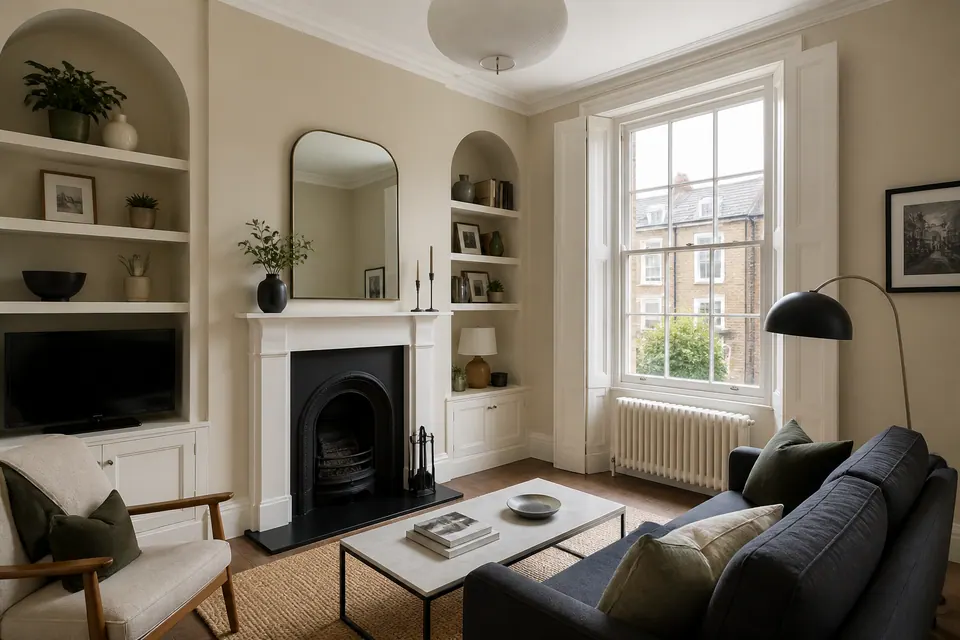
Storage sized for folders and bulky equipment.
Example brief: equipment cabinet build, with cabinet hinge assessment recorded separately.
Internal usable dimensions can differ from the outside cabinet measurements. Include shelf spacing, door openings and the path used to lift bulky items out.
A made-to-measure solution needs a carpentry brief rather than being treated as flat-pack assembly.
Equipment cabinet build · Fitted folder shelving · Store-room door review · Wall organiser fitting
CLEAR BEFORE YOU BOOK
Price the chosen product or carpentry scope. £30 is not a bespoke equipment-storage price.
Small products only; equipment-sized cabinets and fitted storage are separately assessed.
Provide a separate wall and bracket brief for any television.
| Task | Pricing basis | Guide |
|---|---|---|
| Cabinet hinge assessment | Before booking, agree who supplies materials. Agree the cabinet or shelf specification before buying parts for unusual equipment loads. | Scope quotation |
| Small furniture assembly | Confirmed small-item product | From £30 |
| Combined store-room door review | Product configuration and restricted handling space affect the duration of storage work. | Reviewed combined quotation |
| Screen mounting enquiry | Provide a separate wall and bracket brief for any television. | Mounting assessment quotation |
The separate small-item guide is published on Alesta’s furniture assembly page
A supplied cupboard differs from timber measured around unusual contents. Include any handling and fixing requirements, and keep product alteration separate from standard assembly.
START WITH THE TASK
Compare the largest stored case with the cabinet’s usable interior.
02 ↗Specify folder dimensions and expected loading for timber storage made to the available space.
03 ↗Check the store-room door while carrying the bulky item.
04 ↗Provide a separate wall and bracket brief for any television.
05 ↗State what the organiser will hold rather than only its dimensions.
06 ↗Show hinges that reduce the clear opening into the cabinet.
QUICK JOB FINDER
Compare the largest stored case with the cabinet’s usable interior.
Explore this service ↗WALK THROUGH THE PROPERTY
ROOM NOTES
Provide a separate wall and bracket brief for any television. Include the proposed viewing wall.
View the relevant service ↗| Job type | Example | Property area | Service |
|---|---|---|---|
| Assembly | Equipment cabinet build | Final assembly room | Furniture assembly |
| Mounting | Wall organiser fitting | Chosen wall position | Fittings |
| Adjustment | Store-room door review | Internal doorway | Door repair |
| Timber work | Fitted folder shelving | Storage area | Carpentry |
FROM SMALL FIX TO FINISHED JOB
Show hinges that reduce the clear opening into the cabinet.
Include the door-opening conflict if it affects removing bulky contents.
Compare the largest stored case with the cabinet’s usable interior.
Dense files and equipment need a realistic shelf-load brief.
Store-room door review: review operation and deferred items.
A JOB, MADE VISIBLE
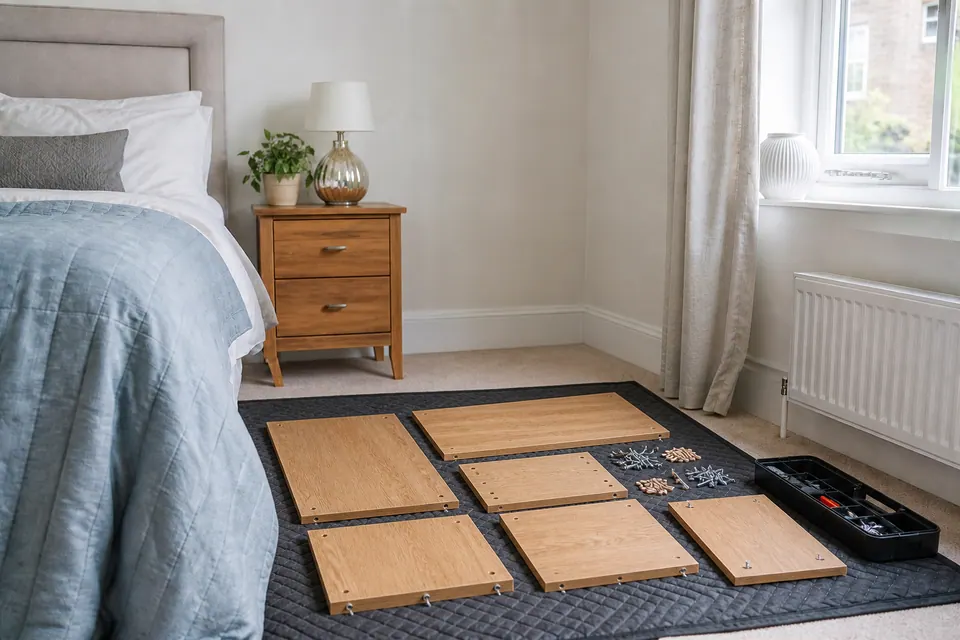
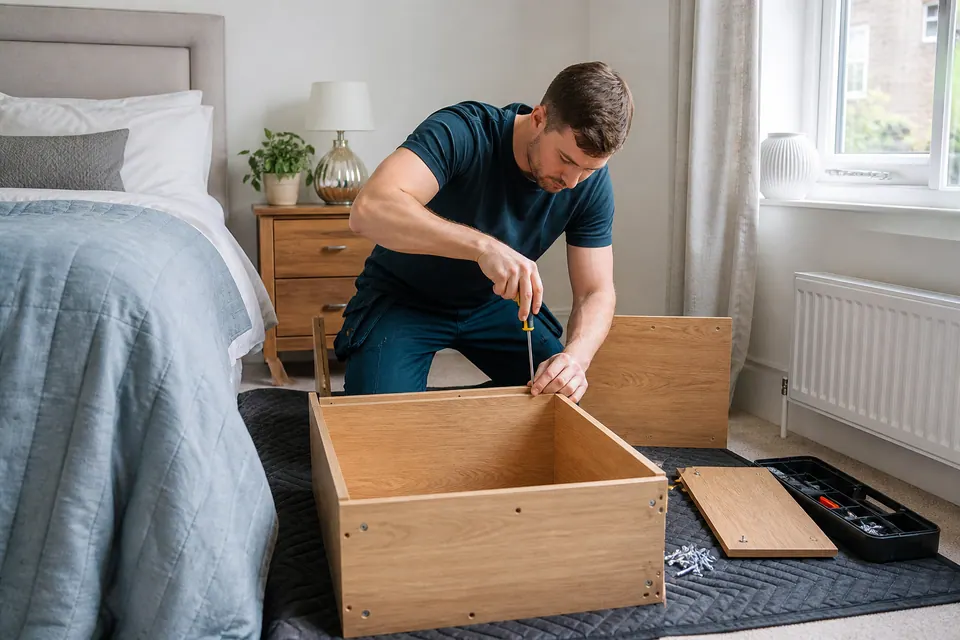
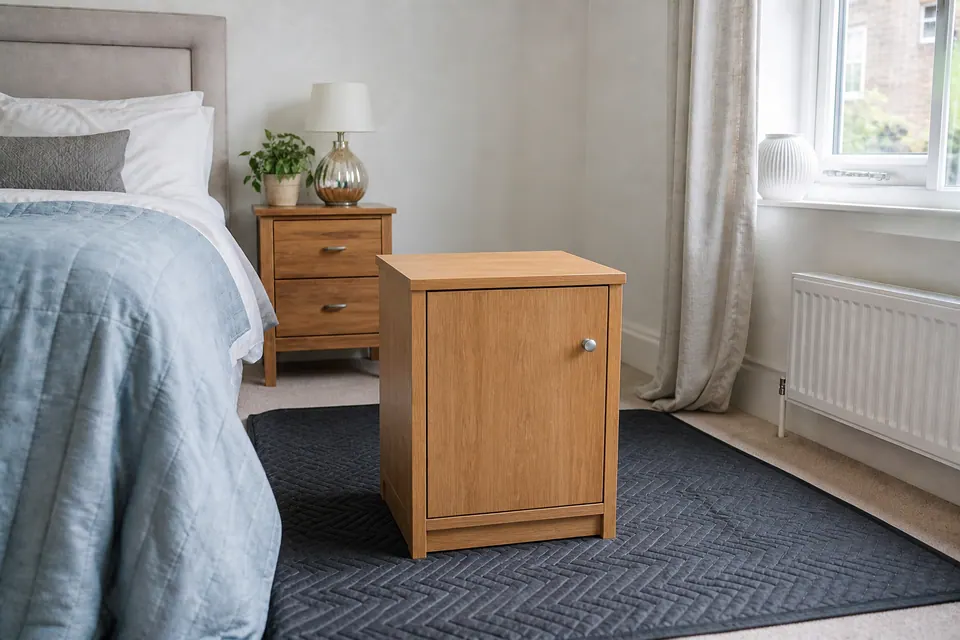
Illustrations only, not a Leatherhead customer case. Your equipment cabinet build follows its own product requirements.
QUICK ANSWERS
Cabinet assembly, suitable shelving and hardware assessment can support a defined storage need.
Include the door-opening conflict if it affects removing bulky contents.
Before booking, agree who supplies materials. Agree the cabinet or shelf specification before buying parts for unusual equipment loads.
Product configuration and restricted handling space affect the duration of storage work.
Furniture assembly is available. Send the cabinet model with its internal dimensions and complete components.
Folder or equipment loads must suit the shelf; screens need separate bracket and wall checks.
Confirm any owner permission before attaching storage in a rented utility room.
Price the chosen product or carpentry scope. £30 is not a bespoke equipment-storage price.
PLAN THE ARRIVAL
Leatherhead postcode, entrance and loading details help plan equipment cabinet build. Confirm appointment availability for the address before making date-specific preparations.
Area reference, loaded on request
THE DETAILS OF YOUR VISIT
No. Internal shelves, hinges and door construction can reduce usable space. Compare the actual contents with the available interior dimensions.
Yes. Weight affects the storage requirement as well as size. Explain likely loading before choosing a shelf or support arrangement.
Describe how you need to retrieve them. A cabinet that technically contains an item may still be impractical for regular use.
Request measured carpentry with the contents and access requirements. That is different from assembling an off-the-shelf unit.
Add the door or drawer projection and space to remove the stored item. Closed depth alone does not describe everyday operation.
Explain what can be cleared and any handling you need. Bulky or sensitive equipment movement should not be silently included in assembly.
State the conditions and provide the product specification. Suitability for moisture exposure should not be assumed from appearance.
Fixings still need to suit the wall and load. Supplied hardware is information for review, not proof of a suitable installation.
Review openings, agreed attachment and access for the largest contents before loading the cabinet, noting anything excluded or awaiting further work.
TURN THE LIST INTO A PLAN
Equipment cabinet build or cabinet hinge assessment? Send the relevant photographs and your Leatherhead address to start the enquiry.
Illustrative Leatherhead task imagery, not customer evidence.
