
Quote to scope
Quote the actual joint condition, with replacement assembly as a distinct option.
MITCHAM · JOINT CONDITION CHECK
Distinguish a loose joint from a cracked furniture rail.
A wobbling table in Mitcham needs a description of where movement occurs, not a promise that a larger screw will hold it. Show the joint and the material around it.
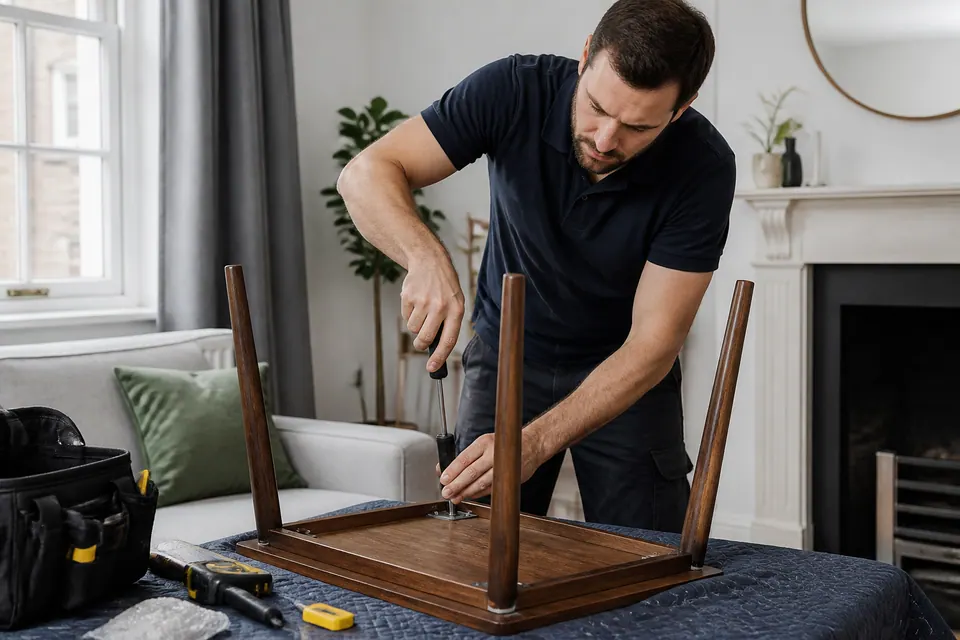
START WITH THE TASK
Compare repair of the table with assembly of a replacement.
02 ↗Avoid loading shelving on unassessed damaged supports.
03 ↗Keep furniture-joint faults separate from room-door adjustments.
04 ↗Do not rely on a wobbling unit to support media equipment.
05 ↗Show accessory fixings that have loosened in timber.
06 ↗Identify the exact rail or connection that moves.
QUICK JOB FINDER
Compare repair of the table with assembly of a replacement.
Explore this service ↗MITCHAM IN PRACTICE
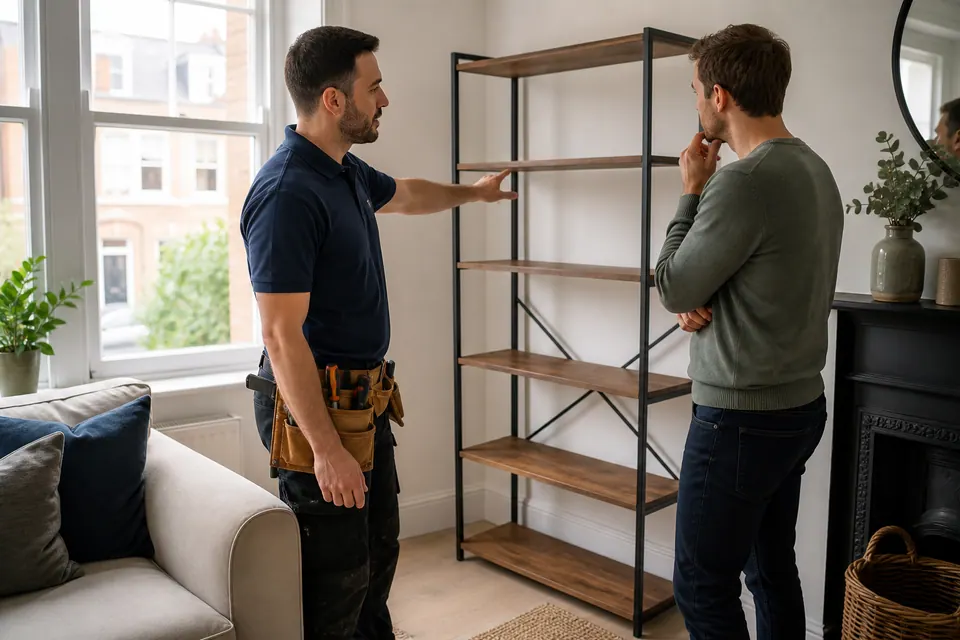
Distinguish a loose joint from a cracked furniture rail.
A loose leg connection differs from a split rail or damaged board. Those conditions can require different work, and a photograph of the tabletop alone cannot distinguish them.
Keep unstable furniture out of use while its condition is uncertain. Accessible views are enough for an initial enquiry; do not invert a heavy item unsafely to expose its underside.
Retain detached hardware for identification and explain whether the item has been repaired before. Previous holes, brackets or adhesive may affect the proposed scope.
Compare repair of the table with assembly of a replacement; Do not rely on a wobbling unit to support media equipment; Identify the exact rail or connection that moves.
CLEAR BEFORE YOU BOOK
Quote the actual joint condition, with replacement assembly as a distinct option.
Yes, Alesta also assembles supplied replacement furniture; request a product-specific review separately from repairing the damaged joint.
Avoid adding wall or screen loads to an unassessed damaged support.
| Task | Pricing basis | Guide |
|---|---|---|
| Repair or fitting | Identify the exact rail or connection that moves | Reviewed quote |
| Small furniture assembly | Compare repair of the table with assembly of a replacement | From £30 |
| Several small jobs | Several unstable items need separate photographs and faults within one enquiry. | Agreed combined work |
| Complex mounting | Do not rely on a wobbling unit to support media equipment | Mounting assessment |
For the published small-item guide, see Alesta’s furniture assembly page . Other fitting and repair requests are quoted individually.
Separate a local joint repair from replacing damaged material or assembling a different item. Previous repairs and unavailable hardware can affect whether the original brief remains appropriate.
WALK THROUGH THE PROPERTY
ROOM NOTES
Do not rely on a wobbling unit to support media equipment. Describe whether the table rocks or a leg moves.
View the relevant service ↗| Job type | Example | Property area | Service |
|---|---|---|---|
| Assembly | Compare repair of the table with assembly of a replacement | Furniture position | Furniture assembly |
| Mounting | Show accessory fixings that have loosened in timber | Fitting wall | Fittings |
| Adjustment | Keep furniture-joint faults separate from room-door adjustments | Opening clearance | Door repair |
| Timber work | Avoid loading shelving on unassessed damaged supports | Storage space | Carpentry |
FROM SMALL FIX TO FINISHED JOB
Identify the joint that moves and any visible split.
Review whether local repair or replacement is being requested.
Leave unstable furniture unused and provide only safely accessible views.
Agree any changed material repair before adding hardware.
Review the specified defect and note any wider condition limitations.
QUICK ANSWERS
Quote the actual joint condition, with replacement assembly as a distinct option.
Minor furniture repair depends on the soundness of surrounding material.
Several unstable items need separate photographs and faults within one enquiry.
Do not substitute longer screws before compatibility and damage are assessed.
The joint’s condition and any replacement parts govern the work needed.
Yes, Alesta also assembles supplied replacement furniture; request a product-specific review separately from repairing the damaged joint.
Avoid adding wall or screen loads to an unassessed damaged support.
Identify who owns the item and may authorise broader repair or replacement.
DIFFERENT ROOMS, DIFFERENT BRIEFS
explain safe access around the item.
show previous reinforcement.
identify ownership before replacement.
label the affected table or chair.
describe normal desk loads.
name the approving contact.
Homeowner? A loose leg connection differs from a split rail or damaged board. Those conditions can require different work, and a photograph of the tabletop alone cannot distinguish them.
Landlord or manager? Identify who owns the item and may authorise broader repair or replacement.
Tenant? Identify ownership before replacement.
BUILD A REALISTIC LIST
Identify the moving joint and stop using unstable furniture. A repair decision should consider the rail or panel carrying that connection.
| Situation | A practical next step |
|---|---|
| Simple familiar task | Describe movement through safe accessible views only. |
| Several jobs or awkward fitting | Request assessment where looseness accompanies a split rail. |
| Uncertain wall, load or fixing | Do not assume added screw length repairs damaged supporting material. |
| Gas, structure or fixed electrics | Refer building structure and regulated services outside furniture work. |
A JOB, MADE VISIBLE
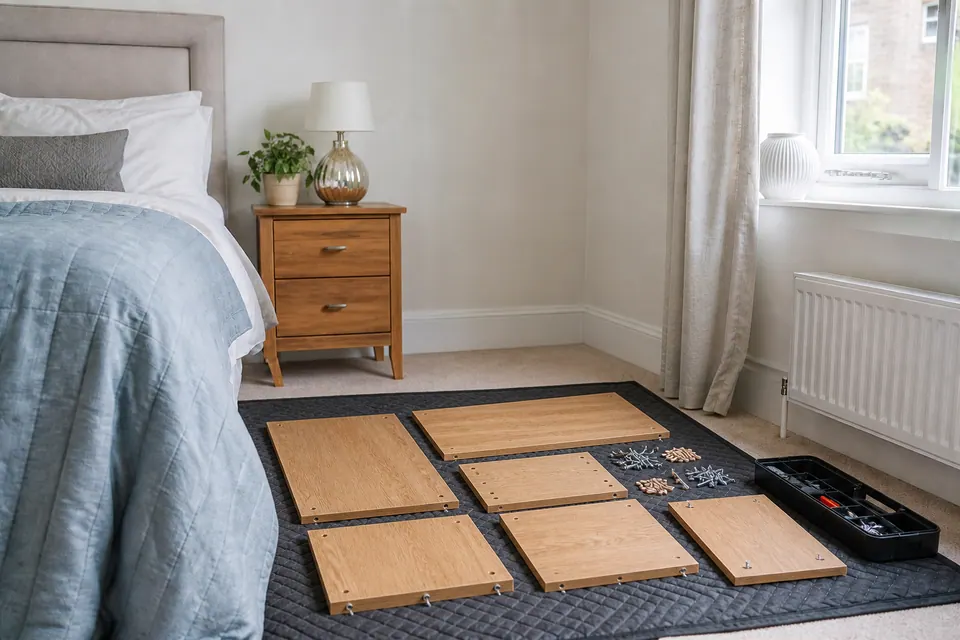
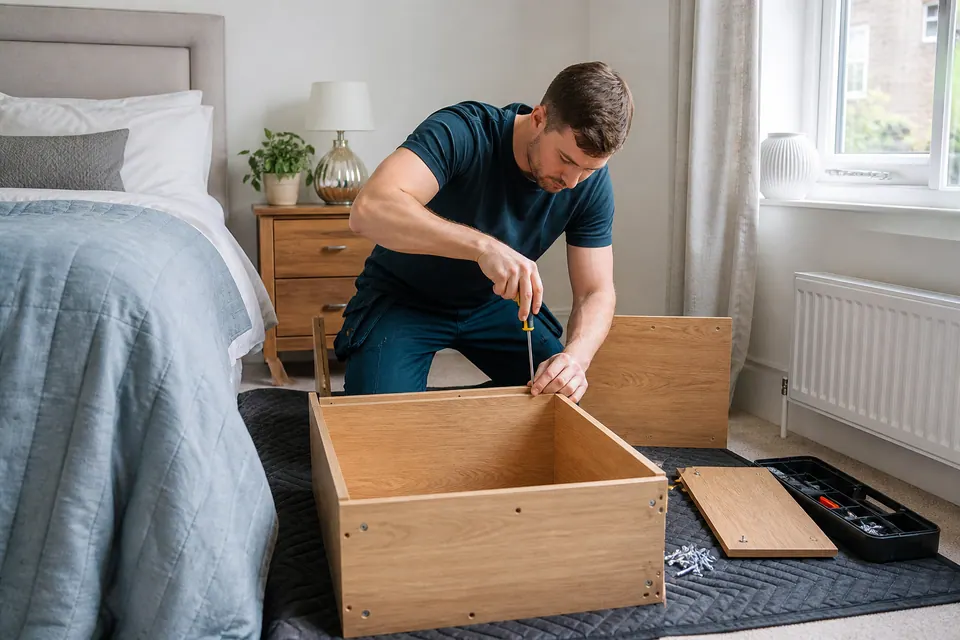
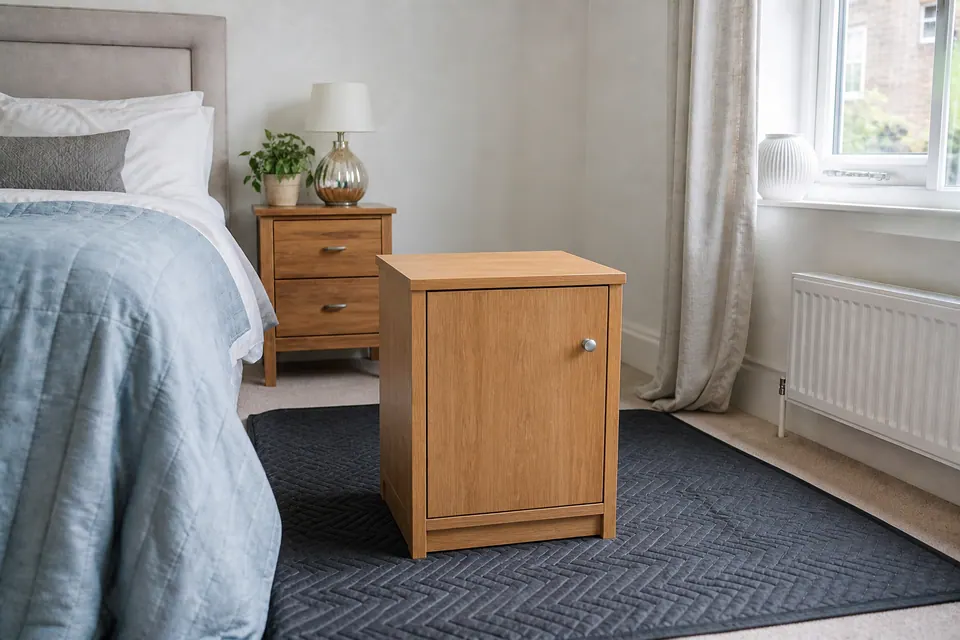
Illustrations explain assembly stages; they do not document a customer project.
PLAN THE ARRIVAL
Provide the Mitcham postcode and explain access around the unstable item. Ask about availability without turning or moving heavy furniture simply to prepare a photograph.
Area orientation
THE DETAILS OF YOUR VISIT
No. Damaged timber, board or an unsuitable connection may remain even after tightening. The supporting material needs assessment alongside the hardware.
Do not choose a repair from that assumption. Dimensions and material condition determine suitability, and extra length may introduce further problems.
Provide accessible views and describe the hidden area. Do not turn over a heavy or unstable piece simply to satisfy an initial photo request.
It can. Show its position relative to the connection rather than treating it as a cosmetic detail beside the loose joint.
Keep visibly unstable furniture out of use pending assessment. Reduced loading is not confirmation that the damaged connection is safe.
Mention the previous method and show any visible additions. Earlier holes or reinforcement may affect available options and component compatibility.
Identify the alternative product separately. Repairing existing damage and building a supplied replacement are different scopes, not interchangeable prices.
Their dimensions and application must be identified. A bolt that enters the hole is not necessarily a suitable replacement for the original connection.
Clarify the specific joint or defect being addressed and any remaining limitations. Wider replacement or carpentry needs should not be hidden within a minor tightening request.
TURN THE LIST INTO A PLAN
Show the connection and surrounding rail or panel. Describe previous repairs so the assessment can consider the actual material rather than only the loose screw.
Task images are illustrative.
