
Locked outside the flat
Describe door material, lock state and key event. Authority is checked before a suitable opening approach is agreed.
Reception · lift · floor · private door
In a high-rise or managed development, the journey to the lock can cross several controlled layers. Plan reception registration, lift access, the correct floor and the private-door instruction as one vertical route.
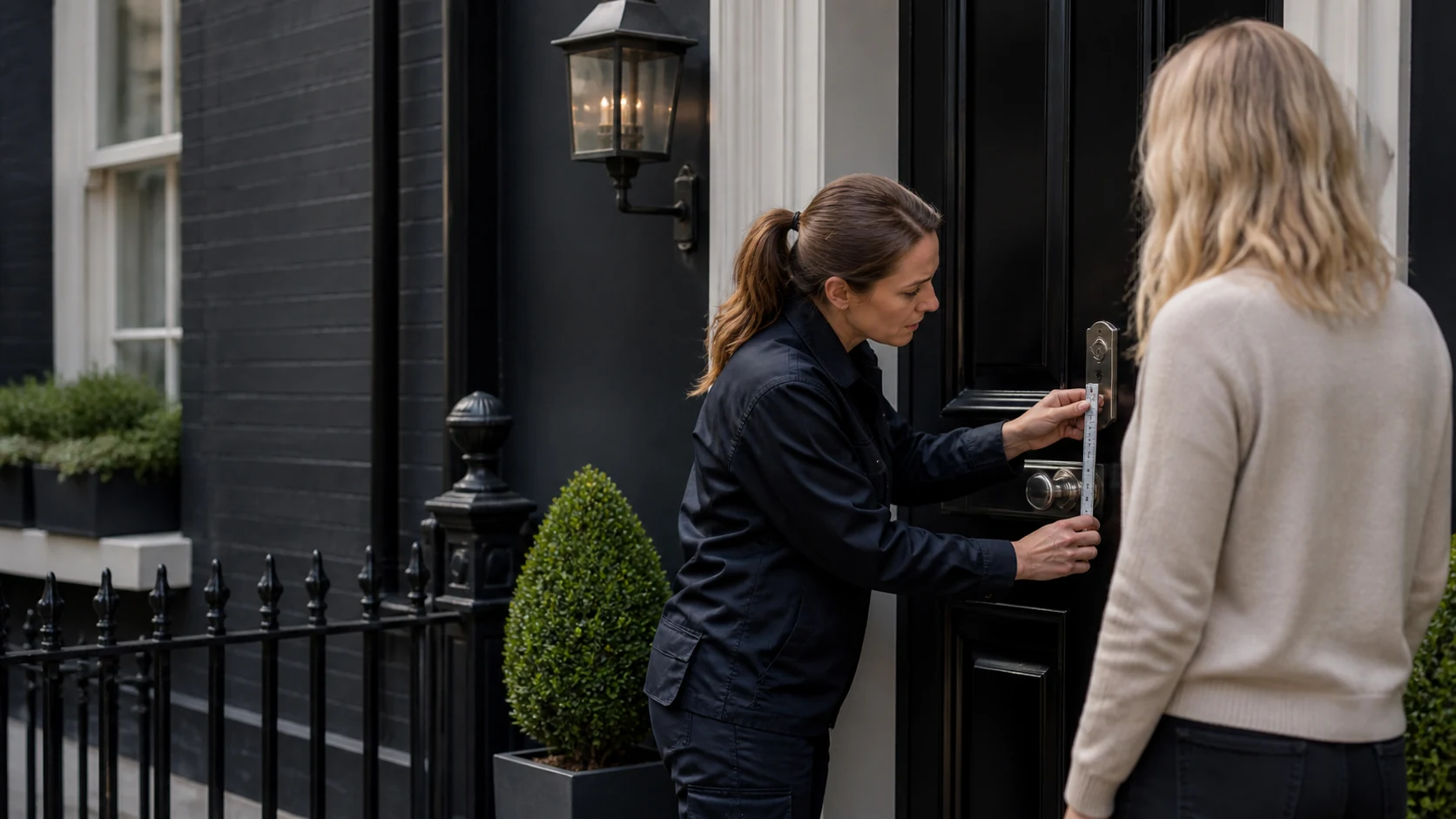
Managed-building route
A building may admit residents with a fob, visitors through reception and contractors by a service route. The locksmith needs to know which route management has approved and who will meet them at the final door. A resident’s access credential does not automatically authorise contractor use of a loading bay, service lift or controlled plant area.
Write the journey from street to flat in sequence. Add desk hours, required registration, floor, lift or stair alternative and any second controlled lobby. Confirm that tools may be carried through the chosen path. This route planning protects the appointment without inventing a response promise or assuming that concierge staff can approve work.
| Stage | Detail to confirm | Person or record needed |
|---|---|---|
| Arrival outside the building | Correct entrance, lawful stopping and person expected at reception | Resident booking plus current building visitor process |
| Reception or concierge | Contractor registration, tool route and any identity requirement | Desk team or managing-agent instruction |
| Lift or stair movement | Floor access, service-lift permission and alternative if unavailable | Building staff for controlled circulation |
| Residential corridor | Second fobbed door, floor lobby and exact flat | Resident or authorised floor-access holder |
| Private entrance | Door state, lock symptom, occupant authority and decision contact | Owner, tenant or authorised property manager |
| Managed equipment area | Whether access is genuinely relevant to the reported problem | Managing agent or appointed building contractor |
A lockout above ground level
For a private lockout, say whether you are outside the building, inside the common areas or only outside the flat. These positions change who must admit the locksmith. Have reasonable evidence of occupancy, ownership or authorised management ready. If identification is inside, discuss the available building and property contacts before attendance.
Reception can confirm a resident or record a contractor without becoming the customer for the private lock. Keep the resident, owner or agent reachable to approve the opening method and any part needed after entry. If the method could damage hardware, the locksmith should explain that boundary before proceeding.
Do not use an emergency stair, roof route or another resident’s flat as an improvised entrance. If a person faces immediate danger, fire or a life-threatening situation, contact the emergency services and follow the building’s emergency arrangements.
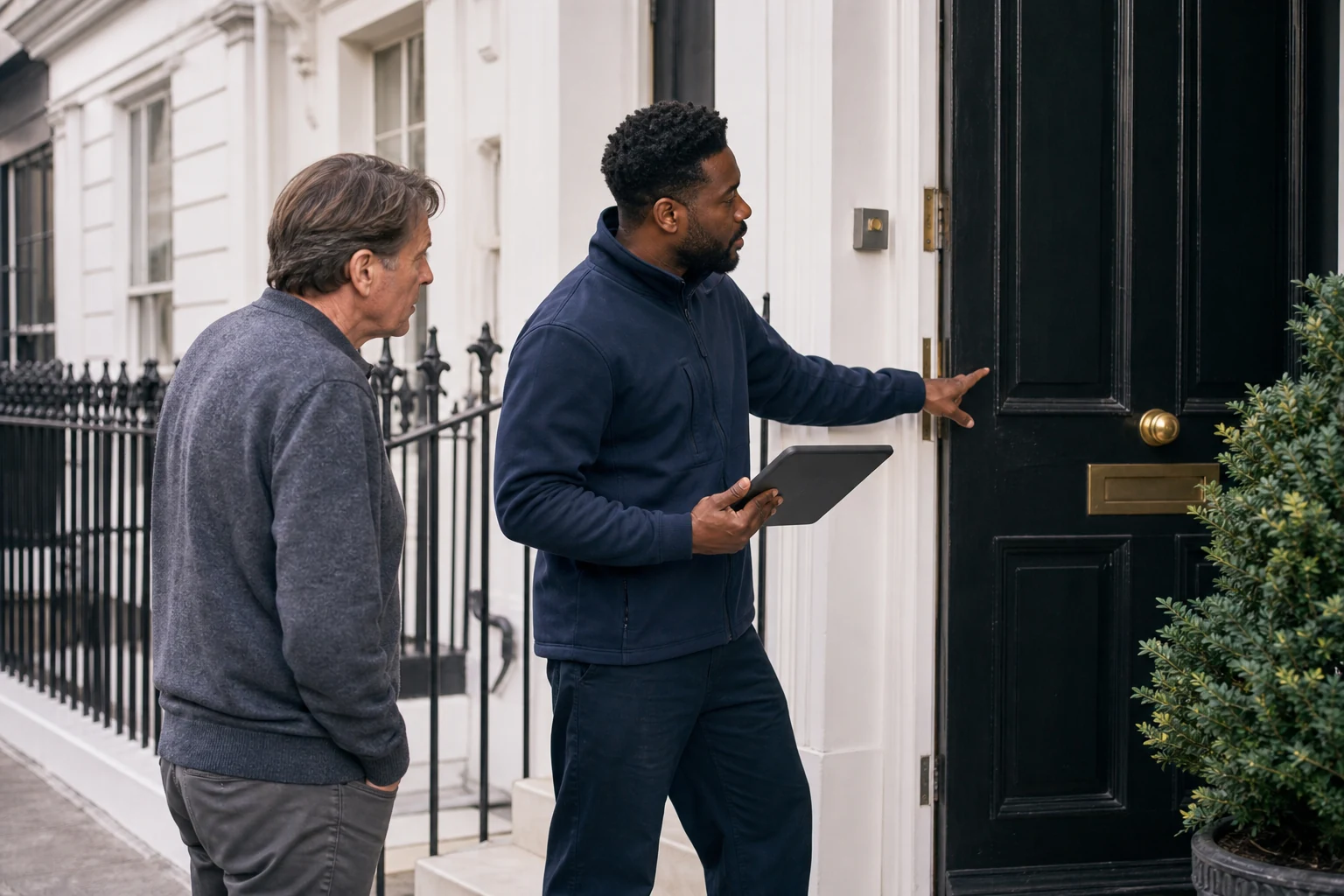
Mechanical or electronic?
A common entrance can include a mechanical key override, latch, closer, powered release, reader, fob and intercom. A failure reported as “the building door is locked” is not enough to choose a trade. Record what each user action produces and send it through the managing agent. Residents should not open control boxes or test powered equipment.
| Observed behaviour | Useful distinction | Likely coordination route |
|---|---|---|
| Mechanical key will not turn in the common door | Key, cylinder, door pressure and whether authorised alternatives work | Management-led mechanical locksmith assessment |
| Fob reads but latch does not release | Reader response, powered release sound, latch and closer position | Managing agent routes access-control, electrical and mechanical checks |
| Intercom works but visitor still cannot enter | Command response versus physical door movement | Building system investigation, not a private lock replacement |
| Door releases but does not close securely | Closer action, hinges, frame contact and latch engagement | Managed door, closer and lock scopes allocated from findings |
| One resident’s fob fails while others work | Credential administration versus shared hardware failure | Building access administrator before physical alteration |
| Private flat key is stiff beyond the common system | Door-open and door-closed operation at the dwelling | Resident-authorised locksmith assessment within the flat boundary |
Private-door service
Describe door material, lock state and key event. Authority is checked before a suitable opening approach is agreed.
Keep it supervised and report key, handle, latch and frame behaviour without dismantling parts.
Agree legitimate users and owner authority before a compatible key-control change.
Provide documented building requirements, current door preparation and the intended function.
Separate urgent securing and lock work from leaf, frame, glazing and decorative reinstatement.
Pass it to the building contact instead of extending a private-door instruction across shared systems.
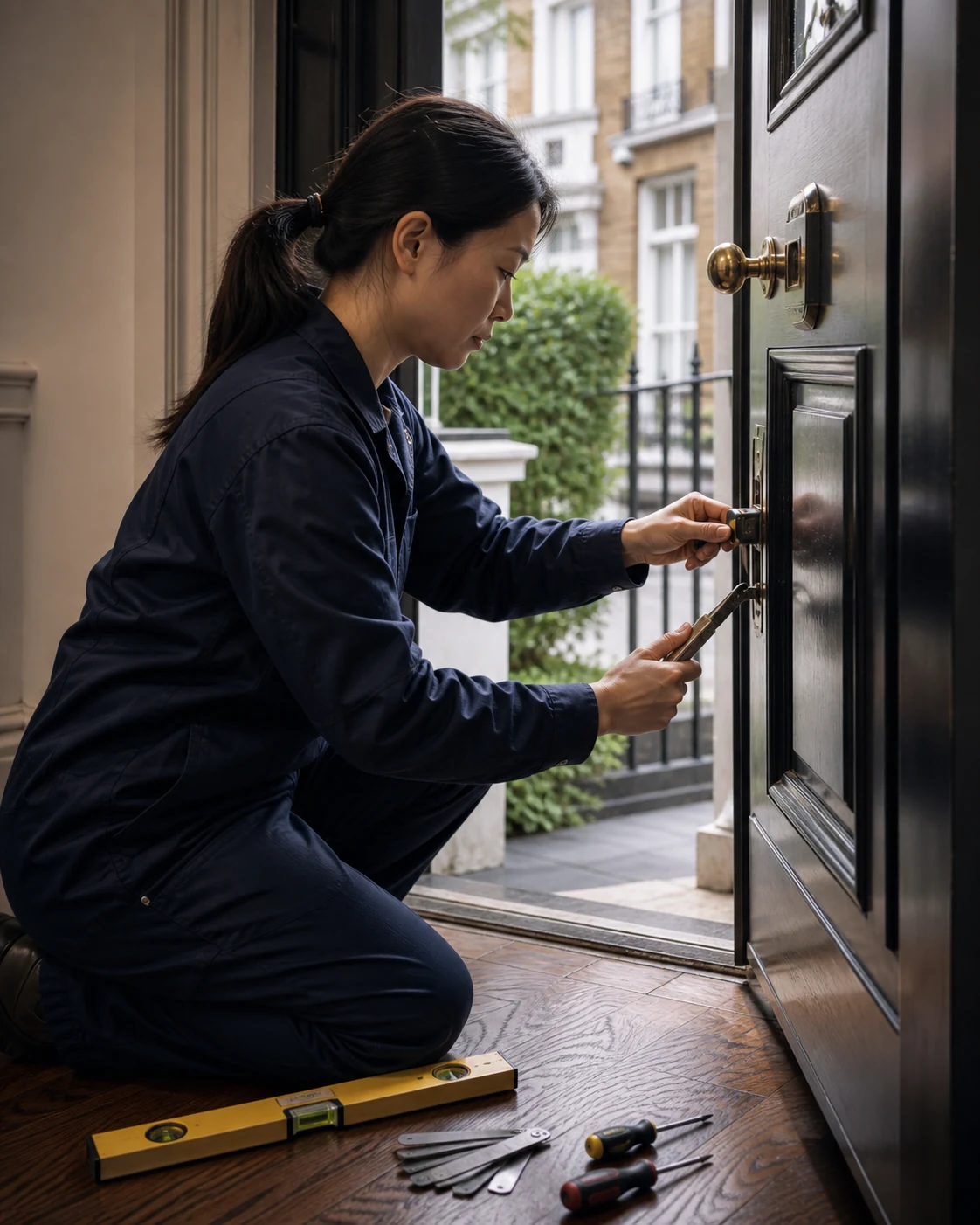
Vauxhall property context
Vauxhall includes high-rise developments and managed apartments as well as older terraces. The high-rise angle creates a vertical access plan; the terrace usually needs a simpler street-to-door route with front and rear entrances under the correct owner. Neither form determines the fitted lock or the work required.
In a development, check concierge, service-lift and controlled-floor procedures. Ask whether the private door has building records or finish requirements. In a terrace, identify alternative lawful access, gates and any garden door included in the enquiry. A conversion can combine the two responsibility questions: a common street entrance and a private door reached by stairs.
Where any door is described as a fire door, use current building records and management authority. The locksmith should not make unsupported compliance claims from appearance. Mechanical operation, closer issues and powered access also remain separate findings.
| Setting | Access preparation | Scope boundary |
|---|---|---|
| High-rise apartment | Reception, lift, controlled floor, flat contact and manager | Vertical access versus authority for private hardware |
| Concierge-managed development | Visitor booking, service route and building work procedure | Concierge assistance versus owner or agent approval |
| Terraced house | Street entrance, rear route, all included doors and key holders | Private lock work versus separate door repair |
| Converted property | Communal door owner, stairs and exact dwelling entrance | Freeholder work versus flat occupier work |
| Electronic common entrance | Reader, fob, intercom, release, closer and mechanical observations | Locksmith component versus access-control or electrical system |
Quote across the vertical route
Cost depends on arrival conditions, internal route, verification, door state, opening method, labour and compatible parts. No figure can be inferred responsibly from the area or building height. A quotation should identify what is known and what depends on inspection.
State the approved entrance, floor access and person meeting the locksmith.
Distinguish attendance, opening, repair, replacement and supplied keys.
List common doors, powered access, closer or fire-door decisions outside authority.
Return findings to the resident and any building issue to the named manager.
If an unavailable lift, locked floor or absent manager prevents access, record the limitation rather than pretending the door was assessed. Additional hardware or destructive entry should receive approval from the private-door decision-maker.
Vauxhall locksmith FAQ
Give the expected name, arrival window, resident and flat, equipment route and whether the building requires contractor registration or service-lift use.
Only if management has expressly given that authority. Admission help and product or cost approval should otherwise remain separate.
State that exact position, prepare occupancy or ownership evidence and keep the authorised owner or agent reachable for method and parts decisions.
Not always. Credential, reader, controller, power and release can be involved. Report mechanical and electronic behaviour separately through building management.
Use the current building procedure. Confirm the permitted lift or stair route before attendance rather than assuming a resident journey is valid for contractors.
Notify the responsible manager. The closer, hinges, frame, mechanical latch and powered release may need coordinated assessment by more than one trade.
It can only be assumed where compatibility and scope are already clear. Otherwise inspection may lead to a separately approved part proposal.
Keep the area safe and provide context photographs. Locksmith securing, frame or leaf repair, glazing and decoration should be allocated explicitly.
Record private-door work, parts, keys and operation tests, then list any common-access or door issue passed to the managing agent.
Nearby coverage
Use the service pages for the task and current local pages for related access contexts.
Plan the route before the private-door decision
Send the vertical journey, resident authority, private symptom and building contact for a visit that stays within the right system.
