
Lock replacement
Existing dimensions, required function and the authorised key plan guide selection.
Paired entrances · controlled access · careful finishes
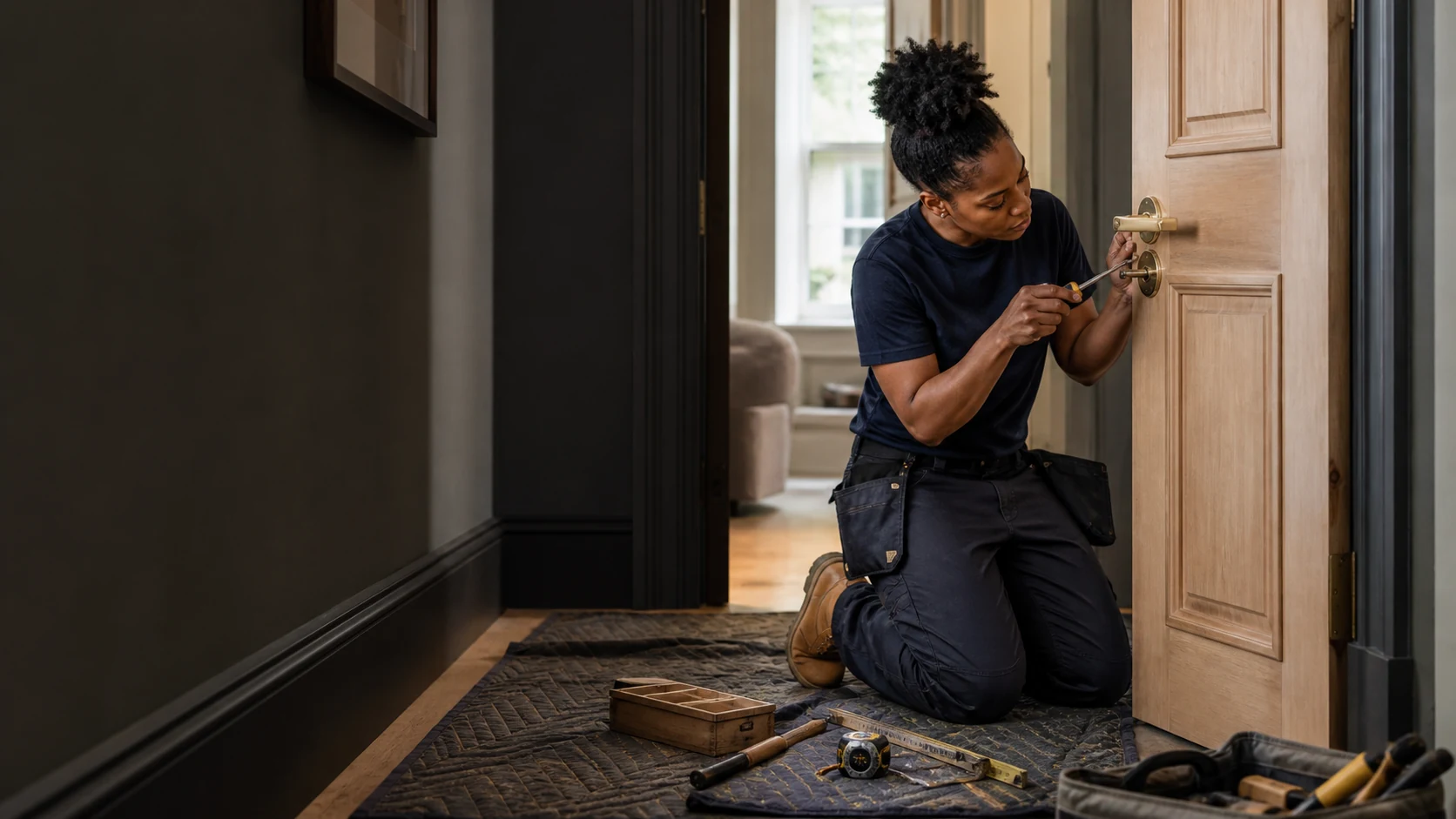
A gated entrance and a carefully finished front door are two different security boundaries. A useful Highgate brief identifies who controls each one, how visitors move between them and which surfaces must remain undisturbed before any lock work is approved.
The paired entrance brief
Start where a resident or visitor actually arrives. A pedestrian gate may use a mechanical latch, an electric release or a key. Beyond it there may be a shared lobby, an intercom-controlled door and finally a private timber entrance. Labelling each stage prevents a fault at one boundary from becoming an instruction to alter another.
For every stage, note who owns it, who can authorise work and which users need access. A resident may have authority over a private door but not a communal gate. A managing agent may approve the shared entrance while the owner decides the finish on an internal front door. These distinctions should be settled before parts are ordered or drilling is discussed.
| Boundary | Record before attendance | Decision owner | Useful test |
|---|---|---|---|
| Pedestrian gate | Latch, closer, key or release method | Owner or managing party | Close and release from both sides where authorised |
| Powered gate control | Intercom, keypad or electrical release | System controller | Keep electrical diagnosis separate from lock work |
| Communal lobby | Door type, users and fire route | Freeholder or manager | Check normal entry and safe exit |
| Private front door | Timber condition, lock, furniture and finish | Resident or owner | Test open, closed, locked and released |
| Service entrance | Separate key holders and delivery use | Named authorised contact | Confirm it is not confused with the main route |
Carefully finished doors
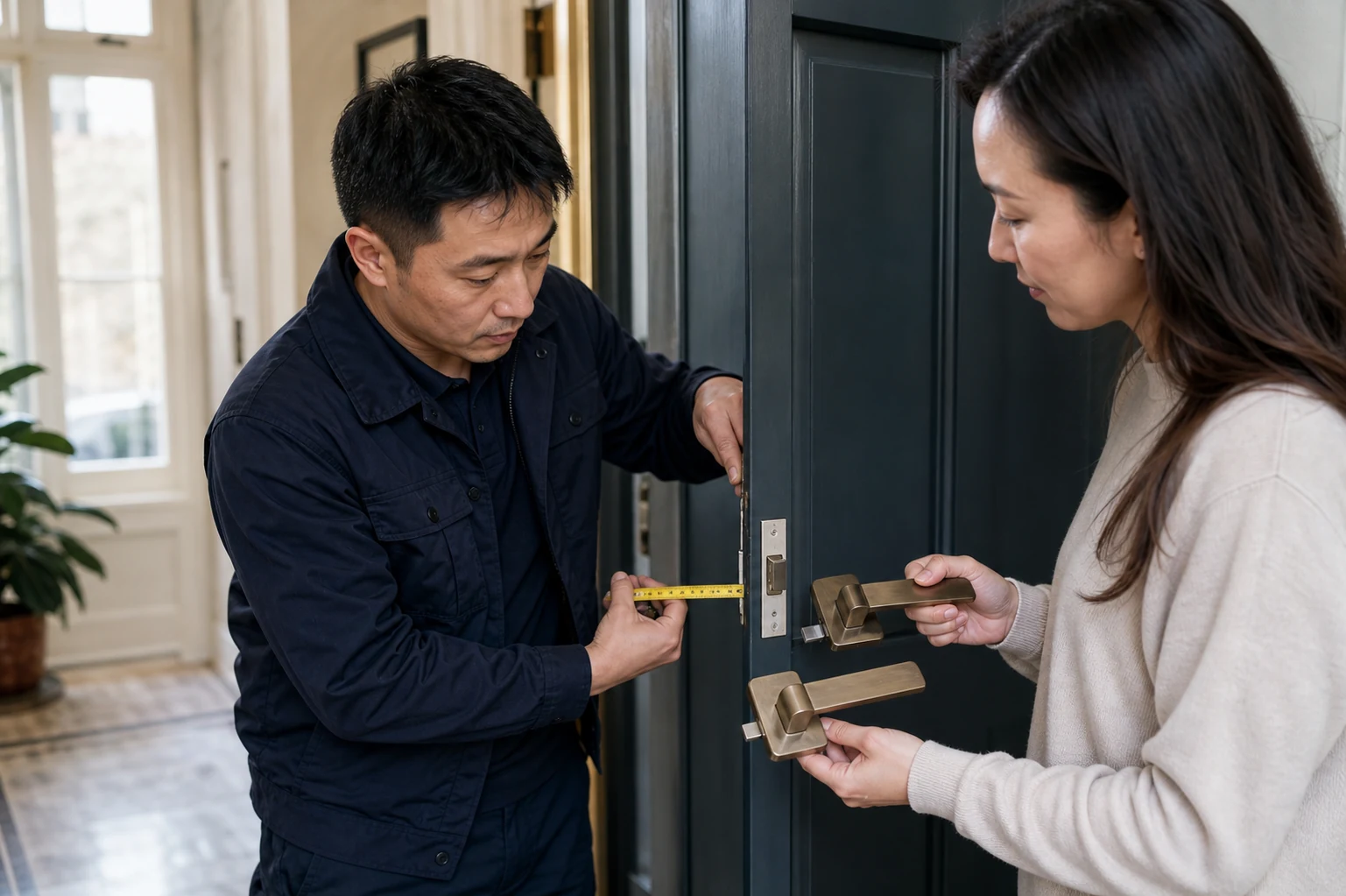
Photograph the whole door in even light, then take close views of the escutcheon, handles, cylinder, letter plate and door edge. Record paint, stain, polished metal and any existing marks. A photograph does not promise that all work will be invisible, but it gives the locksmith and decision-maker a shared reference.
Do not remove furniture to inspect underneath unless authorised and safe. Existing holes may constrain the replacement footprint; a different backplate can expose unfaded timber or old fixing points. If appearance matters, ask for those possibilities to be shown in the quotation rather than discovered after installation.
Outcome before product
“Improve the entrance” can mean better key control, easier visitor entry, dependable latching or a change of appearance. Those outcomes do not automatically require the same work at the gate and the front door. Define the result at each boundary first.
| Desired outcome | Gate question | Main-door question | Evidence needed |
|---|---|---|---|
| Remove former access | Who holds gate credentials? | Which private keys remain accounted for? | Authorised user and credential list |
| Improve reliable closure | Does the gate latch without assistance? | Does the door meet the frame freely? | Unforced observation at each boundary |
| Simplify visitor entry | Is release electrical or mechanical? | How is the visitor admitted onward? | Actual arrival sequence |
| Preserve appearance | Which gate fittings are visible? | Which timber and furniture surfaces matter? | Photographs and retained-item list |
| Change user permissions | Who needs shared access? | Who needs private access? | Approved access groups |
| Support managed maintenance | Who receives gate records? | Who stores the private-door record? | Named custodians for each document |
Planned locksmith services
Existing dimensions, required function and the authorised key plan guide selection.
A serviceable mechanism may be repaired once the fault and condition are known.
Door, hinges, frame and locking points are compared before adjustment.
Mechanical gate hardware is considered within its ownership and system boundary.
Identity, authority and the exact door are confirmed before an opening method is chosen.
Keys are counted, labelled by boundary and delivered to an authorised custodian.
Approval without ambiguity
Highgate is not a pricing formula. The number of boundaries, access arrangements, diagnosis, parts, door preparation and finish constraints all affect the proposed work. A clear quote should say what happens at each door and what remains outside scope.
| Quote line | What should be written | Approval checkpoint |
|---|---|---|
| Arrival and access | Meeting point, gate procedure and authorised escort | Route available without sharing private codes |
| Gate work | Mechanical component and exclusions for powered systems | Correct owner approves |
| Timber preparation | Drilling, cutting, filling or retained holes | Visible consequences accepted |
| Hardware finish | Specified colour and which fittings remain | Sample or product reference agreed |
| Key custody | Key quantities and named recipient | No uncontrolled handover |
| Testing | Gate, lobby and private-door test sequence | Results recorded boundary by boundary |
| Exclusions | Electrical, structural, decorating or joinery limits | Other trades identified where appropriate |
If hidden damage or incompatible preparation appears, stop and revise the scope. Consent to inspect is not consent to make an unpriced alteration.
Highgate property context
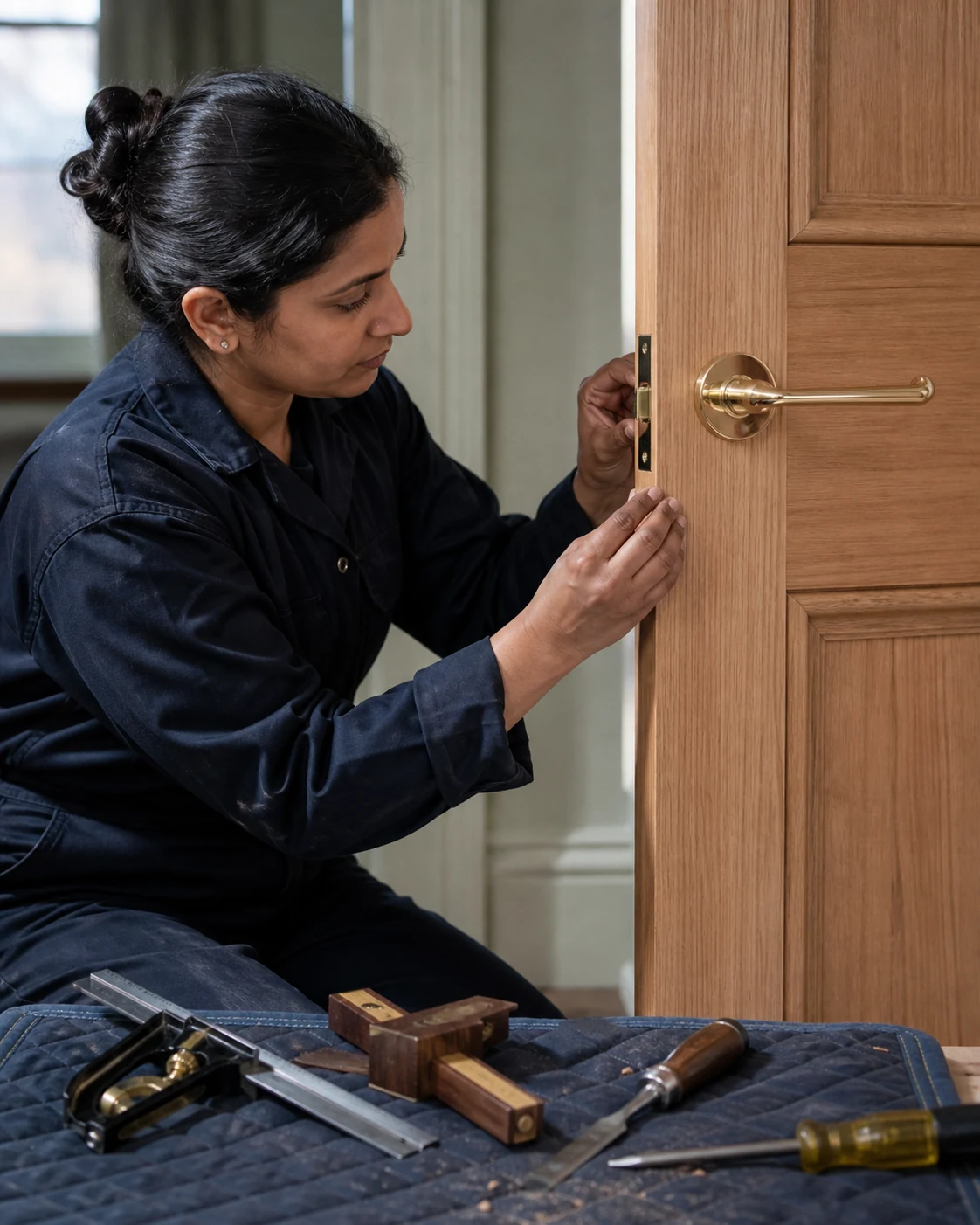
A period house may have a single private entrance with decorative timber. In that case, record the visible finish, existing cut-outs and every person needing keys. Age alone does not determine a suitable lock.
A mansion flat may combine a managed street door with a resident-controlled flat door. The two authorities, key lists and maintenance records should not be merged. Work on one entrance should not silently change the other.
A gated property can add a mechanical or powered boundary before the front door. State whether the reported issue concerns the gate leaf, lock, release, intercom or onward entrance. Locksmith work should not be presented as electrical diagnosis.
Service and side entrances deserve their own line in the brief. If they are retained, test them and identify their key holders; if excluded, record that exclusion so the project does not appear to cover the entire property.
A calm appointment sequence
Before attendance, nominate one person to give access and one person to approve changes if these roles differ. Provide only the codes or keys needed for the visit. Move vehicles, deliveries and pets away from the working route, and ensure suitable lighting at every entrance being assessed.
Walk the route once without forcing a reluctant door. Demonstrate each genuine symptom in normal use, then allow the locksmith to inspect. Where a communal entrance is involved, avoid holding it open in a way that undermines other residents’ security.
At completion, repeat the arrival route with an authorised user. Check that the gate releases, shared door closes and private door latches and locks as intended. Count every new and retained key. Photograph the completed visible surfaces and place the product, key and limitation records with the correct owner or manager.
Highgate paired-entrance FAQ
Possibly, but compatibility, ownership and the approved access groups must be assessed. A shared gate and private door should not be combined merely for convenience.
The relevant owner, freeholder or managing party should provide authority. A resident’s ability to use the gate does not necessarily grant permission to alter it.
Not always. Existing holes, colour changes and plate sizes should be compared before approval, with visible limitations written into the scope.
No assumption should be made. Record whether the mechanical latch, powered release, control or intercom is failing and involve the appropriate specialist.
Only authorised users should receive the keys or credentials assigned to their access group. Keep gate, communal and private-door records separate.
It may be possible when condition, dimensions and compatibility allow. Retention should be specified and verified rather than presumed.
Use the controlled method agreed by the system owner and disclose it only to those who require it. Change or withdraw temporary access where appropriate.
List each boundary tested, work completed, keys or credentials handed over, visible finish condition, exclusions and any referral to another trade.
One route, distinct boundaries
Send the Highgate address, entrance sequence, authorised contacts, photographs and the outcome required at each door.
