
Alignment check
Open and closed operation is compared before frame keeps or hinges are adjusted.
Tenant diary · owner authority · UPVC system · repair record
A tenant can provide the best account of a failing UPVC entrance or garden door, while the landlord or authorised agent may approve permanent work. A Leyton booking should combine those roles in one fault packet.
Tenant fault diary
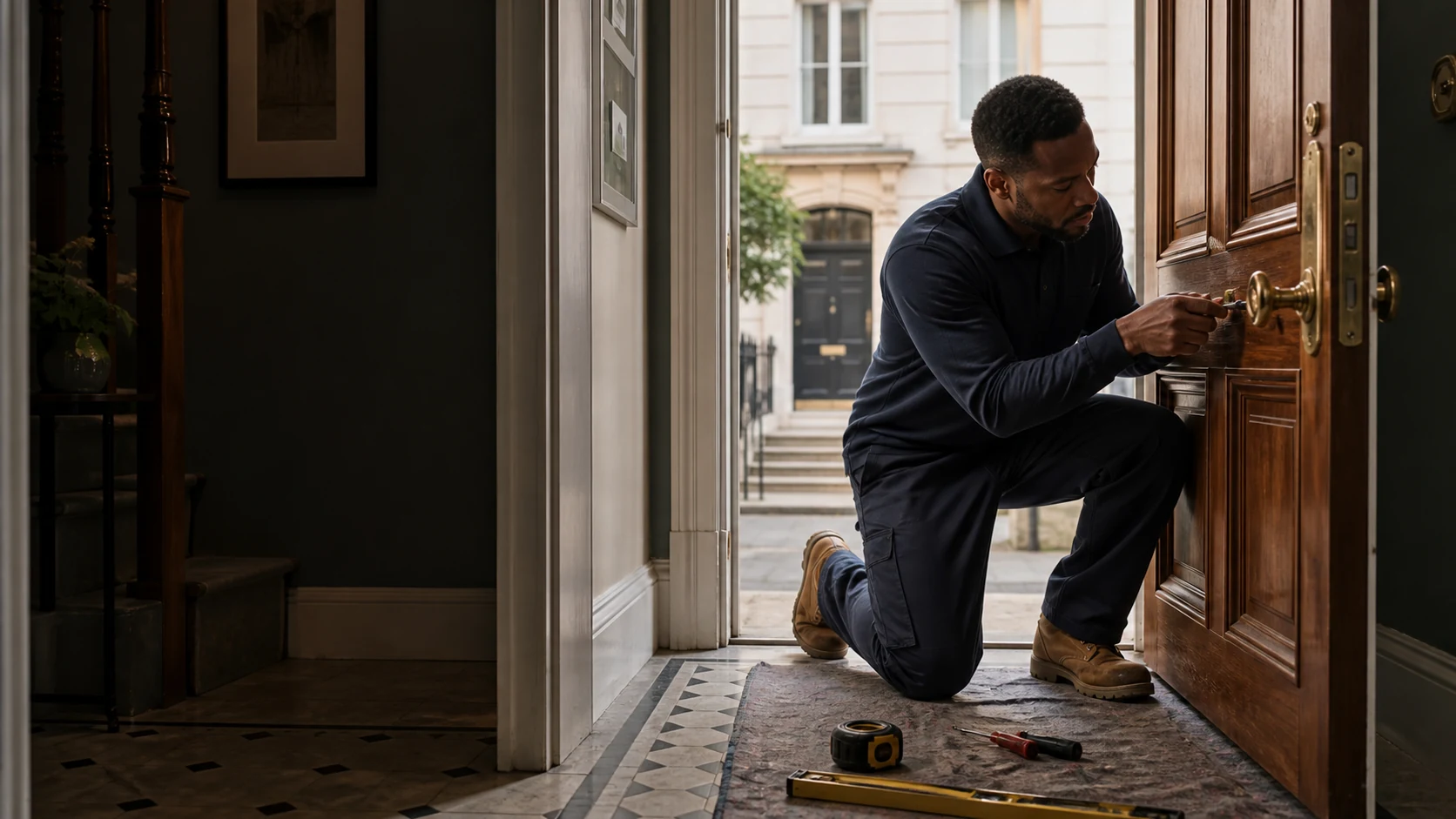
Write the date, door position and action where the problem appeared. Note whether the handle lifted, the key turned and the leaf met the frame normally. If the fault is intermittent, do not keep cycling the door for another example. A short diary built from everyday use is safer and more credible.
Send the diary to the landlord or agent with photographs of the full door, handles, visible cylinder, edge strip and keeps. Leave screws, hinges and hardware untouched. The owner can then authorise assessment while the tenant explains access and practical use.
| Packet field | Tenant contribution | Owner or agent contribution |
|---|---|---|
| Exact door | Front, rear, flat or garden location and route | Confirm private or communal responsibility |
| Symptom diary | Dates and direct handle, key and door behaviour | Provide known repair history without assuming cause |
| Safe photographs | Whole door and visible components | Supply previous part records if held |
| Access window | Occupancy, pets and normal use constraints | Contractor authority and contact for decisions |
| Desired result | Explain daily use that must be restored | Approve repair, replacement and key quantities |
Authority packet
The tenant’s presence does not always authorise a permanent change. The landlord or agent should name the door, accepted assessment and person who can approve a revised scope. If the main entrance is communal, involve the freeholder or manager rather than transferring that responsibility to the tenant.
For a garden door, explain whether both sides are safely reachable. Do not cross another garden or shared passage without permission. Keep the area clear and retain all keys. If the door cannot be secured, notify the owner promptly and supervise it where safe.
Diary entry to component check
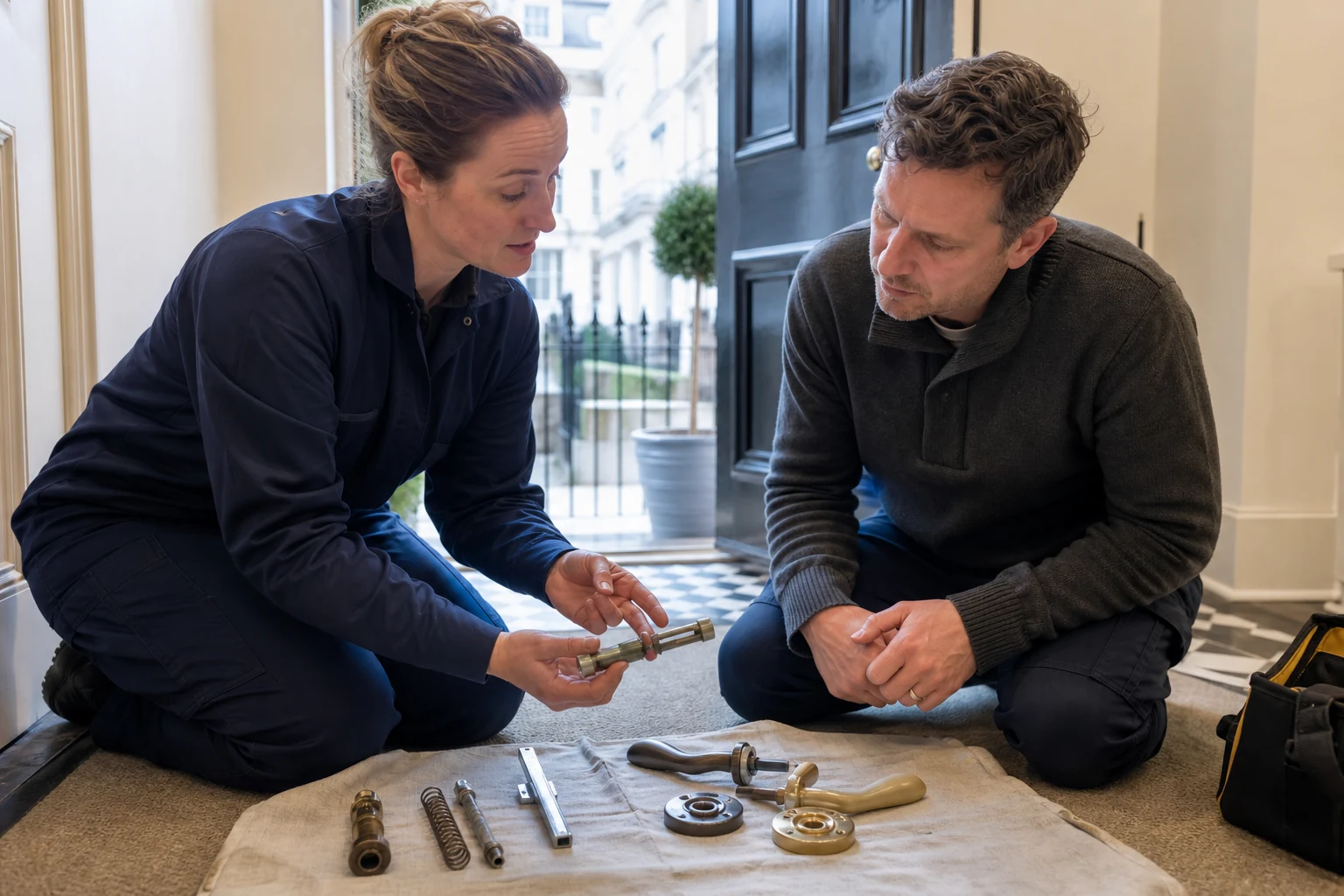
| Diary observation | Safe response | Inspection question |
|---|---|---|
| Handle resists only after closure | Stop force and record frame contact | Alignment, keeps, gearbox and strip |
| Key is stiff in every position | Retain a sound key and limit use | Keyway, cylinder and connected pressure |
| Handle has increasing free movement | Do not tighten or dismantle it | Fixings, spindle and gearbox connection |
| Door locks after being lifted | Report the technique without relying on it | Door position and locking-point engagement |
| One key breaks or bends | Keep it and stop further attempts | Key condition and underlying resistance |
| Communal door shows the same timing | Report separately to management | No causal link assumed between systems |
Repair routes
Open and closed operation is compared before frame keeps or hinges are adjusted.
A measured cylinder can address local damage or key control when the mechanism is sound.
Fixings, spindle and gearbox response are examined as connected parts.
Identification uses dimensions and strip information, not the visible handle alone.
Locking points and keeps are reviewed with the complete door condition.
Frame, panel, glazing and structural issues can require another authorised provider.
Quote and reporting line
Leyton does not generate a standard price. The quote follows access, assessment, labour and parts. It should also state the communication and approval path if the original description changes.
| Scope | Approval input | Handover output |
|---|---|---|
| Assessment | Tenant diary and owner instruction | Confirmed finding to authorised recipients |
| Adjustment | Measured alignment evidence | Change and retained parts recorded |
| Repair | Identified component and owner approval | Normal operation explained to tenant |
| Replacement | Dimensions, part, keys and authority | Installed item and key count to owner and user |
| Communal exclusion | Managing-party contact | Shared system referred separately |
| Making good | Door and finish condition | Repair boundary and follow-on owner |
If the mechanism differs from the anticipated part, pause. The owner or agent should receive the evidence, revised price and disruption before work expands. Tenant convenience does not remove that approval step.
Leyton property context
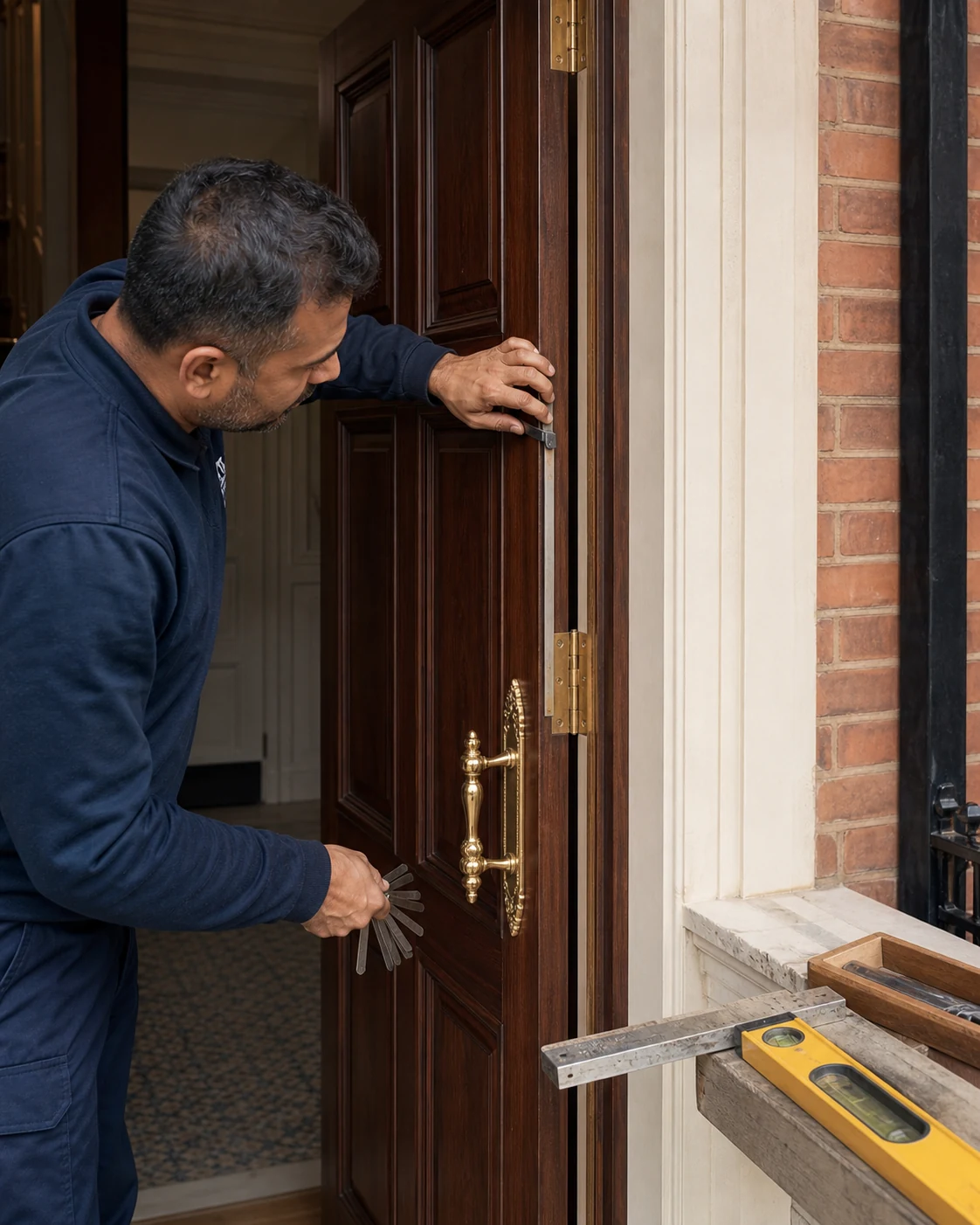
In a rented terrace, the landlord may control the front and garden-door repair while the tenant provides daily evidence. Confirm safe access to the rear and the key recipients after work.
In a conversion, the street entrance may be communal and the flat door private. Create separate diary entries and management contacts. Similar timing does not prove a shared fault.
A UPVC door can look standard while using different internal components. Present photographs help triage, but controlled examination and measurements support the final repair.
Two-part handover
Test closing, locking, unlocking and release with the resident. Count keys and state any temporary technique that should no longer be needed. Send the owner the confirmed part, work, exclusions and future repair note.
If another trade is required, identify the unresolved frame, panel or access-system issue. A clear two-part handover prevents the maintenance record from losing the tenant’s practical result.
Leyton rented-door FAQ
Yes. The tenant can provide direct observations and access, while the landlord or agent confirms permanent work where required.
Record only genuine occurrences with dates and door position. Do not prolong unsafe use to collect more examples.
No. Leave the door unchanged and provide safe photographs and operational notes.
Yes with a clear instruction, decision contact and revised-scope process. The tenant still needs practical access guidance.
Send that issue to the freeholder or manager. A private tenancy instruction does not authorise shared hardware.
The owner or agent should specify tenant, landlord and agent quantities before fitting.
No. It shows observed behaviour; the component diagnosis requires examination and measurements.
Keep the finding, parts, keys, final test, exclusions and any recommendation for door or building work.
Combine the tenant diary with owner authority
Send the Leyton address, exact door, dated observations, safe access and approving landlord or agent contact.
A fault packet that survives a handover
After attendance, update the original fault packet instead of replacing it with a vague “fixed” message. Preserve the tenant’s direct description and photographs, then add the locksmith’s finding. This keeps reported experience separate from technical assessment and helps a landlord or agent understand why a particular repair or replacement was approved.
The completion note should name the exact door and controlled element. In a converted property, “front lock” may refer to the street entrance, a shared lobby door or the flat entrance. Record ownership and authority beside the work so a later manager does not assume that a private repair covered a communal system.
Count new, retained and withdrawn keys. Give them only to an authorised person through the agreed handover route. If a tenant needs access before the landlord is present, document who approved that arrangement without publishing key photographs, access codes or security details in a shared message thread.
Repeat the ordinary operating sequence with the resident where possible. Check that the door closes, latches, locks, unlocks and releases without unusual force. If a UPVC door needs a particular handle movement, demonstrate normal use, but do not frame extra pulling or lifting as a permanent workaround for poor alignment.
Close with limitations and next ownership action. Joinery, glazing, powered access or communal maintenance may require another responsible party. A precise referral is better than leaving the tenant between contractors with no account of what has already been inspected.
