
Alignment assessment
Open and closed operation is compared before hinge or keep movement is considered.
Rear-door history · present symptom · component evidence · normal handover
A loft conversion or change in family use can alter how a home is occupied without proving why a rear multipoint door has failed. A Walthamstow brief should keep the property history as context and let present door evidence drive the repair.
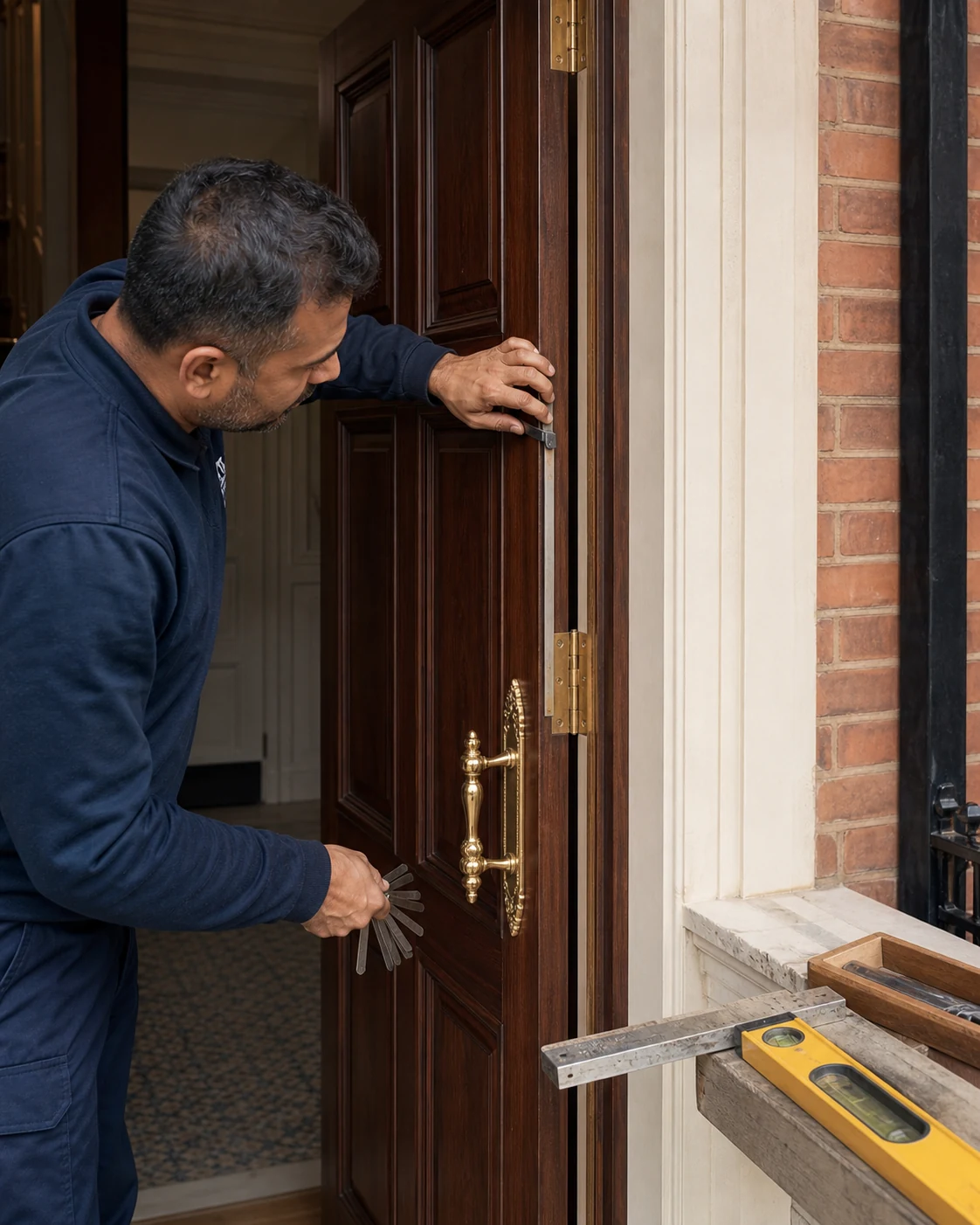
Rear-door service history
A rear extension, loft project or redecoration date can help establish when the door was installed or last accessible. It does not establish that the work caused today’s stiff handle or failed key turn. Gather certificates, invoices and photographs already held, then separate them from a direct account of the fault.
Record whether the leaf closes freely, where the handle resists, whether the key enters and turns, and whether behaviour changes with the door open. Stop at resistance. Do not move keeps, adjust hinges or remove the cylinder. The locksmith can combine this evidence with measurements and component condition.
| Record area | Information to gather | How it should be used |
|---|---|---|
| Installation history | Known fitting or repair date and documents already held | Identification context, not proof of present cause |
| Property changes | Loft, extension or room-use dates relevant to access | Visit planning without assuming mechanical effect |
| Current door state | Open, closed, insecure or jammed position | Safe attendance and opening plan |
| Operating sequence | Closing, handle lift, key turn, retention and release | Locates the stage that requires examination |
| Household continuity | People, pets and routines affected while rear access is unavailable | Plans a practical work window |
Preserve the system evidence
A euro cylinder is only one component. The handles drive a spindle, the gearbox moves the strip and locking points meet frame keeps. Resistance elsewhere can make the key feel faulty. Photograph the whole door, both handles, cylinder faces, visible strip and keeps from safe positions.
Tell the locksmith whether both sides are reachable through your property. Clear ordinary belongings and keep fixed hardware assembled. If the door is insecure, supervise the area and seek prompt advice. Do not repeatedly cycle a handle that feels close to breaking.
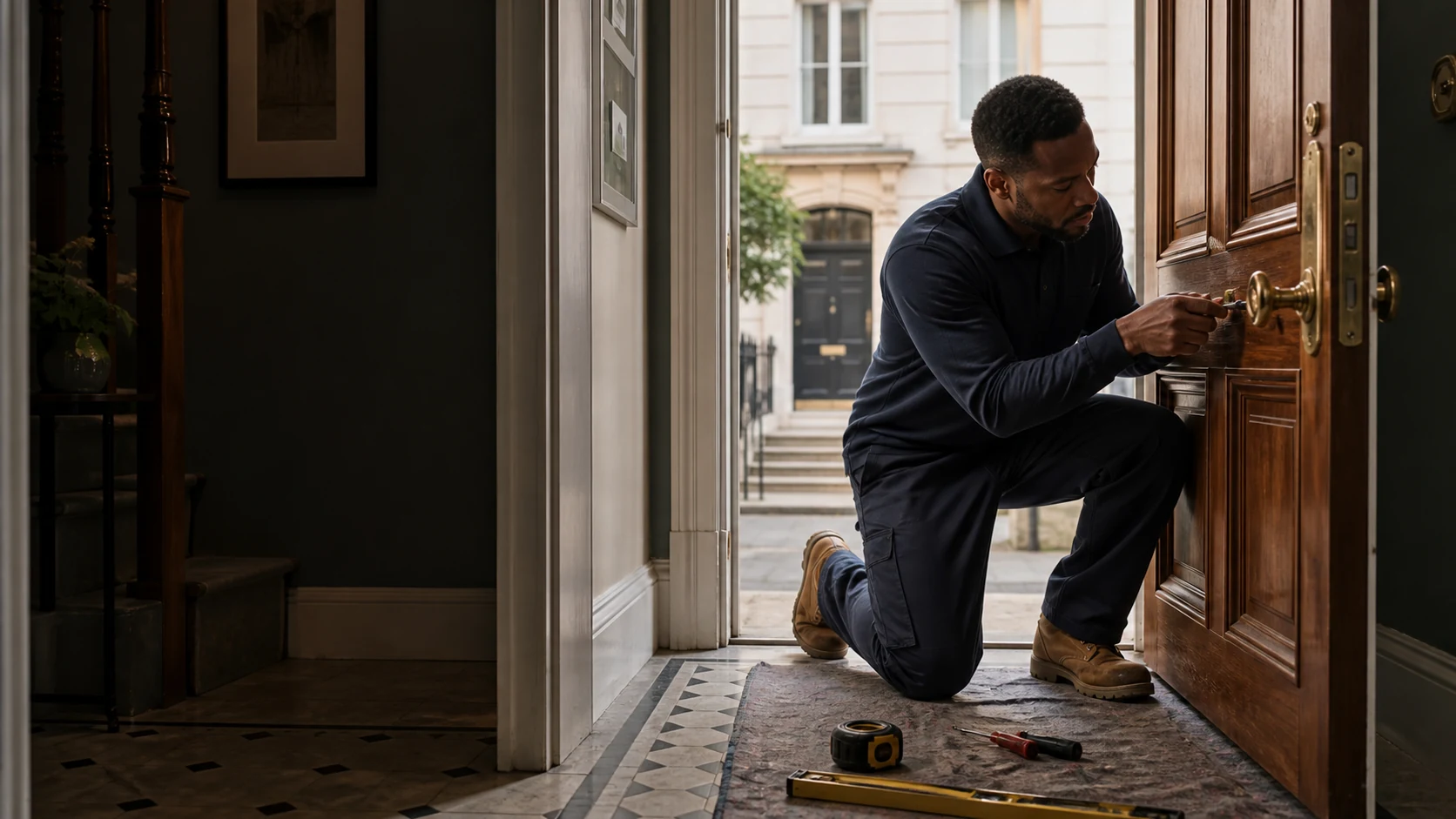
Evidence to component check
| Observation | Safe preparation | Inspection must distinguish |
|---|---|---|
| Door meets the frame only when lifted | Stop forcing and record contact points | Hinges, frame, keeps and door position |
| Handle stops before reaching full lift | Compare open operation only if safe | Keep pressure, gearbox and strip travel |
| Handle lifts but key will not turn | Retain a sound key and avoid extra force | Cylinder condition and mechanism position |
| Key turns but hooks do not move | Leave the door in its safest available state | Spindle, gearbox connection and full strip |
| Handle will not return | Limit use and note its resting position | Handle spring, spindle or internal resistance |
| One frame point catches | Photograph the keep without moving it | Local contact versus whole-door alignment |
Repair branches
Open and closed operation is compared before hinge or keep movement is considered.
A measured change can address local damage or key control, not a failed gearbox.
Fixings, spindle and connected mechanism are checked before new furniture is selected.
Case dimensions and strip details guide compatible parts rather than handle appearance.
Locking points, faceplate and keeps are assessed as a connected system.
Panel, glass, hinge, frame or structural damage can require another provider.
Quote and service record
No fixed Walthamstow figure can replace identification. The quote follows access, labour, parts and actual condition. It should state what remains installed and how the final operating cycle will be checked.
| Scope | Input | Completion record |
|---|---|---|
| Assessment | History, symptoms, access and photographs | Confirmed findings and limitations |
| Adjustment | Measured door and keep relationship | Positions changed and components retained |
| Local repair | Identified handle, cylinder or gearbox issue | Part repaired and test result |
| Replacement | Dimensions, compatibility and agreed alternative | Installed component and keys supplied |
| Related door work | Frame, panel, glass or hinge condition | Exclusions and follow-on provider |
| Handover | Normal household use and authorised users | Complete cycle demonstrated |
If removal reveals a different gearbox or additional damage, pause and revise the scope. The property history remains context; the newly exposed condition is the evidence for the next decision.
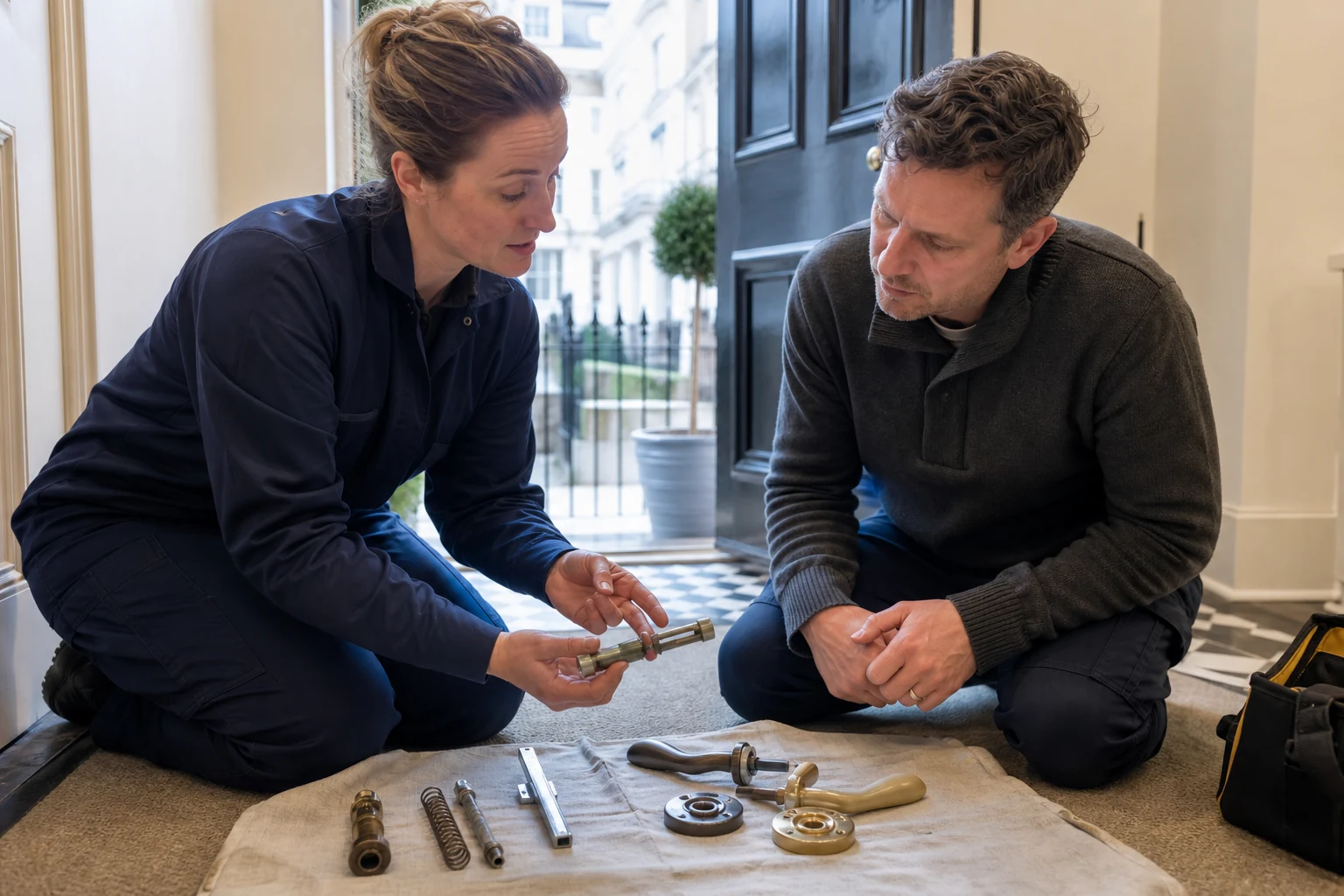
Walthamstow property context
A terraced family home may rely on the rear door for garden use throughout the day. Explain the household window when it can be inspected without leaving children or pets near an unsecured opening.
A loft conversion can place occupants on another level, but it does not identify the rear mechanism. A converted flat may also share the route to a garden or side passage. Confirm ownership and permission before work.
If earlier building work created new finishes around the door, record protection and making-good responsibilities. Electrical, glazing and structural tasks should not be silently included in a mechanical lock repair.
Record the restored cycle
Close, lift, lock, check retention, unlock and release the door with the authorised user. The result should not rely on an unexplained pull or shove. Count keys and add the confirmed repair to the service record.
Note every retained part and outstanding door issue. A useful record prevents future property changes from being blamed automatically for an unrelated lock fault.
Walthamstow rear-door FAQ
Yes as dated context where it affected access or records, but do not claim it caused the present fault.
It may help, but later repairs could have changed parts. Present measurements and examination remain necessary.
Agree a controlled work window and an authorised alternative route. Keep people and pets away while security is interrupted.
Not necessarily. Pressure from alignment or the multipoint mechanism can affect key movement.
Yes when the handle is the confirmed issue and the connected mechanism is sound. Compatibility still requires measurements.
No assumption should be made from marks alone. The locksmith should assess current alignment before adjustment.
Confirm the freeholder, manager or owner responsible and every authorised user affected.
Keep the finding, part or adjustment, retained components, keys supplied, final test and exclusions.
Keep history and diagnosis separate
Send the Walthamstow address, rear-door route, service history, operating sequence and authorised contact.
A usable rear-door service record
Finish the visit with a short record tied to the rear door, not a loose collection of receipts. Identify the leaf by room and orientation, describe the lock and multipoint arrangement in ordinary language, and state which work was completed. If a handle, cylinder or strip was retained, say so. A later owner should be able to distinguish a repaired item from an untouched one without dismantling the door.
Add the normal operating sequence demonstrated at handover. For example, record whether the leaf must meet the frame naturally before the handle is raised, and whether a thumbturn or key completes locking. This is an operating note, not permission to compensate for drag by pulling harder. If the door starts needing extra pressure, the change belongs in a new fault record.
List every key handed over and name the authorised recipient. Store product references without photographing key cuts. Where building work changed the threshold, reveal or surrounding frame, attach the relevant project note so later investigation can separate the door hardware from adjacent alterations.
Finally, include the safe test result: open operation, natural closure, latch, full locking and release. Note exclusions such as decoration, glazing or structural work. This makes the service history useful after a loft conversion, rear extension or change of household, without pretending that an earlier repair guarantees future condition.
