
Compare open and closed operation
Only if the door is already open and safe, say whether the key and handle behave differently away from the frame. This is an observation, not permission to remove parts.
Observe · classify · authorise · secure
Choose the next step from the door state and the outcome you need. Being locked outside, holding a key that feels stiff, finding a damaged frame and planning a new lock are four different briefs.
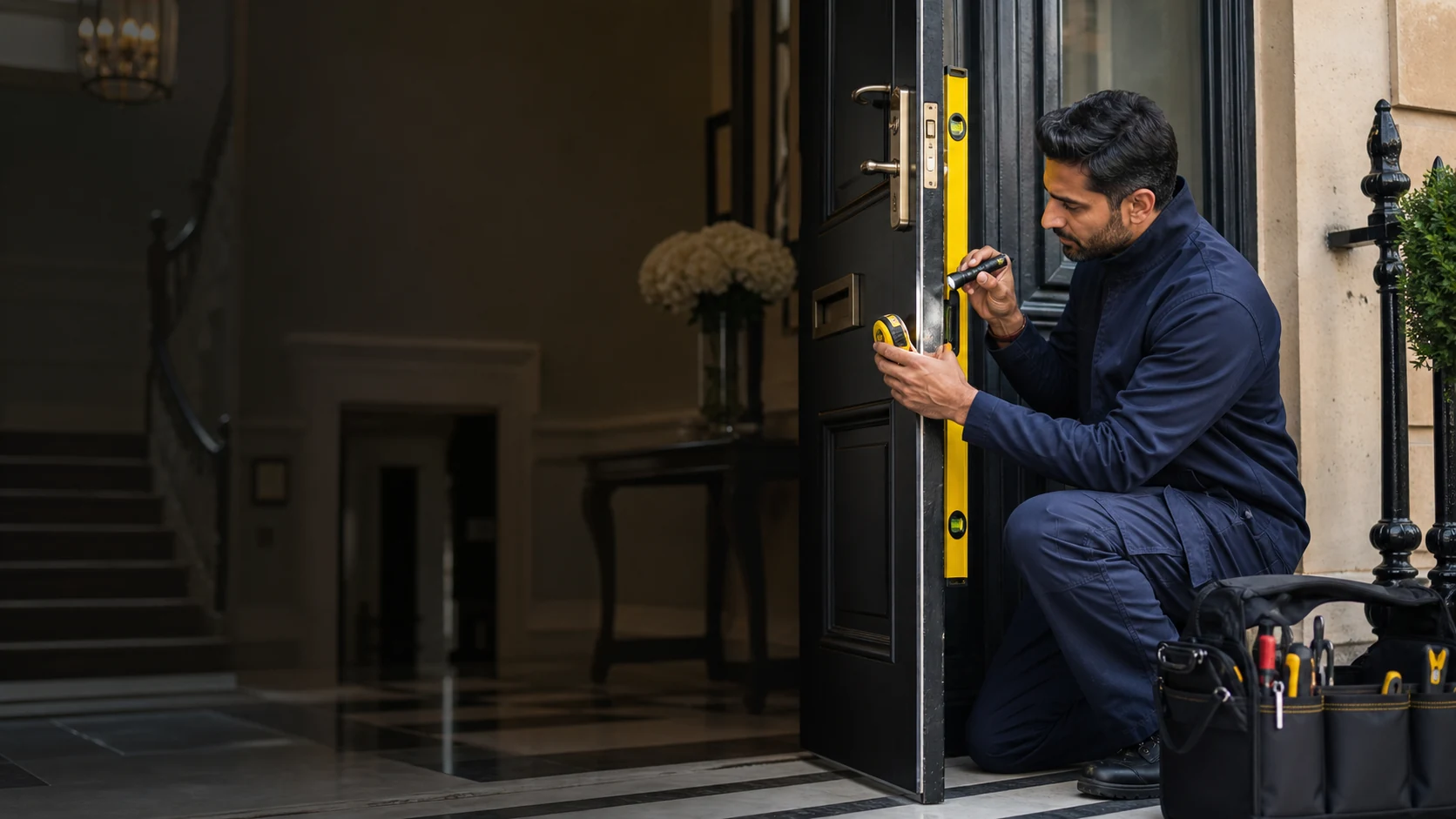
The first decision
A useful locksmith enquiry begins with the current state, not a chosen part. Say whether the door is open or closed, whether anybody is locked inside, whether a working key is present and whether the entrance can be secured. Then describe the handle, key and door movement in plain language. This allows the booking to distinguish access, fault investigation, damage response and a planned improvement.
Do not repeatedly force the key, slam the door against the frame or dismantle handles. If the door is the only practical exit and somebody cannot leave safely, explain that clearly; where there is fire, violence, medical danger or another life-threatening emergency, call the appropriate emergency service rather than waiting for routine locksmith work.
| Present situation | Likely service conversation | Information to provide |
|---|---|---|
| You are outside and the door is shut | Authorised opening, followed by assessment of any failed part | Door material, lock type if known, key state and proof-of-occupancy route |
| The door opens but cannot be locked | Fault assessment and temporary security planning | Handle movement, key behaviour, frame contact and whether another entrance exists |
| The key has snapped | Extraction, opening and possible lock work as separate decisions | Fragment position, door state and both pieces of the key if available |
| The door or frame is visibly damaged | Urgent securing plus a defined locksmith or door-repair boundary | Safe photographs, police or insurer needs and which elements are affected |
| The lock works but no longer meets the desired outcome | Planned audit and compatible replacement options | Reason for change, door details, users and required keys |
Observe safely
Only if the door is already open and safe, say whether the key and handle behave differently away from the frame. This is an observation, not permission to remove parts.
Report obvious rubbing, a loose keep or a gap that has changed. Do not plane, bend or pack the door before the lock system has been considered.
Keep both pieces and avoid glue, drills, tweezers pushed into the keyway or further turning. Improvised extraction can create a second fault.
Take the whole entrance, frame, door edge and hardware from a safe position. Close-ups alone can hide the boundary between lock damage and structural door work.
Say whether a rear door, neighbour-held key or building manager can provide lawful entry. Do not enter through an unsafe or unauthorised route.
In a flat, clarify whether the concern belongs to the dwelling, a shared lobby, an intercom-controlled entrance or another managed space.
Service boundary
After entry, the door still needs a clear security outcome. A locksmith may find that the existing lock operates normally once pressure is removed, that a replaceable component has failed, or that the frame and door need work outside the agreed locksmith task. The available evidence determines whether adjustment, repair, replacement or referral is appropriate.
Ask what the authorised opening price covers. Attendance, an attempted method, successful opening, a replacement cylinder, extra keys and making good are not interchangeable descriptions. Any destructive method should be explained before it is used, including the likely follow-on part. If a component is replaced, confirm its specification and the number of keys supplied.
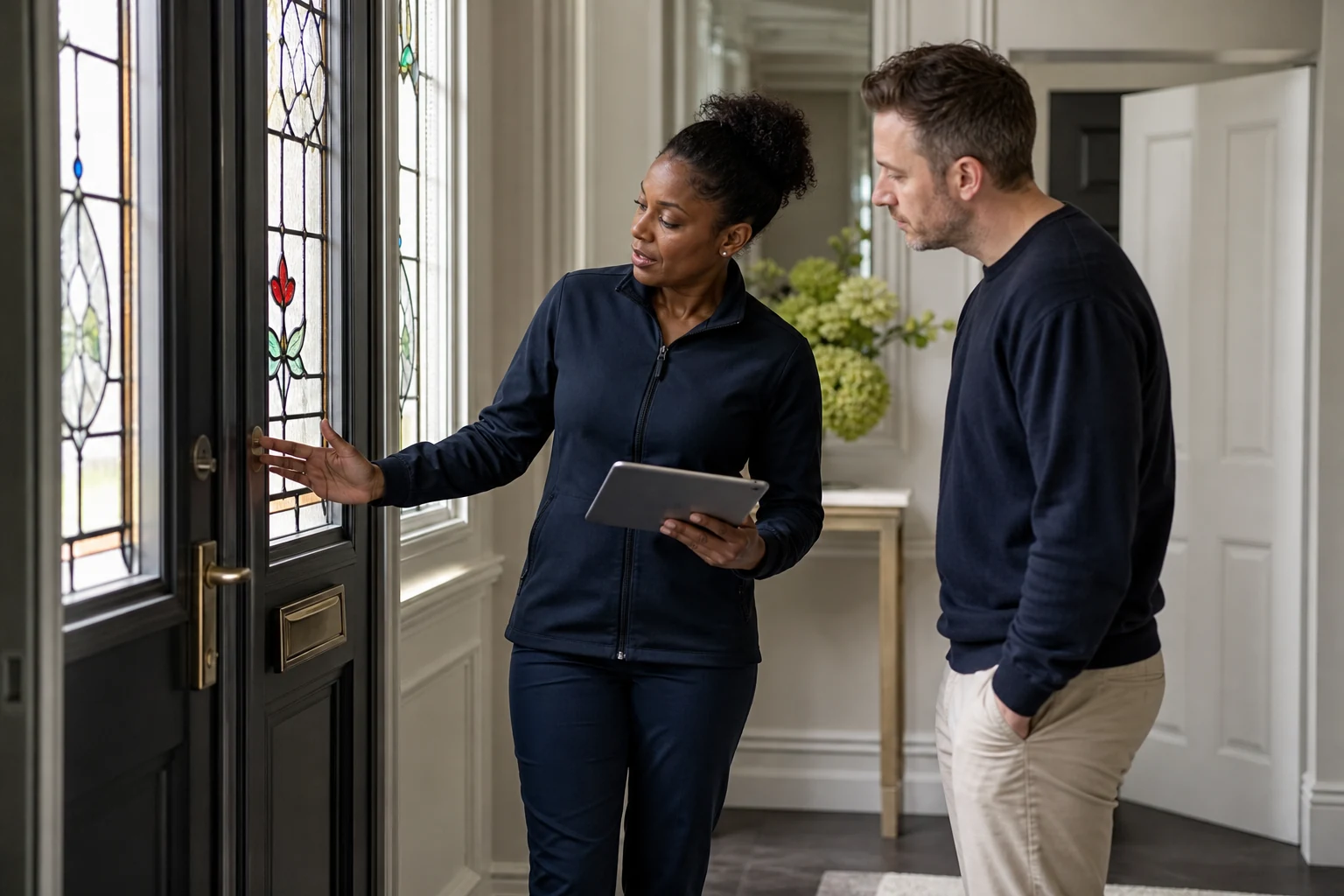
Repair, replace or refer?
| Finding | Locksmith option to consider | Reason another scope may be needed |
|---|---|---|
| Lock works with the door open but binds when closed | Assess alignment, keeps and connected hardware before replacing the lock | Hinges, door movement or frame condition may need broader door work |
| Key fragment is removed and the lock tests reliably | Retain the hardware if it still meets the required outcome | A poor duplicate or damaged original key may need addressing |
| Cylinder turns but a multipoint door will not secure | Examine handles, gearbox, strip, keeps and alignment as a system | The cylinder alone may not be the failed component |
| Timber around the lock is split or forced | Agree temporary securing and any lock work that remains viable | Permanent repair to the leaf or frame can require a door specialist |
| Communal electronic release is not operating | Check whether a mechanical private lock is also involved | Power, controls, intercoms and common access may belong to management or an electrician |
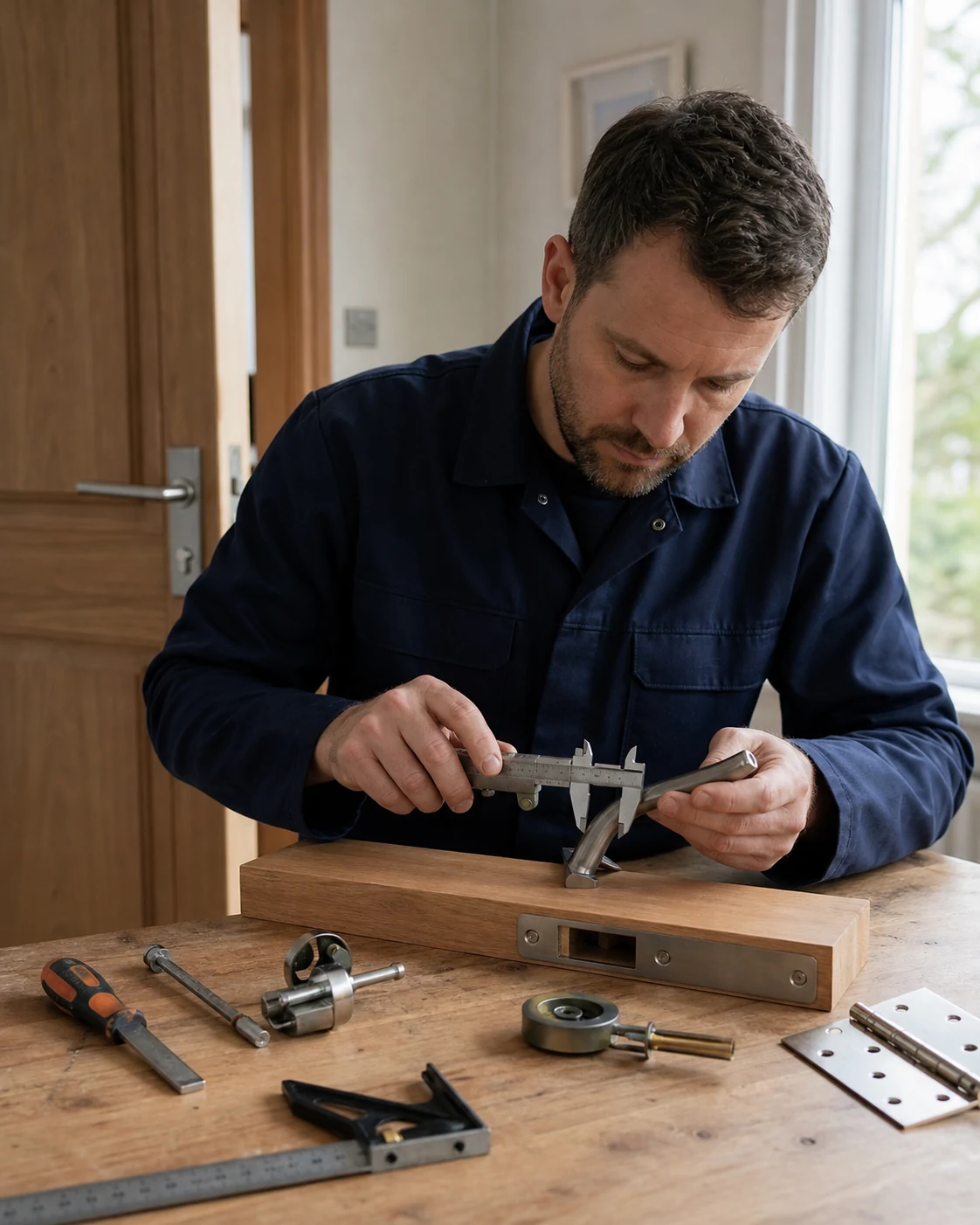
Finsbury Park property context
Finsbury Park enquiries can come from purpose-built flats, shared houses, terraces and buildings with common entrance doors. These settings do not predict a fault. They define who can admit the locksmith, which part of the entrance is private and whether another person must approve the proposed work.
In a shared house, nominate one contact and make sure other authorised occupants know about a planned key change. In a block, the flat door may be the resident’s responsibility while the outer lobby belongs to a freeholder or managing agent. A resident should not arrange a common lock change that affects neighbours without the proper decision route. For a terrace, list rear or side access if the front cannot be secured. If the address has controlled parking or a long internal route, provide the lawful unloading instruction and floor before attendance.
| Finsbury Park setting | Access or authority question | Decision supported |
|---|---|---|
| Purpose-built flat | Which door is private, and who opens meter or service cupboards? | Whether the enquiry stays within the dwelling or moves to management |
| Shared rented house | Who can authorise work and who must retain keys? | How a change preserves legitimate occupant access |
| Terraced family home | Are front, rear and side entrances all secure and included? | Whether the security outcome needs a wider door schedule |
| Common entrance with electronic release | Is the fault mechanical, electrical or not yet distinguished? | Whether a locksmith, building manager or electrical service should lead |
| Upper-floor accommodation | What is the buzzer, floor and carrying route? | How the locksmith reaches the exact door with suitable equipment |
Quotation checkpoints
Clarify whether the quote is for attendance, opening, restoring reliable locking, or a planned hardware change.
Parts, destructive entry and hidden door damage may depend on inspection. Ask how approval will be obtained.
Name the private door, common door or multiple openings. Avoid a vague whole-address instruction.
Confirm product details, supplied keys, operation checks and any written limitation.
Reliable pricing depends on the door, lock, timing, access, opening method and compatible parts. No responsible figure can be inferred from “Finsbury Park” alone, and this page does not invent one. A clear quotation lets customers compare equivalent work rather than unlike headline amounts.
Finsbury Park locksmith FAQ
Say whether anybody is inside, the door material, whether it is simply closed or deliberately locked, what happened to the key and how you can show authority for the address.
No. A suitable non-destructive approach can be considered from the actual lock and door condition, but some failed or secured locks may require an explained destructive method and replacement part.
Not necessarily. The difference can make alignment and frame contact relevant. The door, keeps, hinges and lock operation should be assessed before a replacement is chosen.
Stop turning the fragment, keep both pieces if possible and avoid glue or improvised tools. Tell the locksmith whether the door is open or closed and how far the fragment sits inside.
Lock work and temporary securing may be possible, but damage to the door, frame, glazing, alarm or finishes can require separate trades. Ask for the urgent and permanent scopes to be distinguished.
The freeholder, managing agent or other building authority should confirm the instruction. A common door may also have fire-safety and electronic access considerations.
Compare the identified fault, expected reliability, compatible part, security outcome, keys supplied and any unresolved door issue. Do not compare only the visible lock face.
Look for the named door, attendance and timing, authorised method, labour, parts, key quantity, exclusions and treatment of any additional work discovered after assessment.
Photographs and measurements may support an initial proposal, but final compatibility and door condition still need confirmation. Avoid buying hardware solely from the key shape.
Nearby coverage
Choose a service link for the problem itself. The nearby area links below correspond to pages in this local editorial batch or the approved Camden pilot.
Choose from the evidence at the door
Include the Finsbury Park address, exact entrance, authority, safe photographs and whether the priority is entry, security, repair or a planned change.
