
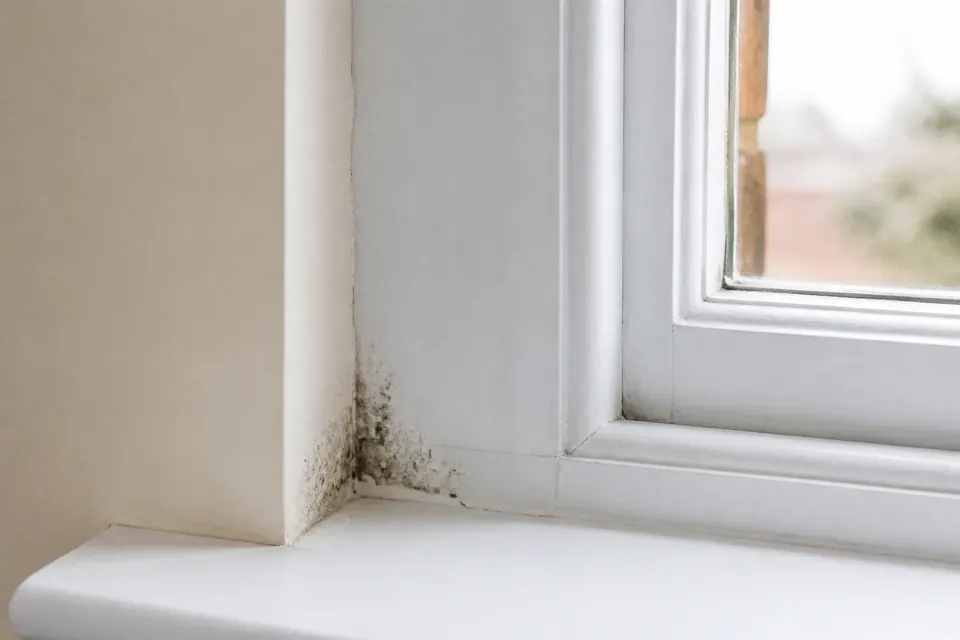
Paint beside a bathroom frame
Separate the reveal coating from timber, frame seals or other materials. A narrow junction can still contain different condition limits.
ANGEL / ONE ROOM, DIFFERENT MATERIALS
The room name should not hide what the marks are sitting on.
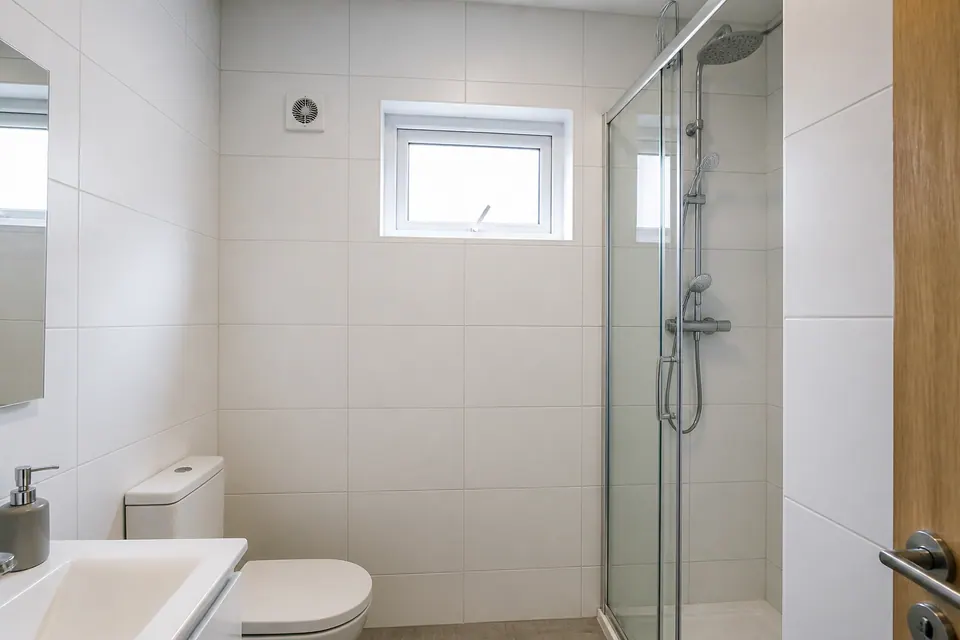
An Angel bathroom can contain affected paint, tiled joints and flexible sealant within a small space. Identify each material before combining the enquiry. An intact accessible coating and a deteriorated shower seal may call for different decisions, even when the visible colour looks similar.
Material · condition · suitable scope
01 / LOCATE THE ISSUE
Use the room selector for context, then identify the actual finish. Similar-looking marks do not establish an identical treatment method.
Separate the reveal coating from timber, frame seals or other materials. A narrow junction can still contain different condition limits.
Photograph both separately rather than calling them one bathroom patch. Deteriorated flexible sealant may need replacement while an intact coating has another option.
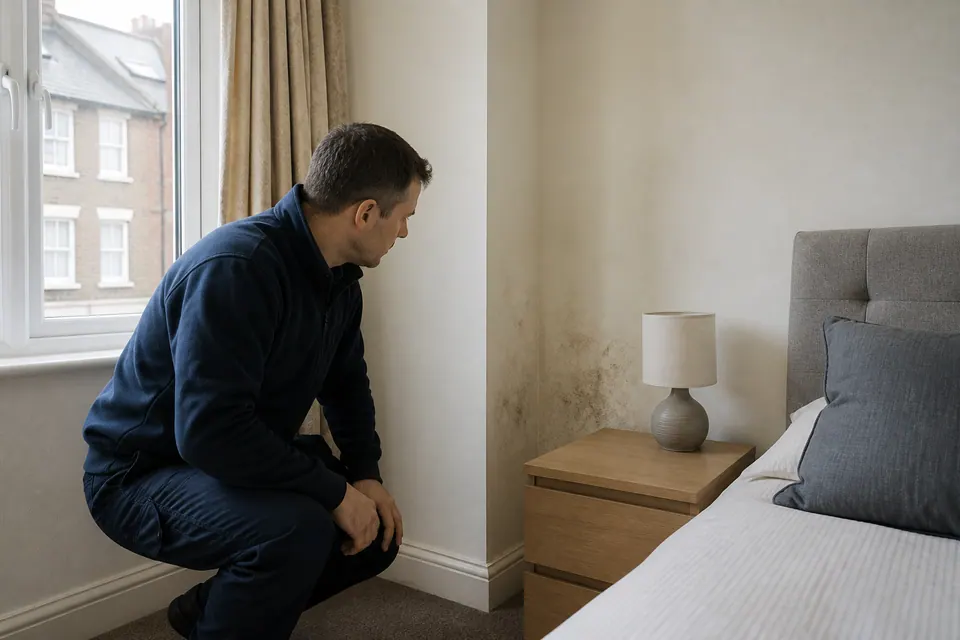
If another room is also affected, give it its own material and history. The bathroom method should not be transferred by assumption.
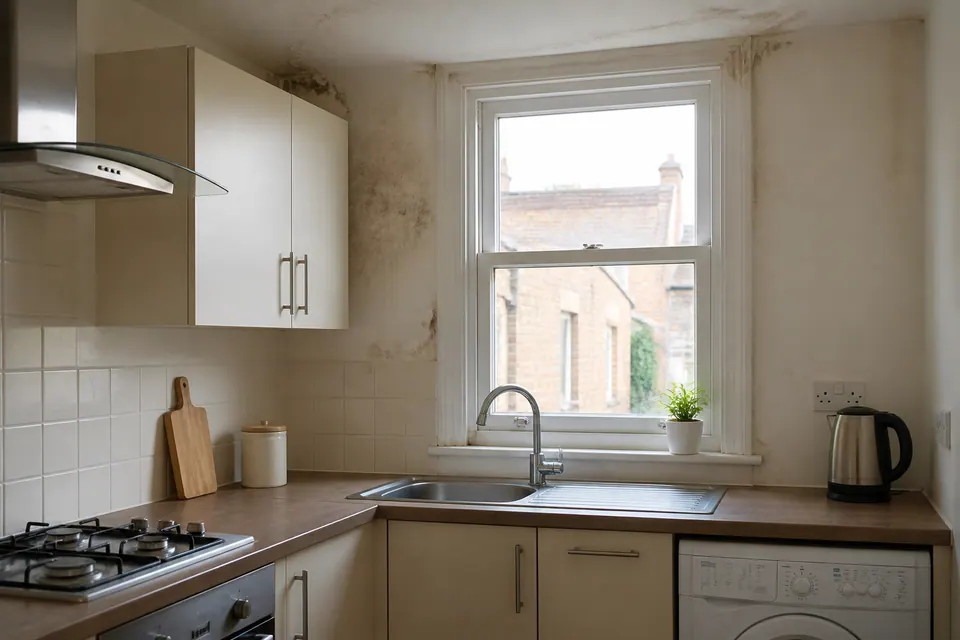
Keep the flexible joint distinct from painted wall and fixed units. A similar surface label still needs its own condition assessment.
Identify paint or covering rather than treating it as equivalent to a tiled bathroom surface. Preparation and residual appearance may differ.
Describe peeling and visible growth independently. Removing suitable growth does not restore a paint film that has lost adhesion.
Show the accessible finish and explain any hidden backing. A restricted opening does not establish the extent or condition behind the unit.
Material labels improve the scope. They do not diagnose moisture or guarantee that every finish is suitable for treatment.
Angel / ACCESS & PEOPLE
Use separate labels even when marks are only centimetres apart. A single close-up may hide the boundary between paint and seal.
State what was resealed or repainted and when. Do not describe all earlier work as mould treatment.
Leave material undisturbed and explain the visible limit. Replacement or investigation should not be assumed within treatment.
Photograph the existing condition and follow booking arrangements. Do not scrape seals or strip coating to establish responsibility.
Provide actual earlier repair and replacement details. A bathroom refurbishment date may not describe the current affected materials.
Separate the treatment request from desired resealing or decoration. Agree the necessary sequence rather than expecting one method to do everything.
Angel / MIXED BATHROOM MATERIALS
A few clear labels make a small room easier to assess.
Show whether the marks are on ceiling paint, a wall covering, tiled joints or a shower-edge seal. Describe loose coating or damaged sealant without probing it. Where more than one material is involved, keep their dimensions and previous work separate. The quotation should reflect suitability and condition, not simply state that the whole bathroom is included.
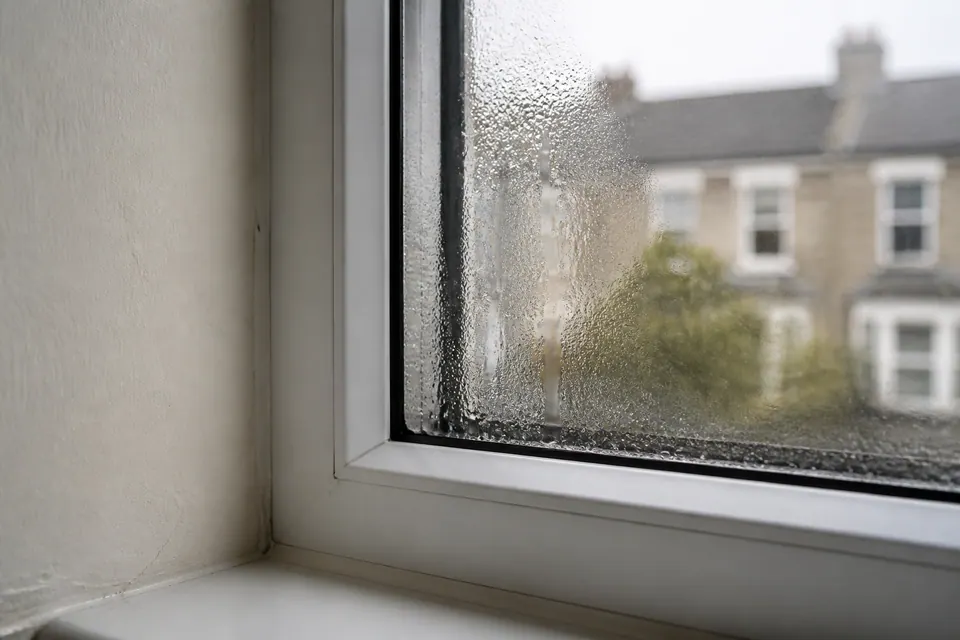
04 / WHEN IT COMES BACK
Identify the actual material and the earlier work on it. Resealing, painting and treating growth are different actions with different scopes.
Report current condition and observed wetting without assuming the whole room shares one issue. A renewed assessment should preserve the material distinctions.
Use the same names in later photographs so a shower seal is not confused with a nearby painted edge.
05 / A CONTROLLED APPROACH
Match photographs to paint, joint or seal and assess current condition. Establish which suitable accessible items belong in treatment.
Clarify contents and facility-use requirements. Do not scrape or cut material in an attempt to prepare it.
Carry out the agreed method within the named scope. Deterioration may need a separate repair or replacement discussion.
Distinguish addressed growth from staining, failed coating or damaged seals. Clarify applicable room-use guidance.
A completed visit does not promise restoration of every bathroom finish.
Keep paint, joints and seals identifiable.
Treat suitable accessible material as named.
Identify any replacement or decorative need separately.
These stages are illustrative, not customer outcome photographs. Persistent moisture can allow growth to return.
06 / QUOTATION, NOT GUESSWORK
For Angel enquiries, send labelled images of paint, joints and seals wherever affected. Small suitable accessible areas may be quoted from photos; multiple, recurring or damaged materials can require assessment or specialist quotation.
Read the published mould-removal scope ↗| Reported condition | Quotation approach | Information needed |
|---|---|---|
| A suitable accessible intact finish | Photographs may support quotation | Its own dimensions and material label |
| Several finishes or repeat marks | Assessment of the combined enquiry | Separate history for each affected item |
| Deterioration or complex damp concerns | Specialist quotation as required | Visible damage and any known repair status |
Confirm every included item. Resealing, regrouting and repainting are not automatically bundled into a surface-treatment quotation.
07 / SEPARATE THE QUESTIONS
Condition and moisture questions should be kept separate for each affected finish.
| Visible issue | Possible context | What to identify |
|---|---|---|
| Reveal paint marked by the window | Moisture near the opening | Paint condition and water actually observed |
| Ceiling spotting above the shower | Repeated wetting and drying | Whether coating remains intact |
| A joint changed after a water event | Exposure or material deterioration | Confirmed event and relevant repair |
| A seal marked again after resealing | A continuing condition or material issue | The previous work and present seal condition |
Resealing, regrouting, repainting and repairing damaged backing are not automatic parts of mould removal. Ask which suitable accessible materials are included and which require a separate scope.
Neither the room size nor the material label settles the source of dampness.
| Assessment point | Mould | Damp / moisture |
|---|---|---|
| What is described? | Fungal growth on the affected material | Excess moisture relevant to that surface or assembly |
| Useful evidence | Its visible extent and material condition | Observed wetting and known water history |
| Relationship | Growth may return if moisture persists | Wetness may also damage a finish without confirming growth |
| Next decision | Suitability for the proposed treatment | Any separate repair or moisture investigation |
08 / ROOM-BY-ROOM CONTEXT
List paint, tiled joints and flexible seals separately. Their condition may require different decisions.
Give the finish and furniture clearance in its own enquiry record rather than borrowing the bathroom scope.
Identify the actual material and any confirmed water event. Similar appearance does not prove identical suitability.
Paper or decorative paint has different limits from a bathroom joint. Describe it clearly.
Confirm who can arrange preparation and work. The materials still need individual identification.
State level and visible condition without diagnosing damp. Suitability depends on material, not only location.
09 / DIRECT ANSWERS
It can describe them, but each should be identified and assessed appropriately. A small room label should not conceal different treatment or replacement requirements.
Paint is not a substitute for assessing growth and moisture. Failed coating may need another decision before decoration.
No. Seal condition and marks on paint or joints should be described separately rather than treated as one uniform surface.
Size alone does not determine the visit. Material condition, access and preparation affect the proposed work.
Ask about the agreed method and facility restrictions before booking. Normal use should not be assumed during preparation or immediately afterwards.
Only if expressly agreed. A deteriorated flexible seal may need another task rather than the same method as a suitable painted surface.
Add it as a separate material with its own condition. Frame repairs should not be inferred from treatment of the bathroom coating.
Not automatically. Investigation, replacement and reinstatement behind a finish require a distinct agreed scope.
Angel / PLAN THE APPOINTMENT
Send the Angel postcode with labelled material photographs and the practical bathroom-use requirement. Confirm availability once the proposed scope is understood.
Mention separately planned resealing or decoration without assuming it is included in the treatment attendance.
The map provides area context for the appointment enquiry.
Angel / BEFORE BOOKING
A compact space can still need several different decisions.
Where possible, yes. If uncertain, say so rather than guessing; the visible condition and location are still useful.
Keep their measurements separate. They describe different materials and should not disappear into one total.
No. Similar colour does not establish identical condition or suitability.
Do not disturb it for the enquiry. Describe visible deterioration and ask about the appropriate next step.
Only an explicit agreement would include replacement. Do not infer it from treatment of another finish.
Ask for preparation guidance. Different materials may have different limits, and products should never be mixed.
Follow applicable instructions for the agreed work. Departure time is not a universal return rule.
Different materials, recurrence or deterioration can make the combined scope more complex than one suitable accessible area.
Provide the replacement date, current photograph and observed moisture history. Keep that item separate from other bathroom finishes.
NAME THE MATERIAL BEFORE THE METHOD
Send the postcode, labelled photographs and previous-work information. Ask which items suit treatment and which need another scope.
The bathroom imagery is illustrative and not a record of a customer material-replacement job.
