
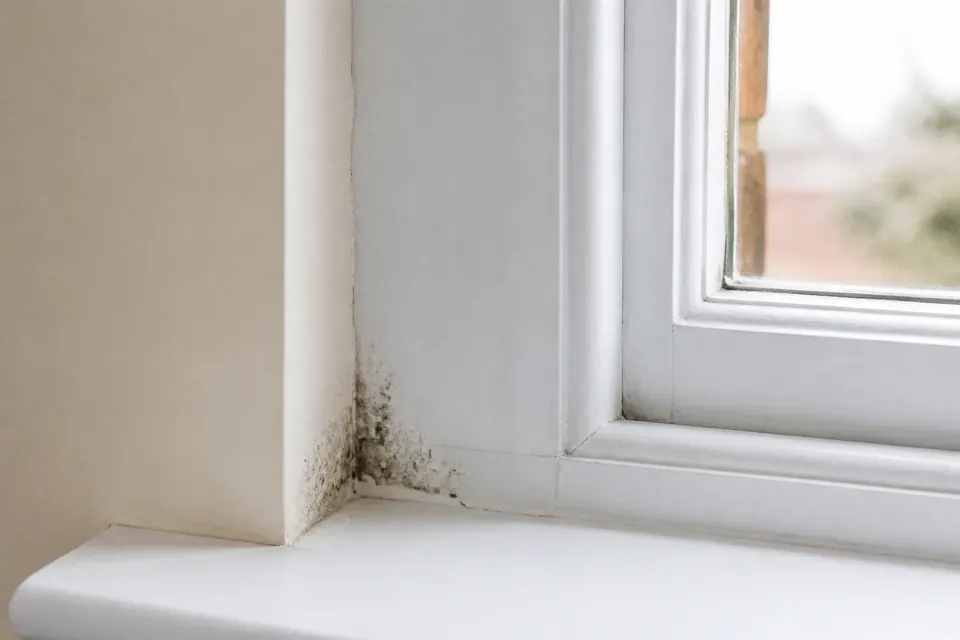
A corner beside the window
Show the opening and both wall faces. Water at the glass may be useful context, but does not prove the explanation for a patch farther along the corner.
HIGHGATE / THE RECURRING CORNER
Show both sides of the corner before choosing an explanation.
A close image can make a corner patch look like one flat surface. For the Highgate enquiry, include both wall faces, nearby furniture and the position of any window. Record how the pattern changes without assuming that its shape proves a cold bridge or another building issue.
Wall faces · nearby objects · recurrence
01 / LOCATE THE ISSUE
Use the room setting to locate the junction. A corner can join different materials and needs more than a single unlabelled close-up.
Show the opening and both wall faces. Water at the glass may be useful context, but does not prove the explanation for a patch farther along the corner.
Distinguish the wall coating from ceiling paint and report ordinary wetting. A joint position is not a diagnosis of ventilation or a leak.
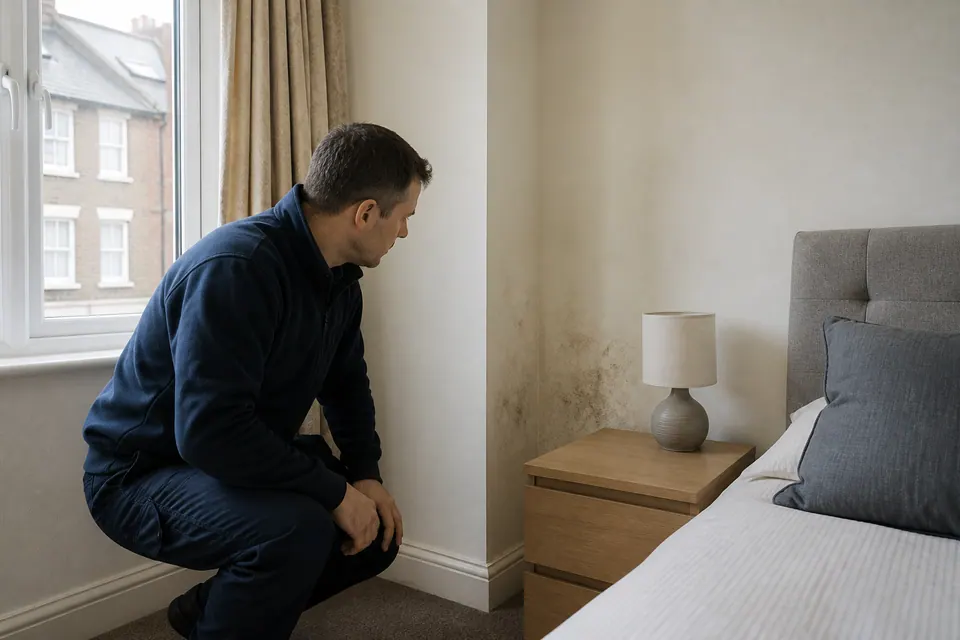
Include the available clearance and identify any concealed portion. Do not move heavy furniture into the patch to reveal both faces.
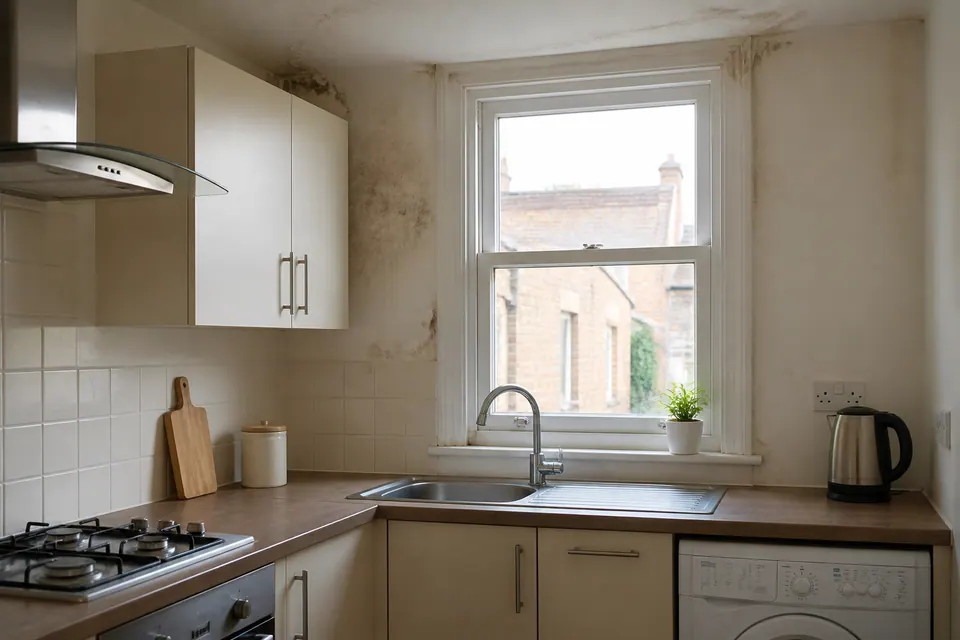
State which surface is accessible and any confirmed water event. Nearby pipework should not be blamed solely because it is visible in the photograph.
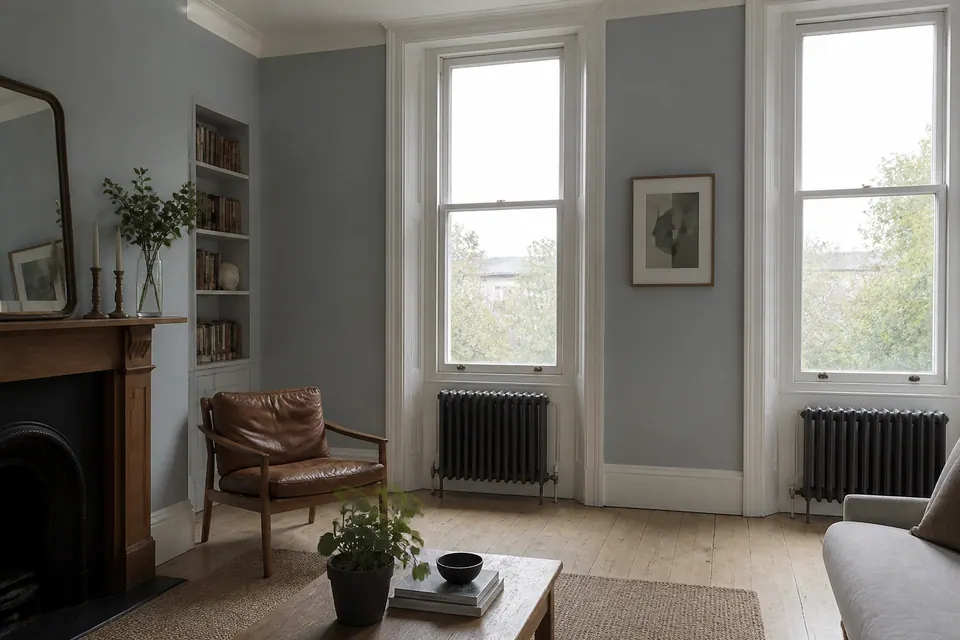
Describe the wall position and nearby objects. A cold impression is not a measured finding or proof of a building defect.
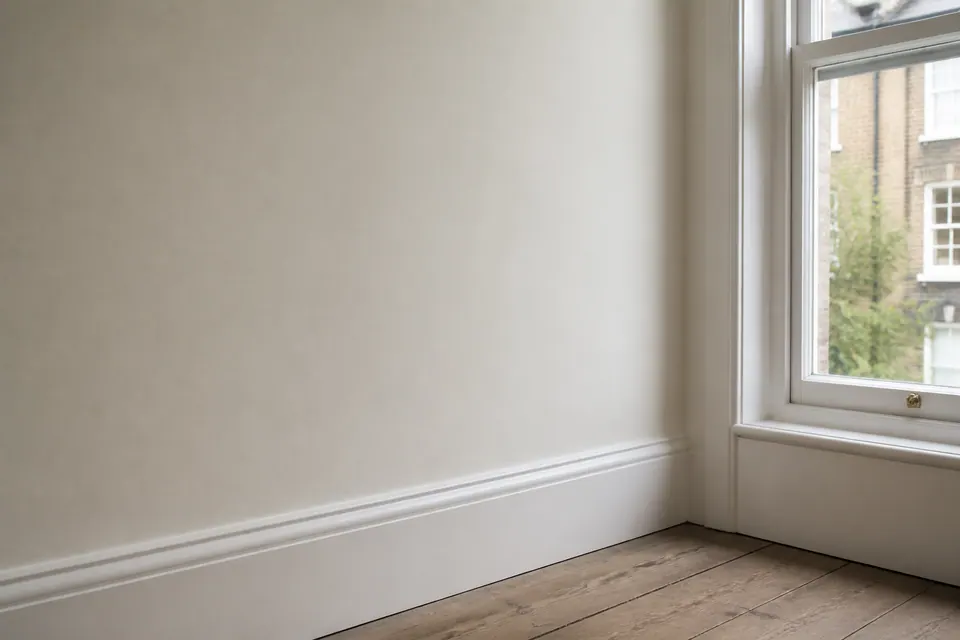
Show each finish separately where possible. Cracking or unstable paint may require another decision beyond removal of suitable growth.
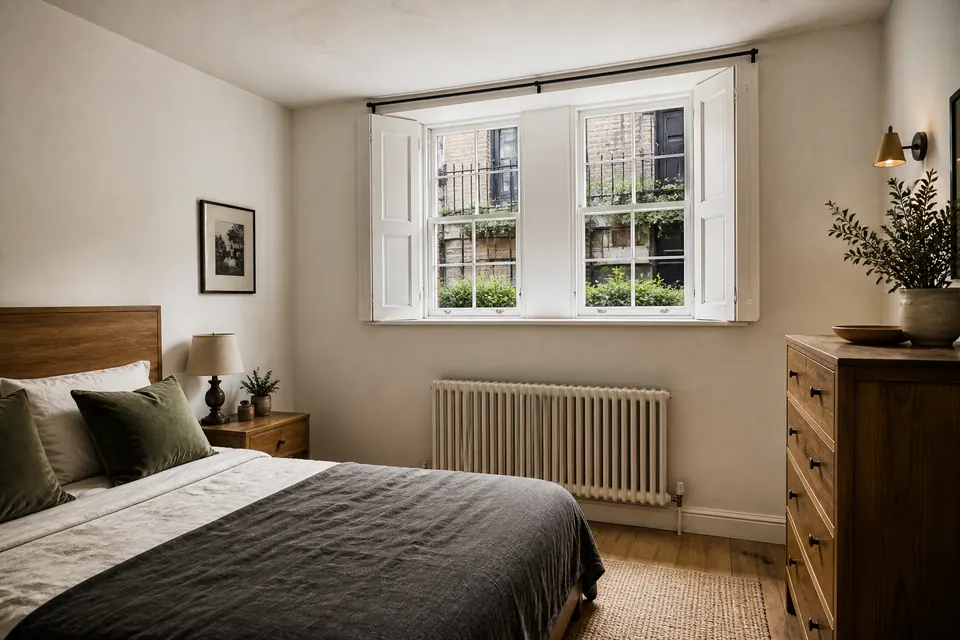
Explain shelves and fixed panels without dismantling them. Concealed extent remains unknown even when an exposed edge is marked.
The shape can guide the questions, but cannot confirm thermal bridging, leakage or another moisture cause.
Highgate / RETURNING CORNER MARKS
A repeated outline is evidence to describe, not a diagnosis to name.
Show whether the mark extends onto both adjoining walls and whether those walls have the same finish. Include furniture and any nearby opening without moving objects unnecessarily. State when the change was first noticed and whether an earlier treatment covered the same faces. An outside-facing wall or a cold-feeling corner can be relevant context, but does not establish the moisture mechanism.
03 / SEPARATE THE QUESTIONS
Keep the geometry, material and recurrence record separate from a presumed explanation.
| Visible pattern | Possible context | Information to provide |
|---|---|---|
| Marks on the window-side face | Moisture around an opening or wall | Actual water observations and finish condition |
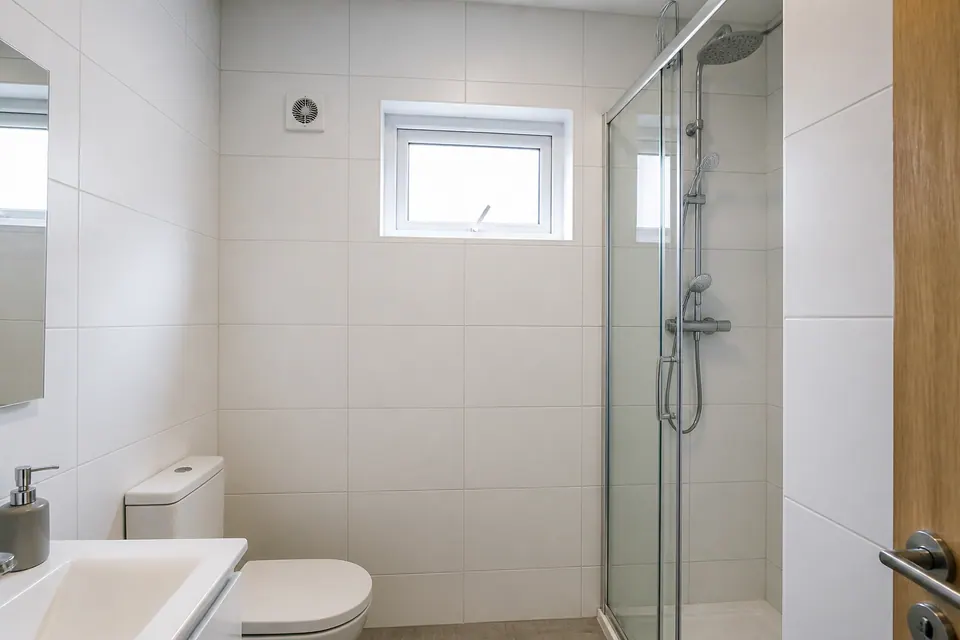
| Spotting at a bathroom junction | Repeated wetting and drying limitations | Which face changes and when |
| A corner altered after a known leak | Water exposure or remaining material damage | Repair status and current appearance |
| The same outline returning | Conditions continuing at the junction | Previous treatment extent on both faces |
Insulation changes, building-fabric surveys and moisture repairs are separate work. Do not treat a corner quotation as a diagnosis that those items are either necessary or already resolved.
The location does not make the visible and concealed conditions interchangeable.
| Assessment point | Mould | Damp / moisture |
|---|---|---|
| What is described? | Fungal growth on one or both exposed faces | Excess moisture affecting the junction or surrounding material |
| Useful record | Extent and material on each face | Observed water and known events |
| Why consider both? | Growth removal does not change all contributing conditions | Persistent moisture may permit a returning pattern |
| Next decision | Suitability and accessible treatment boundary | Whether further investigation or repair is required |
04 / DIRECT ANSWERS
Describe and measure them separately first. They may have different finishes or damage even when the marks appear continuous.
Decoration is not a substitute for assessing growth or moisture. Keep the present condition visible for the enquiry.
No. Describe the observation without turning it into a technical diagnosis. Assessment may raise building questions that surface treatment cannot answer.
Access, finishes and preparation can differ. Ask after the actual geometry and material condition have been reviewed.
Show the available gap and request preparation guidance. Seeing the patch does not establish sufficient working clearance.
Identify ceiling and wall coatings separately. Failed paint or sealant may need another scope rather than one assumed corner method.
Name it explicitly and provide its finish and dimensions. Do not silently extend the corner quotation into window or frame repair.
No such work should be assumed. Building changes and suitable growth treatment require distinct agreements.
05 / QUOTATION, NOT GUESSWORK
For a Highgate corner enquiry, send one wider view and material-specific details. Small suitable accessible areas can be quoted from photographs; recurrence, multiple faces with damage or complex damp may require assessment or specialist quotation.
Review the service scope ↗| Reported condition | Quotation route | Evidence needed |
|---|---|---|
| A limited suitable accessible patch | Photographs may support quotation | Clearly identified faces and finishes |
| A returning or expanding pattern | Assessment of the current scope | Previous work and current dimensions |
| Damaged material or complex moisture concern | Specialist quotation where appropriate | Condition and confirmed repair information |
Confirm the included faces and exclusions. Insulation, surveys and reinstatement are not automatic parts of mould treatment.
06 / A CONTROLLED APPROACH
Identify the material and extent on each face, plus the recurrence history. Establish the suitable accessible boundary.
Plan around nearby furniture without unplanned movement or disturbance of the growth.
Use the appropriate agreed method on suitable material. Newly found damage or hidden extent needs discussion.
Clarify remaining marks and any separate repair or investigation questions. Do not interpret improved appearance as a thermal diagnosis.
The sequence does not promise identical cosmetic results on different finishes.
Record each face and the earlier outline.
Treat suitable accessible material as named.
Keep stains, damage and moisture questions distinct.
The stages are illustrative, not a customer result. Ongoing moisture can permit recurrence.
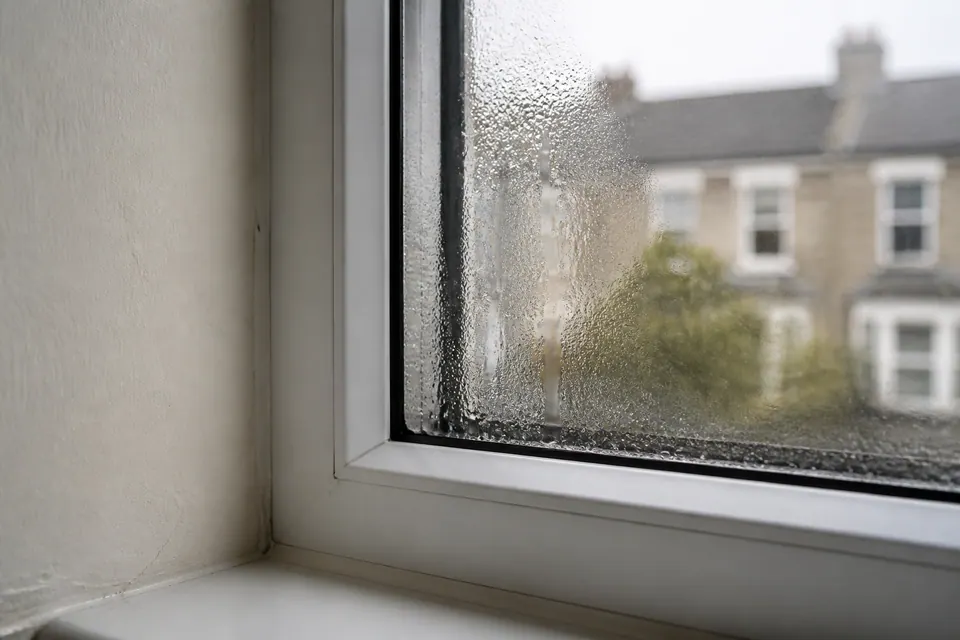
07 / WHEN IT COMES BACK
Compare the same faces from the same safe position. Say whether the new pattern extends farther or appears on material outside the earlier scope.
Report actual water events and furniture changes without assuming one caused the other. Shape and coldness alone cannot establish the explanation for renewed growth.
Use a nearby window or trim as a reference. Different camera angles can make a corner patch appear to change size.
08 / ROOM-BY-ROOM CONTEXT
Separate wall and ceiling paint and describe wetting. A corner shape does not establish the cause.
Show furniture and sleeping-use needs. Do not assume the visible gap provides treatment access.
Identify fixed units and known water incidents without diagnosing nearby plumbing.
Include the wider wall relationship and any different coverings. Keep material boundaries visible.
Name the affected section and the contact controlling work. Passing the corner is not permission to treat it.
Report level and water history without a named damp assumption. Condition determines suitability.
Highgate / ACCESS & PEOPLE
Keep paint or paper descriptions separate. Continuous marks do not establish identical material suitability.
Show what can be reached and what remains concealed. Ask about preparation before moving heavy items.
Retain earlier photographs and the previous surface scope. A newly visible face may not have been treated before.
Describe the pattern and follow booking arrangements without disturbing it. The enquiry does not decide repair liability.
Supply relevant earlier work and water records for the actual corner. Avoid a general statement that the whole property was addressed.
Separate the treatment decision from any proposed thermal or building investigation. A surface visit cannot certify the cause.
Highgate / PLAN THE APPOINTMENT
Send the Highgate postcode with a wider junction view and access details. Confirm availability after the affected faces and practical preparation are clear.
Mention any separate building investigation already proposed without assuming it is included in the surface appointment.
The map gives area context for arranging access.
Highgate / BEFORE BOOKING
The geometry helps locate the work without diagnosing the cause.
Yes, add a wider view so the junction is clear, with details of each affected material where possible.
Measure the visible portion on each face separately where safely possible. A projected corner image can distort dimensions.
No. Report the pattern without treating it as a technical conclusion about the building.
Identify it separately from the adjoining paint or plaster. Different materials may need different decisions.
Not unless separately agreed. Mould removal does not automatically include building alterations or surveys.
Ask for guidance first and show the available view. Do not make unplanned moves beside the affected finish.
Obtain instructions for the agreed method and circumstances. Attendance ending is not a generic return rule.
Its history or current material condition may differ from a first suitable accessible patch and needs review.
Use the same corner reference, give the date and explain which face or boundary has changed since the earlier record.
SHOW BOTH SIDES OF THE QUESTION
Send the postcode, both wall faces and the available clearance. Describe the changing outline without assuming a building cause.
The property images illustrate context rather than a documented corner-treatment outcome.
