
An apparently intact portion
Include it as a comparison without treating appearance as proof of suitability. The assessment still needs the material and history, not only the absence of a visible mark.
Blackheath / PROPERTY CONDITION
A fragile finish needs its condition understood before a cosmetic result is discussed.
For a Blackheath room with a delicate covering on an outside-facing wall, show the affected area beside intact material. Describe any loose edge without lifting it, and keep the wall’s position separate from a guessed moisture diagnosis. Ask what treatment is suitable before planning restoration.
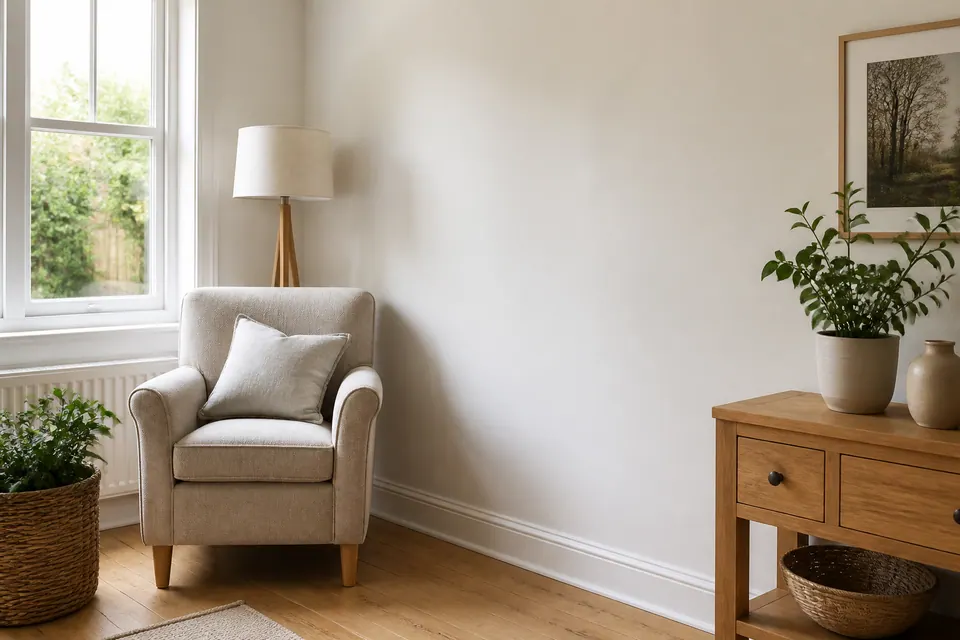
Fragile covering · intact comparison · realistic limits
Blackheath / ACCESS & PEOPLE
Include it as a comparison without treating appearance as proof of suitability. The assessment still needs the material and history, not only the absence of a visible mark.
Describe the current deterioration and avoid testing adhesion or strength. A damaged covering should not be presented as something removal automatically restores.
Explain furnishings or fittings that limit the view. Do not create additional damage simply to provide a more complete image of a delicate surface.
Tenants can show existing damage and obtain permission for proposed work without peeling material to establish the concern. The enquiry does not decide legal responsibility.
Landlords can provide any reliable specification or decorative history. If the material is unknown, state that rather than assuming a standard washable coating.
Homeowners should ask what can be addressed and what damage or staining may remain. The wish to preserve a decorative finish does not establish that every part is suitable for treatment.
02 / LOCATE THE ISSUE
Choose the room setting and describe the finish without testing it. A small visible patch can still involve a fragile coating whose condition changes the appropriate discussion.
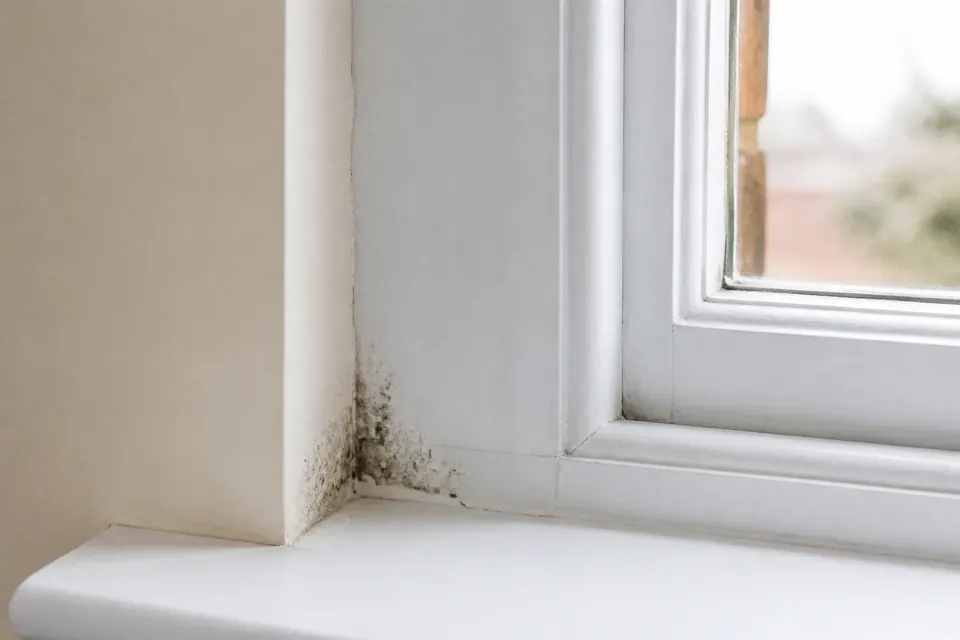
Show the frame, affected covering and intact neighbouring area together. The window position can help locate the mark without confirming a frame defect or the suitability of the covering.
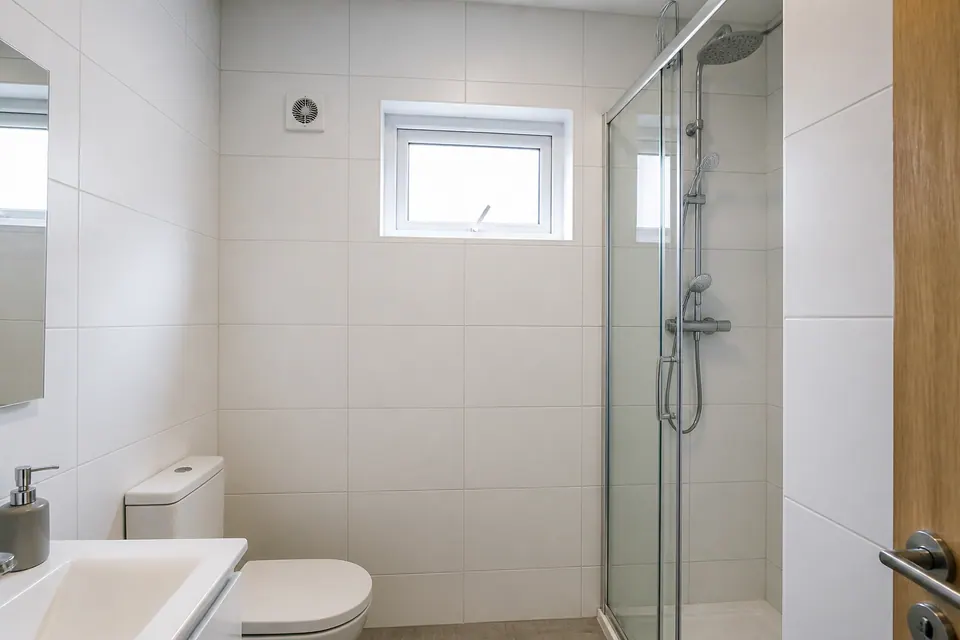
Identify the actual surface and visible damage. Do not assume an affected finish is robust enough for the same approach as an intact coating simply because it is in a bathroom.
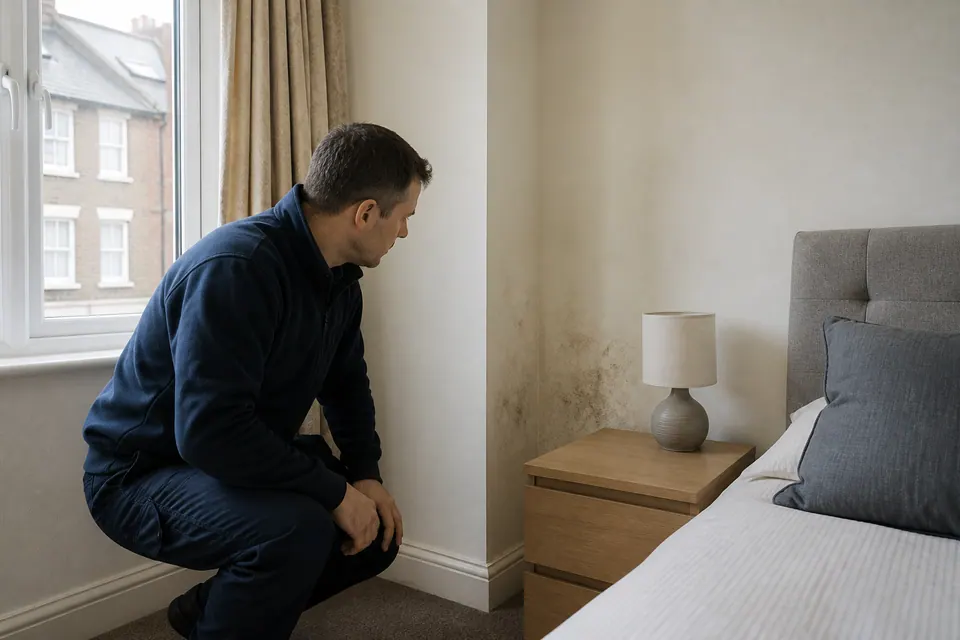
Include the accessible edge and nearby furniture without peeling the covering back. If the material is unknown, say so rather than testing or labelling it by assumption.
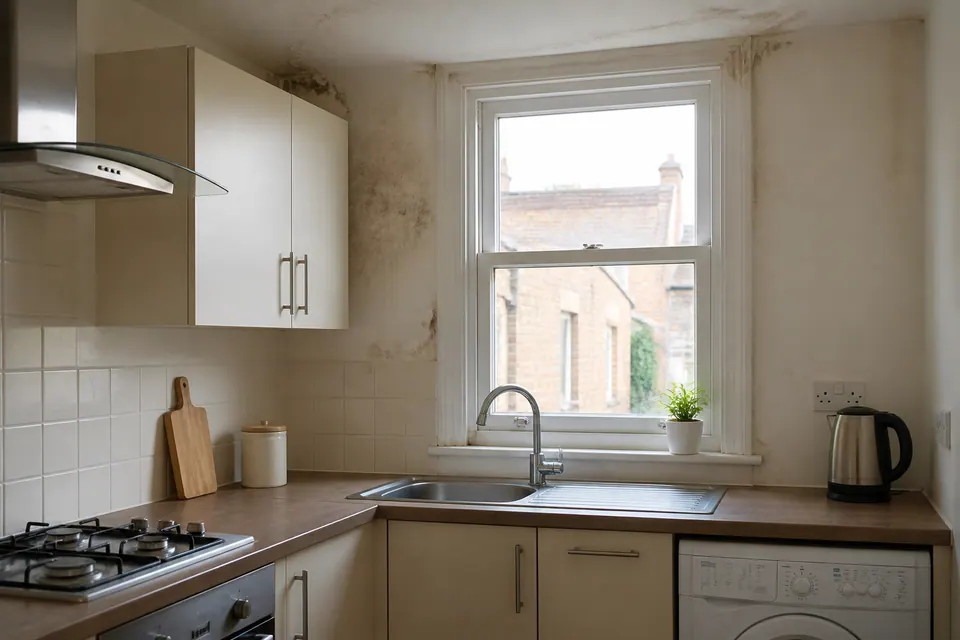
Distinguish the wall covering from joinery and any confirmed plumbing history. A position near fittings does not establish one moisture source or a uniform treatment material.
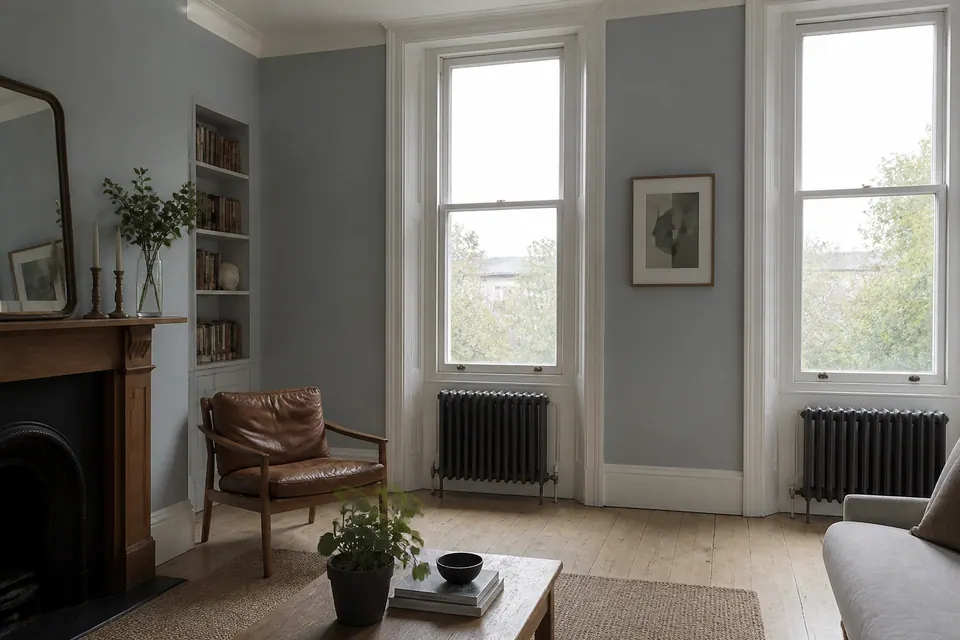
Photograph intact finish beside the affected portion so the existing condition is visible. A close-up of the mark alone can hide deterioration that affects expectations.
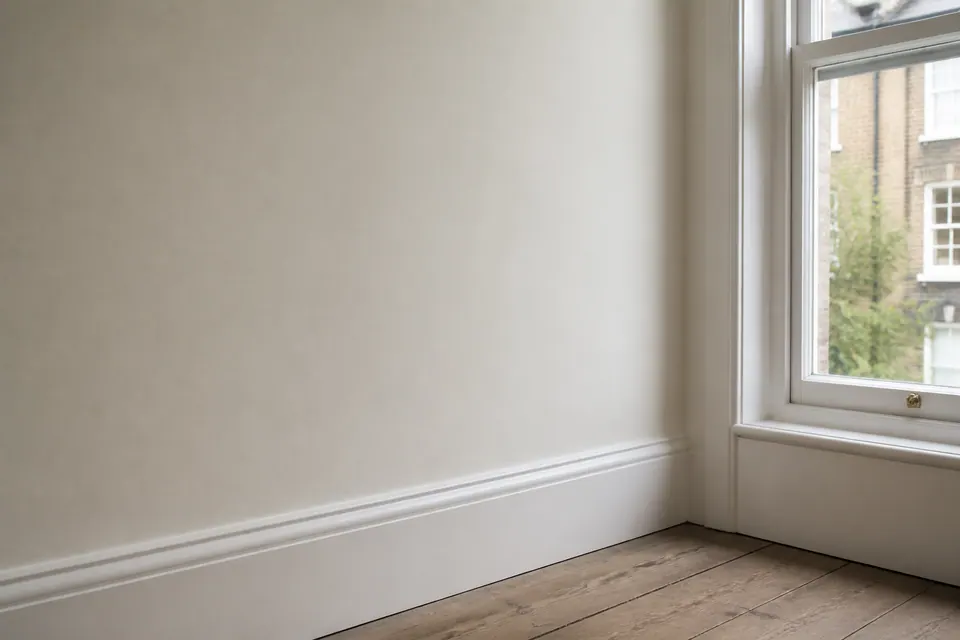
Describe what is already loose without extending the damage. The condition of the finish needs its own decision, separate from whether visible growth can be addressed.
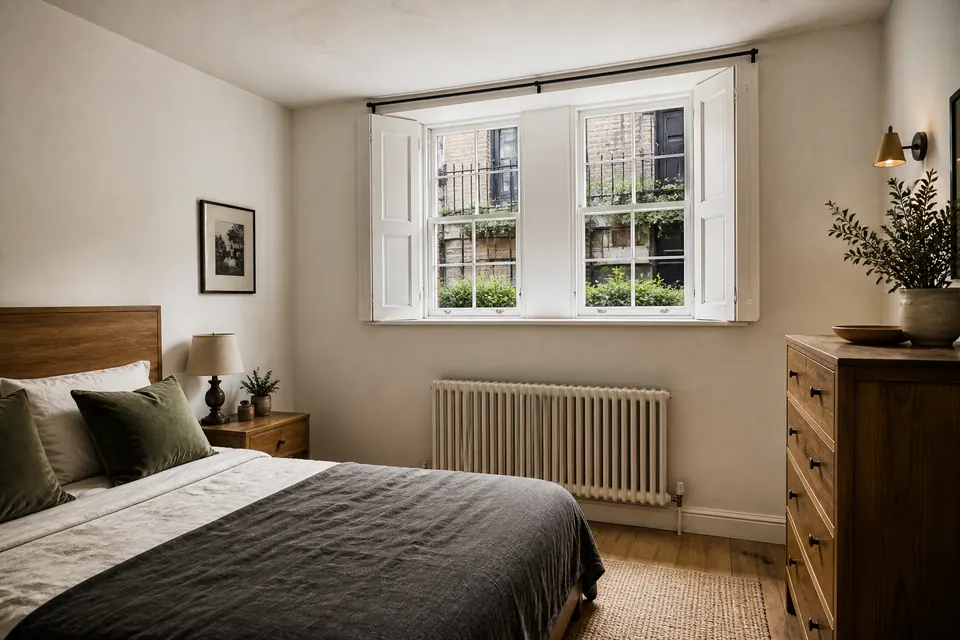
Explain the available view and the obstruction. Do not clear affected belongings or pull the covering to expose more material before appropriate preparation is discussed.
The desired decorative result should not replace an honest account of fragility. Growth, staining and failure of a covering may require different decisions.
03 / SEPARATE THE QUESTIONS
An outside-facing surface can be described precisely without identifying a moisture source. Keep the visible growth, covering deterioration and any confirmed water history separately stated.
| Visible issue | Possible contributing factor | What may need checking |
|---|---|---|
| A marked covering at a reveal | Moisture near the window may be relevant | Separate the frame question from the covering’s suitability |
| A damaged bathroom coating | Repeated wetness may contribute | Assess the actual material rather than assuming robustness from the room label |
| A stain on an outside-facing wall | Past or current moisture may matter | Provide reliable history without diagnosing from orientation alone |
| Marks return while the edge deteriorates | An ongoing contributor may remain | Distinguish recurrence from the condition of the covering |
Source investigation, component repairs, replacement material and decorative restoration need separate agreement where relevant. A suitable surface proposal should not imply those tasks are achieved automatically.
Mould describes fungal growth and damp describes excess moisture. A fragile or failing covering is another condition to report, not proof of either a particular source or a particular remedy.
| Question | Mould | Damp |
|---|---|---|
| What is described? | Growth affecting an identified finish | Excess moisture in material or surroundings |
| Useful evidence | The outline and existing covering condition | Observed wetness and reliable water history |
| A possible relationship | Growth can recur where moisture persists | Moisture may contribute without identifying an external-wall defect |
| The next decision | Which material is suitable for treatment? | Does the moisture question need separate assessment? |
Blackheath / THE PROPERTY BRIEF
An outside-facing wall is context, not a diagnosis.
Show the affected covering and intact neighbouring finish without disturbing either. Record known recurrence or water events separately from the wall’s position. Ask which surface work is suitable and what restoration, replacement or investigation may need another agreement.
05 / QUOTATION, NOT GUESSWORK
A quotation should identify the suitable material and its limitations rather than rely only on the patch size. Photographs may support a defined enquiry, while fragility, recurrence or uncertain backing can require assessment. Restoration should not be assumed included in removal.
See the main mould-removal service ↗| Scope | Quotation basis | Limitation to clarify |
|---|---|---|
| Suitable accessible finish with a clear boundary | Photographs may support pricing | Identify the covering and current condition |
| Recurring marks or uncertain material | Assessment may be required | Keep the intact comparison and history available |
| Deteriorated covering or damaged backing | Specialist quotation may be needed | Clarify replacement or restoration independently |
Confirm the total and exclusions. Replacing a covering, restoring adhesion or matching a decorative finish should not be inferred from a surface-treatment quotation.
06 / DIRECT ANSWERS
A photograph can support an enquiry, but material uncertainty or deterioration may require assessment. Size alone does not establish suitable work.
A cosmetic layer is not a substitute for reviewing growth and moisture. Ask what needs assessment before covering evidence or changing a fragile finish.
Its position is context, not a confirmed cause. Provide current observations and reliable history rather than assuming a specific building condition.
Do not assume it. Replacement and restoration need explicit agreement where appropriate, distinct from treating suitable growth.
Follow the applicable instructions for the agreed approach and circumstances. A delicate finish’s appearance does not replace return guidance.
Its suitability needs separate consideration. Identify deterioration rather than assuming one method applies to every surface in the room.
Show the transition and describe each material. A continuous appearance does not establish identical limitations or results.
Not automatically. Surface work, restoration and moisture-source repair have distinct purposes and should be separately agreed.
07 / A CONTROLLED APPROACH
Review the covering, intact comparison and visible deterioration together. Identify uncertainty about the material and any limitation on treatment before discussing the cosmetic result.
Agree access and preparation without unrequested peeling, scraping or testing. Nearby belongings should be handled according to an appropriate plan, not simply moved to expose more fragile finish.
Carry out the confirmed approach on suitable areas within the agreed limits. Replacement or restoration of damaged covering should remain separately identified.
Explain residual staining, existing damage and any further finish decision. Keep room-use instructions distinct from a promise that the wall will look newly decorated.
The schematic does not promise recovery of a fragile covering or a uniform decorative result across damaged material.
Record the affected and intact portions together.
Respect the material limitations agreed before work.
Distinguish remaining damage from addressed growth.
These stages are illustrative, not customer restoration evidence. A treated surface may still need separate decorative work, and continuing moisture can remain relevant.
08 / ROOM-BY-ROOM CONTEXT
A bathroom coating may already be damaged. Identify its condition rather than assuming the room label establishes a suitable cleaning surface.
A bedroom covering should be described without peeling. Show the furniture arrangement and any limit on an undisturbed view.
Near kitchen fittings, distinguish the covering from joinery or exposed wall material. Different finishes should not be merged because the mark crosses them.
A living-room comparison image can show intact and affected material together. Keep the desired cosmetic result separate from the existing condition.
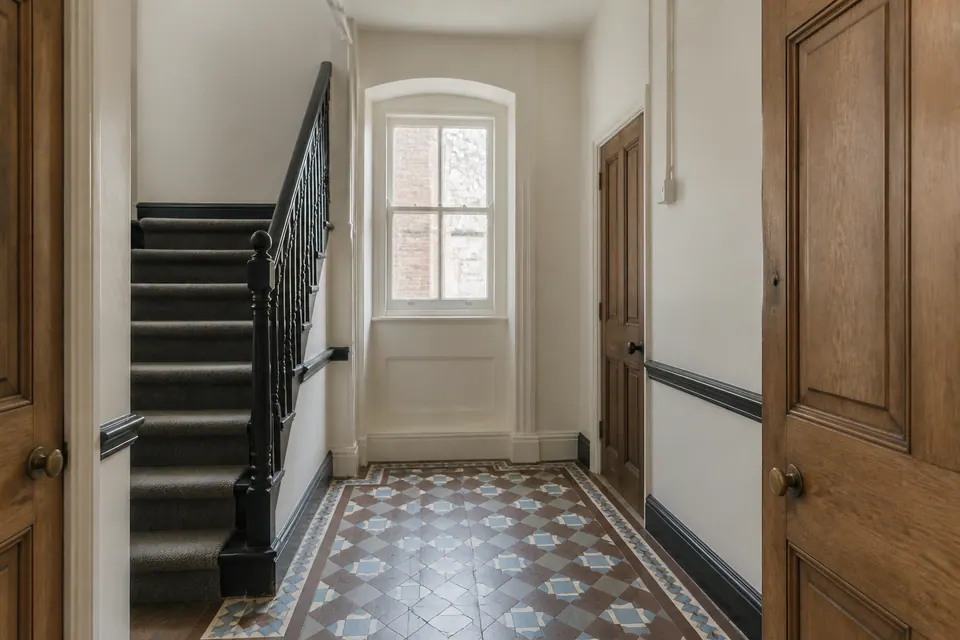
If a delicate finish belongs to shared space, clarify permission and scope separately. Entry through the area does not authorise restoration or treatment.
For a lower-ground room, provide reliable water history along with the covering detail. Fragility does not remove the need to consider persistent wetness or damage.
09 / WHEN IT COMES BACK
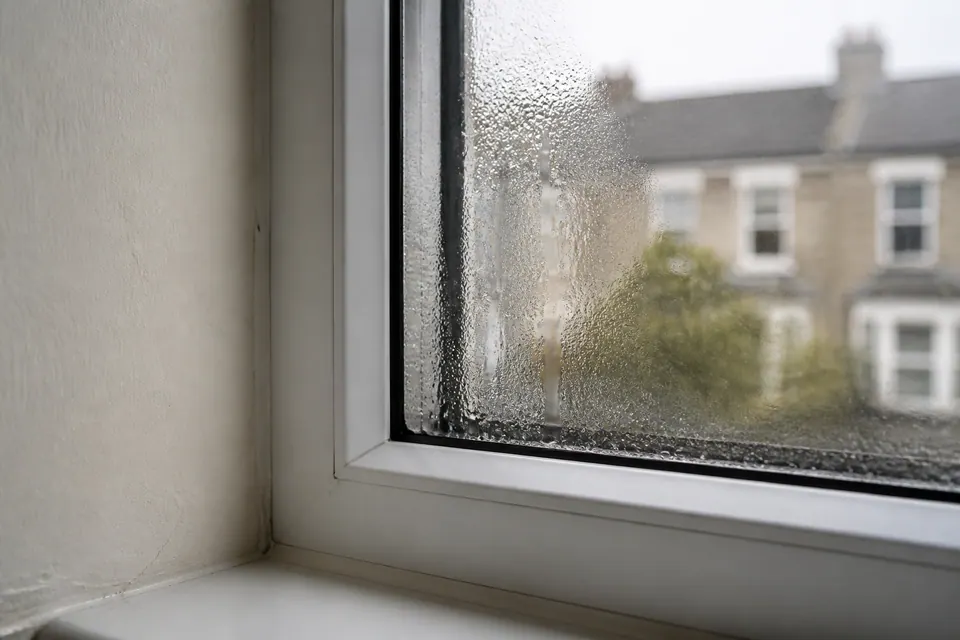
Keep those observations separately described. A changing edge or loss of coating may accompany a mark, but it should not be treated as the same condition or assigned the same start date without evidence.
Continuing moisture may support recurrence, while an outside-facing position does not identify the source on its own. Provide reliable water history and current material condition without assuming a particular building defect.
Retain images showing intact and affected material together. Do not remove more covering to reproduce a previous view or make the contrast more obvious.
Blackheath / PLAN THE APPOINTMENT
Send the postcode with a wider image showing the affected covering and intact comparison area. Explain any obstruction and identify known material information without testing the surface.
Keep planned restoration or decorating separate until the suitability and remaining questions have been clarified.
View the Blackheath area map.
Blackheath / BEFORE BOOKING
Describe the material carefully and keep the decorative expectation separate from the assessment of suitable work.
No testing should be assumed necessary. Describe the visible condition and photograph it without adding disturbance.
State that the material is unknown. A clear image and ordinary description can support the enquiry without scraping or peeling it.
It helps show the existing finish and the boundary of change, provided the image is obtained without manipulating the material.
No. Its position is useful context but does not establish a specific moisture contributor or repair requirement.
Do not assume a universal outcome for already fragile material. Discuss suitability and limitations before agreeing the work.
Explain the plan and ask which assessment or decision should precede it. Do not treat removal and reinstatement as automatically interchangeable tasks.
Residual stain and material damage should be distinguished from growth. Ask what later decorative work may need separate agreement.
Not conclusively. Keep unseen material as an uncertainty rather than a confirmed part of the treatment area.
The suitable finish, existing limitations, any excluded damaged material and separate restoration or moisture questions. Avoid a broad decorative promise unsupported by the condition.
A PROPERTY-SPECIFIC NEXT STEP
Send the postcode, undisturbed material view and known history. Ask which suitable work can be proposed and what restoration decision remains separate.
The illustrations depict property finishes, not customer restoration results or proof that a particular fragile covering is suitable for treatment.
