
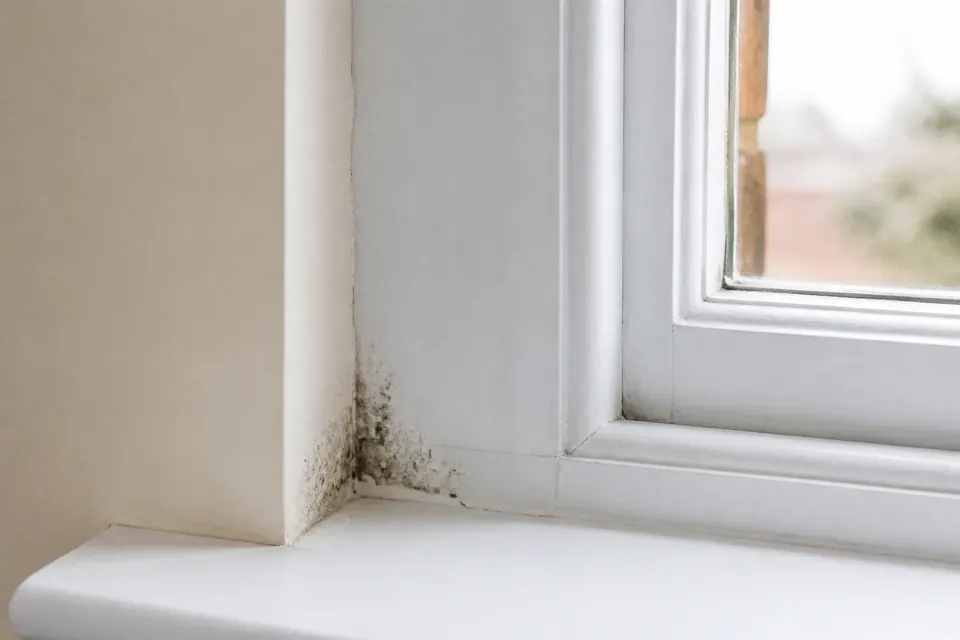
At a frame and reveal
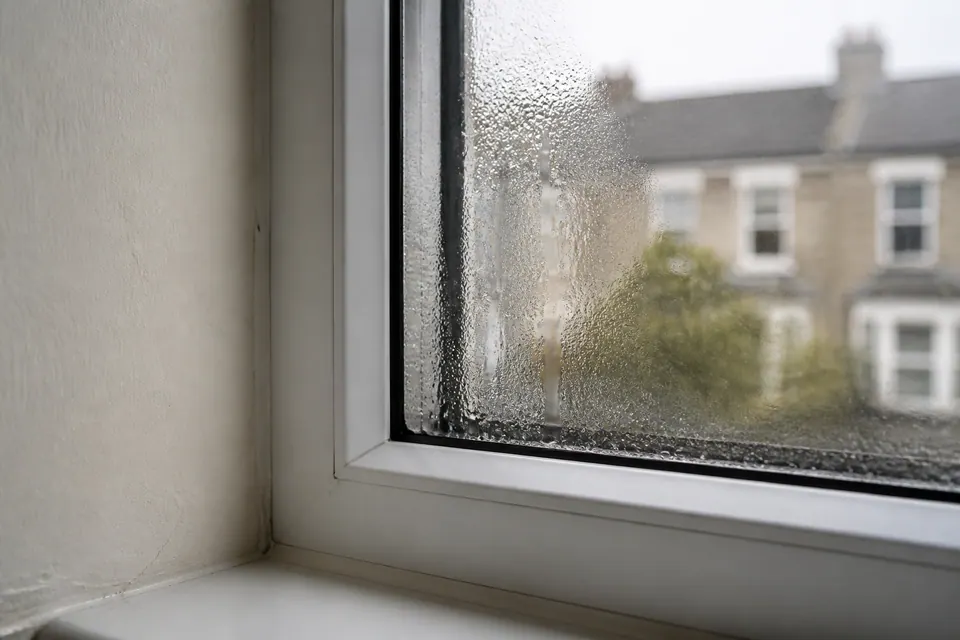
Timber or another frame material may meet plaster or board within a narrow strip. Label each part so a continuous mark does not conceal the material boundary.
GREENWICH / MATERIAL-BY-MATERIAL
The same visible colour does not make two surfaces the same job.
A painted wall in one Greenwich room and a covered surface in another need separate descriptions. Label the finish where you know it, and say when you do not. The assessment should distinguish suitable accessible material from damage or uncertainty rather than applying one assumption to every patch.
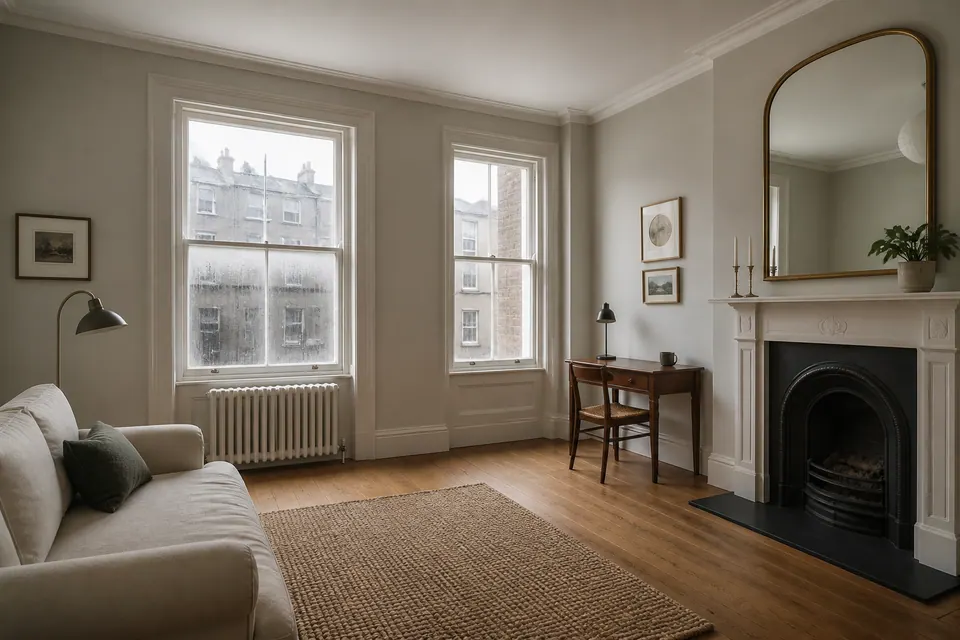
Paint · covering · uncertain substrate
01 / LOCATE THE ISSUE
Use the room setting to organise evidence, then identify the finish itself. A room name cannot establish material suitability.
Timber or another frame material may meet plaster or board within a narrow strip. Label each part so a continuous mark does not conceal the material boundary.
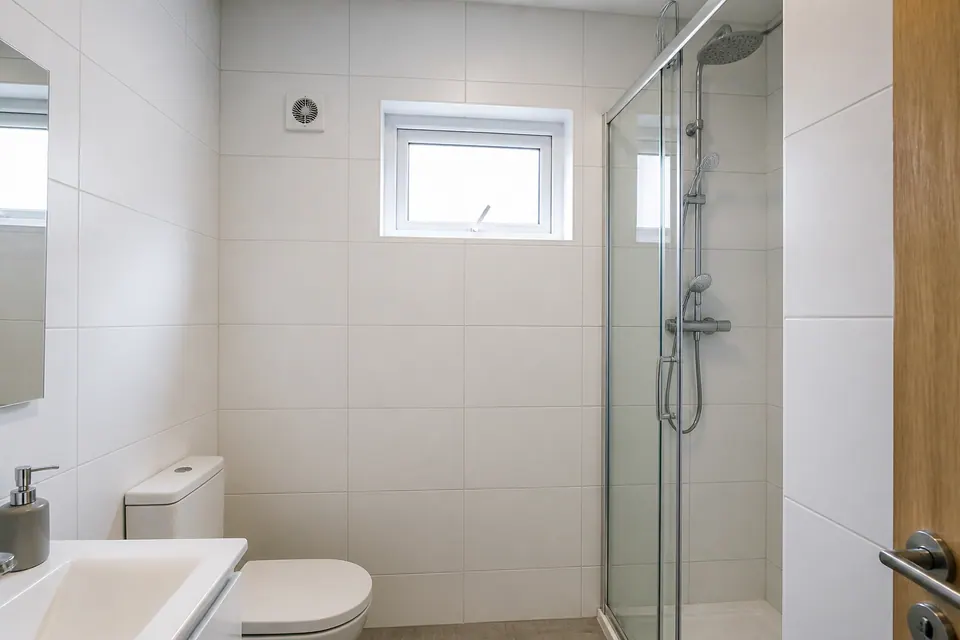
Paint, tiled joints and flexible seals need their own condition notes. Do not treat all marks as an identical bathroom surface.
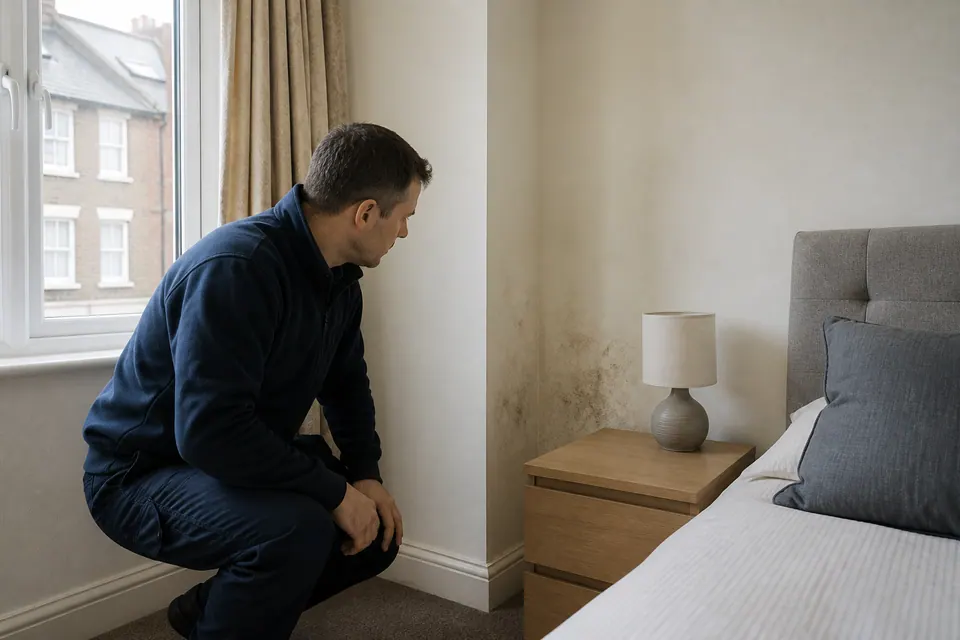
Say whether the visible layer is paper, paint or unknown. The wall behind furniture or covering may remain uninspected.
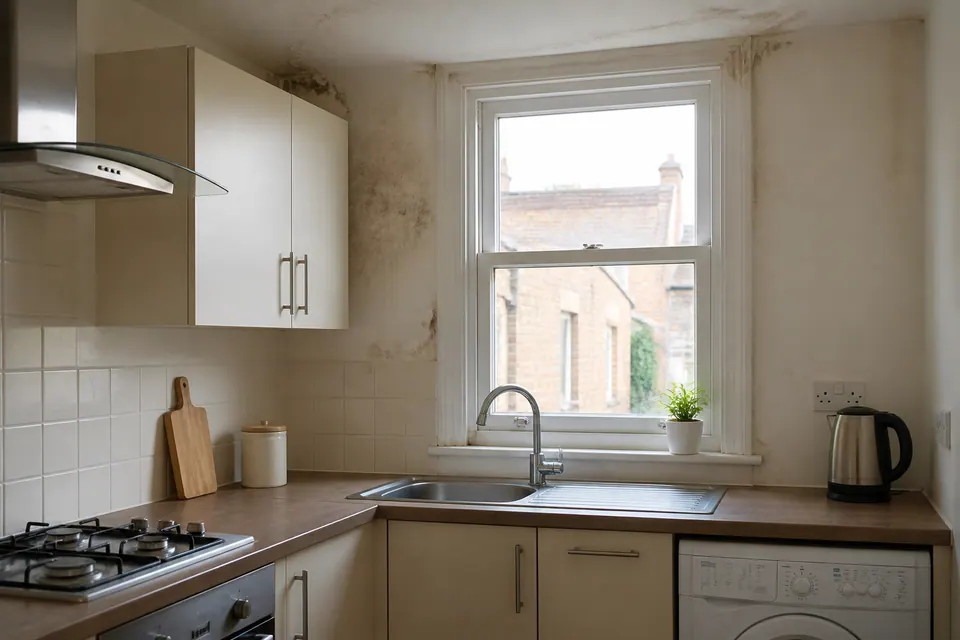
Show the boundary between wall coating, splashback and fitted materials. Fixed units can conceal the backing and restrict the proposed approach.
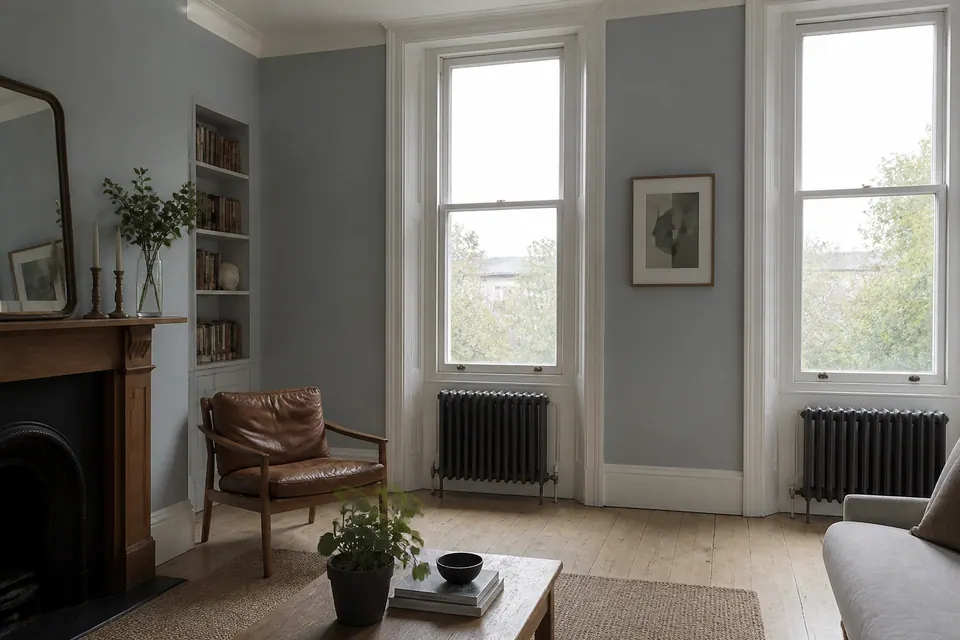
Include a wider view and any material change. Colour similarity does not prove that adjoining finishes will respond alike.
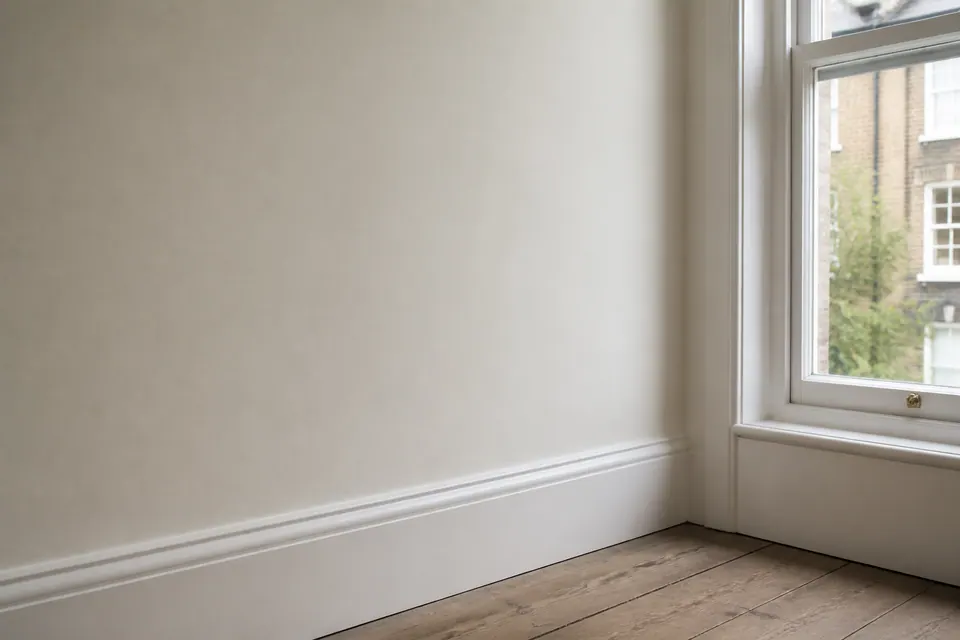
Describe visible deterioration without pressing or scraping it. Unsound material may need specialist work beyond removal of suitable growth.
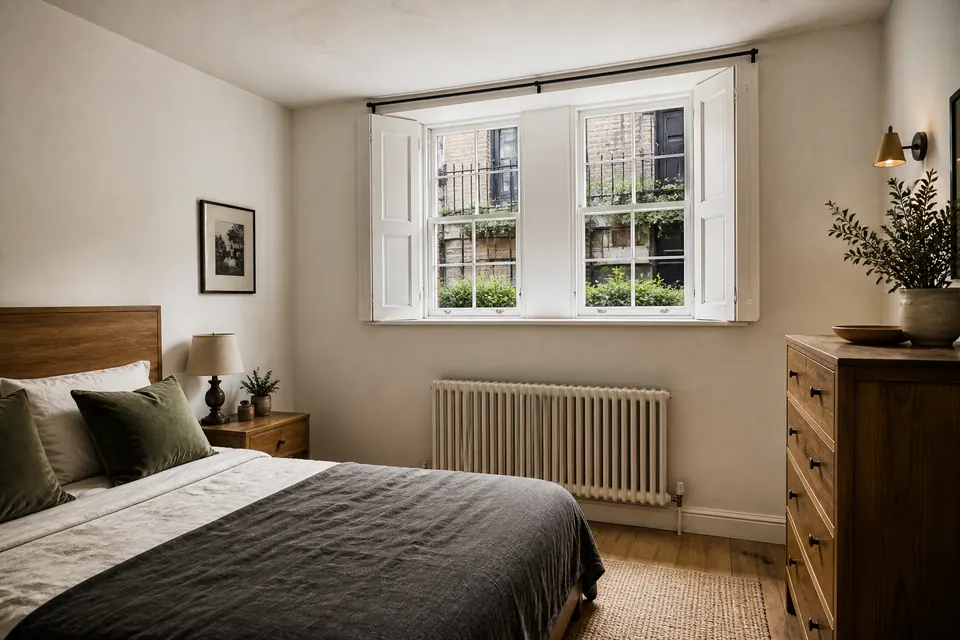
Identify what is exposed and what remains behind panels. Do not call a concealed backing the same material as the visible cupboard face without reliable information.
Appearance helps locate the issue, but does not establish material composition or suitability on its own.
Greenwich / WINDOW-ADJACENT PLASTER
A clear unknown is better than an invented specification.
If you know a wall is painted plaster or has a particular covering, include that information. If the backing is concealed, do not infer it from the smooth appearance. Show the present surface and any visible deterioration alongside the marked area. Several finishes can be considered in one enquiry, but the proposed work should retain their differences.
03 / SEPARATE THE QUESTIONS
Two finishes can show similar marks while needing different questions about condition and treatment.
| Visible condition | Possible moisture context | Material information needed |
|---|---|---|
| A marked painted reveal | Moisture near the opening | Known coating and underlying material where reliable |
| Bathroom spots on more than one finish | Repeated wetting or drying limitations | Paint, joints and seals identified separately |
| A softened surface after water exposure | Material deterioration or retained moisture | Current damage and confirmed repair history |
| Growth recurring on a covered wall | A continuing condition behind or at the finish | The visible layer and concealed limits |
Different surfaces may require separate assessment or repair decisions. Replacement of damaged material, investigation behind coverings and decoration should not be assumed within accessible growth treatment.
A known surface label does not settle its current moisture condition.
| Assessment point | Mould | Damp / moisture |
|---|---|---|
| What is described? | Fungal growth affecting the exposed material | Excess moisture relevant to the material or its backing |
| Evidence to supply | Visible extent and present coating condition | Known water history and observed wetness |
| Why distinguish them? | Treatment suitability depends on the actual finish | Persistent moisture may require work beyond the visible layer |
| Next decision | Which accessible materials can be treated | Which conditions need separate investigation or repair |
04 / DIRECT ANSWERS
They can be described together, but each should be identifiable. Assessment may lead to different treatment limits or a separate repair requirement.
Do not cover the evidence as preparation. Decoration does not replace growth assessment and can hide material differences.
No. Keep each location, finish and history available rather than assuming colour or outline establishes the same explanation.
Not necessarily. Condition, access and the selected method affect the work. Ask after the surfaces have been reviewed.
Ask for preparation instructions relevant to the agreed scope. A requirement for one finish should not automatically be applied to another.
Do not assume that. Deterioration can require repair or replacement outside treatment of suitable accessible growth.
Say the material is unknown and send clear images. A reliable uncertainty is preferable to guessing from appearance.
Only separately agreed work would establish that. A mould-removal quotation should distinguish treatment from replacement and reinstatement.
05 / QUOTATION, NOT GUESSWORK
For Greenwich material comparisons, send labelled current images and affected dimensions. Small suitable accessible areas may use photo quotations; several, recurring or damaged finishes can require assessment or specialist quotation.
Read the main assessment approach ↗| Reported material condition | Quotation route | Important evidence |
|---|---|---|
| A sound suitable accessible finish | Photographs may support quotation | Reliable material label and dimensions |
| Several finishes or recurring areas | Assessment of the combined scope | Separate histories and condition notes |
| Damaged or complex material concerns | Specialist quotation where needed | Visible deterioration and repair information |
Confirm which finishes are included and what remains uncertain. A combined price should not hide unsuitable material or unagreed repair.
06 / A CONTROLLED APPROACH
Match images to known finishes and identify uncertainty. Establish suitable accessible treatment areas before assuming a uniform method.
Clarify instructions for the actual surfaces and surroundings. Do not scrape or remove layers to prepare the enquiry.
Carry out agreed work on suitable material. Damage or newly apparent differences require discussion rather than automatic repair.
Explain remaining stains, deterioration and any separate next step under the same material labels.
Different materials may have different cosmetic limits even within one attendance.
Keep the material and room attached to each image.
Treat suitable accessible finishes explicitly named.
Distinguish repair, replacement and treatment outcomes.
The stages are illustrative rather than customer evidence. Persistent moisture can permit growth to return.
07 / WHEN IT COMES BACK
Identify the exact material and location before comparing outcomes. The earlier scopes and condition may have differed even where marks originally looked alike.
Report current evidence and known water events without treating a different response as proof of one cause. A renewed assessment should preserve the material distinctions.
Use the same names and viewpoints in later photographs so a painted wall is not confused with a nearby covering.
08 / ROOM-BY-ROOM CONTEXT
Keep paint, seals and joints separate in the evidence, even when the marks are close together.
Identify the visible covering and any concealed edge. Do not assume the backing from its appearance.
Show changes between coating, splashback and fitted units. Each can have different condition limits.
Describe paper or paint reliably and include any visible failure. Similar colour is not a specification.
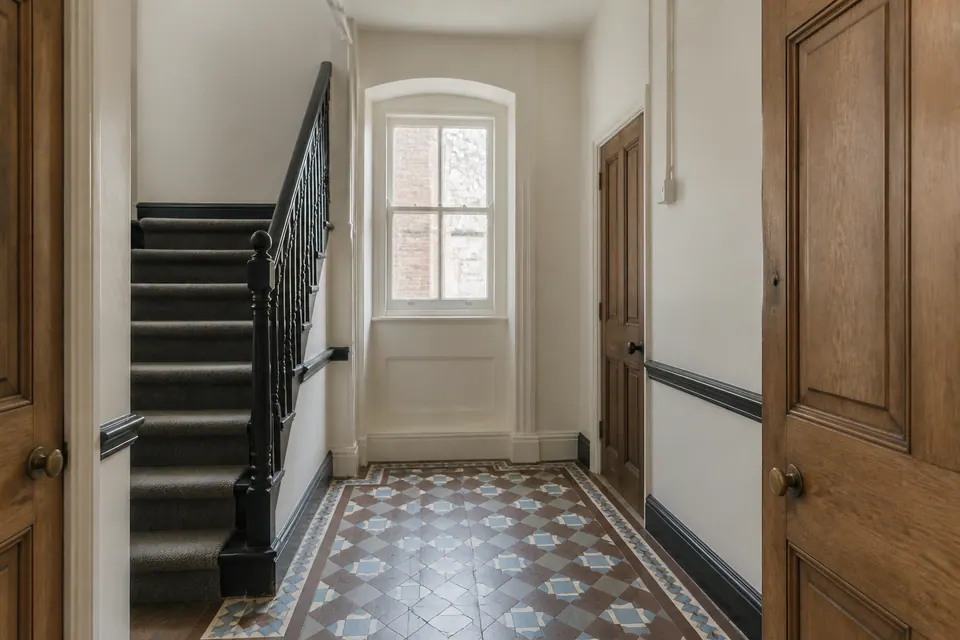
Confirm the relevant access arrangement as well as the material. A shared location does not establish suitability.
Report visible condition and water history without deriving a damp diagnosis from level or coating type.
Greenwich / ACCESS & PEOPLE
Share relevant specifications where available, but distinguish them from current condition and later decoration.
State the limit clearly. Do not strip a covering to make the enquiry appear complete.
Describe what is already apparent without probing softened or loose material. A separate scope may be needed.
Provide current photographs and arrange the appropriate booking permissions. You need not identify every substrate or decide repair responsibility.
Supply known material or previous-work information where relevant. Avoid labelling every wall alike because it was decorated together.
Ask which finishes suit treatment and which need repair or replacement. Separate the desired appearance from the material assessment.
Greenwich / PLAN THE APPOINTMENT
Send the Greenwich postcode with labelled finish photographs and practical access details. Confirm availability after the proposed surfaces are understood.
Mention separate repair or replacement work already considered without assuming it belongs in the treatment attendance.
The map gives area context for the visit enquiry.
Greenwich / BEFORE BOOKING
Clarity about the finish helps keep treatment and repair decisions separate.
Say it is unknown and provide clear images. Do not guess or remove a covering merely to supply a label.
Keep their individual dimensions available so the quotation can distinguish material and condition.
No. Appearance alone does not establish composition or treatment limits.
Do not probe it for the enquiry. Describe visible deterioration and request assessment.
Only an explicit separate agreement would establish replacement or reinstatement within the work.
Ask for guidance first and never mix cleaning products. Different materials may have different limits.
Obtain the applicable guidance for the agreed work rather than generalising from one finish.
Material differences, recurrence or damage can make the combined enquiry more complex than one suitable accessible area.
Name the same finish and location, retain the earlier scope and provide a current image without assuming all other surfaces have changed.
KEEP THE MATERIAL DIFFERENCES VISIBLE
Send the postcode, current finishes and affected dimensions. State uncertainty honestly so the next step distinguishes suitable treatment from separate material work.
The property illustrations do not document treatment of a particular set of customer materials.
