
Must I move a heavy cabinet to get a quotation?
Explain the obstruction first and ask about preparation. Do not move heavy or fixed furniture solely to improve an enquiry photograph.
East Dulwich / ALCOVES AND ROOM EDGES
A narrow gap can hide the extent without explaining the cause.
When spotting is visible beside a bookcase or within an alcove, show the exposed wall and describe what cannot currently be seen. Furniture clearance, finish suitability and any moisture concern are different questions. Start with the visible position rather than promising an empty room or an unseen result.
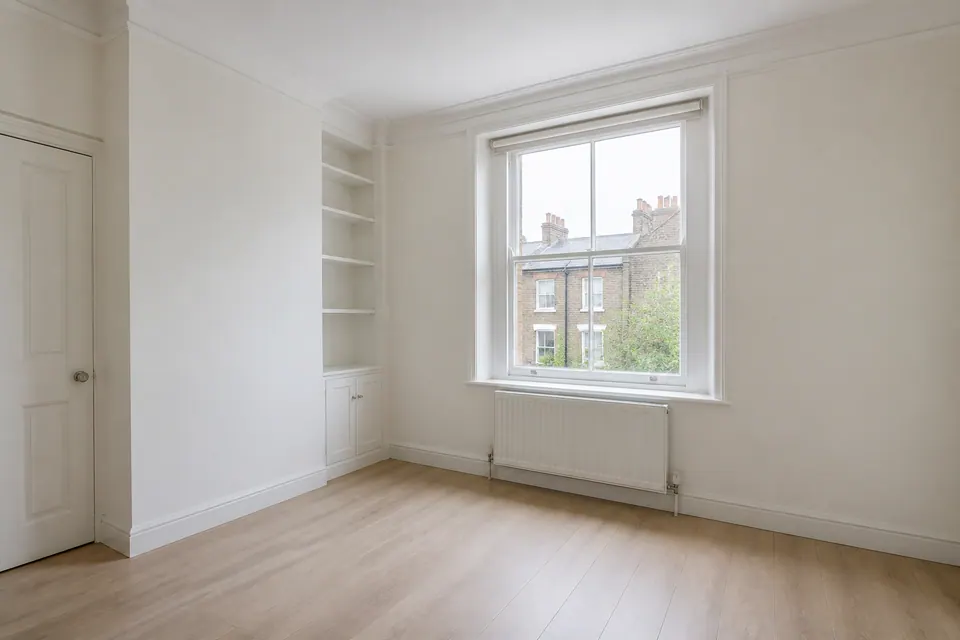
Wall finish · available space · appropriate preparation
East Dulwich / THE PROPERTY BRIEF
An awkward wall does not need an exaggerated enquiry.
If the concern sits beside built-in shelving, a freestanding cabinet or a decorative recess, describe that arrangement as it stands. The useful local detail is your property’s layout: which room, which face and how the position is reached. Do not assume the furniture caused the condition simply because the patch appeared beside it.
02 / DIRECT ANSWERS
Explain the obstruction first and ask about preparation. Do not move heavy or fixed furniture solely to improve an enquiry photograph.
A small suitable accessible area may be considered from images. State that another portion is concealed so the proposed scope does not imply unseen work.
Identify the covering and visible deterioration. Do not assume treatment will restore decorative matching or that stripping is required before assessment.
Painting over growth is not an appropriate substitute for treatment and consideration of moisture. Ask what preparation is actually needed.
No. Its position is a useful observation, not proof of a particular mechanism. The moisture context may still require assessment.
That depends on the agreed work and preparation requirements. Do not assume a complete clearance from one small exposed patch.
Repairing or replacing damaged material is a separate requirement unless explicitly agreed. Suitable surface treatment should not imply reinstatement.
Follow the relevant preparation and return instructions for the actual method. There is no single interval to assume from an image.
East Dulwich / ACCESS & PEOPLE
Describe the gap and the visible boundary without committing to heavy lifting. Preparation should reflect what can safely be arranged.
Identify the fixed fittings. Removal or access behind them should not be assumed within ordinary surface treatment.
Explain any known delicate finish and the appearance concerns separately from the request to remove suitable growth.
State where it is visible and what has changed. You do not need to determine responsibility or a cause before making a useful report.
Share the exact obstruction and preparation requirements with whoever will be present, not merely the name of the room.
Keep joinery changes, plaster repair and redecoration separate from the treatment proposal so the intended outcome is clear.
04 / A CONTROLLED APPROACH
Consider the visible growth, finish and limitations of the current view rather than inferring hidden damage.
Agree what needs to be accessible and who can safely arrange it. Fixed storage and heavy furniture need an explicit discussion.
The assessed accessible area defines the surface work. Newly revealed damage or unsuitable material may require another decision.
Keep moisture considerations and any remaining decorative or building work distinct from the completed treatment.
The practical sequence should leave both the work and its limitations understandable.
Start with the exposed position.
Follow the actual arrangements.
Work within the agreed area.
The sequence uses illustrations, not a customer’s alcove transformation or a guarantee about concealed surfaces.
05 / QUOTATION, NOT GUESSWORK
A useful proposal distinguishes the exposed patch from any inaccessible continuation. Explain the available clearance and the current finish so a small visible area is not mistaken for a fully accessible wall or a promise to restore the entire alcove.
Read the main mould-treatment quotation information ↗| Position described | Quotation basis | Boundary to keep clear |
|---|---|---|
| Small suitable exposed patch | Photographs may allow a quotation | The visible accessible face |
| Several recesses or returning marks | Assessment of the combined concern | Each position rather than a room label alone |
| Concealed complexity or damaged layers | Specialist quotation where required | Investigation and reinstatement separate |
Ask what happens if the accessible extent differs from the photographs. Clarifying that boundary is more useful than treating an estimated size as a guarantee.
06 / ROOM-BY-ROOM CONTEXT
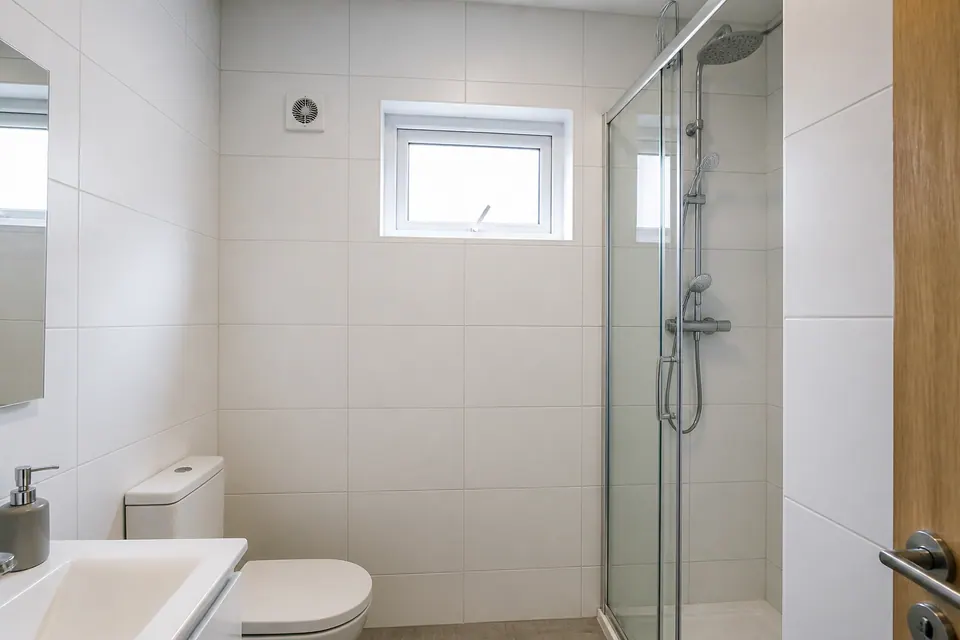
Separate a marked return wall from the cabinet and nearby sealing.
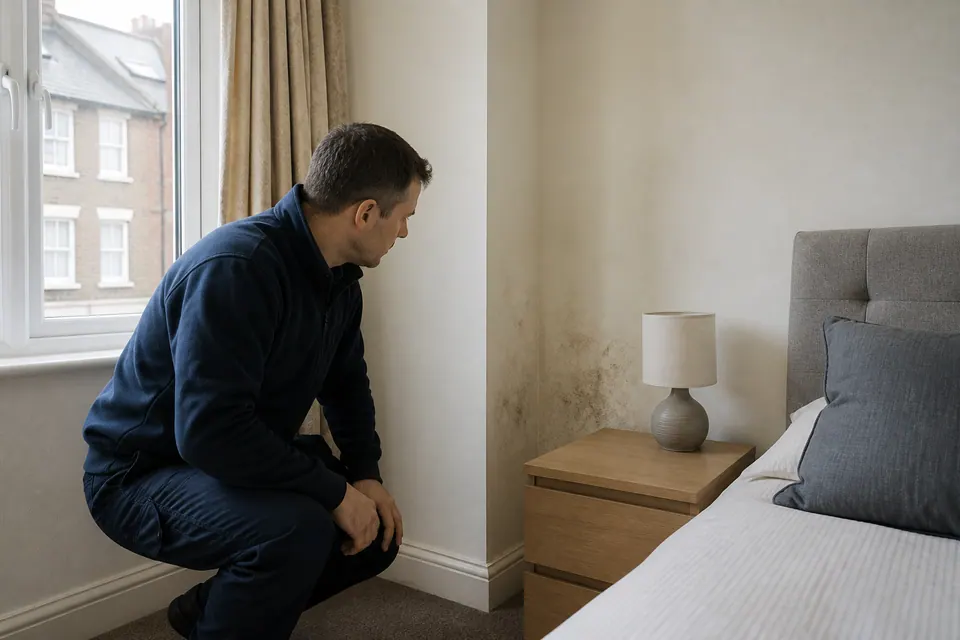
Describe the visible strip beside storage without assuming the hidden back wall.
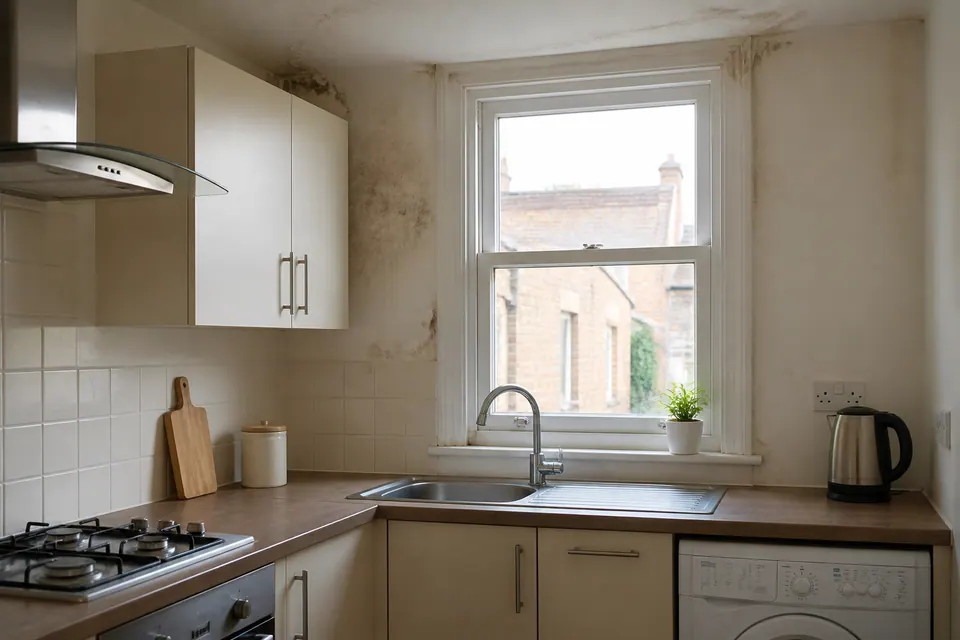
Identify an exposed side panel or wall rather than one general fitted area.
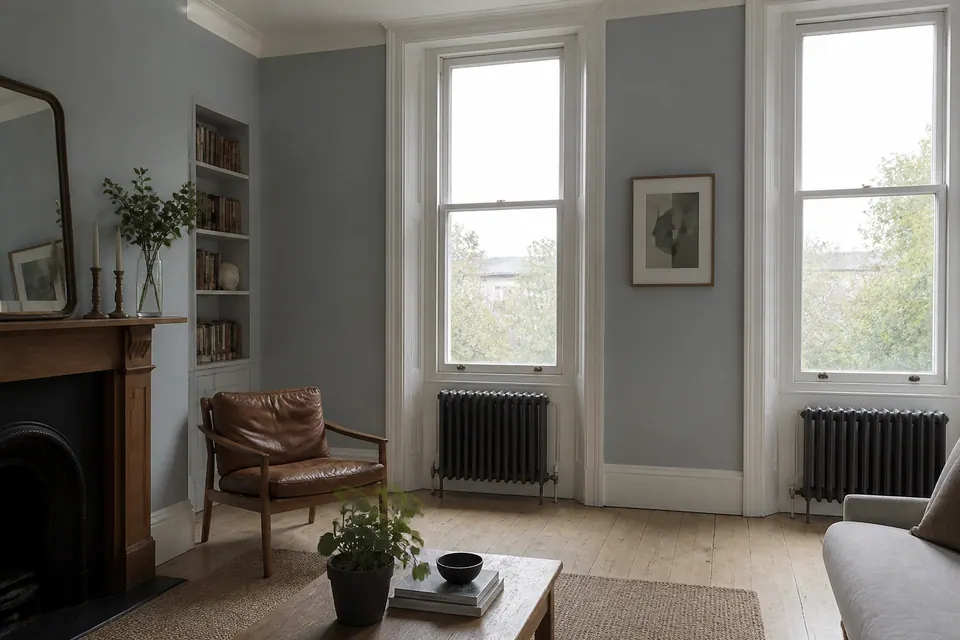
Mention the decorative finish within an alcove and any fixed shelving.
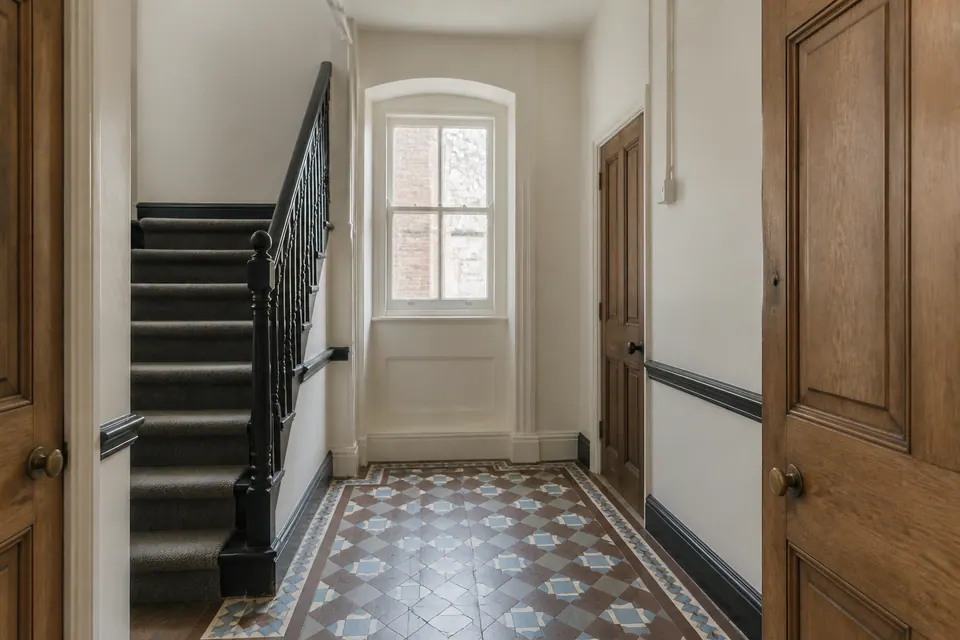
Explain whether the recess is inside the home or part of a shared space.
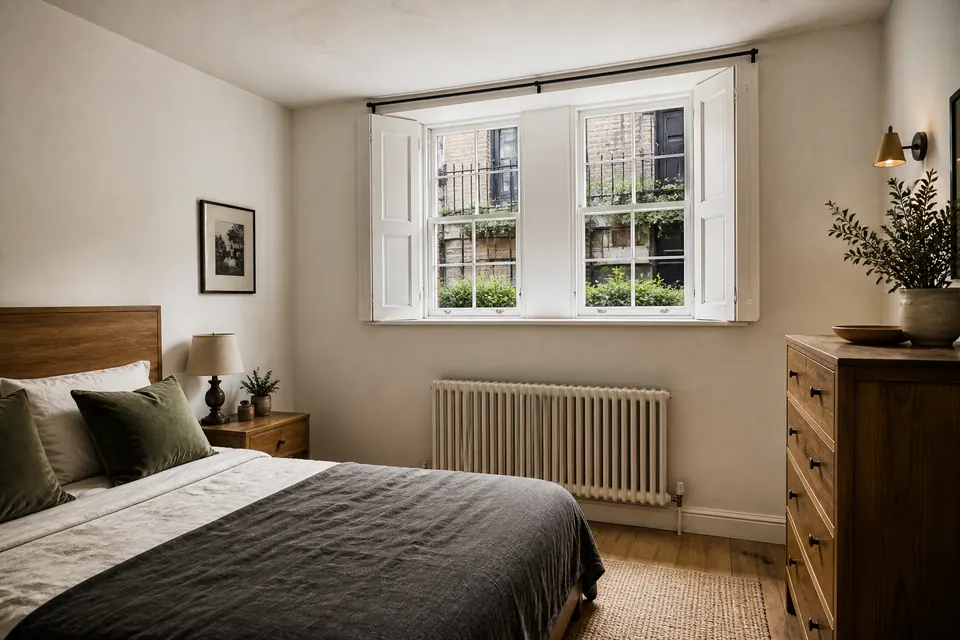
Add the actual moisture history; a recessed position alone does not establish its source.
07 / WHEN IT COMES BACK
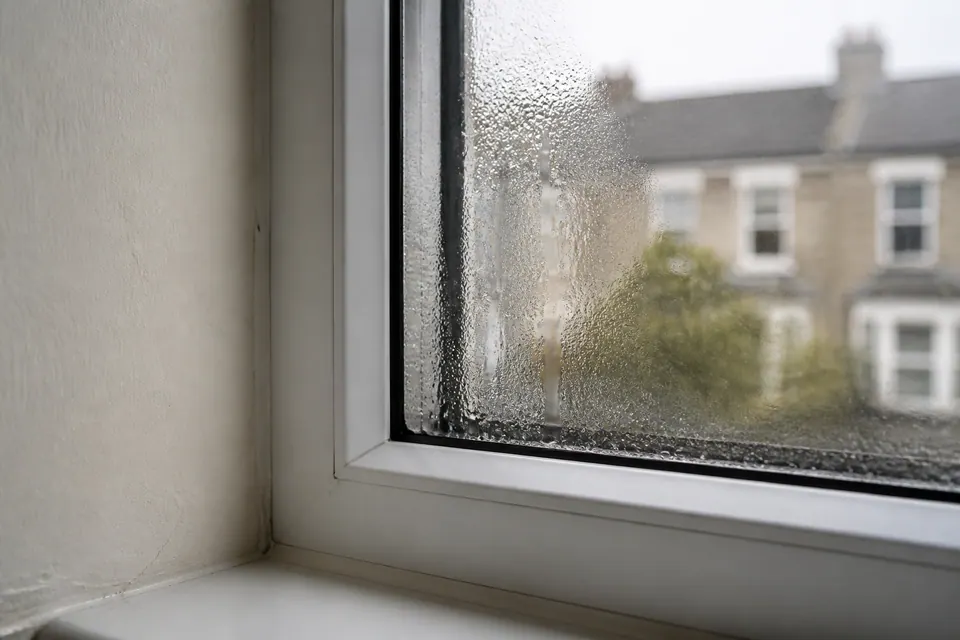
Compare the position with the earlier record and state what changed: furniture arrangement, coating, treatment or a known repair. Keep these actions distinct. A new shelf layout does not establish that the underlying moisture conditions were resolved.
Continued moisture can permit recurrence. If marks repeatedly appear around the same edge, further assessment may be needed rather than assuming another wipe or another furniture move will answer the concern.
A wider image showing a fixed room feature helps identify the same face later, even if the furniture is moved between observations.
08 / SEPARATE THE QUESTIONS
Furniture position may be relevant to the enquiry, but it is not a diagnosis. Distinguish limited access from the moisture conditions that may need assessment.
| Observation | Useful extra detail | Question still open |
|---|---|---|
| Spotting beside a cabinet | The exposed dimensions | Whether the concealed area is affected |
| Marks within a painted recess | Current coating condition | Suitability and possible moisture contributors |
| A patch noticed after moving a shelf | When it was first visible | How long it was present before discovery |
| Damage at an alcove edge | Known water or repair history | Whether separate reinstatement is needed |
Finding a mark after changing the furniture does not show that it began on that day. Include the discovery date while leaving the earlier history uncertain where appropriate.
The visible material and the conditions affecting it should both be considered.
| Question | Mould | Damp |
|---|---|---|
| Concern | Fungal growth on a suitable face | An excess-moisture condition |
| Evidence to describe | Spots, patches and their exposed boundary | Known wetness, staining or relevant incidents |
| What remains uncertain | Any extent hidden behind storage | The origin or persistence of the moisture |
| Next step | Assess the accessible treatment area | Clarify whether further investigation is required |
09 / LOCATE THE ISSUE
An alcove description becomes more useful when it identifies the affected face. Use the selector to distinguish the wall, adjoining fittings and positions that need a different access discussion.
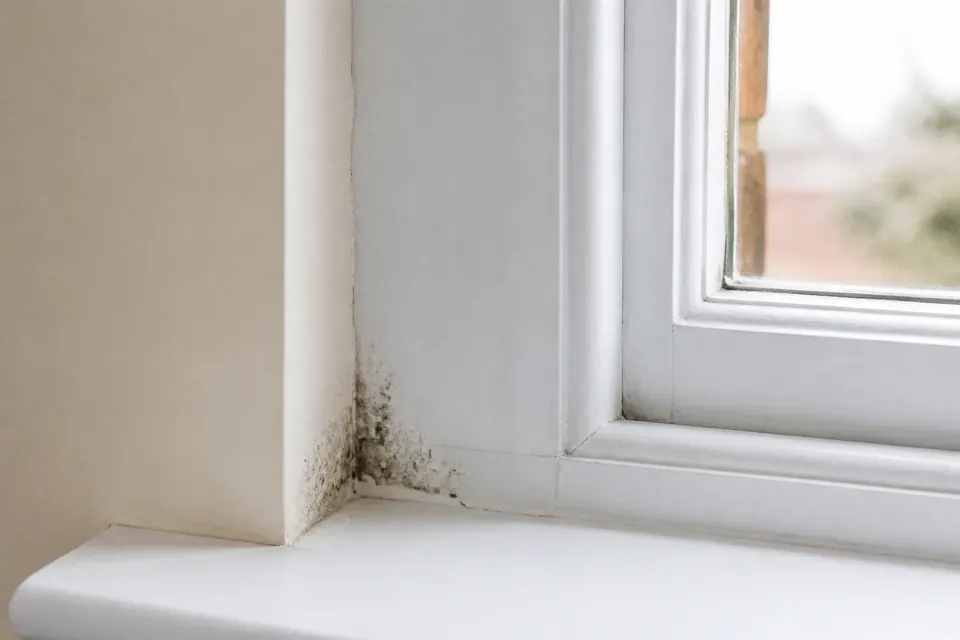
Show whether spots sit on the reveal, sill or adjacent wall. A narrow recess can contain several materials, and the suitable work should identify the actual marked face.
Describe the exposed wall beside a cabinet or fitting. Keep visible growth separate from damaged sealing or a plumbing concern that may need another task.
Explain what is visible without moving a heavy wardrobe. Ask about preparation instead of assuming the entire back wall is reachable or affected.
Identify the exposed shelf-side wall and any lining. Dismantling fitted units is not a necessary step for an initial description.
Mention decorative paper, texture or another known coating. Treatment of suitable growth should not be confused with preserving every finish unchanged or replacing decoration.
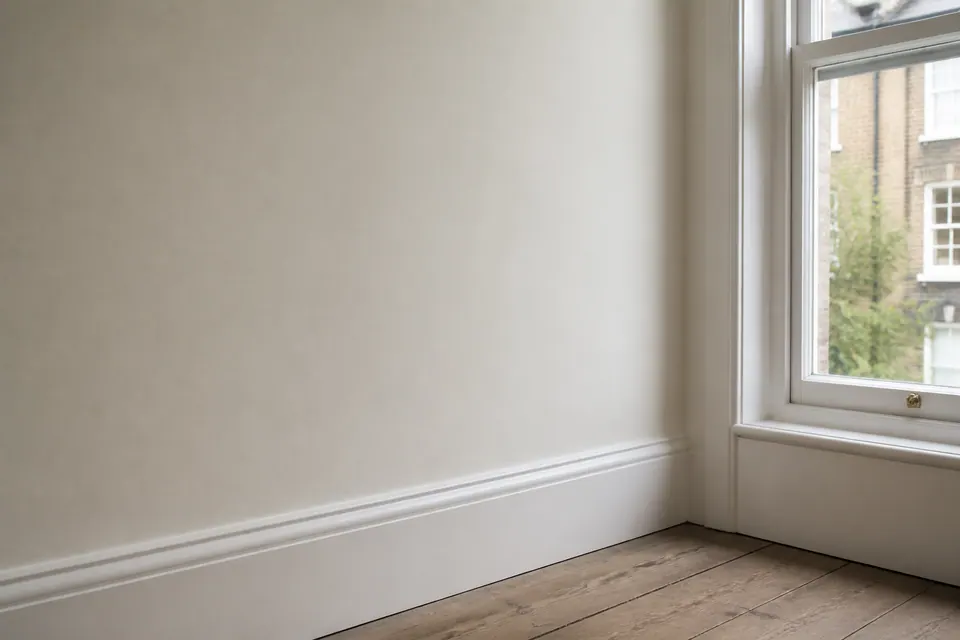
A floor-level view and approximate position are enough to start. Do not climb on shelving to investigate a mark for the enquiry.
Distinguish the cupboard lining from the building wall where that is already known. Hidden backing should remain an unknown rather than a quoted certainty.
A photograph does not establish the condition behind a fixed unit. State that limitation so preparation and the proposed work can be discussed realistically.
East Dulwich / PLAN THE APPOINTMENT
Provide the postcode, affected room and practical access details when asking about the next step. Mention fixed storage or restricted reach before preparation is agreed.
Check the proposed work and appointment arrangements before clearing the room or booking separate joinery and decorating tasks.
Load the area map.
East Dulwich / BEFORE BOOKING
Useful details before moving furniture or agreeing work.
A wider view can show the position and current clearance. Add a detail image if it can be obtained safely without shifting heavy items.
Do not assume its extent or condition. Explain that it is concealed and ask how the proposed scope will handle that limitation.
Give the discovery date and explain the change. That does not necessarily establish when the mark first developed.
Yes, mention the covering and any visible damage. Treatment suitability and decorative reinstatement need separate consideration.
Do not dismantle fittings for an initial enquiry. Describe the obstruction and clarify any preparation with the proposed work.
Report its position and condition before assuming it belongs to the original quotation.
Not necessarily. Preparation, reach and material suitability also need consideration when defining the actual work.
Yes, identify it separately so it is not mistaken for an automatic part of mould removal.
No permanent result should be assumed from that change alone. Any continuing moisture or other unresolved conditions may need assessment.
East Dulwich / SHOW THE VISIBLE EDGE
Send the postcode, a wider room view and a detail of the exposed mark. Include the finish and any fixed obstruction so the next step can be discussed realistically.
The interiors shown are illustrative settings, not evidence of concealed conditions or completed treatments in East Dulwich.
