
Only the wall looks affected
Show the visible wall and the position of nearby items. Do not describe unmarked possessions as affected merely because they were stored beside the patch.
Golders Green / PROPERTY CONDITION
Found marks behind books or boxes? Tell us about the wall and the belongings.
When a shelf is emptied in a Golders Green home, the first concern may be a wall patch, a marked book or both. Photograph the arrangement before further sorting. Explain which possessions matter to you and ask about them separately: a room-surface appointment is not automatically a document, book or fabric-restoration service.
Room photograph · belongings question · item owner
01 / WHEN IT COMES BACK
The discovery date is useful, but the wall may have been concealed for some time. An earlier photograph or a known water incident can be added without claiming an exact start date that nobody witnessed.
If items were returned to the cupboard after previous work, explain when and what changed later. Keep the account factual rather than treating storage alone as proof of why growth returned.
Deciding what to do with papers or fabrics does not resolve a water issue in the property. Equally, a repair record does not provide an item-by-item assessment of the contents.
Golders Green / ACCESS & PEOPLE
Show the visible wall and the position of nearby items. Do not describe unmarked possessions as affected merely because they were stored beside the patch.
Mention it separately and ask whether an appropriate item-specific service is available. A wall quotation does not decide the future of a book, document or fabric.
Identify the owner before anything is moved or discarded. A person arranging room access may not be the person authorised to make decisions about the contents.
Keep your personal-item enquiry distinct from the report about the property finish. Give the landlord or agent the relevant room evidence without assuming they will decide what happens to your belongings.
Clarify ownership when a cupboard contains items left by the landlord or a previous occupant. Do not leave the current resident to infer permission to dispose of them.
Explain if the contents include records, albums or other items that cannot simply be replaced. Ask about the limits of the proposed visit before authorising a general clear-out.
03 / DIRECT ANSWERS
No such inclusion should be assumed. Ask for the room surfaces to be named and describe any separate request about the contents.
Ask about the appropriate next step first. A new coating does not answer the current growth or moisture question, and decoration may be a separate task.
That does not resolve a property moisture issue by itself. Do not treat a disposal decision as a substitute for considering the affected room and its history.
No. Start with the view already available and explain what remains stored. Ask for preparation advice before undertaking a larger sorting exercise.
Follow the instructions for the actual work and raise any individual-item concern separately. A generic return time should not be assumed.
Identify the room finish and the fabric concern separately. Do not infer that a treatment appointment includes laundering or a decision about retaining linen.
Not automatically. Report actual observations around the window and the items without treating proximity as a diagnosis.
A building repair does not establish the condition or restoration prospects of personal items. Those questions need their own appropriate consideration.
04 / A CONTROLLED APPROACH
Review the room photographs and identify any separate request about personal items. Clarify what is being considered for the appointment before preparations affect the contents.
Agree the handling arrangements with the person responsible for the belongings. Do not assume the occupant should empty, discard or relocate everything before receiving instructions.
Carry out the agreed work on suitable room surfaces. Item restoration, laundering and disposal should not be implied unless they have been separately and explicitly arranged.
Explain the aftercare and any remaining questions about returning items to the room. Keep the completed room work distinct from decisions still needed about individual possessions.
The illustration describes a possible progression for the property surface. It does not demonstrate that books, documents or fabrics can be restored by the same appointment.
Locate the wall concern and record nearby stored items.
Follow the agreed preparation without assuming a whole-contents service.
Review the room work and the instructions for the next step.
The diagram is illustrative and is not a customer record of rescued belongings or restored documents.
Golders Green / THE PROPERTY BRIEF
A box of records is not just an obstacle in front of a wall.
You may be worried about paperwork, photographs or possessions as much as the newly exposed finish. Say that at the start. The enquiry can then distinguish a request for suitable room treatment from questions about individual items, ownership and any other specialist help that may be needed.
Golders Green / PLAN THE APPOINTMENT
Give the full Golders Green postcode and a room photograph showing where the items were stored. Explain whether the enquiry is about the property finish, particular belongings or both.
Identify the person who can approve decisions about the contents as well as the person providing entry. Those roles may belong to different people.
View the Golders Green area map.
07 / QUOTATION, NOT GUESSWORK
Explain the visible room area and any belongings question separately. That prevents an enquiry about a wall patch being mistaken for a quotation to sort, clean or restore the contents of an entire cupboard.
See the main mould-removal service ↗| Scope | Quotation basis | Belongings detail |
|---|---|---|
| A suitable visible room surface | A photo-led quotation may be possible for that defined treatment. | Show nearby items without assuming they form part of the price. |
| Several areas or an uncertain room condition | An assessment may be needed before the property work is confirmed. | Explain what was revealed during sorting and what remains concealed. |
| A complex material or item concern | A specialist quotation or another appropriate service may be needed. | Identify the wall material and any separate restoration request. |
Confirm the total for the named room work. Sorting, disposal, laundering and restoration of possessions are not automatic inclusions in a mould-removal quotation.
08 / SEPARATE THE QUESTIONS
The table separates observations about the room from observations about possessions. Neither should be used to make unsupported claims about everything stored in the same place.
| Visible issue | Possible contributing factor | What may need checking |
|---|---|---|
| A patch on the wall behind boxes | The property finish needs consideration. | What is visible without unpacking further? |
| A mark on a book or folder | The item raises its own handling or restoration question. | Is an appropriate item-specific service required? |
| An odour when the cupboard opens | The observation is useful but does not identify a hidden cause. | What other visible evidence is available? |
| A known water incident near storage | The event may be relevant to the room history. | What is documented about the repair and present condition? |
Avoid describing every possession as either damaged or unaffected without evidence. Identify the particular concern and ask what can appropriately be considered.
Mould removal may concern suitable property surfaces. The preservation of documents, fabrics or collections is a different request and should not be promised as an incidental benefit.
| Question | Mould | Damp |
|---|---|---|
| What is the object of the work? | The named wall, lining or other suitable room finish. | A water or building condition affecting the property. |
| What does not follow automatically? | That nearby books or fabrics have been restored. | That every personal item has been assessed. |
| What evidence is useful? | The visible room mark and relevant material information. | Actual water observations and a documented repair history. |
| What remains to decide? | Preparation and any item-specific help outside room treatment. | The next step for an unresolved property condition. |
09 / LOCATE THE ISSUE
Start with that distinction, then choose the nearest room below. A picture of a shelf may show several concerns that should not be bundled into a single promise to clean everything.
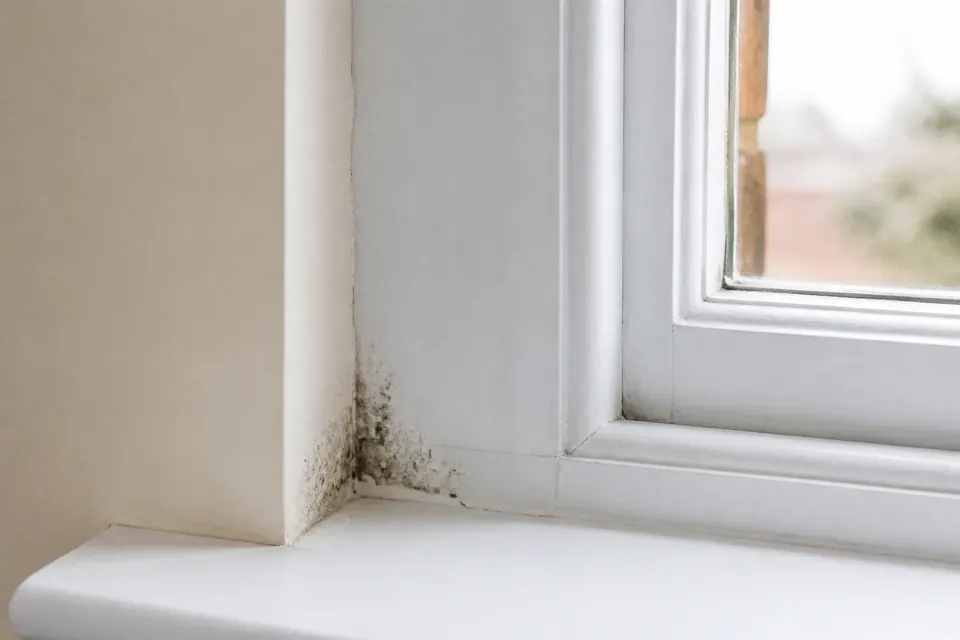
Show the reveal and the shelf position together. Explain whether a mark was noticed on the painted wall, a book cover or the shelf itself; each is a different part of the enquiry.
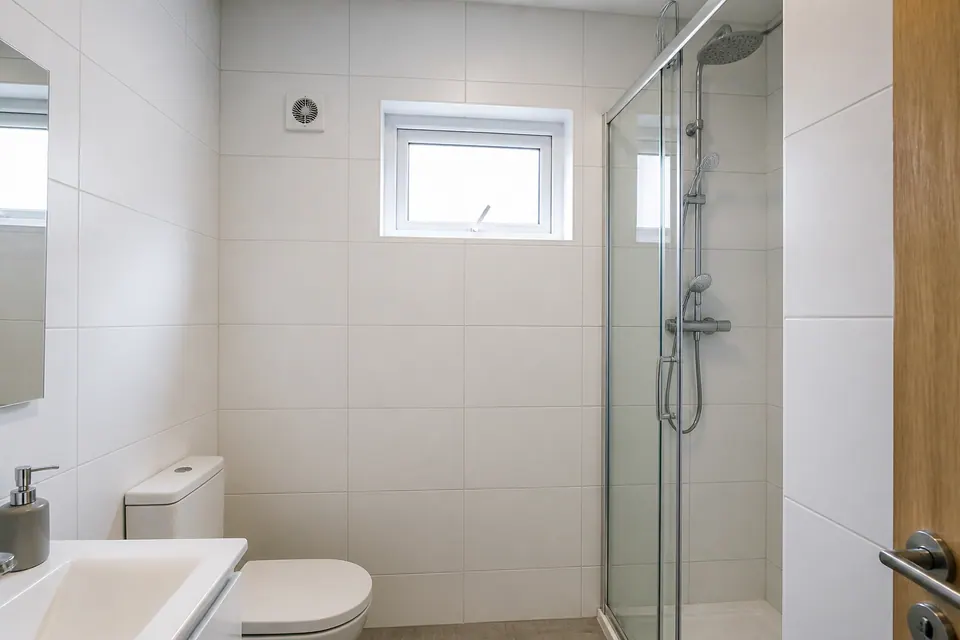
Identify the room finish and mention any concern about towels or other fabric separately. Do not assume the proposed work includes laundering or deciding which belongings can be retained.
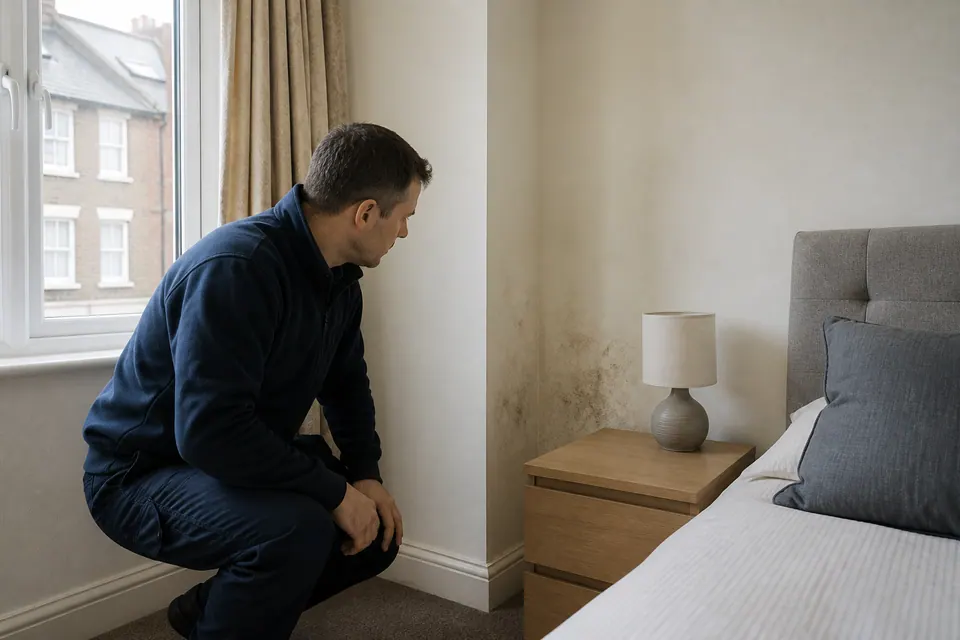
Describe what was noticed before unpacking further. A photograph of the closed arrangement can locate the wall concern without requiring every personal item to be handled for evidence.
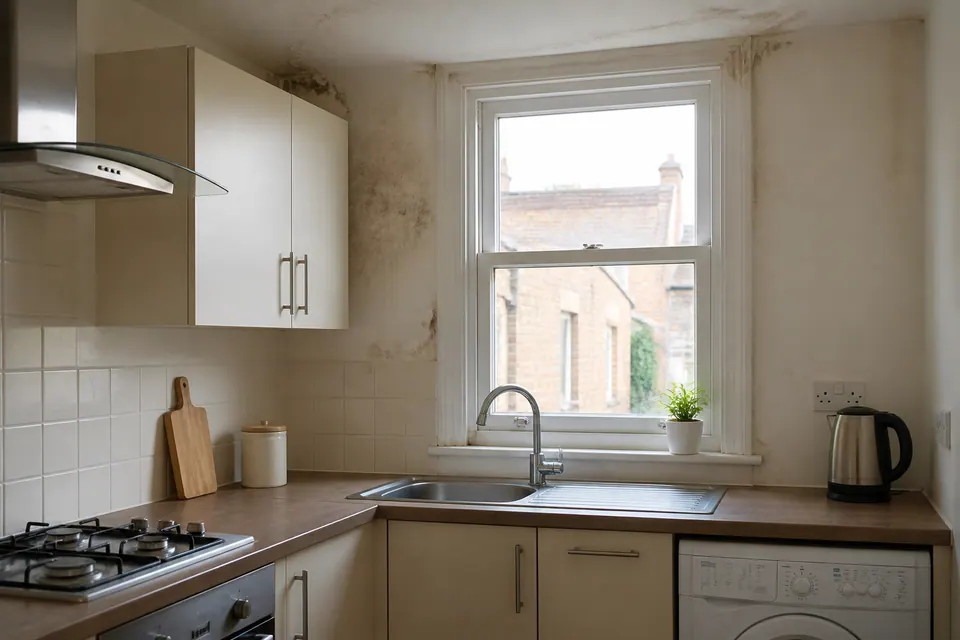
Distinguish the cupboard lining, building wall and stored papers. If the wall behind the fitting cannot be seen, say that rather than assuming the contents reveal its condition.
Tell us if there are irreplaceable photographs or albums involved. Their importance should be clear before preparations are discussed, without implying that restoration is part of a wall-treatment visit.
Give the discovery date and explain what previously stood there. It may be impossible to know when a concealed mark began, and that uncertainty can simply remain in the account.
Show the lining or shelf carrying the mark and identify any affected possessions. Do not describe a whole cupboard as one material when the photograph contains panels, paper and fabric.
Photographs should explain the situation, not require a full sorting exercise. Ask what preparation is appropriate before turning an initial discovery into a large handling or disposal task.
10 / ROOM-BY-ROOM CONTEXT
If towels or stored linen are part of the concern, mention them alongside the affected paint or lining. A bathroom treatment enquiry is not a laundry instruction.
Identify boxes, papers or clothing as personal possessions, not merely clearance. Explain ownership and any item concern before agreeing the room preparation.
Stored documents and the cupboard itself are different objects. A photograph should make clear which one carries the observed mark.
Albums or collections may be particularly important to the owner. Make that priority clear without assuming a room-surface team provides conservation work.
A shared cupboard may contain several people’s property. Identify who needs to be consulted before a preparation plan involves moving or discarding anything.
Report known water events and visible room evidence. Do not use the storage location alone to decide the condition of every box or the cause of the wall mark.
Golders Green / BEFORE BOOKING
These answers distinguish a property-surface appointment from decisions about papers, fabrics and other personal items.
Do not assume that. Mention the books as a separate concern and ask whether an appropriate item-specific service is available before including them in the appointment.
No complete unpacking exercise is needed to begin the enquiry. Show the existing arrangement and the visible concern, then ask what preparation is appropriate.
That is not an automatic part of room treatment. Ownership, permission and any suitable specialist advice should be clear before decisions are made.
Make their importance explicit at the outset. Ask about the limits of the proposed service rather than assuming restoration can be provided alongside the wall work.
Identify that ownership and the person who can approve action. Do not assume permission to discard or alter items simply because room access has been arranged.
The wall photograph does not assess every item. Describe what is actually observed and avoid making a blanket claim about the contents.
Obtain the instructions for the agreed work and raise unresolved item concerns separately. Do not rely on a general promise about all belongings.
No. It may explain part of the property history, but it does not assess an album’s condition or establish a restoration outcome.
Send the postcode, an overall room view, the visible property mark and a short description of any important personal-item concern, including who owns the items.
A PROPERTY-SPECIFIC NEXT STEP
For Golders Green, include the room photograph and explain any concern about books, papers or fabrics. Ask about the limits of the appointment before starting a large clear-out.
The room illustrations are not customer evidence of saved books, restored fabrics or successful conservation of personal possessions.
