
Can an odour alone produce a treatment quotation?
Explain it, but do not assume a removal scope exists without visible or assessed material. Ask what further information or assessment is appropriate.
Finchley / VISIBLE AND UNSEEN CONCERNS
A smell is information, not a measured patch.
If a cupboard smells different, start by distinguishing the odour from anything visible on the finish. For Finchley, describe the opening, stored items and accessible surfaces without dismantling fittings or treating a suspected hidden issue as confirmed growth.
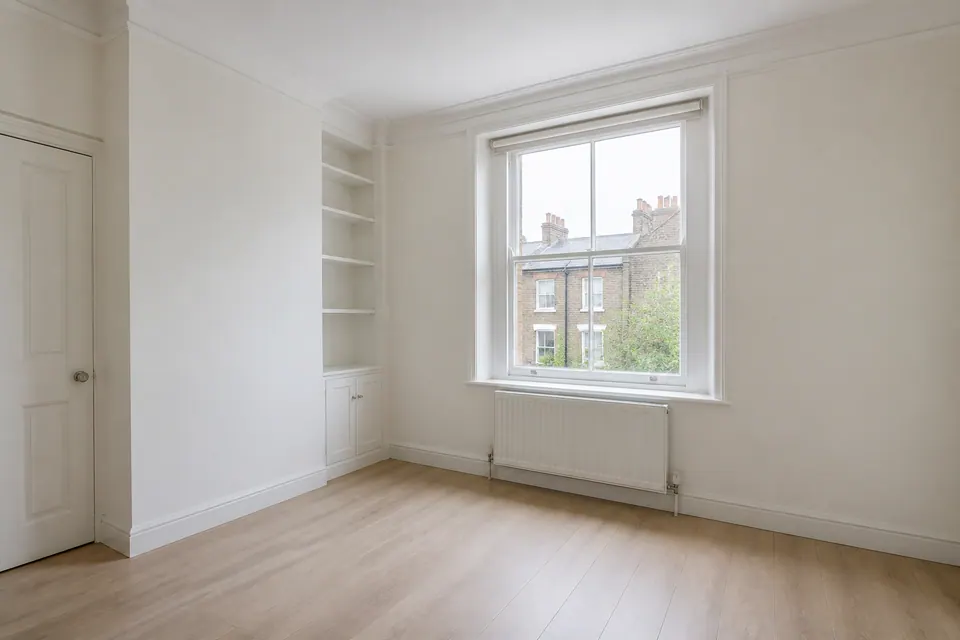
Opening · visible finish · contents
01 / DIRECT ANSWERS
Explain it, but do not assume a removal scope exists without visible or assessed material. Ask what further information or assessment is appropriate.
Painting is not a substitute for understanding the condition. It can conceal evidence without resolving a moisture or material problem.
Describe the sequence and any visible changes. Emptying it does not establish the source, and a recurring odour is not by itself a confirmed mould diagnosis.
Only if expressly agreed within an appropriate scope. Accessible treatment should not be taken to include dismantling, opening-up or reinstatement.
Ask for handling guidance before moving items that may be affected. Explain what is stored there and what clearance is realistically available.
Material and condition matter. Show the actual panel; damaged board or another unsuitable finish may require replacement rather than surface treatment.
Describe both visible areas separately. Their proximity does not establish the same moisture cause or an identical treatment method.
No such investigation or repair should be assumed. A concern within a cavity belongs in a separately defined assessment.
02 / SEPARATE THE QUESTIONS
A cupboard’s location, smell and visible condition each provide context, but none alone confirms a hidden moisture diagnosis.
| Observation supplied | Useful accompanying detail | Question left open |
|---|---|---|
| Musty smell at the opening | When it is noticed and whether marks are visible | Is further assessment needed beyond surface work? |
| Spotting on a back panel | Panel material and accessible extent | Is that material suitable for the proposed method? |
| Marks beside known pipework | Any confirmed leak and repair status | Does unresolved water need a separate response? |
| A concealed wall is suspected | Why the concern arose and what blocks the view | Who should assess the inaccessible area? |
Removing fitted units, opening cavities or replacing damaged boards requires explicit agreement or another specialist. Do not assume that those tasks are covered because the cupboard is in the treatment room.
A smell alone should not be used as a measurement of either growth or moisture.
| Question | Mould | Damp |
|---|---|---|
| What is visible? | The observed marks on accessible material | Actual wetness or a documented water event |
| What might remain unknown? | Whether hidden surfaces are affected | Where moisture may be travelling |
| Why record uncertainty? | Treatment cannot be specified from invented extent | Investigation can have a different scope |
| What needs deciding? | Which visible finishes can be assessed | Whether concealed conditions need another specialist |
03 / ROOM-BY-ROOM CONTEXT
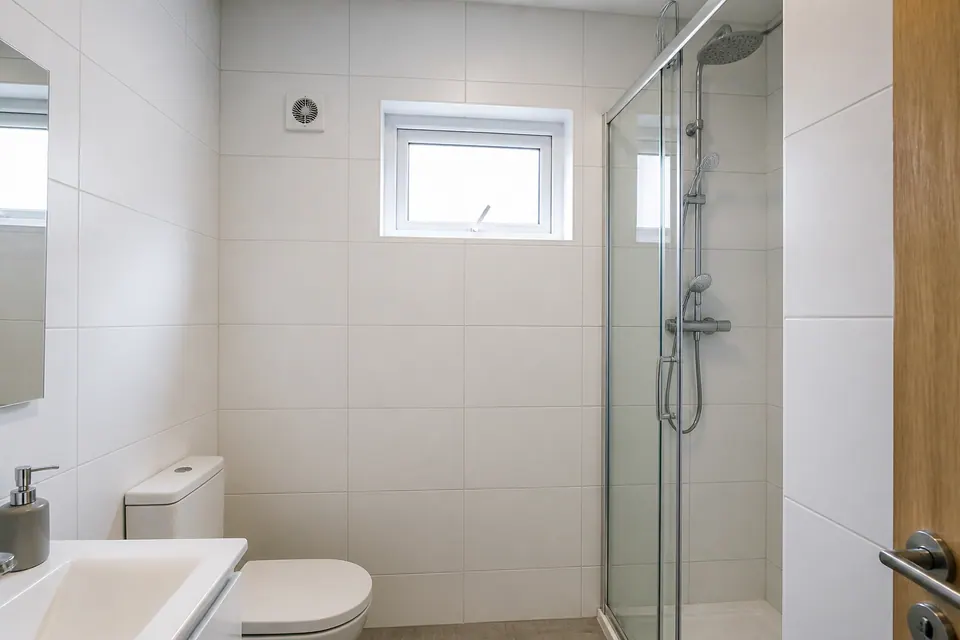
Identify the material carrying visible marks and any known wetting. A cabinet interior and the bathroom wall need not have the same scope.
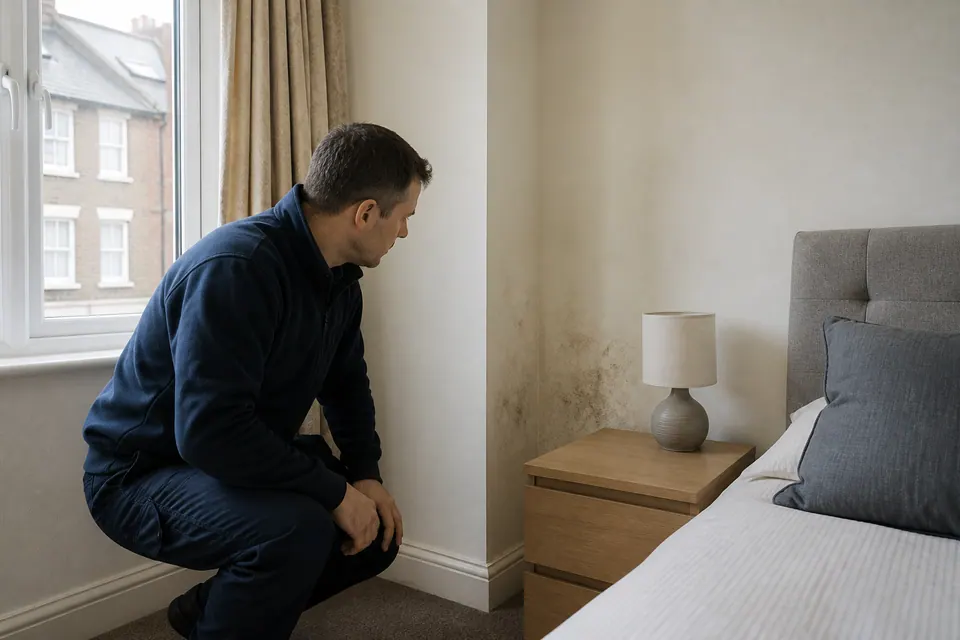
Explain whether the rear wall can be seen and how the unit is fixed. Wait for advice before moving potentially affected contents.
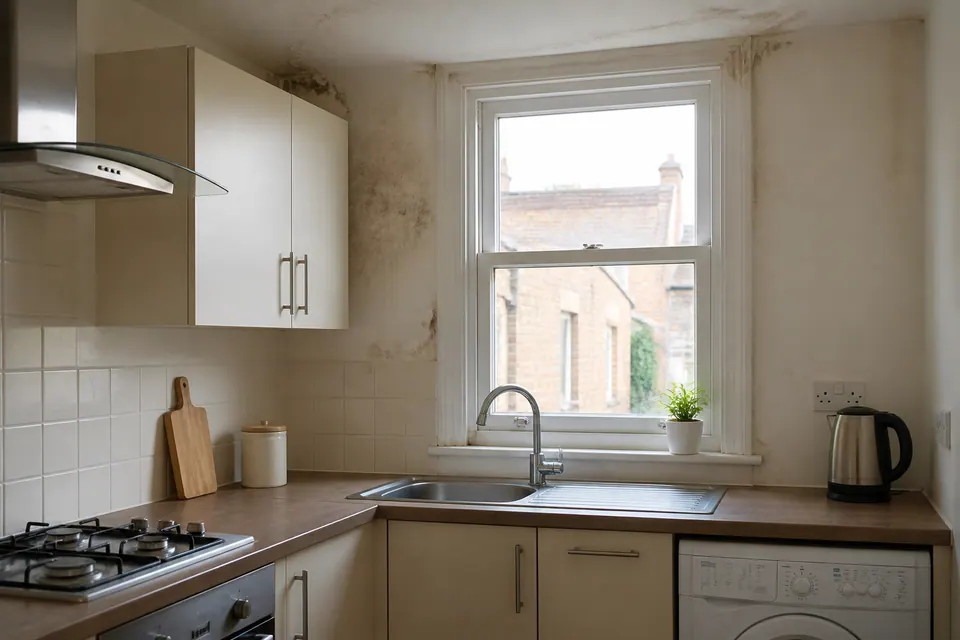
Describe known water history without assuming the nearest pipe is responsible. Concealed plumbing assessment is not automatic surface work.
Keep wall observations separate from books, fabrics or other stored belongings. The enquiry should not assume every item is treatable.
Mention whether the cupboard is private or in a common area. Access and authorisation need confirmation for shared spaces.
Record any known water event and the visible finish. The room level alone does not establish what is happening behind a lining.
Finchley / THE PROPERTY BRIEF
The opening and obstruction are part of the brief.
For a Finchley storage enquiry, say whether the space is built into the room or is a separate piece of furniture. Note what is normally kept there without sending unnecessary personal detail. If the back wall cannot be viewed, state that plainly. A surface visit should not be booked on an assumption that concealed material has already been assessed.
05 / QUOTATION, NOT GUESSWORK
For a Finchley cupboard enquiry, provide the normal opening and any visible marks in the photographs. State where contents or fixed panels prevent a view, so a proposed price is not based on an invented quantity of affected material.
Check the main assessment approach ↗| Evidence available | Possible quotation route | What to explain |
|---|---|---|
| Small suitable visible area | Photographs may inform the price | Material and normal working access |
| Repeated marks or several surfaces | Assessment defines the proposed treatment | History and separate surface locations |
| Hidden concern or damaged lining | Specialist assessment or pricing may be needed | What remains concealed and why it is suspected |
Get the inclusions in writing before clearing or dismantling anything. Contents work, concealed investigation and reinstatement are not automatic parts of a removal quotation.
Finchley / ACCESS & PEOPLE
Identify units attached to the building and any access panels already present. Do not assume removal of joinery is part of the appointment.
Describe the item and the visible wall around it. Furniture treatment and wall treatment should not be combined without confirmation.
State where the backing or lining obscures the building surface. Its hidden condition cannot be established from the cupboard’s smell alone.
Share observations with the booking contact and confirm permission for the proposed work. Do not dismantle fitted storage to establish repair responsibility.
Provide known leak or maintenance records relevant to the space. Distinguish factual history from a suspicion about concealed growth.
Ask whether the concern calls for accessible removal, a separate investigation or material work. Agree those boundaries before commissioning a cosmetic refresh.
07 / LOCATE THE ISSUE
Choose the nearest setting, then explain the visible part and any obstruction. The selector cannot establish what is behind a lining or fixed unit.
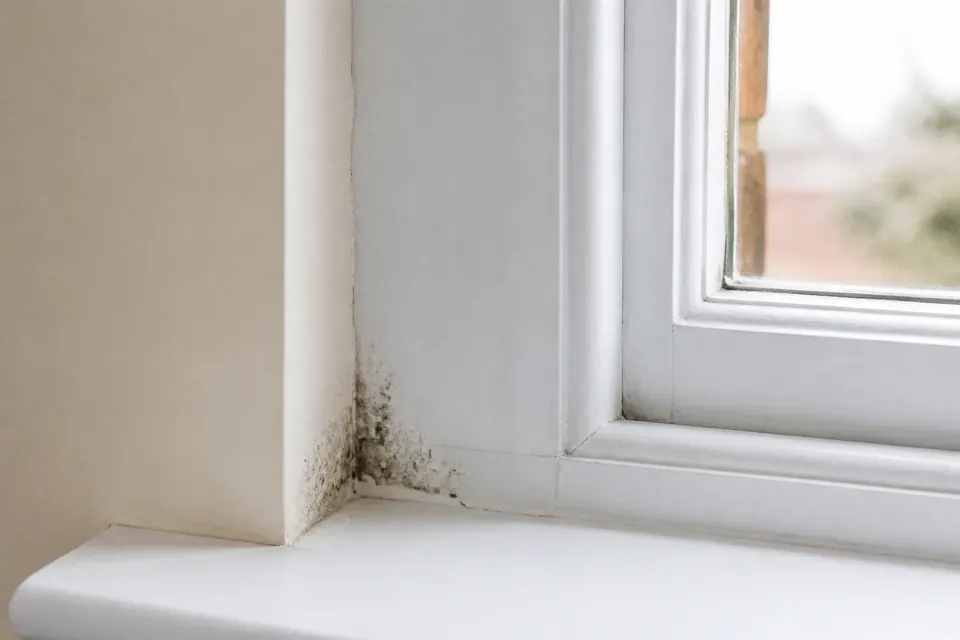
Show the relationship between the storage and window from outside the opening. Report actual water on the frame separately from an odour noticed inside.
Identify whether marks are on the room’s paint, a cabinet panel or another surface. Do not assume that all materials inside the unit are suitable for one treatment.
Explain whether the furniture is freestanding or fixed. A narrow visible strip behind it does not prove that the whole concealed wall has the same condition.
Report confirmed water events and what can be seen through the normal opening. Do not remove pipe boxing or panels to investigate for the enquiry.
Describe where the smell is noticed and whether any room surface has changed. The contents and wall may be separate concerns requiring different decisions.
State where a lining prevents inspection. Accessible-surface removal should not be interpreted as investigation inside a wall or above a ceiling.
Show the opening and accessible finish without reaching into affected material. Explain whether an odour is persistent or noticed only when the space is opened.
Do not turn suspected hidden growth into a statement of fact. The appropriate assessment depends on the evidence and safe access available.
08 / A CONTROLLED APPROACH
Distinguish the visible finish from odour and hidden concerns. Confirm what can actually be assessed through the available opening.
Discuss contents and fixed obstructions before the visit. Do not remove panels or relocate affected belongings simply to create a larger work area.
Work within the accepted accessible scope. An unseen surface revealed later is not automatically included or suitable for the same approach.
Record any remaining odour, staining or inaccessible concern without presenting the visit as a full investigation of the enclosure.
The process separates surface work from assumptions about the back of a unit or wall.
Show the normal view and its limitations.
Treat the suitable accessible material agreed beforehand.
Do not describe concealed surfaces as checked when they were not.
The drawings illustrate a process, not customer results or proof of conditions inside an enclosure.
09 / WHEN IT COMES BACK
Record whether the same visible surface has changed or whether the concern is odour alone. Note the interval after the earlier work and any known water event.
A return does not prove that every hidden panel needs treatment. It may require a different assessment question, especially where access or the moisture history remains uncertain.
Knowing what was actually accessible during the previous visit helps avoid claiming that concealed areas were treated or inspected.
Finchley / PLAN THE APPOINTMENT
Send the Finchley postcode and explain whether the concern involves a fitted cupboard, furniture or a room surface. Confirm availability for the actual proposed assessment.
The map provides geographical context; it does not imply that inaccessible areas or every contents concern are within the service.
Open the area map if it assists the access discussion.
Finchley / BEFORE BOOKING
Describe the evidence clearly before deciding that hidden material needs removal.
Yes. Explain when it occurs and whether any finish has changed. Ask what assessment is appropriate rather than claiming a measured infestation.
Do not open fixed construction for the enquiry. Show the existing access and ask whether a separately arranged investigation is needed.
Describe that independently from the wall or panel. Do not assume a surface-treatment quotation includes handling or restoring stored items.
No. Report confirmed water events separately; odour alone does not locate a moisture source or establish the concealed condition.
Explain its size, fixing and the concern first. Obtain appropriate preparation advice rather than moving heavy or potentially affected items to create access.
State that it cannot be viewed and explain why it is suspected. Do not assign dimensions of mould to a surface that has not been observed.
Replacement is a separate matter unless expressly agreed. The visible material must be assessed for suitability rather than assumed recoverable.
No universal result should be promised from surface removal. The cause of the smell and any concealed or contents issue may remain separate questions.
Newly visible extent or damage can change the appropriate scope. Discuss it before assuming the additional material is included.
START WITH WHAT YOU KNOW
Send the postcode, opening view and any visible evidence. Explain what remains hidden so assessment options can be discussed without an assumed diagnosis.
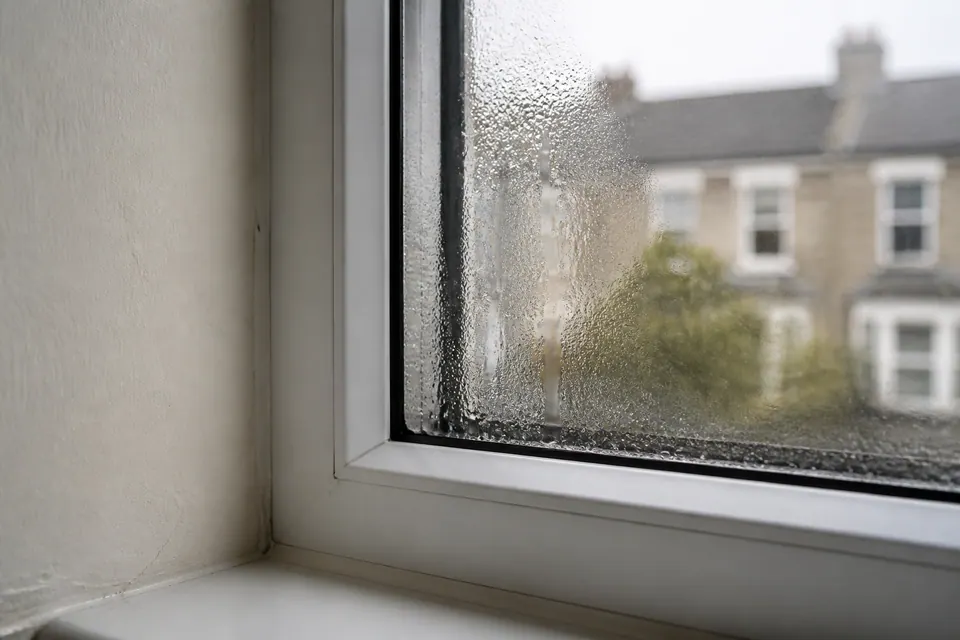
The property scenes are illustrative and do not document customer treatment outcomes.
