
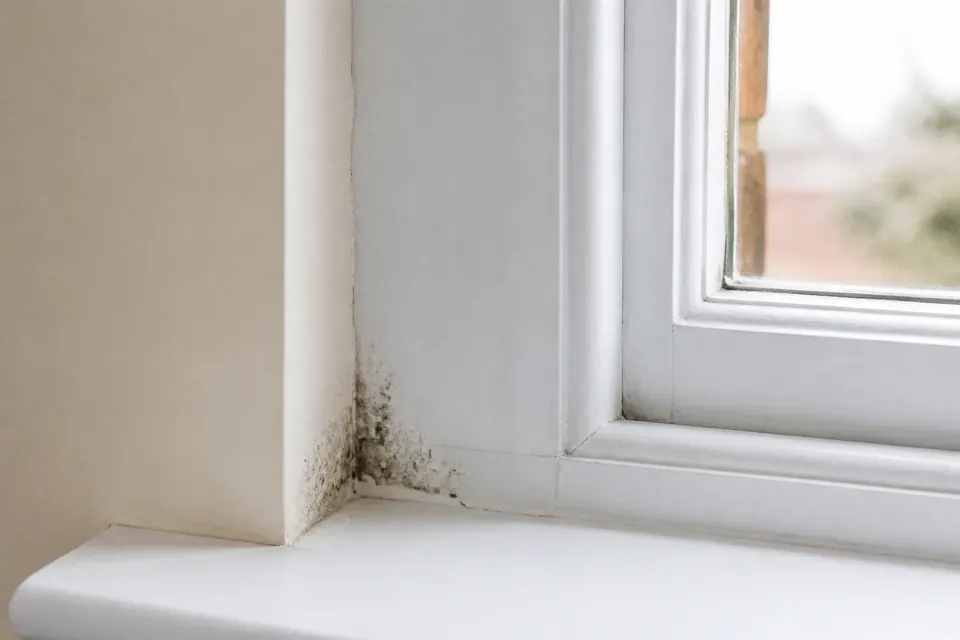
Window plaster or coating
Show loose or damaged portions beside intact material. Do not remove paint to expose more of the substrate for the enquiry.
Leatherhead / MATERIAL CONDITION BEFORE PRICE
The condition matters before the square metres.
A softened-looking board or deteriorated covering may need a different response from an intact surface. For Leatherhead, confirm postcode availability and describe what can be observed without testing the material before asking for a removal quotation.
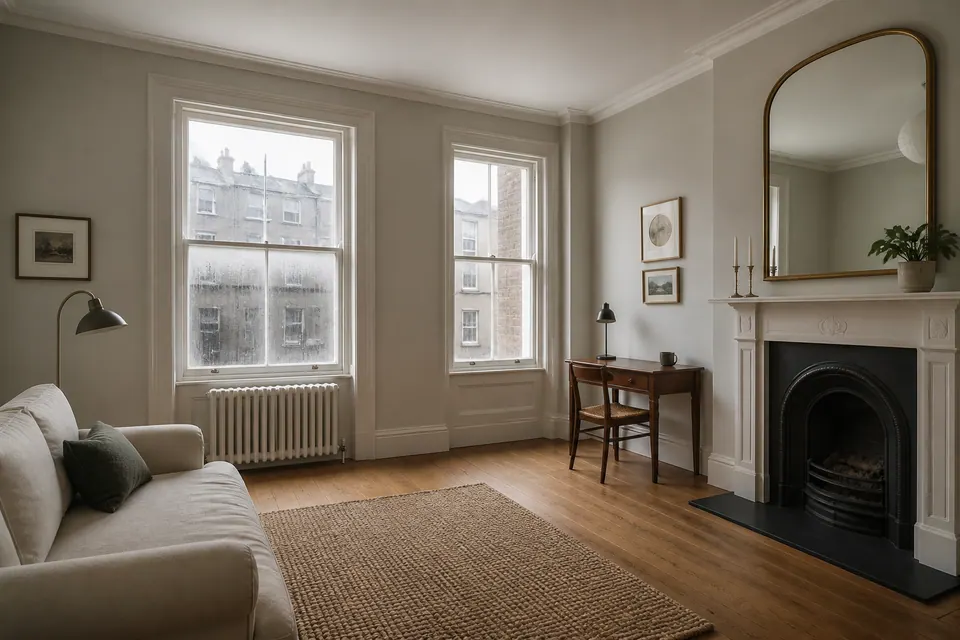
Material · deterioration · visible extent
01 / LOCATE THE ISSUE
Select the setting and describe the current finish. A room name or patch size does not establish whether it can appropriately receive surface treatment.
Show loose or damaged portions beside intact material. Do not remove paint to expose more of the substrate for the enquiry.
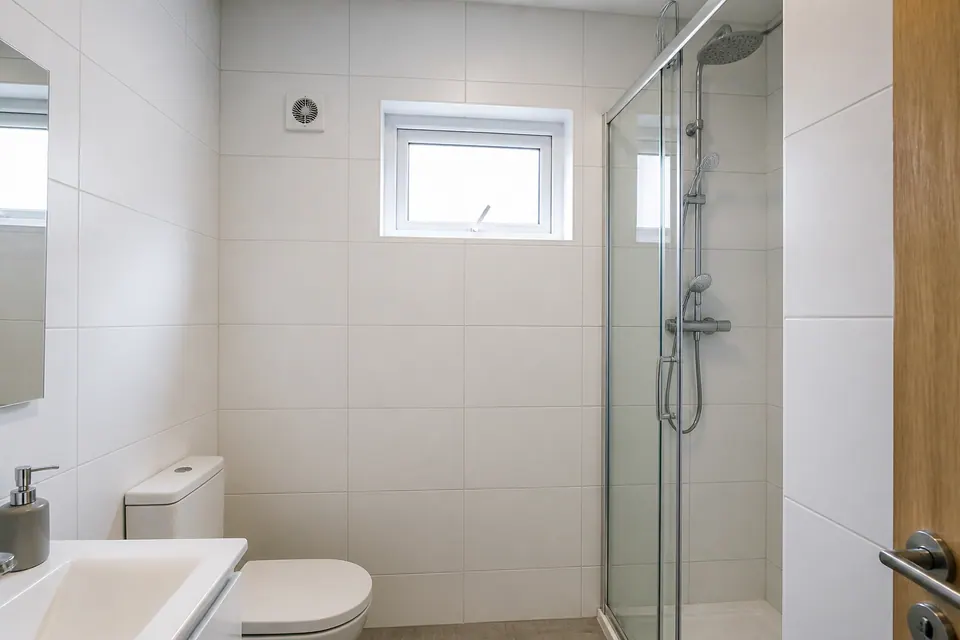
Identify the component and visible deterioration. Replacement may be a separate decision rather than an expected cleaning outcome.
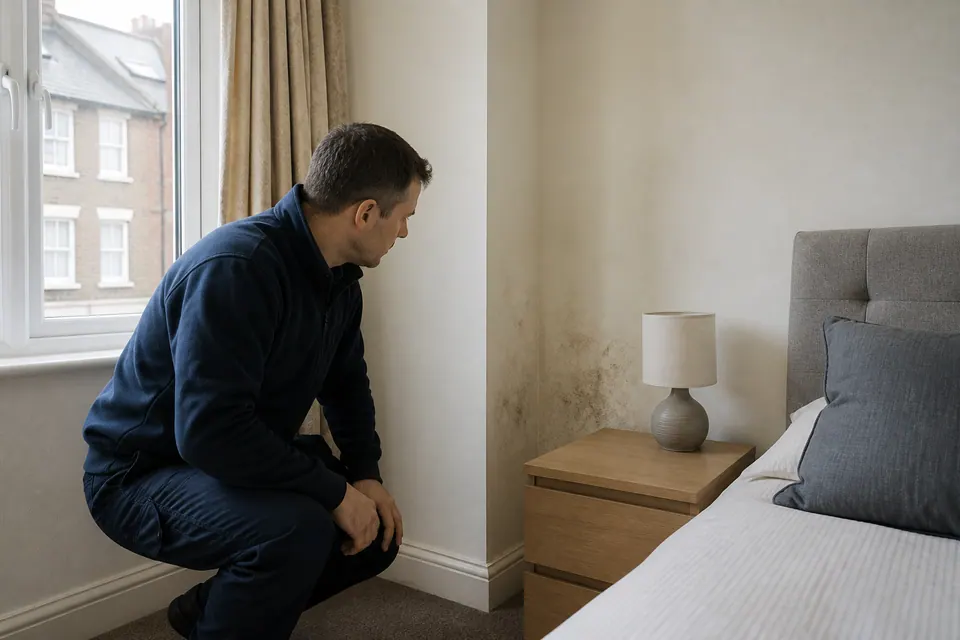
Describe lifting, damage or uncertainty without peeling it back. The concealed wall condition remains unconfirmed.
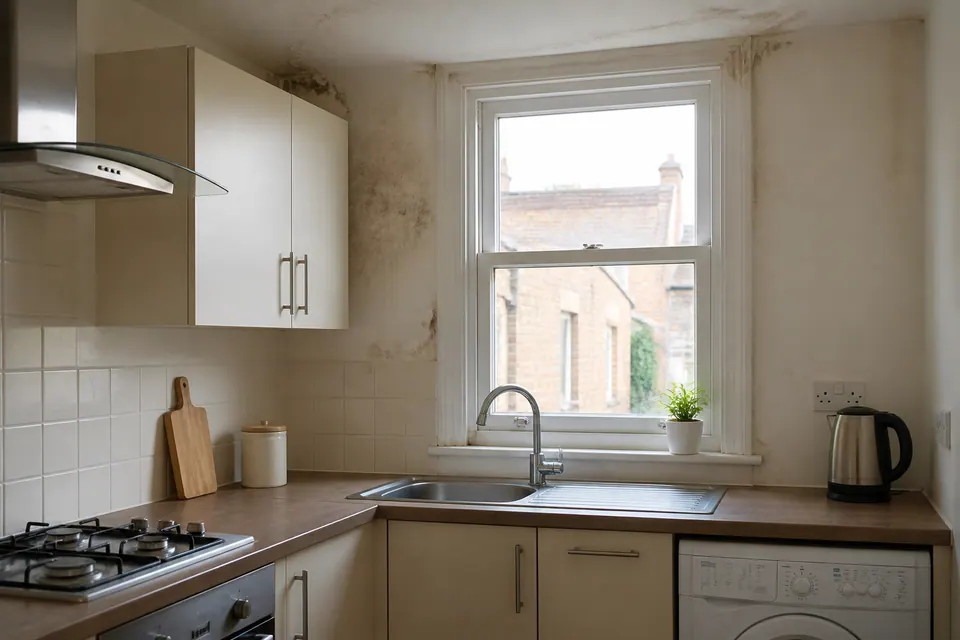
Explain known water history and current material condition. Do not assume nearby fixed units or panels are suitable because the visible patch is small.
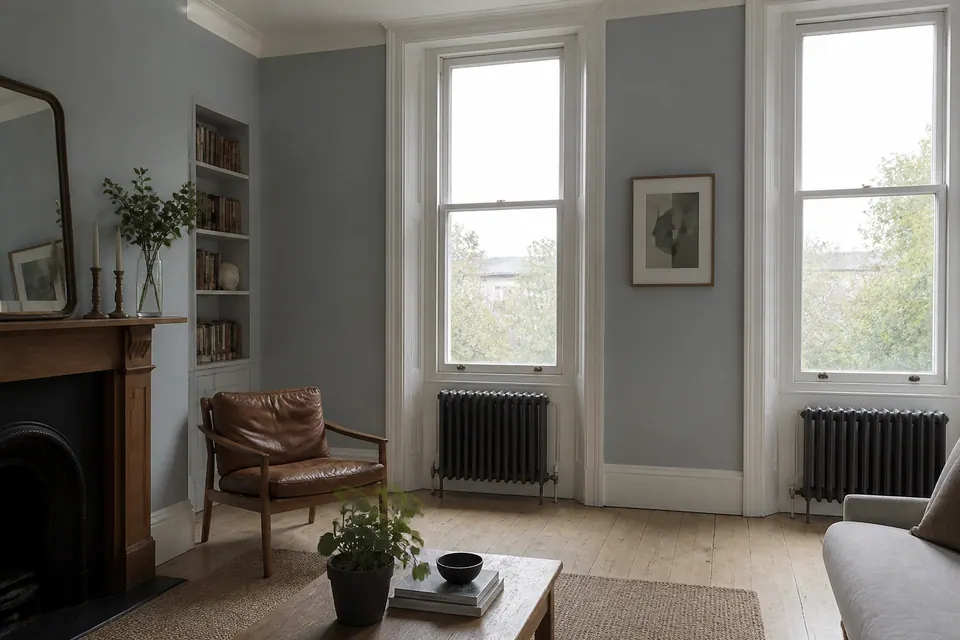
Show deterioration and any old staining separately. Removal of growth should not be promised as restoration of a damaged covering.
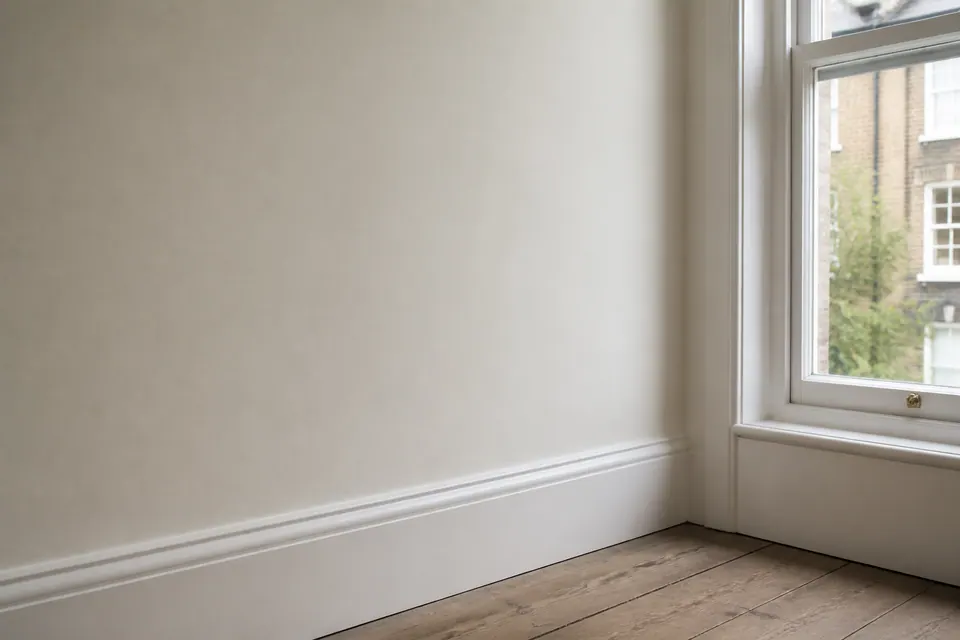
Photograph from a safe position and describe what looks loose or wet. Do not test strength or open construction to obtain a better explanation.
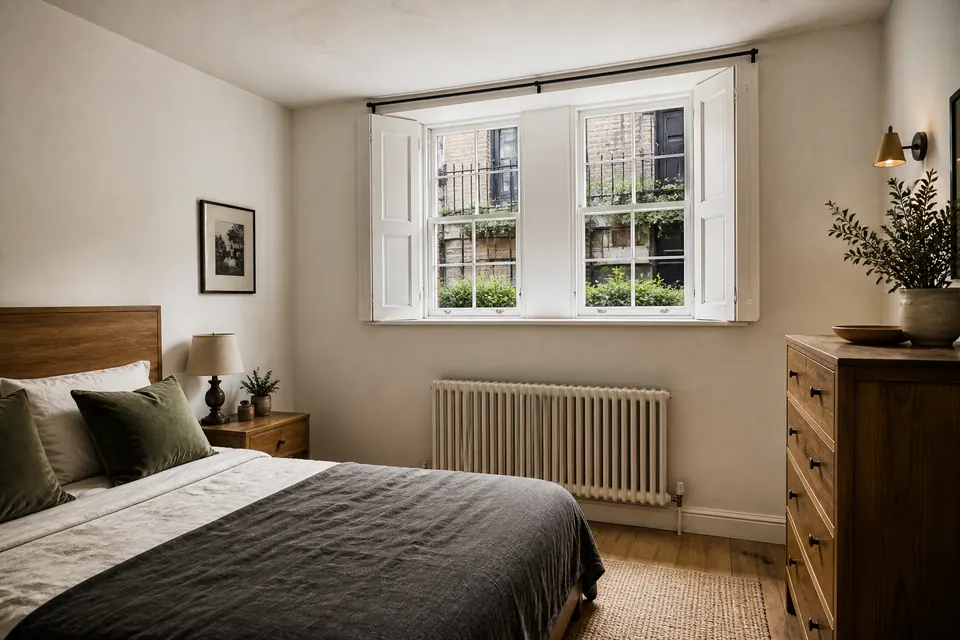
State material uncertainty and access limits. An unknown damaged panel should not be treated as ordinary intact plaster by default.
These observations call for suitability review. They should not become a self-diagnosis or a reason to disturb the material.
Leatherhead / THE PROPERTY BRIEF
A removal price should not hide a repair question.
Confirm availability for the complete Leatherhead postcode and show the affected finish in its present state. If a board or covering appears deteriorated, describe that without probing it. Ask whether suitable surface treatment can be proposed or whether material assessment, repair or replacement needs a separate specialist scope before an area-based quotation makes sense.
03 / SEPARATE THE QUESTIONS
They can occur together while requiring different treatment, repair and moisture decisions.
| Observed finish | Useful context | What needs assessment |
|---|---|---|
| Loose covering around marks | Known material and history | Whether the covering is suitable for treatment |
| Deteriorated board after water | Confirmed event and repair status | Whether replacement or other work is needed |
| Flaking paint beside growth | Current boundary and intact comparison | Removal limits versus coating repair |
| Unknown panel in an enclosed area | What can be viewed safely | Material identification and access scope |
Replacement boards, covering removal, plaster repair and decorative reinstatement require explicit separate agreement. A quotation should not imply that deteriorated material becomes sound through treatment.
Visible growth is one question; the condition of the material carrying it is another.
| Question | Mould | Damp |
|---|---|---|
| What is visible? | Marks on the exposed surface | Deterioration, wetness or known water effects |
| What cannot be assumed? | That removal restores material integrity | That the moisture source is resolved |
| Why assess condition first? | A suitable method depends on the actual finish | Repair or investigation may precede other work |
| What should be agreed? | Accepted treatment and material limitations | Any separate replacement or moisture task |
04 / DIRECT ANSWERS
Do not assume so. Describe the condition and ask whether assessment or a specialist scope is needed before suitable work is proposed.
Do not use decoration as a substitute for assessment. Damaged material and moisture questions can remain beneath a new coat.
Not automatically. Current condition, history and suitability need review rather than a replacement decision based on recurrence alone.
Size is not enough. Material condition, access and the appropriate scope may change what work can be offered.
No. Report visible deterioration without probing, pressing or opening the material for the enquiry.
Identify that component and condition separately. Renewal or repair is not automatically included in surface removal.
Ask for each material’s limits to be clear. Deterioration may require a separate repair decision.
No such certification should be assumed. Clarify any necessary material or moisture assessment independently.
05 / QUOTATION, NOT GUESSWORK
For Leatherhead, confirm postcode coverage and provide condition photographs with the visible dimensions. The quotation should distinguish accepted surface work from damaged-material repair rather than imply one price restores the whole finish.
Review the main quotation boundaries ↗| Present material | Pricing approach | Question to clarify |
|---|---|---|
| Suitable limited accessible finish | Photographs may support a quote | Current condition and extent |
| Recurring or multiple areas | Assessment informs the proposal | Material limits across the list |
| Damaged or uncertain substrate | Specialist quotation may be required | Repair, replacement or further assessment |
Confirm availability and exclusions before booking. A removal quote should not be interpreted as material replacement, structural repair or a guarantee that the existing finish is sound.
06 / A CONTROLLED APPROACH
Identify known finish, damage and history without disturbing it. State where suitability remains uncertain.
Clarify whether another material task or assessment is needed and what preparation applies to the accepted scope.
Follow the proposal where material is appropriate. Deterioration should trigger a separate decision rather than an unsupported restoration claim.
Distinguish removed growth from damage and repair needs. Keep replacement or decoration outside claims about treatment unless separately completed.
The sequence does not promise to restore strength or integrity through surface removal.
Show the visible deterioration honestly.
Do not treat repair as an automatic addition.
Identify replacement, moisture or decorative questions.
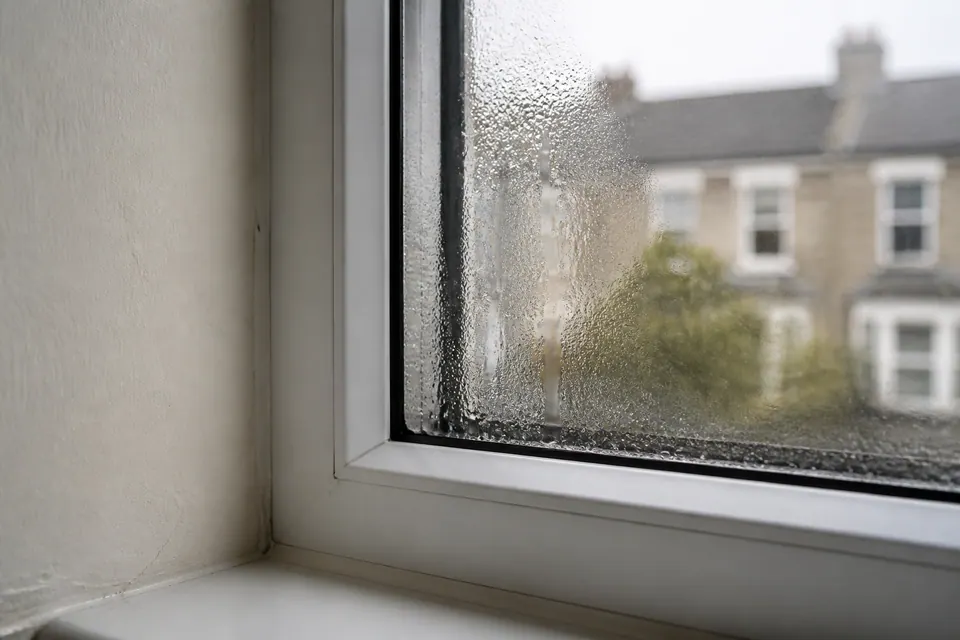
The diagrams are explanatory, not customer material-restoration results or proof of structural soundness.
07 / WHEN IT COMES BACK
If growth-like change returns on a deteriorated finish, describe current damage and the known previous scope. Do not assume another application is suitable simply because the same area was treated before.
Material condition can change over time, and unresolved moisture may remain a separate issue. The new proposal should reflect current evidence rather than an old area measurement.
A larger damaged portion should not be silently counted as confirmed growth, nor should a small patch hide wider visible deterioration.
08 / ROOM-BY-ROOM CONTEXT
Identify panels, sealant and paint separately. Deteriorated components may need repair or replacement outside removal.
Describe damaged coverings and current growth-like marks independently. Do not strip material for the enquiry.
Include actual water history and fixed-unit access. An uncertain board should not be assumed to be intact plaster.
Keep decorative damage and staining separate from treatment expectations. A matching restored appearance is not automatic.
Confirm material and authorisation boundaries. Shared repairs need their own agreed scope.
Give known moisture history and present condition without assigning a damp type. Persistent deterioration may need separate assessment.
Leatherhead / ACCESS & PEOPLE
State what the material is if known and show current condition. Do not test or remove it to provide a more certain label.
Describe lifting and damage without peeling layers. Replacement or decorative restoration needs a separate decision.
Show intact and deteriorated areas together. Suitable growth removal should not be equated with repairing the coating or substrate.
Share observations with the authorised contact without disturbing material to establish a repair claim.
Provide relevant water and maintenance history. Avoid assuming that a prior cosmetic repair establishes current suitability.
Ask which surface work is appropriate and which material task requires another scope before committing to decoration.
Leatherhead / PLAN THE APPOINTMENT
Confirm availability for the full Leatherhead postcode before arranging a visit. Send the visible condition and known material information so the appropriate scope can be discussed.
Use the map to locate the address and explain access where helpful.
Load the Leatherhead area map.
Leatherhead / BEFORE BOOKING
Describe what is visible without testing the finish or assuming restoration.
No. Report visible deterioration without probing or disturbing the material for the enquiry.
No. Request postcode-specific availability before planning access or a visit.
Do not assume that. Identify the material and condition so suitability or a separate scope can be considered.
Replacement is not automatic. Ask for any material repair to be explicitly and separately agreed.
State the uncertainty and show the accessible surface. Do not remove layers to obtain a name.
Describe their visible boundaries separately where possible. They may not coincide or represent the same work.
No such guarantee should be inferred from surface removal. Clarify any necessary specialist assessment separately.
Ask about the current material and unresolved questions first. Removal does not automatically establish readiness for a new finish.
Inform the booking contact before assuming the original scope remains suitable. New deterioration can change the appropriate next step.
LET CONDITION DEFINE THE ENQUIRY
Send the postcode, current material view and known history. Confirm availability and ask whether suitable surface work or a separate material assessment is needed.
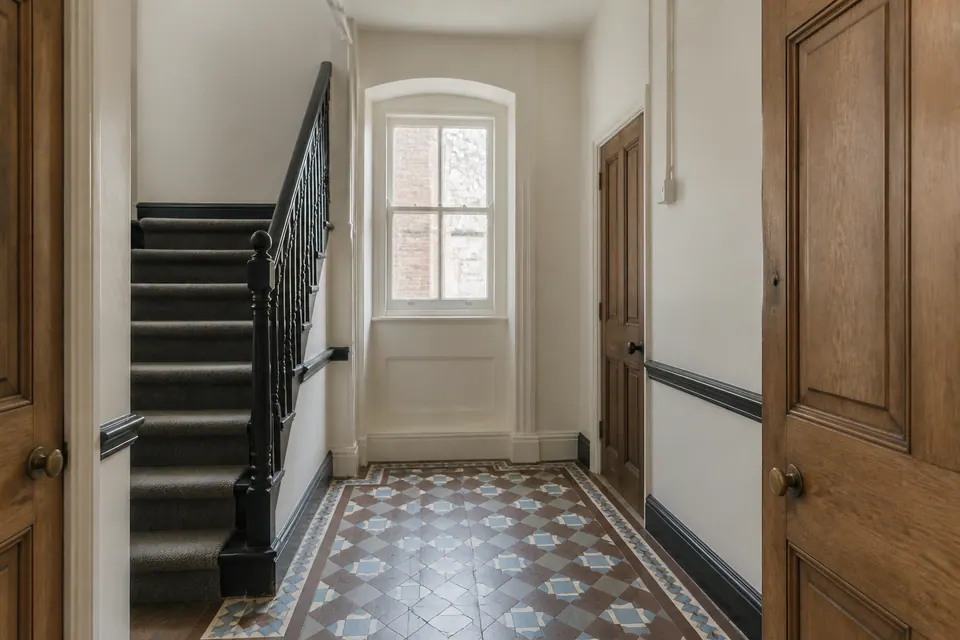
The images illustrate property conditions rather than customer material-repair or structural-assessment results.
