
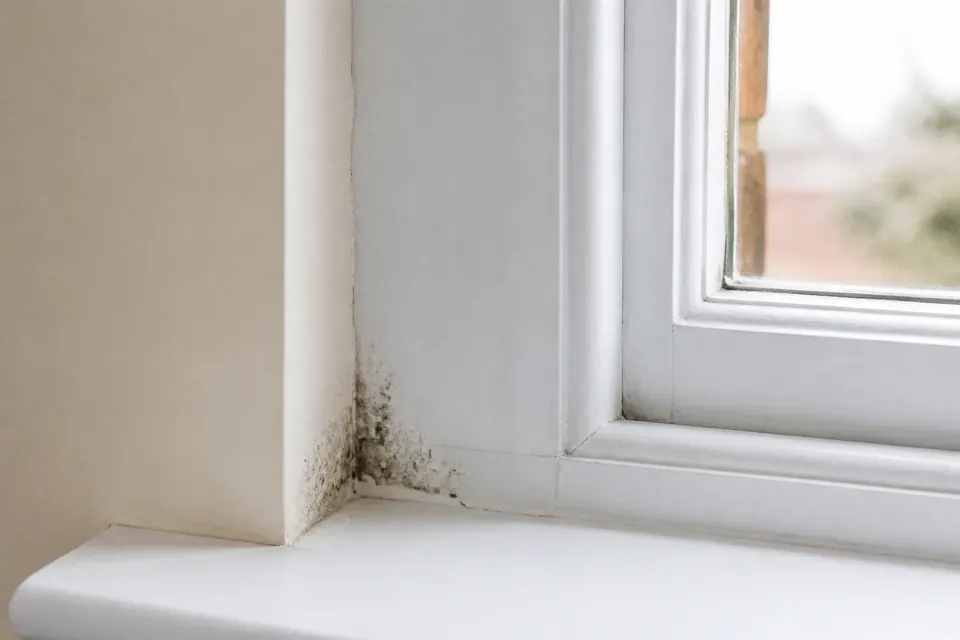
Along the sill and reveal
Show the entire lower and side edge. State where water collects and whether the marks stop at a join, without calling condensation the confirmed cause.
Leyton / WINDOW-EDGE DETAILS
Show how the narrow patch fits the window.
Marks along a sill can be cropped so tightly that the affected material and surrounding moisture context disappear. For Leyton, include the pane, reveal and adjoining wall so the enquiry distinguishes the visible edge from a suspected window fault.
Sill · reveal · adjoining material
01 / SEPARATE THE QUESTIONS
The position directs attention to the window area; it does not identify whether water, ventilation or another building issue explains the patch.
| Visible issue | Context to provide | Question still open |
|---|---|---|
| Marks along the lower sill | Water seen on the glass or frame | Which surfaces are affected and why? |
| Spotting up one reveal | Its finish and orientation in the room | Is moisture reaching that side differently? |
| Paint lifting beside a repaired frame | Repair date and current appearance | Is material damage suitable for surface work? |
| The same edge changes again | Earlier treatment and return interval | What continuing condition needs assessment? |
Frame sealing, glazing repairs, ventilation changes and replacement joinery are separate unless expressly agreed. A visible patch can be treated without claiming those questions have been resolved.
Growth is a surface condition; condensation is water changing state on a cooler surface.
| Question | Mould | Damp |
|---|---|---|
| What can be photographed? | Visible marks on sill, reveal or wall | Actual droplets or wetness when present |
| Why not combine them? | Growth can remain when the pane is dry | Condensation can occur without visible growth |
| What else might matter? | Finish damage and earlier frame work | Ventilation, leaks or another moisture route |
| What is the next decision? | Assess suitable accessible surface treatment | Clarify any separate window or moisture work |
02 / LOCATE THE ISSUE
Use the closest setting, then identify which finish carries each mark. One continuous-looking line can cross several materials with different treatment limits.
Show the entire lower and side edge. State where water collects and whether the marks stop at a join, without calling condensation the confirmed cause.
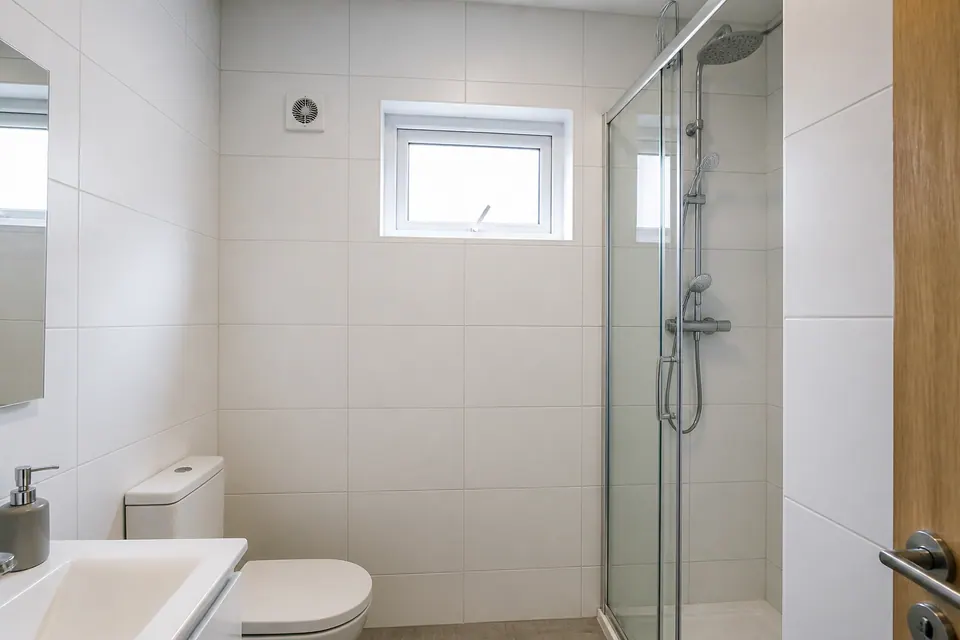
Include the extractor and nearby wet area in the room-wide image. Distinguish paint from sealant and report how the window is normally used.
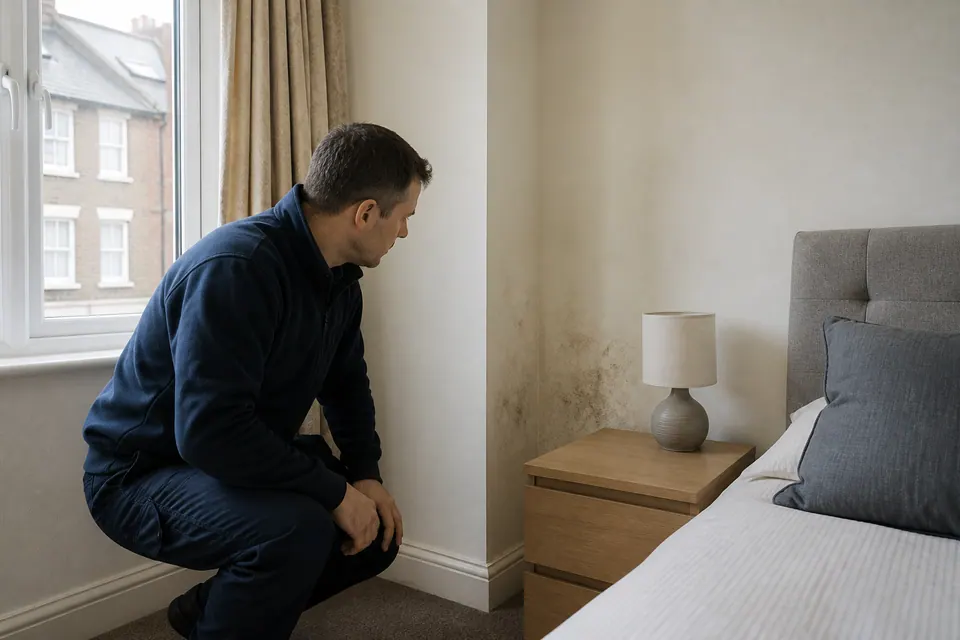
Show furniture, curtains and the wall beyond the reveal. Ask before moving affected fabrics or heavy items solely to uncover another edge.
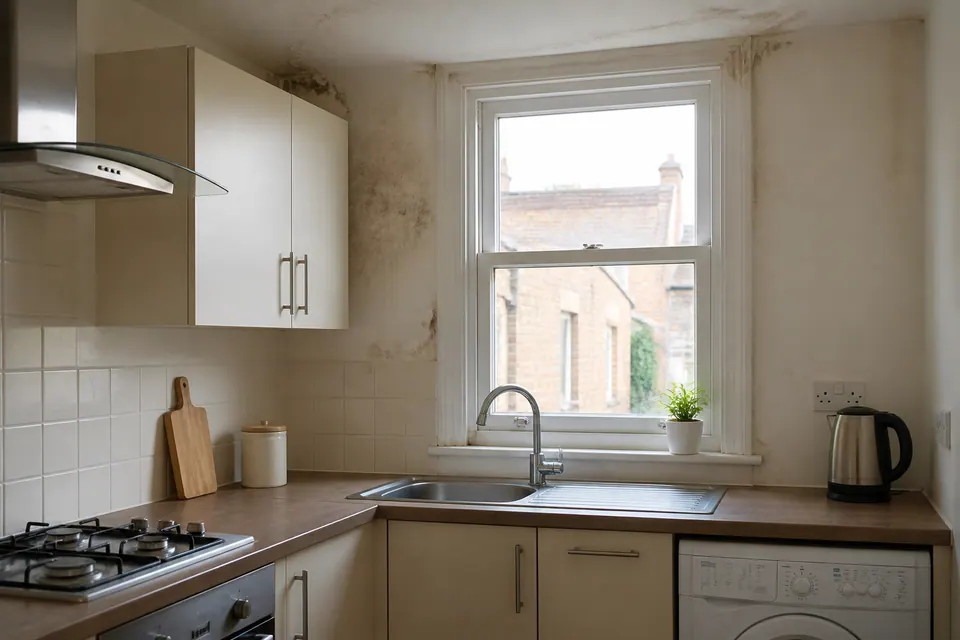
Identify nearby cooking and washing areas without assigning them as the source. Record any known frame leak separately from steam or condensation observations.
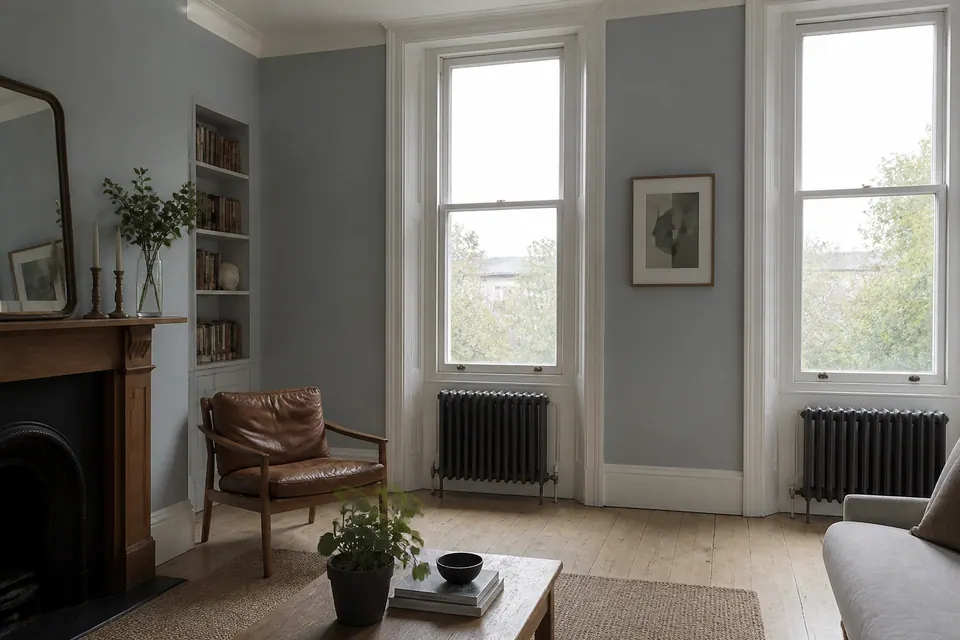
Show whether the patch continues beyond the window surround. A decorative wall finish may need a different assessment from painted joinery.
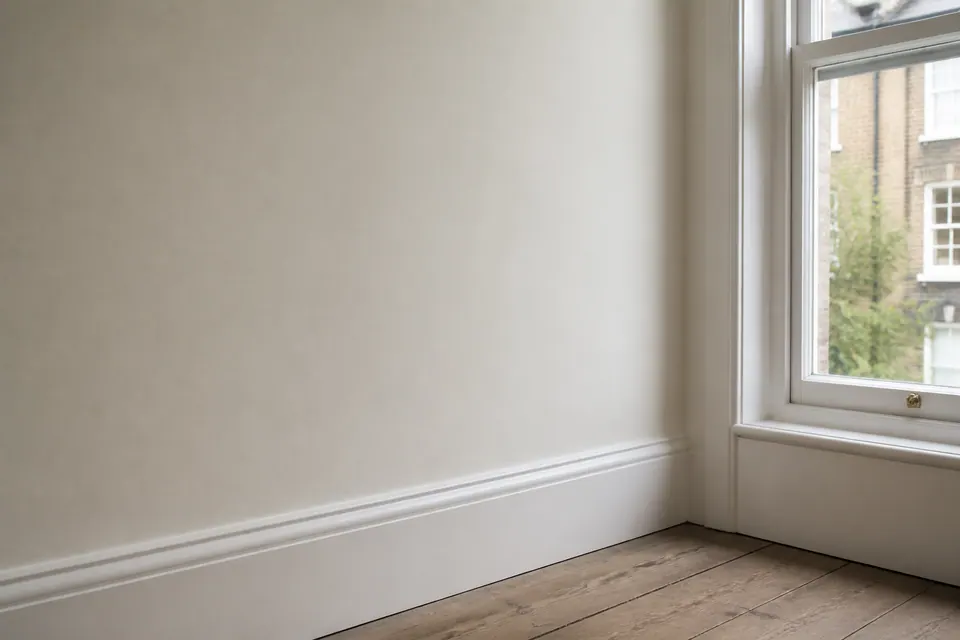
Give the mark’s height and material. Loose paint or board can change the scope beyond treatment of accessible surface growth.
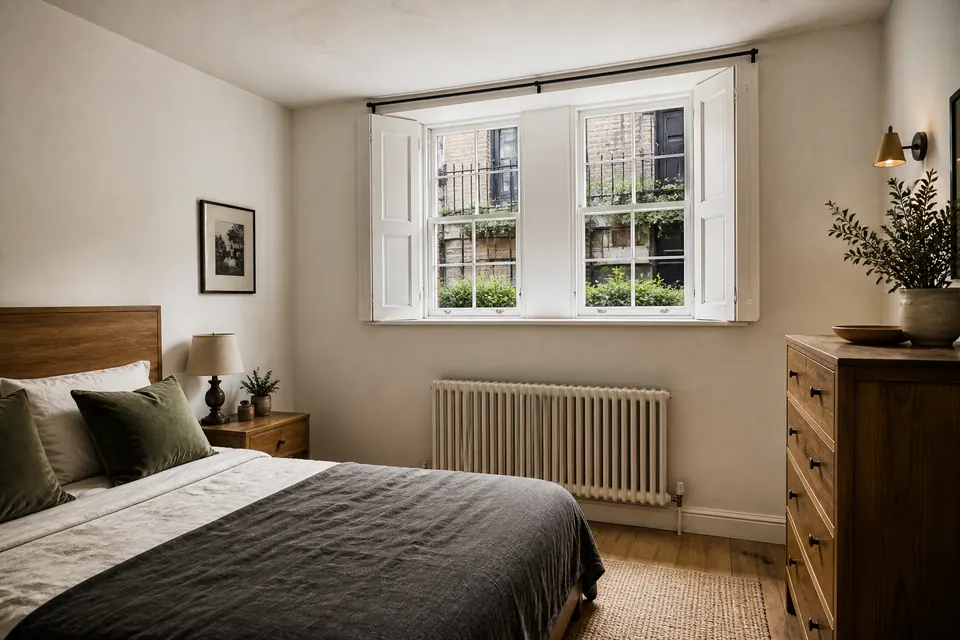
Explain whether the opening exposes the external wall or only a cabinet panel. Do not present concealed space as measured growth.
Position helps assessment, but neither condensation nor proximity to a frame proves the moisture source without further review.
Leyton / THE PROPERTY BRIEF
A narrow strip still needs a material description.
For a Leyton room, pair the detail image with a view that shows the whole window and adjoining wall. State whether the sill is timber, another painted material or uncertain. If condensation is noticed, explain when rather than presenting it as the final diagnosis. Any frame repair or replacement finish should remain outside the assumed surface scope.
04 / A CONTROLLED APPROACH
Compare close and wide views, identify the affected materials and note observed water without fixing a diagnosis.
Agree handling of curtains, blinds and furniture. Do not scrape loose finish or remove sealant to increase the visible extent.
Work to the suitable accessible sill, reveal or wall areas in the agreed scope. Damaged material may need another response.
Distinguish removed growth from staining and deterioration. Record unresolved frame, ventilation or moisture questions separately.
The stages do not promise a repaired frame or a perfectly matching decorative finish.
Show where the marks cross joins or stop.
Keep repair work outside an unagreed surface visit.
Identify staining, damage and further questions.
The sequence is illustrative rather than a customer before-and-after case. Continuing moisture can allow window-edge growth to return.
05 / QUOTATION, NOT GUESSWORK
For Leyton, show the marked length, material changes and working clearance around the window. The quotation should address suitable accessible finishes rather than treat every part of the frame, wall and glazing as one item.
Read the current service scope ↗| Surface condition | Quotation approach | Evidence to supply |
|---|---|---|
| Small reachable edge | Photographs may support pricing | Full window context and material |
| Several or returning window areas | Assessment informs the proposal | Each window’s location and history |
| Damaged surround or unresolved leak | Specialist quotation may be needed | Repair status and material deterioration |
Confirm which window materials are included. A surface-treatment quote should not be interpreted as reglazing, resealing or restoring every stained part of the surround.
06 / WHEN IT COMES BACK
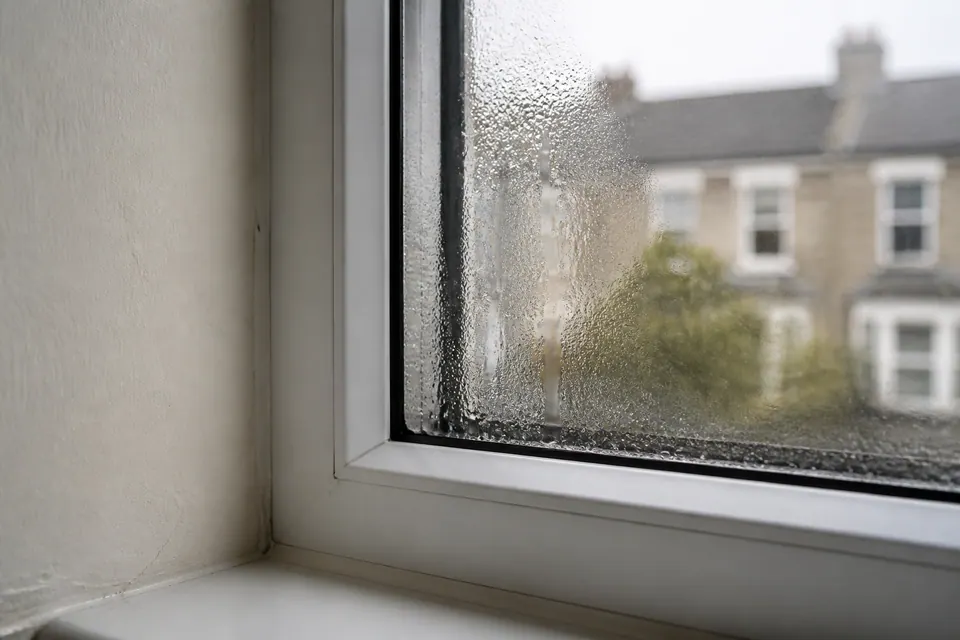
Compare the new outline and interval with earlier photographs. Note whether water was observed at the pane or frame between appearances and whether any repair occurred.
Do not repeat a household application merely to create another temporary comparison. A returning patch may require consideration of the moisture context and finish condition.
One returning reveal does not prove that every window has the same issue. Label the room and side consistently in later records.
Leyton / ACCESS & PEOPLE
Describe the current paint condition and any known repair. Growth removal does not automatically include sanding or refinishing timber.
Show intact and damaged portions. A loose or wet finish may need material work outside suitable surface treatment.
Explain what restricts access and who can safely prepare it. Fixture removal should not be assumed in the appointment.
Provide current observations and notify the authorised contact of any known frame issue. The evidence does not determine legal repair responsibility.
Share confirmed window work and dates with the surface photographs. Do not treat a past repair as proof that today’s finish is dry.
Separate treatment of visible growth from joinery, glazing and decoration decisions. Ask what sequence is appropriate before booking trades.
08 / ROOM-BY-ROOM CONTEXT
Describe condensation observations, extraction and the actual surround material. Bathroom humidity is context rather than an automatic diagnosis.
Show beds, curtains and furniture near the reveal. Plan preparation and return arrangements before moving belongings.
Record cooking moisture and any known frame or pipe issue separately. Do not infer the cause from the room label.
Include decorative wall finishes and blinds in the wider view. A sill and wallpaper edge may not share the same suitability.
Confirm whether the window belongs to the dwelling or common parts. Access and authorisation can require another contact.
State the room level and visible water history. A below-street position does not establish a damp type or treatment method.
09 / DIRECT ANSWERS
Add a wider window view and approximate dimensions. The close-up may not show the material, adjacent wall or access needed for assessment.
No. Covering the marks can obscure current extent and damaged finish. Decoration should follow a suitable assessment and separate preparation decision.
It is relevant evidence, not a complete diagnosis. Record when water appears and any known frame defect for assessment.
Width alone cannot decide duration. Material, preparation, reach and any deterioration affect the proposed work and timetable.
Describe their position and ask for preparation instructions. Avoid moving potentially affected fabrics through the room without appropriate handling advice.
Do not assume so. Identify both materials; deteriorated sealant or damaged paint may require different or replacement work.
Provide the repair date and current surface condition. Repair history is useful but does not establish complete drying or treatment suitability.
No such result should be assumed. Surface treatment does not itself alter glazing, ventilation or room-moisture conditions.
Leyton / PLAN THE APPOINTMENT
Send the Leyton postcode with room-labelled window photographs and access details. Confirm appointment availability before removing blinds, curtains or furniture.
The area map helps with address context; it does not identify a moisture source or represent a local office.
Load the Leyton map when planning access.
Leyton / BEFORE BOOKING
Use the entire window as context while keeping each material and observation distinct.
Yes, if safely possible when it occurs. Label its timing and location; do not present it as proof of the only moisture cause.
Avoid changing the surface for the enquiry. Measure the visible outline approximately and request preparation advice before another application.
Describe what is visible without removing sealant. Deteriorated or concealed material may require a separate decision after assessment.
Not automatically. Give the repair date and describe current wetness, damage or staining so suitability can be considered.
Show how it affects access and ask what preparation is required. Do not dismantle a fixed fixture unless an agreed plan calls for it.
Only report affected or relevant observed areas. One window’s condition should not be copied across unaffected rooms without evidence.
Photograph and identify both. Their condition and appropriate work can differ even when the visible line crosses the joint.
No. Ventilation operation or upgrades are different matters unless another service is explicitly arranged.
Discuss the finish and moisture context first. Treatment does not guarantee that every stain disappears or that immediate decoration is appropriate.
SHOW THE EDGE IN CONTEXT
Send the postcode, full-window view and details of the finishes involved. Include observed condensation and known repairs without assigning the cause yourself.
Illustrative window and room scenes are not documented customer treatment outcomes.
