
Can one quotation include both rooms?
Ask for each affected surface and its limitations to be listed. A combined visit need not mean identical material condition or work on both sides.
Walthamstow / ADJOINING ROOM OBSERVATIONS
A shared wall does not settle the explanation.
When a bathroom mark and a patch in the next room appear together, it is tempting to connect them immediately. For Walthamstow, show each surface independently and explain the layout so assessment can distinguish observations from a suspected link.
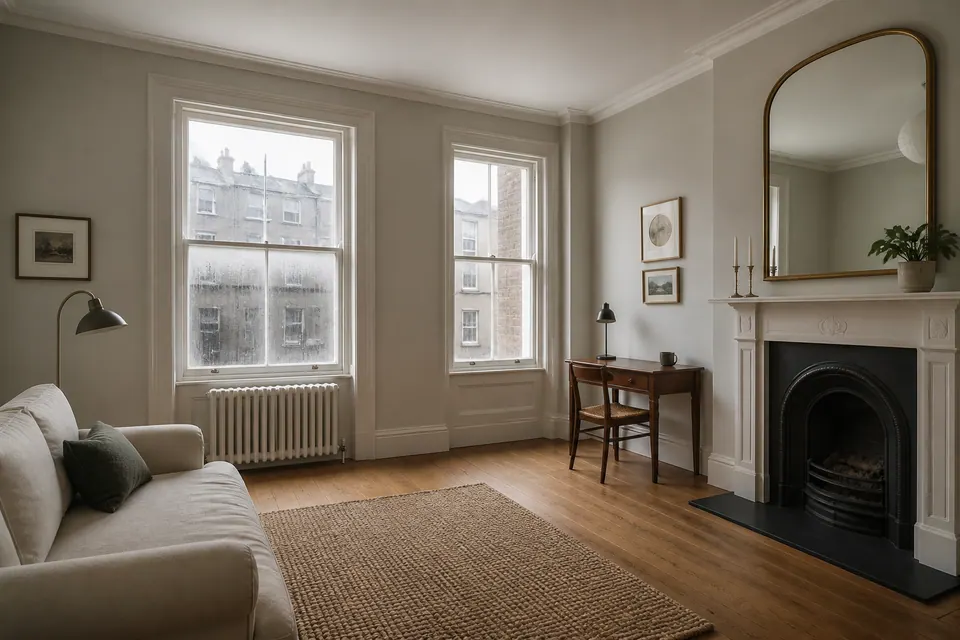
Room side · material · separate timeline
Walthamstow / THE PROPERTY BRIEF
Keep the connection as a question until assessed.
In a Walthamstow home, a bathroom and neighbouring bedroom may share a wall but have different finishes, access and histories. Label the photographs clearly and say when each mark was first noticed. If the adjoining space belongs to another occupant or dwelling, explain that boundary without assuming permission to inspect or treat it.
02 / DIRECT ANSWERS
Ask for each affected surface and its limitations to be listed. A combined visit need not mean identical material condition or work on both sides.
Not as a substitute for assessment. Determine suitable treatment and any unresolved moisture or damage before deciding on separate decoration.
No. Record the timing accurately but leave the explanation open. Similar dates can be useful context without confirming a route through the wall.
Proximity does not establish duration. Material, extent, preparation and access determine the proposed work in each room.
Discuss the layout and method-specific instructions. A room being on the other side of a wall does not automatically establish permitted access.
Describe both. Their treatment suitability and any damage can differ, so the quotation should not treat them as one uniform finish.
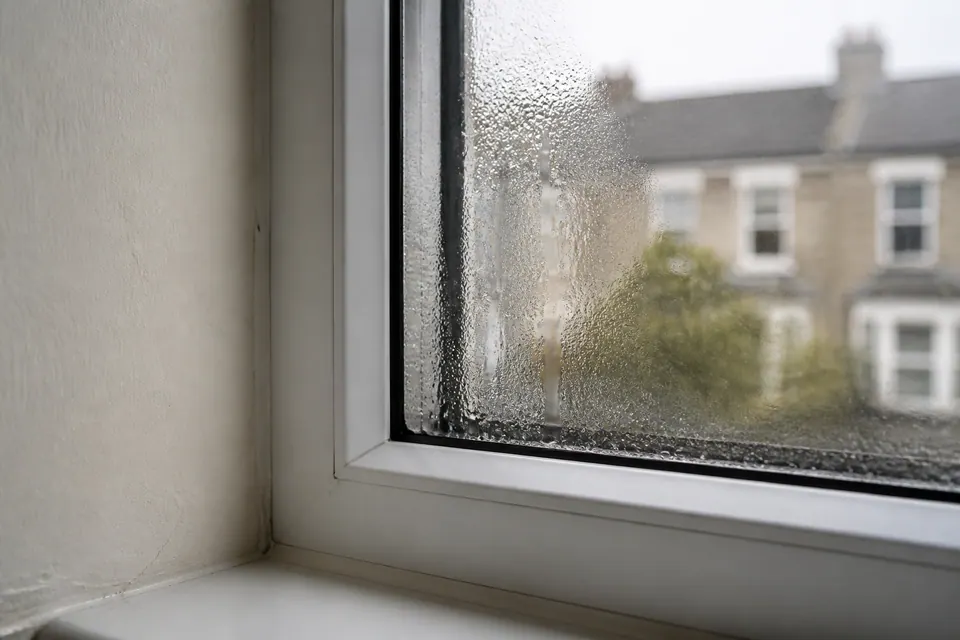
Report actual window observations as another piece of evidence. Do not replace one assumed cause with another before assessment.
Not automatically. Concealed investigation and any structural or plumbing repair need explicit separate agreement.
Walthamstow / ACCESS & PEOPLE
Identify both spaces and their current uses. A single booking contact should still provide separate finish and preparation information.
Confirm the practical contact and permission for each proposed area. Being adjacent does not remove room-access restrictions.
Describe the in-home evidence only unless reliable information is available from the other side. Do not assume access or treatment authority there.
Share the two-sided observations with the authorised booking contact. Keep photographs separate from any conclusion about legal responsibility for repairs.
Provide known maintenance relevant to each room and arrange occupant access. Avoid treating a confirmed bathroom repair as proof of the bedroom’s present condition.
Ask which surfaces can be addressed and which moisture questions need another specialist. Keep decoration of the two rooms as a later, separately considered task.
04 / A CONTROLLED APPROACH
Relate the photographs to the room layout while keeping dates and materials separate. Identify what is observed and what is only suspected.
Confirm that both areas can be reached and who authorises work. Do not assume access to a neighbouring dwelling from its position.
Work to the agreed suitable surfaces in each room. A different material or damage discovered on one side may need a separate decision.
Record what was treated on each side and any unresolved moisture or concealed concern. Avoid a general statement that the entire wall is fixed.
This approach makes differences visible rather than promising matching cosmetic outcomes.
Keep the room label with its current evidence.
Do not extend the work into concealed construction by assumption.
Distinguish residual marks and damage in each room.
The diagrams explain stages only. They are not proof of a moisture path or documented customer before-and-after results.
05 / QUOTATION, NOT GUESSWORK
For Walthamstow, the quotation enquiry should show each room’s affected material and dimensions. Explain their relationship, but do not combine visible patches into a claim about the entire shared wall or the concealed space between them.
Read the main treatment information ↗| Evidence supplied | Quotation route | What to keep distinct |
|---|---|---|
| A small suitable accessible patch | Photographs may support pricing | Its own material and clearance |
| Several or recurring room surfaces | Assessment informs the proposal | Each history rather than one assumed cause |
| Concealed concern or damaged material | Specialist quotation may be needed | Investigation or repair beyond exposed finishes |
Ask which room surfaces are included and whether any question remains for another trade. A quotation for exposed growth is not confirmation that the wall between rooms has been repaired.
06 / ROOM-BY-ROOM CONTEXT
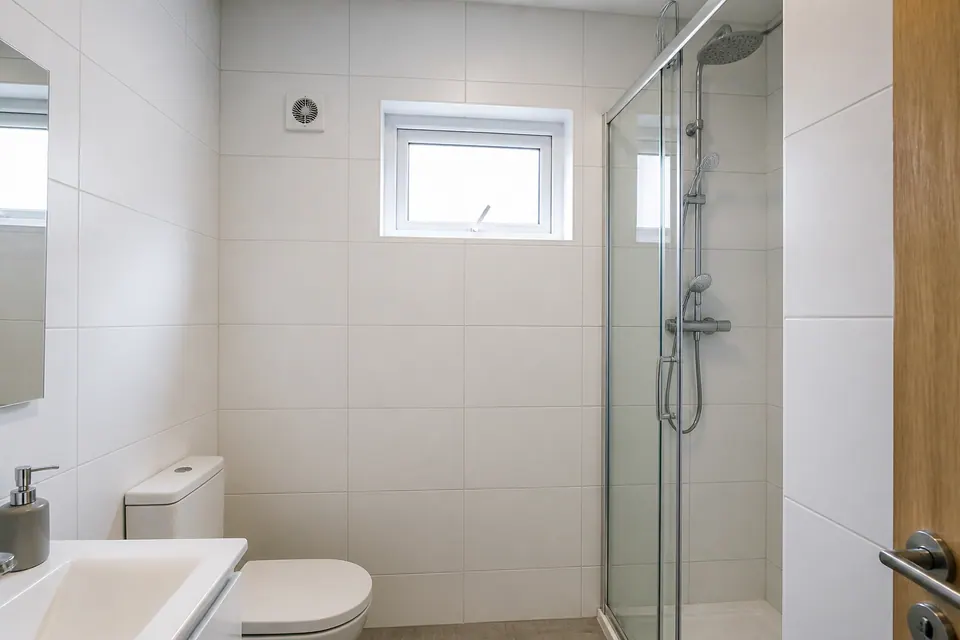
Describe the actual finish near fittings and any known wetting. Do not automatically transfer those observations to the next room.
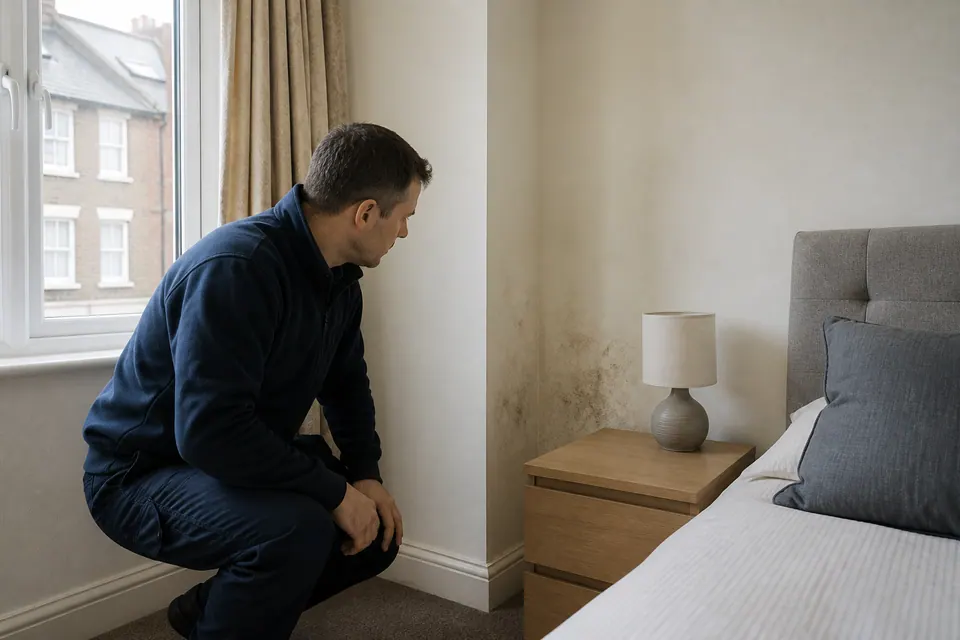
Show paint or covering and furniture around the patch. Its preparation and return arrangements may differ from the bathroom.
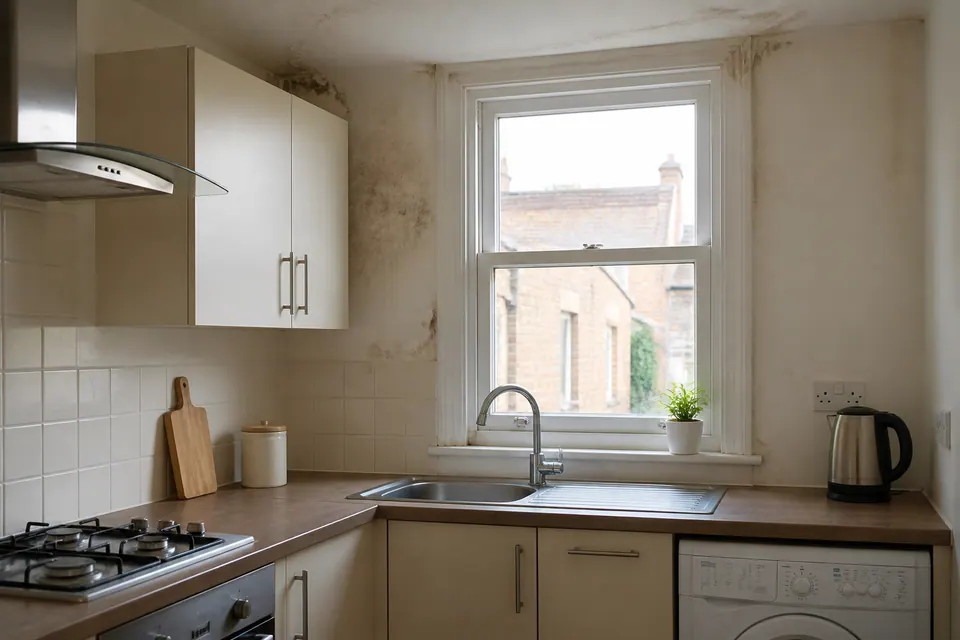
Record known plumbing events separately from visible growth. Nearby construction may need a question rather than an assumed repair scope.
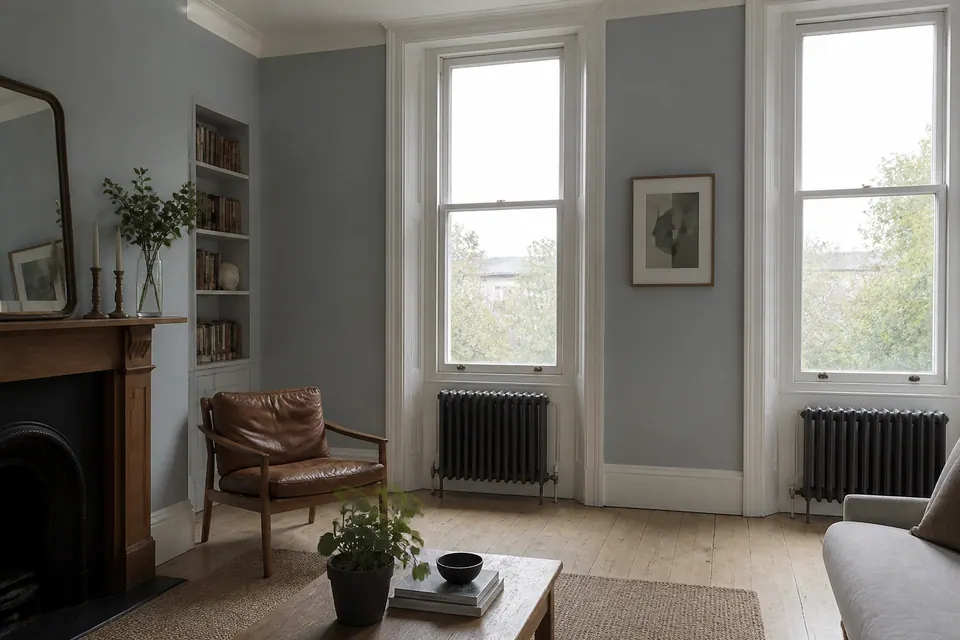
Include decorative changes and the visible outline. A similar position across the wall does not make the finishes equivalent.
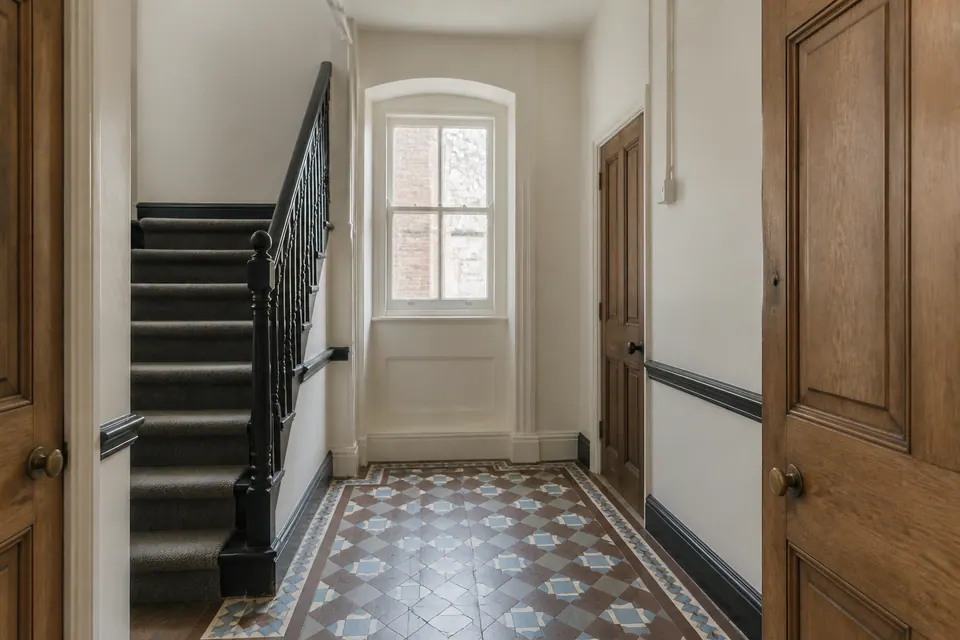
Identify private and common spaces. Their inclusion depends on agreed scope and authorisation, not proximity to the affected rooms.
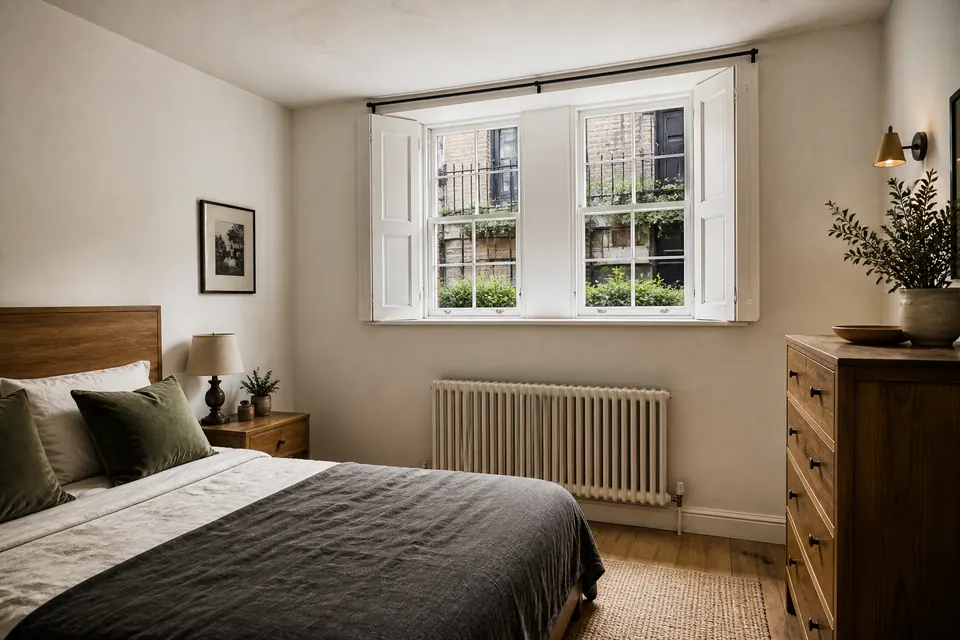
Give each room’s level and documented water history. Adjacent low rooms do not by themselves establish a shared damp diagnosis.
07 / WHEN IT COMES BACK
Record which room is involved and whether its outline matches the earlier patch. Keep the unchanged room in the history without treating it as proof that one cause has been ruled out.
A difference between the sides may be useful for assessment. It does not establish whether the explanation is within the room, the wall or another building element.
They avoid compressing two distinct observations into an inaccurate claim that the whole shared wall always changes at once.
08 / SEPARATE THE QUESTIONS
Compare the evidence on both sides before discussing whether any further investigation should connect the observations.
| Observed relationship | Information to provide | What remains uncertain |
|---|---|---|
| Bathroom and bedroom patches nearby | Separate dates and photographs | Whether the conditions share a moisture source |
| Different finishes at similar heights | Material on each side of the wall | Whether both are suitable for surface treatment |
| A known leak in one room | Confirmed repair status and current evidence | What effect, if any, remains elsewhere |
| Only one side keeps changing | The recurrence record for each side | Why their conditions differ |
Opening construction, repairing plumbing or assessing concealed material requires a separately defined scope. Access to two rooms does not automatically include the structure between them.
A visible comparison can prompt investigation without confirming a concealed route.
| Question | Mould | Damp |
|---|---|---|
| What is directly observed? | Growth or marks on each exposed finish | Actual water or known moisture events |
| What should remain separate? | Dimensions and material condition for each side | Any suspected connection through construction |
| Why avoid one combined label? | Different surfaces may need different work | The source may not be shared or confirmed |
| What can be agreed now? | Suitable accessible treatment areas | Whether another investigation is needed |
09 / LOCATE THE ISSUE
Use the room selector to organise the photographs. A wall’s other side should not inherit the same material description or history.
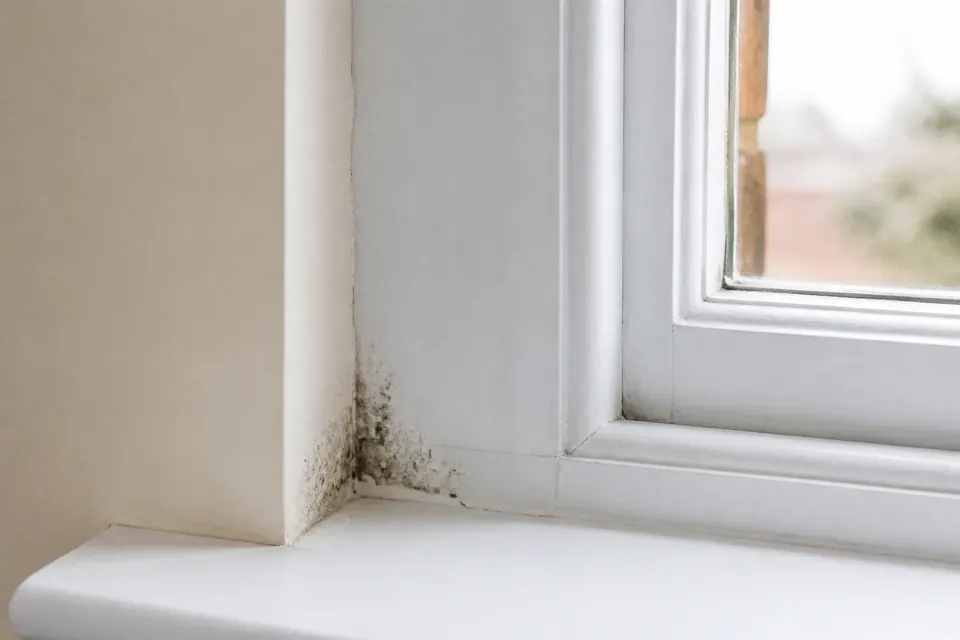
Show whether the patch meets the reveal or remains on the adjoining wall. Record observed window water separately from any bathroom concern.
Identify paint, tile edges or panels and show the patch relative to fittings. Do not assume a mark proves water is crossing into the next room.
Include the whole affected portion and nearby furniture. Its finish may differ from the bathroom side, even when the patches occupy similar positions.
Describe confirmed plumbing events and the actual changed surface. The neighbouring room may need its own evidence and treatment decision.
Show the wall covering and visible outline. A mark opposite another patch does not by itself establish a route through the construction.
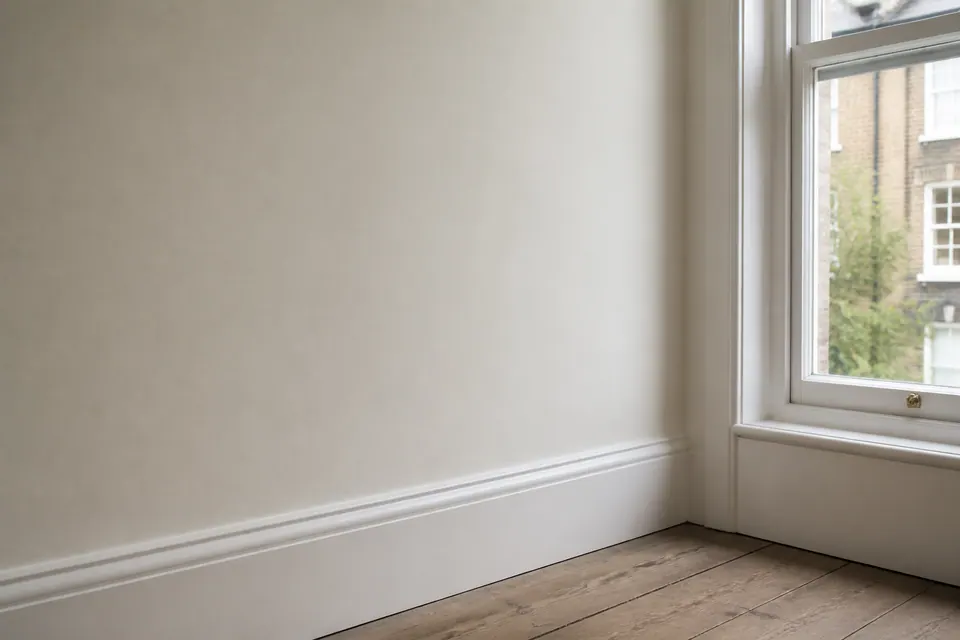
Give the mark’s position within the ceiling and its own history. Avoid merging it with wall evidence simply because the areas are close.
Explain which room provides access and what remains concealed. A shared enclosure does not establish that all hidden material is affected.
The relationship between rooms is context. It should not be presented as proof of a leak path or one uniform treatment scope.
Walthamstow / PLAN THE APPOINTMENT
Send the Walthamstow postcode and labelled evidence for the proposed rooms. Confirm availability and access to each space before arranging a combined visit.
The map gives area context; the room descriptions establish what is accessible and being requested.
Open the local map when planning the address.
Walthamstow / BEFORE BOOKING
Explain the layout while keeping the evidence from each side distinct.
They can be sent as one set if clearly labelled by room and surface. Include their separate dates and dimensions to avoid confusion.
Not necessarily. Their positions are useful context, but the route and cause require assessment rather than a conclusion from photographs.
Describe only the evidence you have and explain the access boundary. Do not assume another dwelling can be inspected or treated within your booking.
Ask what is appropriate after the surfaces and moisture context are reviewed. Do not decide the sequence solely because one room is easier to clear.
Give the visible affected dimensions for each finish. The total construction area does not establish a treatment quantity or concealed condition.
It is relevant history, not proof of the present condition elsewhere. Provide the repair information and current evidence from the other room.
Record that difference. The previous treatment and current material condition may affect the proposed work for that side.
Do not assume it. Different finishes or deterioration can require different suitability decisions within or outside the proposed scope.
Only if explicitly agreed as appropriate separate work. A surface-removal appointment should not be interpreted as opening-up and reinstatement.
KEEP BOTH SIDES CLEAR
Send labelled photographs, the postcode and the known history for each side. Ask what can be assessed together without assuming a shared cause or concealed repair.
Illustrations provide room context rather than verified evidence of customer treatment results.
