
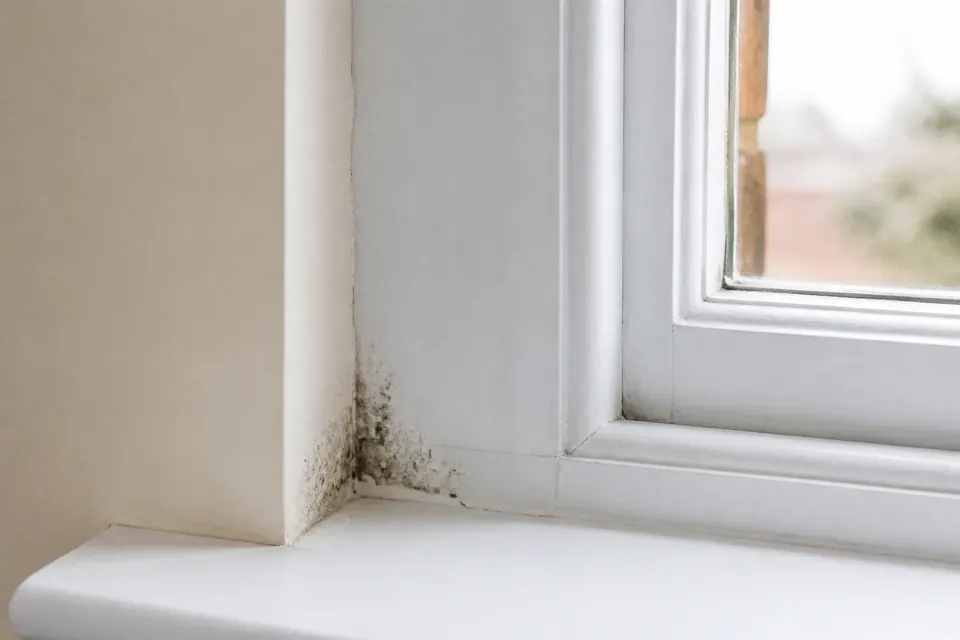
A reveal with peeling edges
Show the reveal, frame and intact paint together. A photograph can document peeling, but it cannot confirm the condition of material concealed beneath a coating.
Purley / PROPERTY CONDITION
Before treating a mark, consider what is happening to the material beneath it.
A Purley wall with lifting paint or a damaged covering needs more than a description of colour. Show the intact area beside the damage and explain what has changed. The first decision may concern assessment or repair, rather than applying a treatment to a finish that cannot be retained.
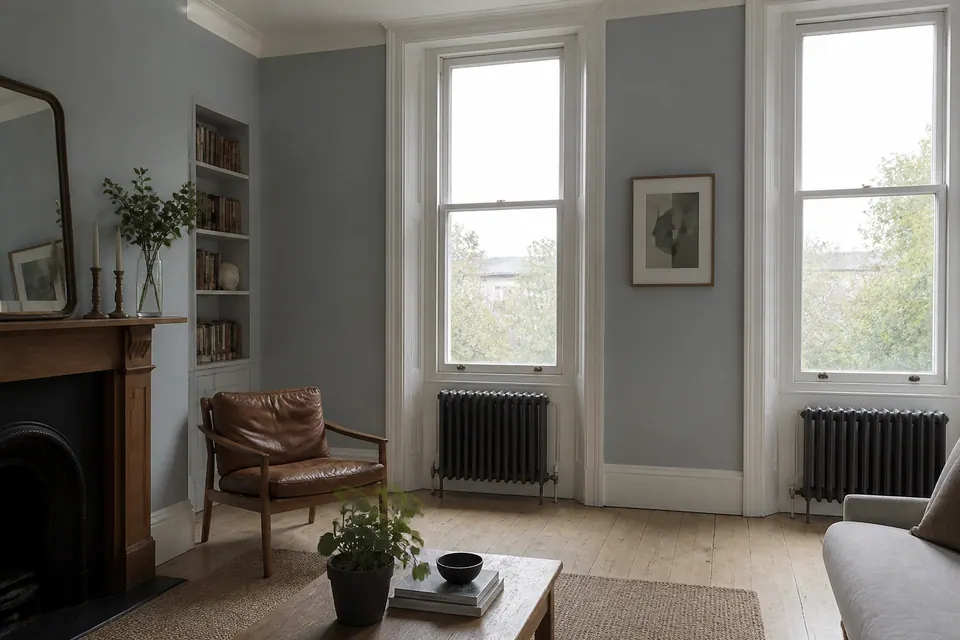
Current damage · neighbouring finish · next decision
01 / LOCATE THE ISSUE
Choose the room that best matches the concern. The visible material is as important as the room name when deciding whether ordinary surface work is appropriate.
Show the reveal, frame and intact paint together. A photograph can document peeling, but it cannot confirm the condition of material concealed beneath a coating.
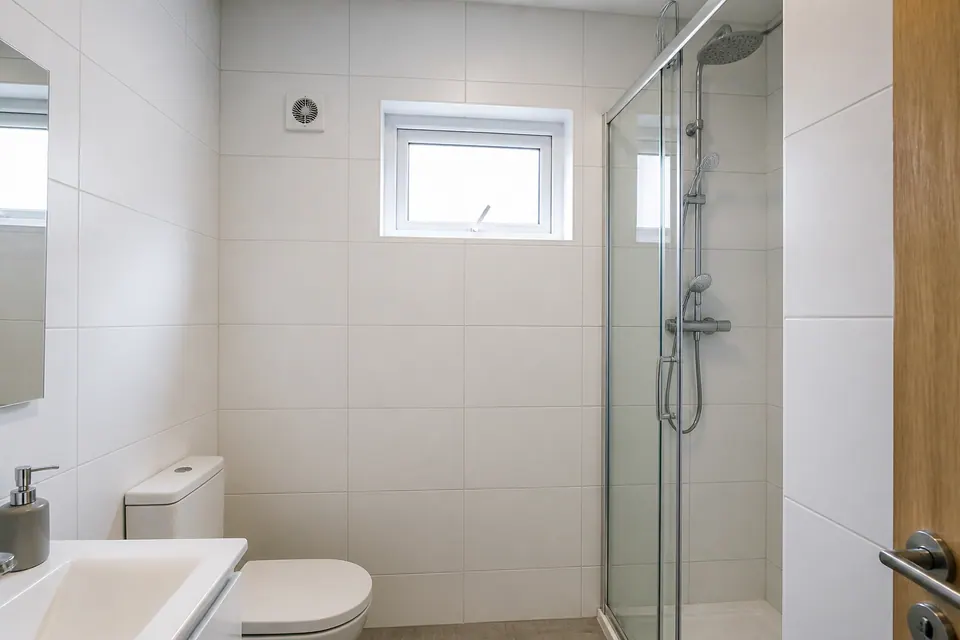
Take a view from the floor and explain any known leak history. Do not stand on fittings or remove a loose section to make the close-up clearer.
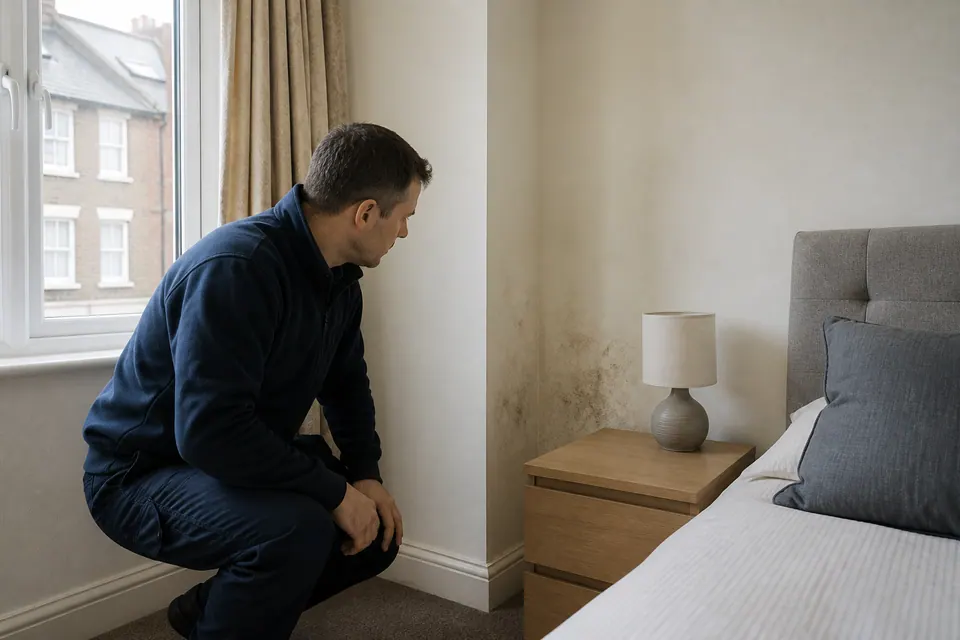
Include the obstruction and the part already visible. If the covering is lifting, leave it in place and describe the concern rather than pulling it back to discover more.
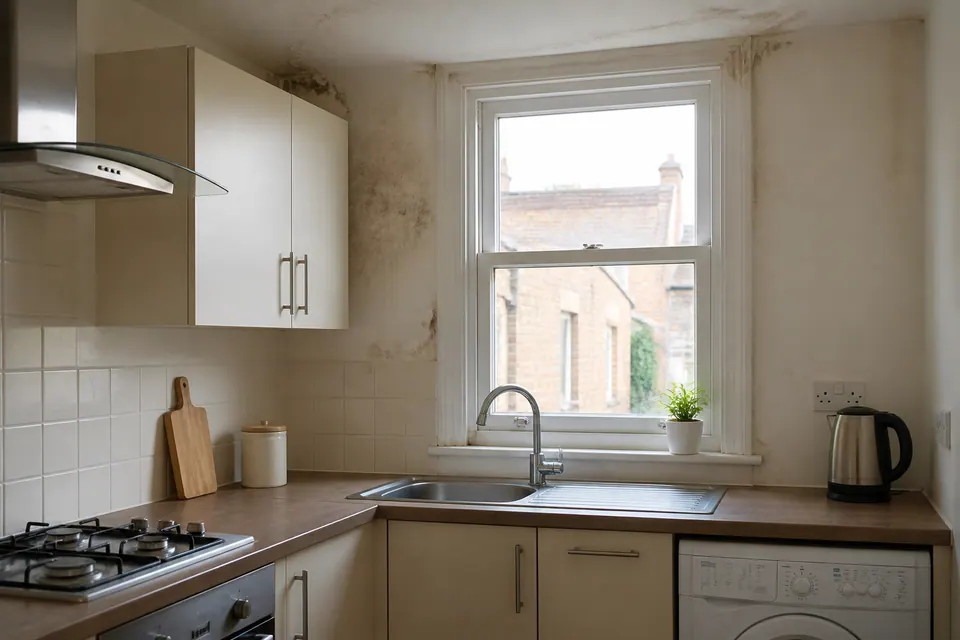
Identify the wall, ceiling or cabinet panel involved. Equipment and fixed units can limit access, while damaged material may need another trade before a cleaning decision.
Include a wider image showing the finish you hope to retain. Treatment and cosmetic restoration are not interchangeable, especially where the surface is already compromised.
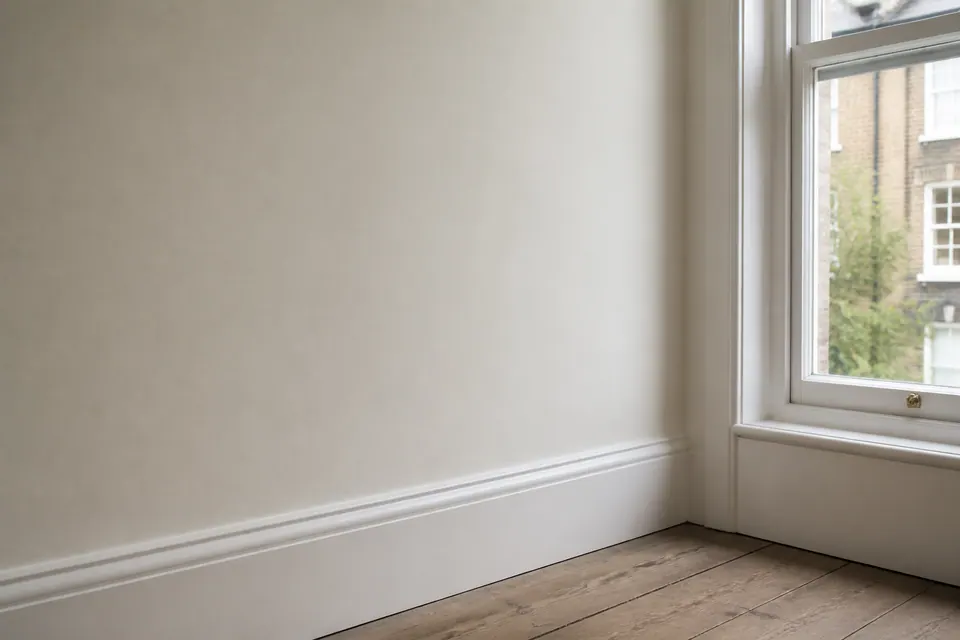
Describe what can be seen without rubbing, scraping or testing it. The enquiry should make the damage clear while leaving the question of retention to an appropriate assessment.

Distinguish the lining from belongings and from the building wall behind it. A damaged panel may not be suitable for the same work proposed for sound adjacent paint.
Do not label every damaged finish as a simple cleaning job. The useful enquiry leaves room for a different first step where the material itself is the concern.
Purley / ACCESS & PEOPLE
This may allow a clearer discussion of suitable surface treatment. The affected area still needs review, and the intact neighbour does not prove the whole substrate is sound.
A peeling or broken finish can change the first step. Ask whether assessment or repair should precede any work directed at the growth.
Clarify who is responsible for removal and reinstatement. A mould-removal quotation should not be read as a building-work contract unless those tasks are expressly included.
Photograph the damage and report it through the relevant maintenance route. Do not remove landlord-owned finishes to make the evidence more convincing.
Decide who will assess the material and who can authorise any repair. Give the occupant clear instructions instead of asking them to prepare a damaged surface themselves.
Keep the wish to redecorate separate from the decision about what can be retained. Buying paint first can commit the project before the underlying question is answered.
Purley / THE PROPERTY BRIEF
The question is not only “how much mould is there?”
Explain whether the priority is keeping an existing finish, replacing damaged material or finding out which is feasible. Those are different decisions. A treatment enquiry can describe the visible growth without silently including removal, rebuilding and redecoration in the same request.
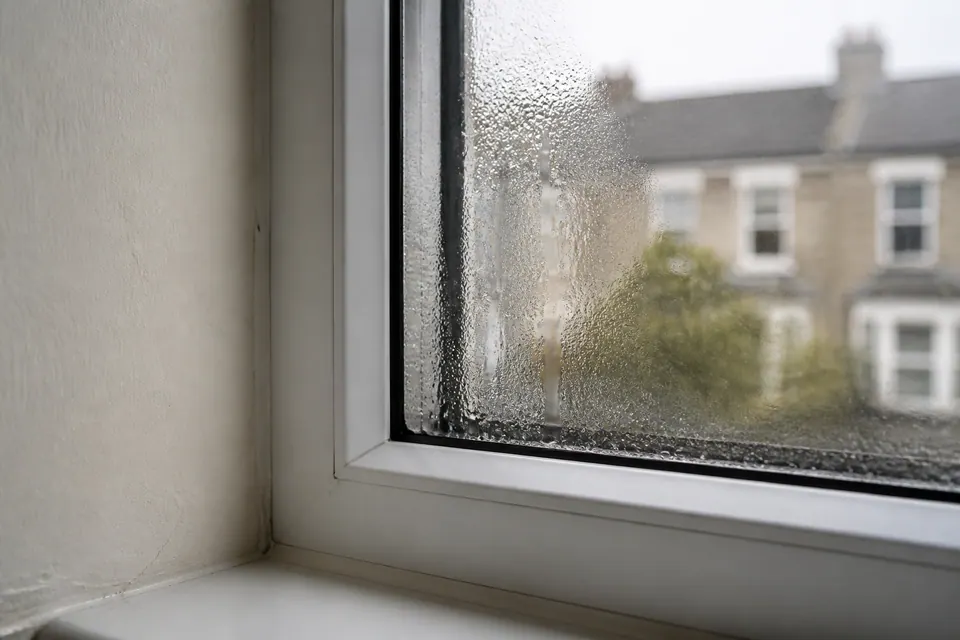
04 / WHEN IT COMES BACK
If the same area has been repaired or decorated before, give the date and what was actually done. A new finish may conceal the previous appearance without proving the moisture question was resolved.
Later growth on sound paint and continuing breakdown of damaged material are different observations. Photograph both where they occur and avoid reducing them to one general description.
Where the material is unsuitable, the appropriate next step may fall outside surface treatment. Clarify that before arranging decoration or assuming the damaged area can be cleaned in place.
05 / A CONTROLLED APPROACH
Review the images for visible growth, material damage and access limits. Ask whether further assessment is needed before a surface-treatment proposal can be made.
Agree preparation without requiring the occupant to strip or scrape the area. Coordinate any separate repair visit and identify who can authorise changes to the finish.
Work only on the suitable material included in the agreement. If an unexpected condition changes that decision, it should be clarified rather than hidden beneath a cosmetic finish.
Explain the aftercare and any repair or decoration tasks left outstanding. The customer should know which part of the project has been completed and which has not.
These stages describe the difference between observing damage, carrying out agreed work and reviewing what remains. They are not a promise of complete cosmetic restoration.
Document the condition before the finish is changed.
Keep the agreed treatment distinct from any replacement work.
Review the surface and the outstanding repair instructions.
The sequence is a schematic explanation, not a customer repair record or proof that a particular finish can be restored.
06 / QUOTATION, NOT GUESSWORK
The cost cannot be inferred from the visible colour alone. Material condition can change the kind of work required, and removal, repair or redecoration may need a separate quotation.
See the main mould-removal service ↗| Scope | Quotation basis | Decision to clarify |
|---|---|---|
| An intact accessible finish | A photo-led quote may be possible for suitable visible treatment. | Confirm the affected extent and any nearby damage. |
| Uncertain or recurring deterioration | Assessment may be needed before a treatment proposal. | Explain earlier repairs and what has changed since. |
| Material requiring specialist work | A specialist quotation may be appropriate for the next step. | Identify replacement, opening-up or reinstatement questions. |
Ask for a written description of included work and exclusions. No automatic allowance for structural repair or a new decorative finish should be inferred from a treatment price.
07 / SEPARATE THE QUESTIONS
Visible deterioration can raise useful questions, but it does not provide a complete diagnosis of moisture or the condition behind a covering.
| Visible issue | Possible contributing factor | What may need checking |
|---|---|---|
| Paint lifting around spotting | The coating or base may be unsuitable for ordinary work. | Does it need assessment before treatment? |
| An old repair with a new mark | A previous intervention may not explain current moisture. | What work was completed, and when? |
| Damage beside a known leak stain | The leak history may be relevant to material condition. | What is the documented repair status? |
| A covering hiding the base | The substrate cannot be judged from its face alone. | Who will assess any concealed concern? |
Leave the surface undisturbed for the enquiry. Appropriate assessment and authority may be needed before removal is considered.
Mould removal may address suitable visible growth. Replacing a damaged substrate, repairing a water source and matching a decorative finish are separate questions unless explicitly agreed.
| Question | Mould | Damp |
|---|---|---|
| Primary task | Treat suitable material within the agreed area. | Investigate or repair the relevant building condition. |
| Evidence required | Present growth, finish and access photographs. | Damage history and the appropriate technical assessment. |
| Unanswered question | Can the particular finish be treated as proposed? | Can the underlying material remain or must it change? |
| Completion record | What treatment and aftercare were provided? | What repair or reinstatement was actually completed? |
08 / ROOM-BY-ROOM CONTEXT
Show whether the affected area is paint, sealant or another component. Each may require a different decision, especially if damage is already visible.
A bed or wardrobe can conceal the edge of a deteriorating finish. Describe the view available rather than moving or stripping items for a complete photograph.
Do not assume a cabinet lining and the adjacent building wall are one material. Identify each part and any equipment obstructing access.
A decorative finish may be important to retain, but its appearance cannot guarantee that treatment will preserve it. Discuss that expectation before authorising work.
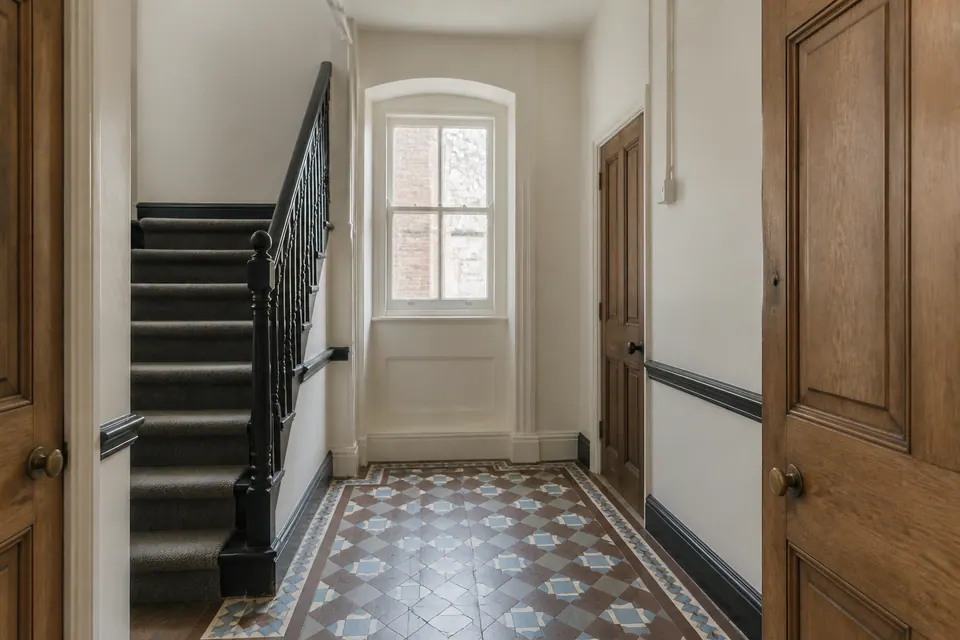
Shared or landlord-controlled finishes may require permission before alteration. Identify the responsible contact and the material already showing damage.
Report known water history without using the room’s level as a diagnosis. Damaged material still needs a decision based on its actual condition.
09 / DIRECT ANSWERS
A wider view and material information are usually more useful. The damage may require assessment before a suitable treatment quotation can be considered.
Ask for the relevant repair and preparation advice first. Treatment does not automatically make a damaged substrate ready for decoration.
No permanent result can be inferred from a coating change. Any unresolved moisture condition must remain part of the discussion.
Clarify the sequence before booking either task. The answer depends on the material and the work proposed, not simply the date you want the room finished.
Explain the intended use and obtain instructions for the actual work. A repair stage and a treatment stage may have different requirements.
Not automatically. Show the damage from a safe position and ask whether the material needs another assessment first.
Clarify the proposed result. Suitable growth treatment, substrate repair and matching the decorative finish are not necessarily one service.
Only expressly included tasks are covered. Ask who will investigate or repair the underlying condition and who will reinstate the finish.
Purley / PLAN THE APPOINTMENT
Provide the complete Purley postcode, room photographs and any existing assessment. Explain if another contractor is already involved so attendance can be planned around the actual sequence.
If you are requesting work on someone else’s property, identify who can approve alterations. A visit arrangement should not rely on an assumed permission to remove material.
View the Purley area map.
Purley / BEFORE BOOKING
These questions help distinguish an enquiry for visible growth from a decision about retaining or replacing material.
No. Photograph what is already visible and explain the concealed concern. Opening or removing material may require an appropriate assessment and authority.
Say the material is uncertain and include a wider image. Do not test it by scraping or breaking a piece for identification.
That needs to be agreed for the particular area. Identify both parts clearly so no one assumes the whole surface is suitable for one approach.
Yes. Provide the recommendation as a recommendation, with its source and any arranged date. Do not present proposed work as completed repair.
That is not automatic. Existing stains, damage and decoration requirements should be discussed separately from suitable mould treatment.
Only follow the preparation instructions actually provided. Stripping, sanding or scraping is not a default requirement for the enquiry.
No. Material condition and the necessary next step can matter more than the visible dimensions. A small photograph may not reveal the full repair question.
Identify the person responsible for authorising alterations through the appropriate property-management route. Do not assume an enquiry gives an occupant that authority.
It should make clear the proposed treatment area, any separate assessment or repair, preparation, aftercare and exclusions such as reinstatement or decoration.
A PROPERTY-SPECIFIC NEXT STEP
Send the Purley postcode, an overall view and an intact comparison, plus any repair advice already received. Explain what you hope to retain without assuming the material is suitable.
Illustrative room scenes do not establish that a customer’s damaged substrate is suitable for treatment or can be restored.
