
Can a photo of the whole junction help with cost?
Yes, it can show the relationship and extent. Current finish condition and access still affect whether photographs are enough for a quotation.
Windsor / WHERE TWO FINISHES MEET
The adjoining surfaces should not lose their individual treatment limits.
When marks cross painted joinery and nearby plaster, identify each material and its present condition. For a Windsor enquiry, confirm postcode availability and ask how suitable removal differs from restoring damaged coatings or timber.
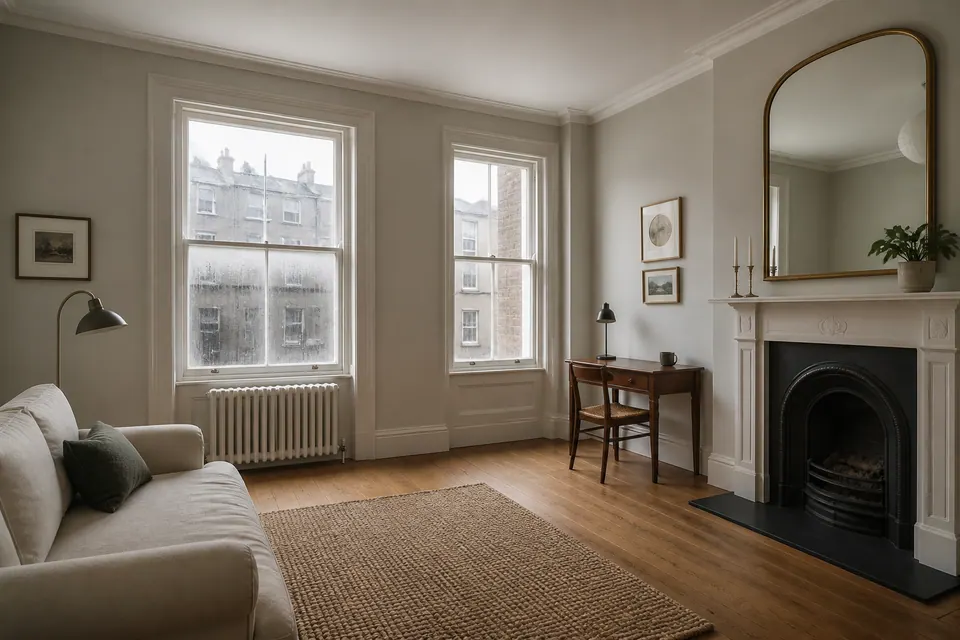
Material · coating · actual damage
01 / DIRECT ANSWERS
Yes, it can show the relationship and extent. Current finish condition and access still affect whether photographs are enough for a quotation.
Do not disturb the marked coating to prepare evidence. Send its current appearance and ask for appropriate preparation instructions.
No universal outcome should be assumed. Suitability and any continuing moisture issue need consideration for the actual materials.
The work cannot be timed from the material names alone. Extent, condition, access and the agreed method affect scheduling.
Ask for specific use and return guidance. Do not infer it from a photo or from an earlier treatment elsewhere.
Identify it as a separate material. Treating the trim does not promise restoration or replacement of the sealant.
Not necessarily. Describe its condition and seek assessment rather than diagnosing structural damage from marks alone.
No. Concealed investigation and any source repair are different tasks and must be separately considered.
02 / SEPARATE THE QUESTIONS
The junction can help locate the concern without proving the source or supporting one universal treatment across all finishes.
| Observed detail | Information to add | Decision still needed |
|---|---|---|
| Marks on painted timber | Component and coating condition | Suitability for that finish |
| Marks on adjoining plaster | Visible extent and wall condition | Appropriate surface scope |
| Flaking at the junction | What was present before the enquiry | Repair or decorative limitations |
| A confirmed earlier water event | Actual work and current observations | Whether further investigation is needed |
Timber repair, coating replacement and making good plaster are separate from treating suitable visible growth. Keep these outcomes distinct when agreeing the work.
The visible line may be easy to photograph, while the underlying moisture history remains uncertain. Do not infer hidden construction from the surface pattern.
| Question | Mould | Damp |
|---|---|---|
| What is visible? | Marks on the named exposed finishes | Not a complete account of moisture movement |
| What needs material review? | Coating and surface suitability | Any continuing water concern |
| What may remain afterwards? | Staining or pre-existing damage | An unresolved repair requirement |
| What must be agreed separately? | Decorative or joinery restoration | Investigation and source repair |
03 / ROOM-BY-ROOM CONTEXT
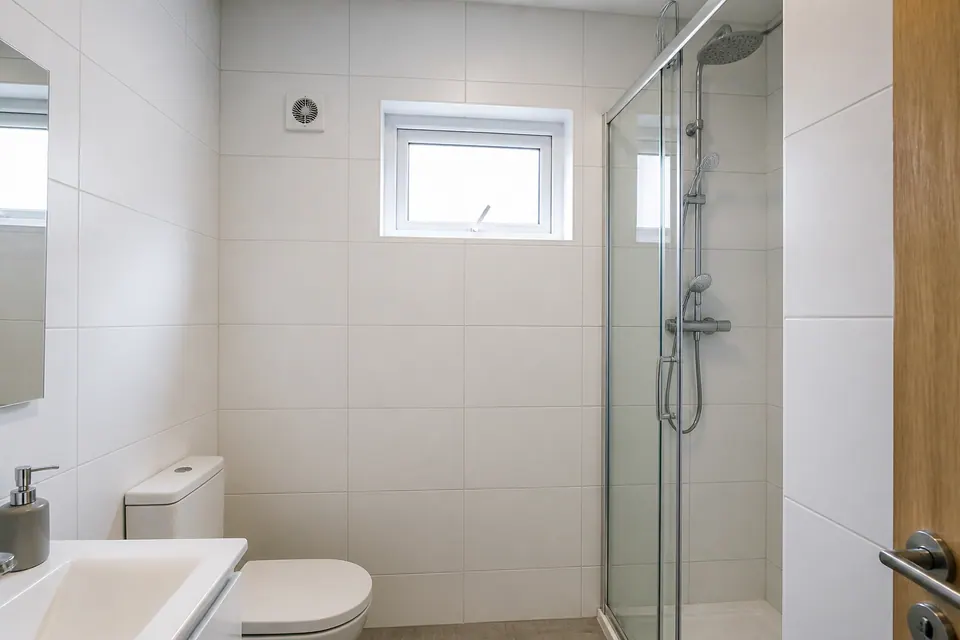
Keep painted trim, plaster and sealant individually described. One bathroom label does not define a common method.
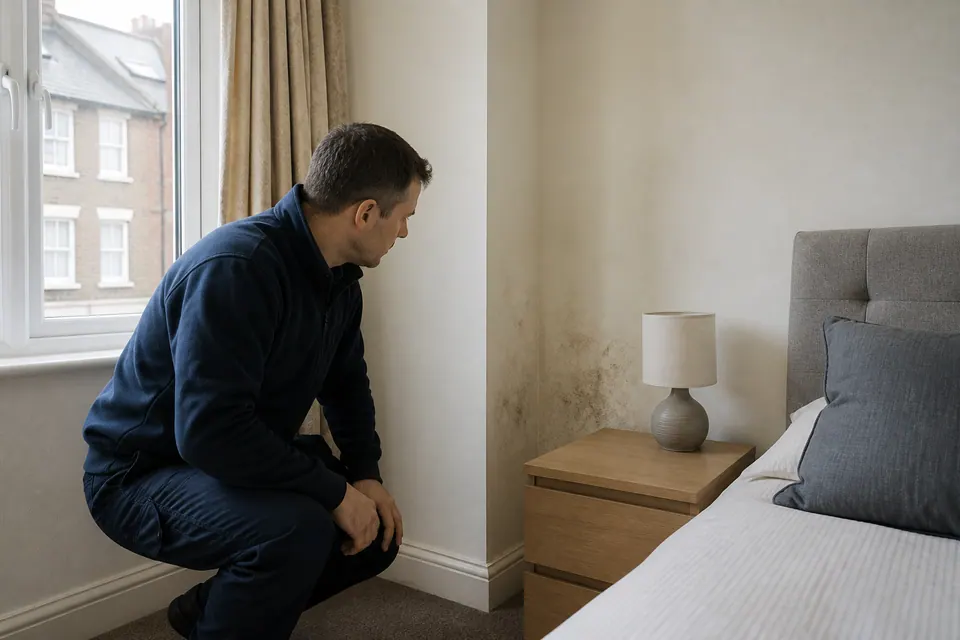
Show lower wall and skirting without removing either. Include furniture that affects access.
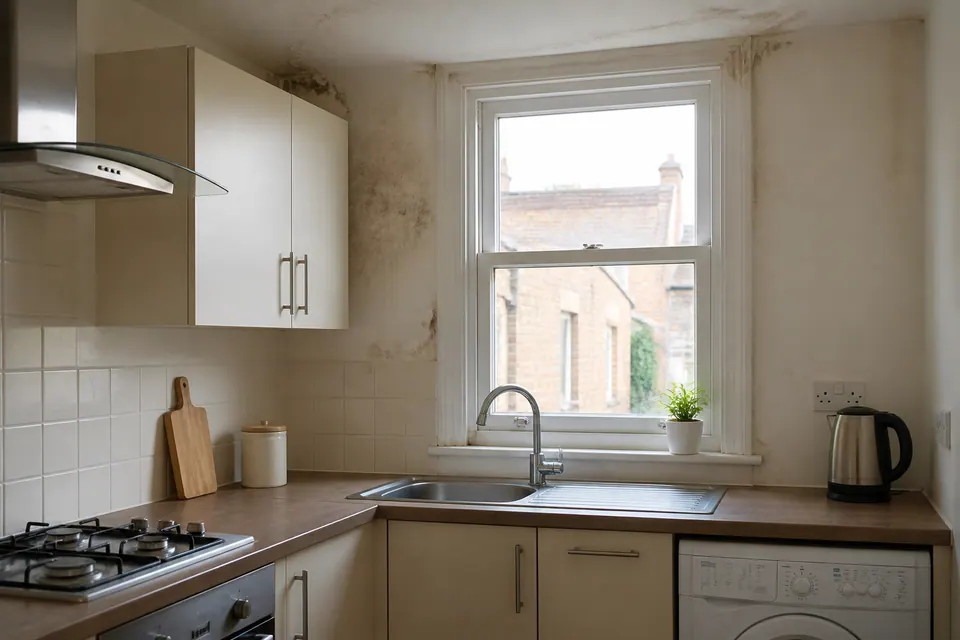
Identify fixed trim and the adjacent coating. Give confirmed incident history without assuming the nearby appliance caused the marks.
Separate decorative panelling from furniture and wall finish. Appearance expectations should be explicit.
Clarify ownership and authority for fixed joinery. An internal-room request does not include communal fittings by default.
Describe actual materials and known water history. The floor level is not a substitute for reviewing the finish.
Windsor / THE PROPERTY BRIEF
Avoid asking for one generic application across two different finishes.
Confirm the full Windsor postcode first. Then show both the painted joinery and adjoining plaster, identifying existing damage on each side. Ask which visible surfaces are suitable for removal and whether coating repair, timber work or redecoration needs separate advice and agreement.
05 / QUOTATION, NOT GUESSWORK
For Windsor, establish postcode availability and show each affected material. A quotation should distinguish suitable surface treatment from damaged coatings, joinery work and plaster restoration rather than bundle them into an undefined cosmetic result.
Read the material-scope guidance ↗| Surface request | Possible quotation route | Detail to establish |
|---|---|---|
| Small accessible suitable area | Photos may support an initial quote | Both materials and visible extent |
| Several junctions or returning marks | Assessment may be needed | Separate condition and history |
| Damaged or uncertain material | Specialist quotation may be appropriate | Repair and treatment boundaries |
Confirm the accepted surfaces and exclusions. A removal price is not automatically a promise to renew paint, repair timber or make good surrounding plaster.
Windsor / ACCESS & PEOPLE
Identify the component and current coating. Surface removal should not imply stripping, refinishing or repair.
Show visible damage or residual staining. A neat colour match after treatment is not an automatic inclusion.
State the limit of what can be seen. The exposed edge does not establish hidden condition.
Report the marked finish and existing damage before making alterations. Confirm who may authorise work to fixed fittings.
Provide relevant records for the actual trim or wall. Keep decorative expectations separate from suitable mould treatment.
Ask whether removal, repair and redecoration need separate stages. Do not use a desired appearance to bypass material assessment.
07 / LOCATE THE ISSUE
A continuous-looking patch can involve more than one material. Show where joinery ends and the wall or ceiling begins without disturbing the surface.
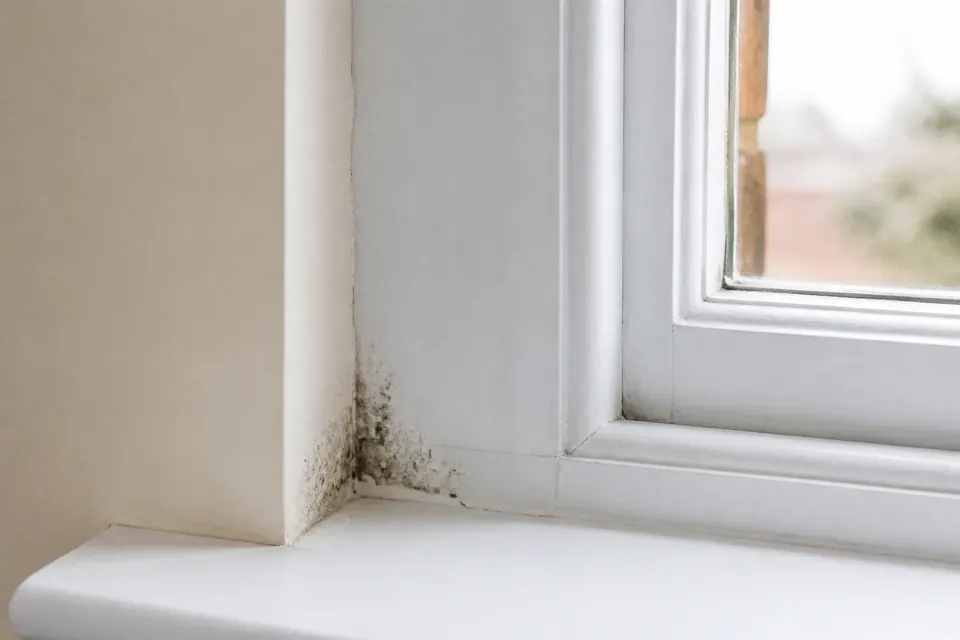
Include frame or trim and adjoining wall in one view. Add close details only where safe, with the finish condition clearly identified.
Describe the timber coating separately from plaster or sealant. Shared location does not mean the same outcome is possible.
State whether marks are on the timber, wall or both. Do not prise the skirting away to show concealed material.
Identify the visible coating and any known water history. A doorway location does not establish why the surfaces are marked.
Show the edge and surrounding decoration. Keep removable furniture separate from fixed joinery in the enquiry.
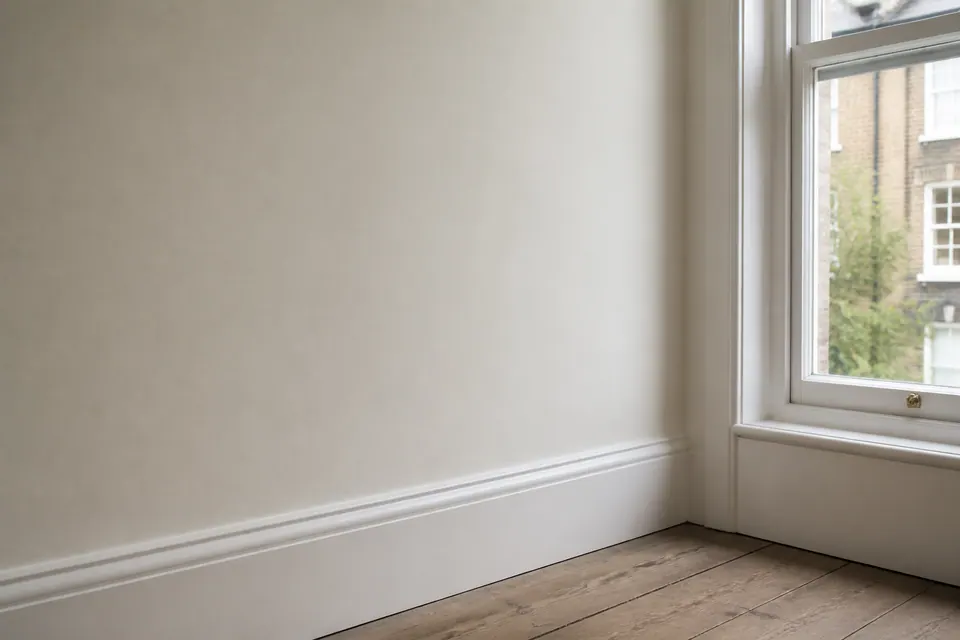
Photograph from a safe position and describe height. Do not scrape a sample or use unsuitable access to inspect the junction.
Explain which surfaces can be seen and what remains covered. A visible frame does not reveal the condition behind the lining.
Photographs can establish the layout of a request while leaving material suitability, hidden condition and restoration needs open for assessment.
08 / A CONTROLLED APPROACH
Provide a wider view and identify the materials. Keep existing coating damage visible rather than masking it.
Clarify which surfaces are included and what remains fixed. Do not dismantle joinery or strip finishes without specific advice.
Follow the agreed method and limits for the materials present. An unsuitable or newly revealed area may need a different decision.
Record any remaining staining or damage and which decorative or repair task has not been included.
The sequence explains a decision process rather than suggesting identical work on all adjoining surfaces.
Keep timber and wall descriptions separate.
Do not assume intact coatings beneath marks.
Decoration or repair may need another agreement.
The pictured sequence is explanatory and does not document customer joinery restoration or a guaranteed cosmetic finish.
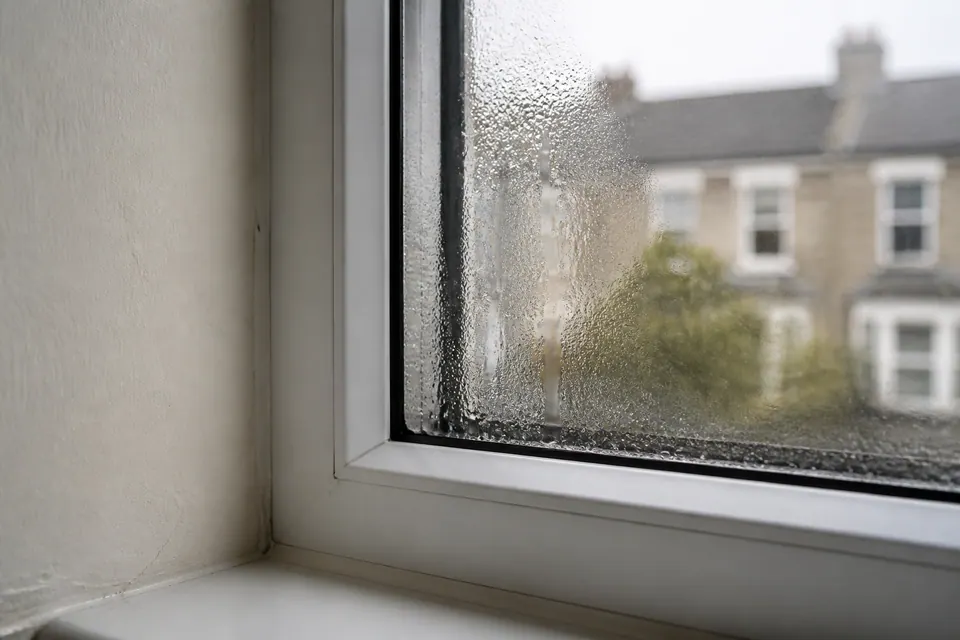
09 / WHEN IT COMES BACK
If marks return, identify whether they are on the timber, plaster or both. A general statement that the whole junction has returned can hide a meaningful difference in extent or condition.
Include known work since the previous visit, such as actual coating repair or a confirmed water repair. Do not assume those tasks occurred because an area looks newer.
Comparable views help explain a change without treating every adjoining finish as one surface.
Windsor / PLAN THE APPOINTMENT
Confirm availability at the complete Windsor postcode before arranging treatment. Send a view of the joinery-to-wall junction and explain any fixed access limitations.
The map can help identify the property area during the enquiry.
Load the Windsor area view.
Windsor / BEFORE BOOKING
These details make the Windsor enquiry more precise without requiring you to diagnose the material.
A wider view is useful for context. Add safe details and identify which side is joinery and which is wall finish.
No. Confirm availability for the actual address before arranging a visit or making preparations.
Yes. Say what is visible rather than guessing the construction or removing the coating to identify it.
That should not be assumed. Material condition and suitability need to be considered in the agreed proposal.
No, not merely to obtain a quotation. Explain what is visible and ask about access instead of disturbing fixed materials.
Not automatically. Agree any redecoration or coating restoration separately and discuss existing appearance limits.
Show that condition clearly. Repair or further assessment may be needed rather than treating it as a routine cosmetic patch.
No. Surface appearance does not establish that a separate moisture source has been resolved.
Name the material, current extent and interval. Do not report both surfaces as recurrent if only one has changed.
TWO FINISHES, A PRECISE REQUEST
Send the postcode and views showing both materials, with existing damage identified. Confirm availability and separate removal from repair or redecoration.
The interior images are illustrations, not evidence of restored customer joinery or guaranteed decorative results.
