
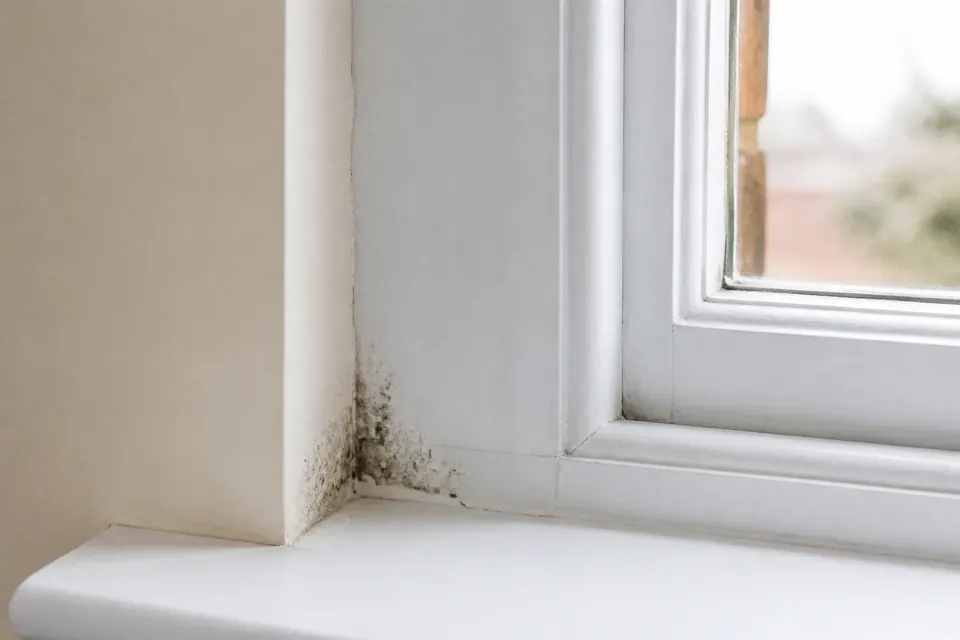
A window reveal within the flat
Show the affected side and finish. Keep any question about the external frame or façade as a separate item requiring information.
Slough / INSIDE THE FLAT, BEYOND THE FLAT
One room enquiry should not silently become a building-wide promise.
If visible marks inside a flat raise questions about shared parts, start with the surface you can actually show. Confirm availability for the Slough postcode, then separate the requested treatment from information or repairs controlled elsewhere.
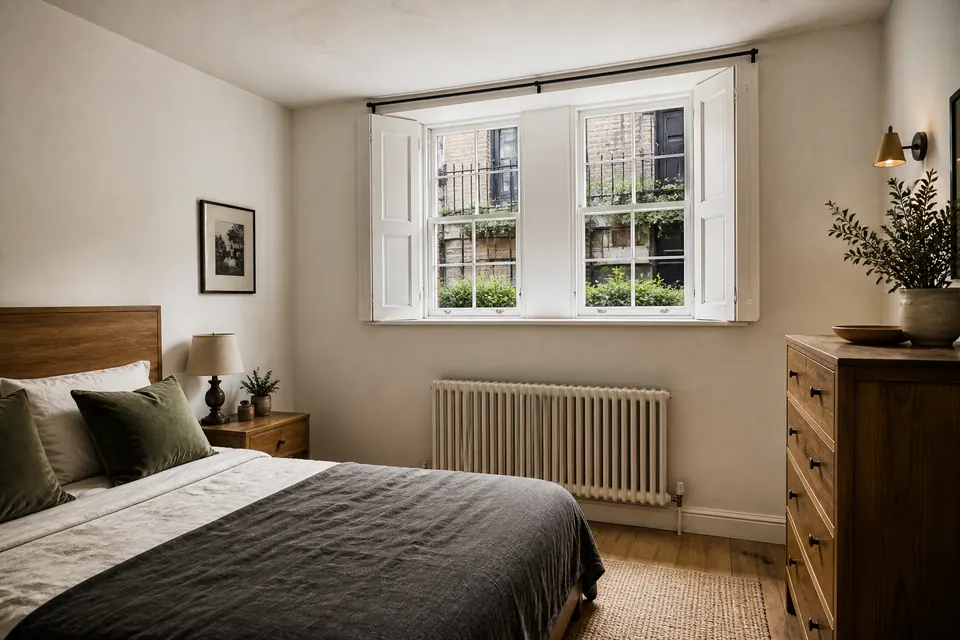
Room evidence · permissions · repair history
01 / LOCATE THE ISSUE
The room location helps organise evidence. It does not decide whether a building component is responsible or who must arrange a repair.
Show the affected side and finish. Keep any question about the external frame or façade as a separate item requiring information.
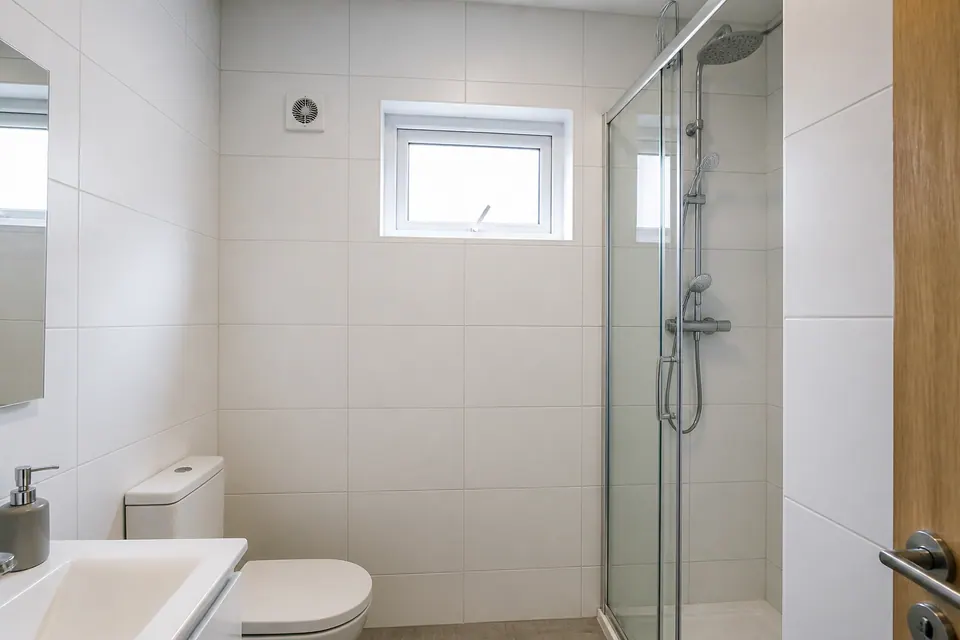
Describe ceiling, coating or sealant separately. A shared ventilation question should not replace evidence of the material needing review.
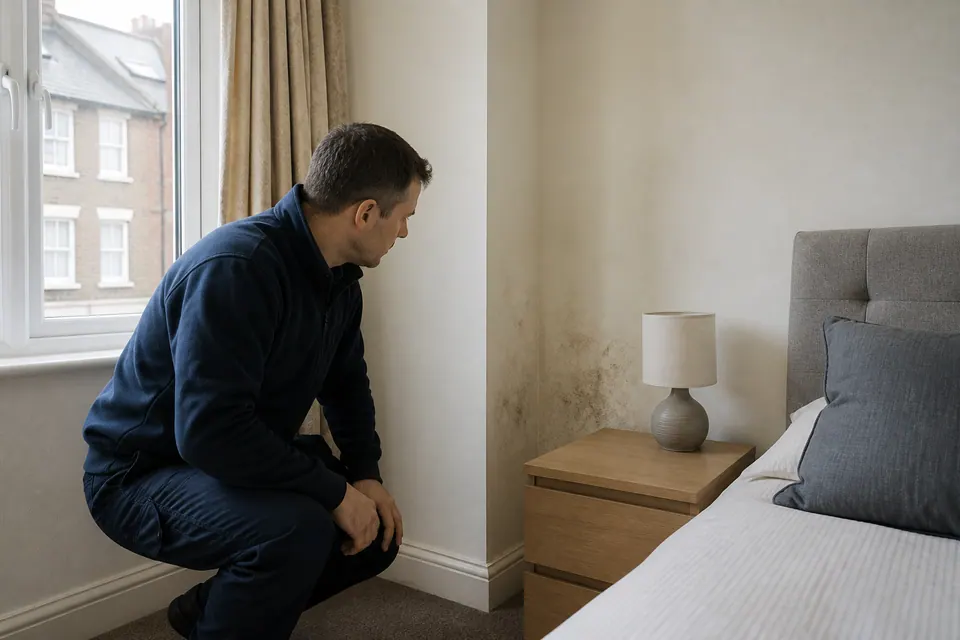
Name the room and visible boundary. Do not assume that an unseen adjoining area has matching marks or the same cause.
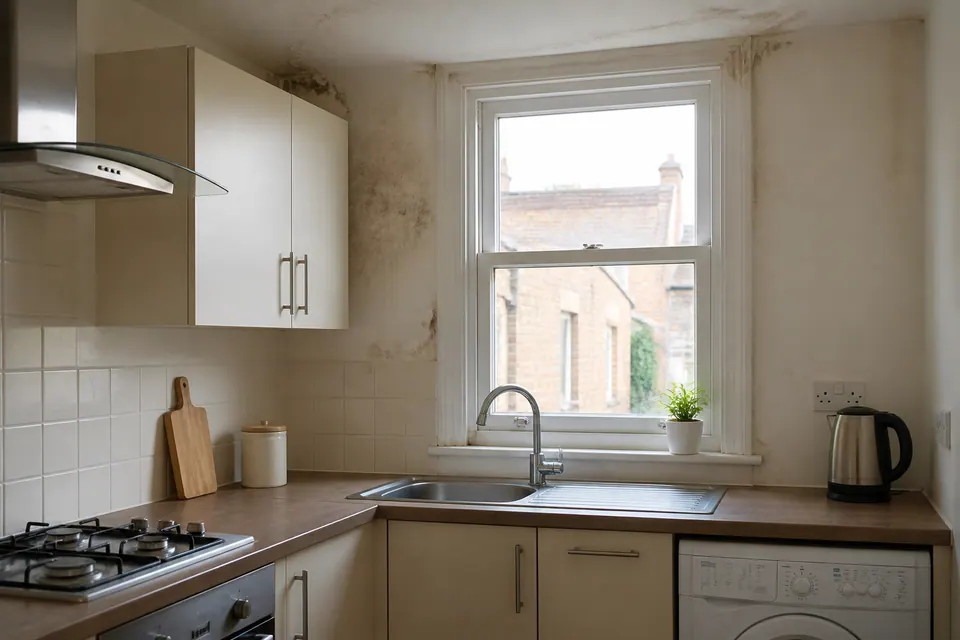
Report known water events and visible condition. A communal pipe route on a plan is not confirmation of the source.
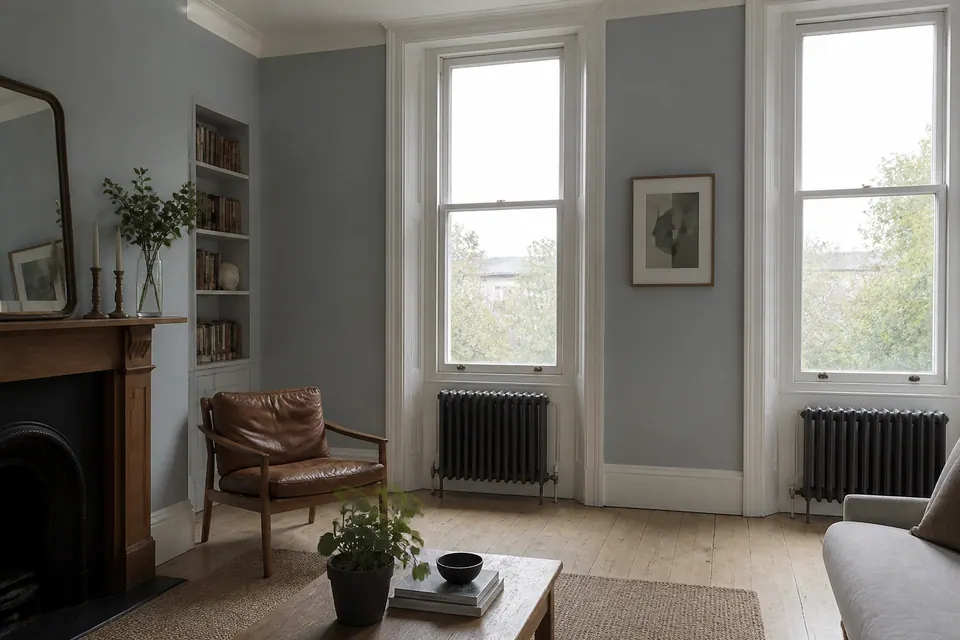
Include the surrounding finish and furniture access. Keep observed marks distinct from a theory about the outside of the building.
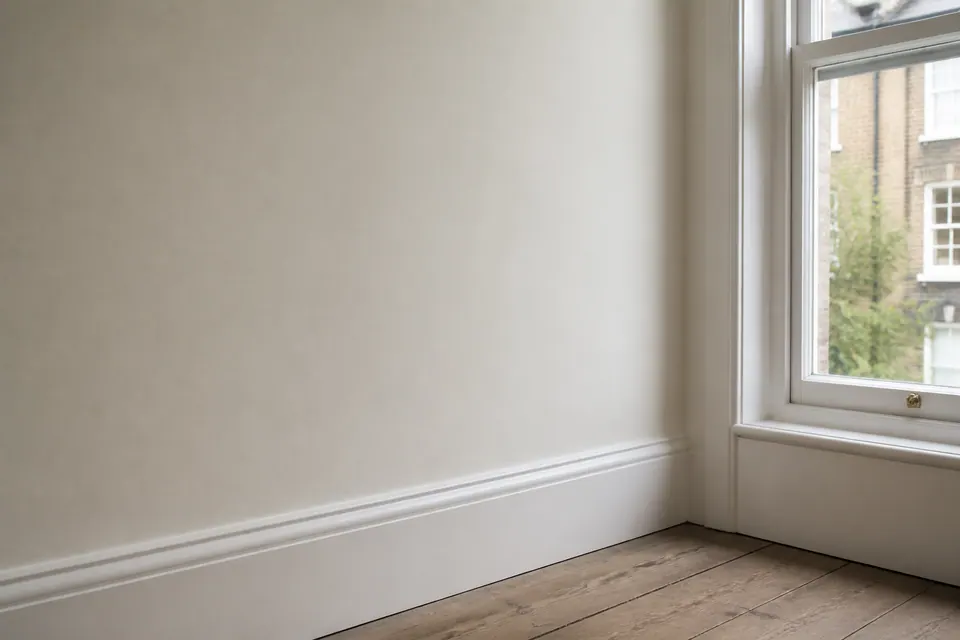
Photograph safely from below and give confirmed incident history. Do not present an unverified neighbour account as a completed repair.
Say which part is within the flat and accessible. Locked equipment areas should not be included without permission and scope.
The most useful request distinguishes what is visible, what is documented and what still needs another party’s confirmation.
Slough / THE PROPERTY BRIEF
Bring building information into the conversation without expanding the job by assumption.
First confirm postcode availability. For the Slough flat, provide the visible area, material and access arrangements, then identify any relevant record held by a managing agent or other contact. Ask whether the surface request can be considered now and which unresolved building question could change the next step.
03 / SEPARATE THE QUESTIONS
Do not convert a possible connection into a diagnosis or assume a surface visit includes communal investigation.
| Visible concern | Useful supporting detail | Boundary to retain |
|---|---|---|
| Marks on an internal finish | Room view and material condition | Assessment of that surface |
| Known incident involving another area | Confirmed record and timing | No assumed ongoing source |
| Question about a shared system | Relevant contact or documentation | Separate investigation if required |
| Unseen adjoining space | Clearly stated lack of access | No condition claimed for that space |
The proposal should identify authorised areas. Shared-system testing, access elsewhere and repairs must not be silently included in a quotation for the visible finish.
A treatment request concerns suitable visible surfaces; a wider water question may require evidence and authority that the occupant does not hold.
| Question | Mould | Damp |
|---|---|---|
| What can be photographed now? | The named finish within the flat | Not the full route of any water source |
| What could another contact add? | History relevant to current suitability | Confirmed building or repair information |
| What requires agreement? | Treatment area and preparation | Any investigation beyond the room |
| What should not be promised? | A universal result for unseen surfaces | Resolution of a shared system by cleaning |
04 / DIRECT ANSWERS
They may help for a suitable accessible area. Missing material, access or water information can still require assessment.
Do not cover the evidence simply to keep the room presentable. Ask how the present condition should be documented first.
It does not establish responsibility or source by itself. Describe the sequence and use confirmed records rather than assigning blame.
Only if access, authority and relevant work have been specifically agreed. A private-flat booking does not include it automatically.
Ask for instructions based on the actual method and room arrangement. Do not infer return guidance from the building type.
State that fact if known and identify available maintenance information. Do not treat its condition as diagnosed from the wall marks.
Not automatically. Show the internal material and keep the exterior question separate pending assessment.
No such assumption should be made. Suitable surface work and investigation or repair have different scopes.
05 / QUOTATION, NOT GUESSWORK
A Slough enquiry should confirm postcode coverage before preparation. Price discussions need the private area, material and access, with any shared-building issue clearly recorded rather than buried in a general flat-cleaning request.
Read the removal quotation boundaries ↗| Request | Initial route | Information affecting scope |
|---|---|---|
| Small suitable accessible patch | Photographs may support a quote | Material and private-room access |
| Repeated or several affected areas | Assessment may be appropriate | Separate room histories and records |
| Damage or wider unresolved issue | Specialist quotation may be needed | Investigation and repair boundaries |
A price for the flat’s visible finish does not automatically cover common parts, another property, building repairs or subsequent decoration.
06 / A CONTROLLED APPROACH
Keep room labels and material details clear. Note which wider concerns are documented and which remain questions.
Confirm postcode availability, entry and authority. Do not assume the team can enter shared or neighbouring spaces.
Work within the accepted surfaces and material limitations. New information can require a revised decision rather than an unplanned extension.
Record unresolved maintenance or decorative matters separately from the treated area. Share appropriate information with the relevant contact.
A clear sequence avoids confusing a limited surface visit with building-wide investigation.
Photograph what is actually accessible.
Include only the accepted rooms and access.
Do not imply it was completed by surface removal.
The diagram is illustrative, not a record of a customer’s building investigation or a guarantee of repair.
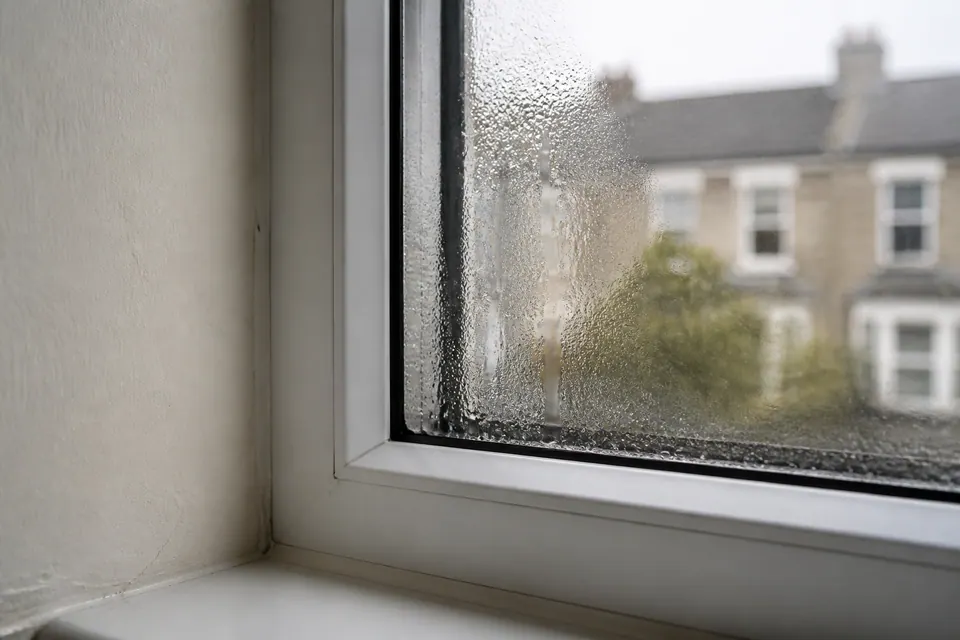
07 / WHEN IT COMES BACK
Keep the previous treated boundary and approximate return date. Add only confirmed intervening maintenance; a pending request should not be described as a completed repair.
Where another party holds records, ask for the relevant information rather than infer it from the room’s appearance. Recurrence can justify another assessment without proving a shared-system fault.
An occupant can accurately report a returning mark even when the wider source remains unconfirmed.
08 / ROOM-BY-ROOM CONTEXT
Describe each material and known ventilation information. Shared-system questions should be recorded without claiming a diagnosis.
Show the affected wall and adjoining furniture. An unseen neighbouring space remains unassessed.
Give confirmed water history and current finish condition. Proximity to services is not proof of their involvement.
Record the actual boundary and access. External-building questions can be noted separately.
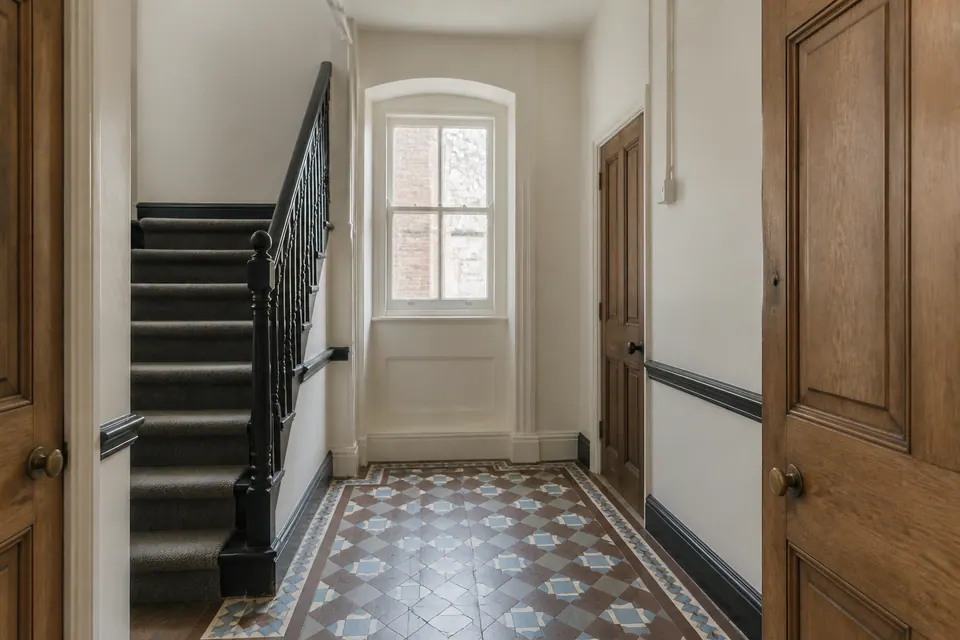
Distinguish the private hall from communal circulation. Permission and treatment scope may differ.
State the actual location and observations. Floor position alone does not identify the moisture source.
Slough / ACCESS & PEOPLE
Define the visible area and practical route. A booking should state what the occupant can authorise.
Treat access and maintenance information as separate requirements. Their inclusion must be explicit.
Describe confirmed incidents only. Do not claim conditions within an area that has not been inspected.
Send labelled evidence to the relevant contact and ask who can approve the proposed work. Avoid attributing repair responsibility from appearance.
Make previous treatment and confirmed maintenance records available for the correct flat. Keep the authorised scope clear.
Separate the room request from any managing-agent enquiry. Ask which unanswered question could affect treatment suitability.
Slough / PLAN THE APPOINTMENT
Confirm service availability for the full Slough postcode before scheduling. Provide the private-room evidence and explain any additional access or maintenance-information requirement.
Use the map to identify the address area when discussing the enquiry.
Load the Slough location map.
Slough / BEFORE BOOKING
These distinctions help organise a Slough request without assigning causes or responsibilities.
Yes, describe that area clearly, while noting relevant unresolved information. Suitability and availability still need confirmation.
No. Supply the complete postcode and obtain availability before arranging access or preparation.
No. Report observations and confirmed history. A suspected connection should remain a question rather than a diagnosis.
Identify the relevant contact and state which information is missing. Do not invent a completion date or repair outcome.
Only if expressly included with appropriate access and authority. A private-room quote does not imply communal work.
It may be useful context if clearly described as a report rather than your own confirmed observation.
That depends on the present surface and unresolved issue. Ask what information is needed for the suitability decision.
No. A surface-treatment result does not decide which party is responsible for a separate building matter.
The authorised room and finish, preparation, limitations and any unresolved maintenance action outside the agreed work.
DEFINE THE ROOM AND THE AUTHORITY
Send the postcode, visible finish and known maintenance history. Confirm availability and keep communal access or investigation as separately agreed questions.
Illustrative scenes do not show a customer’s flat or establish the condition of any shared building.
