
BANSTEAD · DEFINE EACH ZONE
Rug Cleaning in Banstead, Room by Room
Open-plan homes often use rugs to divide dining, seating and entrance areas. We scope each Banstead textile as a separate object, linking its weave and condition to the particular zone it serves.
- Number multiple rugs so photographs and measurements cannot be mixed
- Show chair tracks, doorway soil and quieter borders in the same sequence
- Record anti-slip layers, floor vents and joins beneath each piece
- Map gates, side paths or internal stairs before handling is arranged
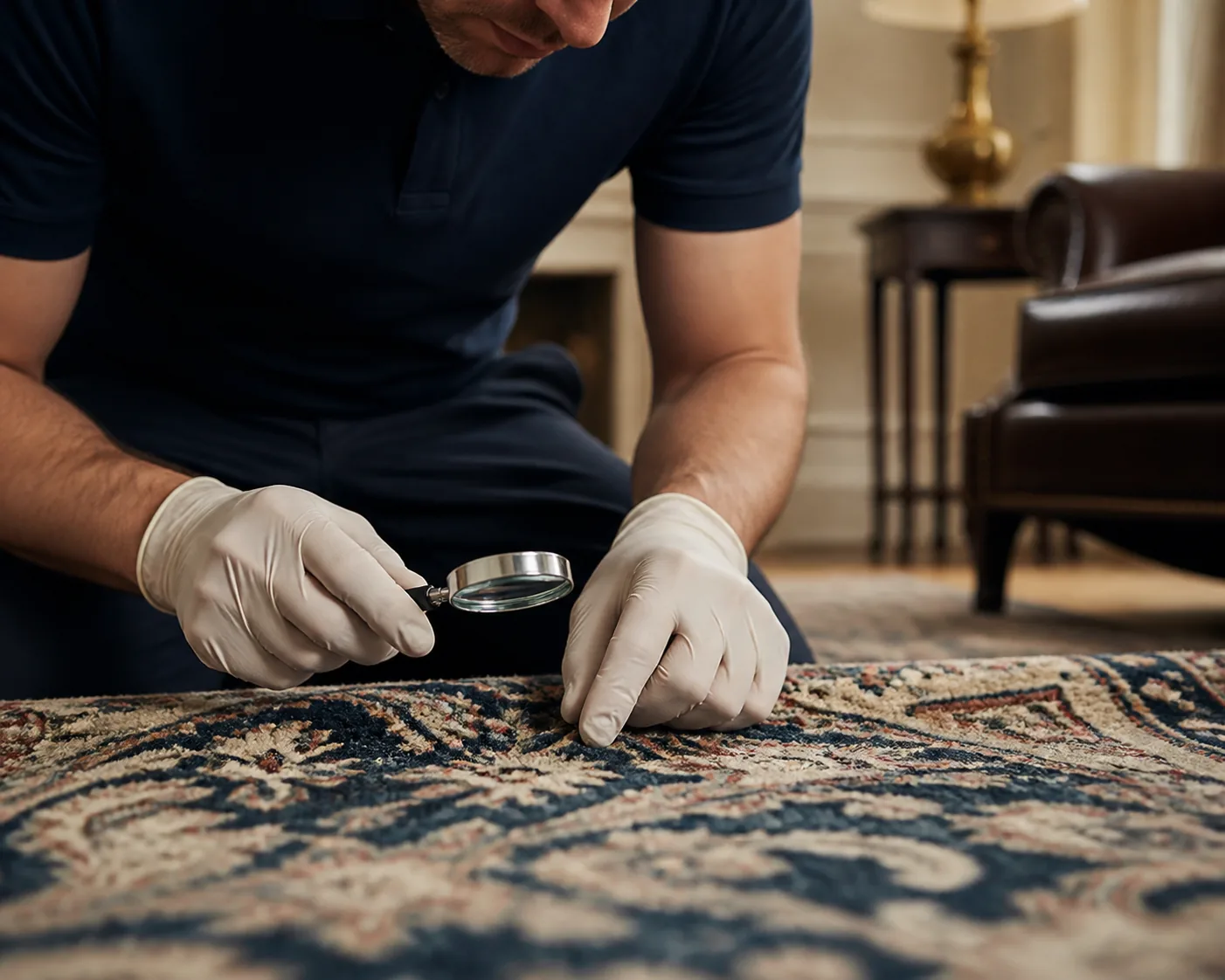
LABEL THE OBJECT BEFORE THE PROBLEM
Create one card per Banstead rug
Selections are a filing aid for the enquiry. Compatibility and outcome still depend on physical assessment.
WHY ZONES BEHAVE DIFFERENTLY
Traffic is only one variable
A dining rug receives dropped material and moving chair feet; an entrance runner meets grit and turning force. The same method cannot be inferred from similar colour alone.
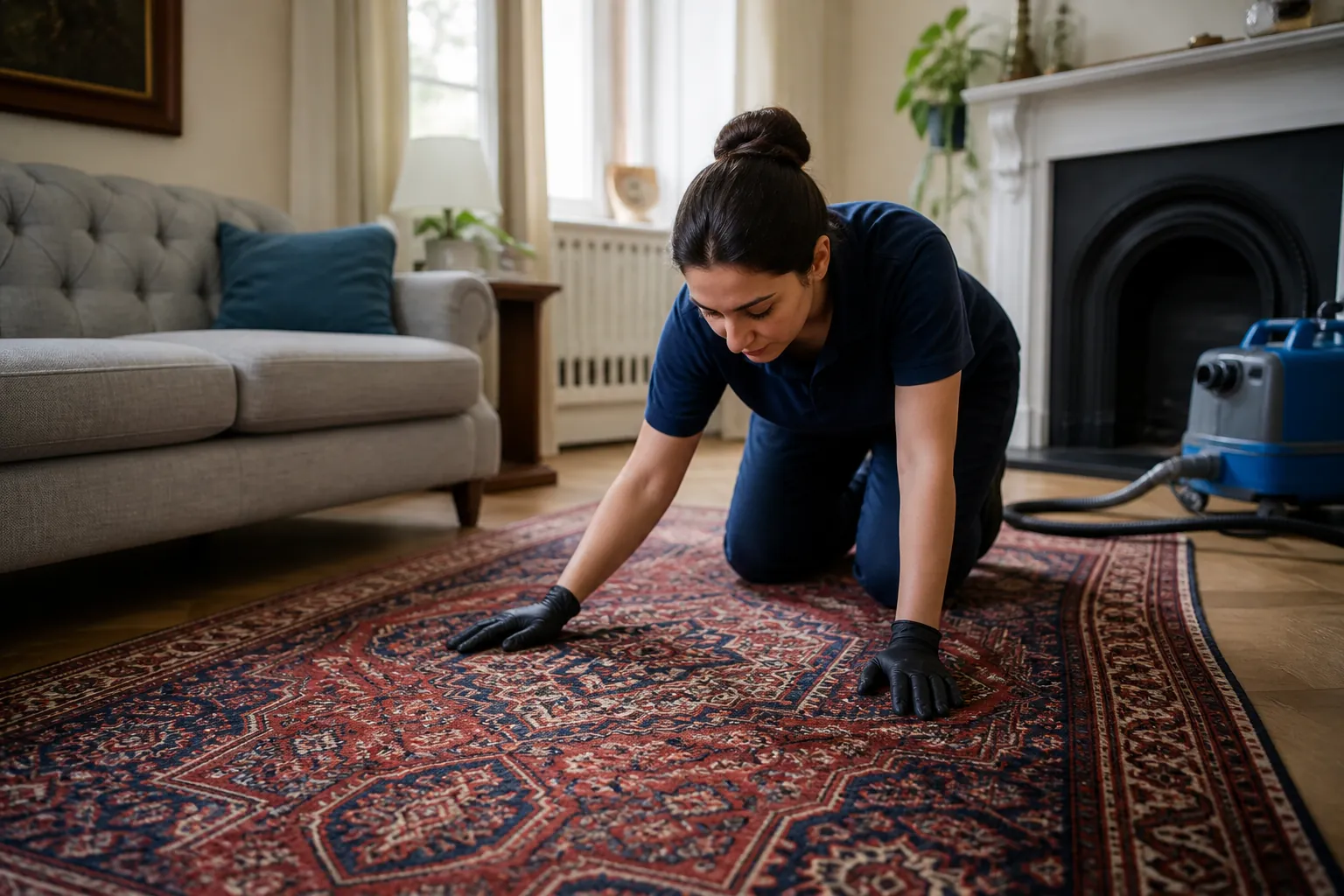
Furniture pressure
Table legs, chairs and cabinets can conceal or compress parts of the pile.
Direction of travel
Doorways and repeated turns create concentrated rather than even change.
Underlay and backing
A separate pad can alter grip, ventilation, weight and lifting.
One piece or a set
Every rug keeps its own dimensions, history and agreed boundary.
A BANSTEAD FLOOR PLAN IN WORDS
Turn a large interior into manageable evidence
Detached houses, bungalows and apartments can all contain awkward routes. A simple room sketch, numbered image set and doorway note are more useful than a general statement that access is easy.
Example sequence. Rug A sits under a six-seat table and shows crumb build-up beside the kitchen threshold. Rug B defines the sofa group and has an odour noticed near one corner. Their concerns, constructions and moving needs remain separate.
Quotation benefit. Individual records prevent the cleaner from assuming that every piece can follow the same handling, preparation or return schedule.
Banstead zone inventory
Count. State the total number of removable textiles in the proposed booking.
Placement. Name the room and the function each piece performs.
Scale. Measure every item; similar appearance does not mean equal area.
Coverage. Photograph exposed pile and the portions currently beneath furniture.
Food zone. Identify greasy residue, drink marks and dry crumbs independently.
Entrance zone. Distinguish loose grit from worn or flattened fibre.
Pet zone. Mark repeated incidents and whether concern extends under the rug.
Mechanics. Show chair castors, cabinet feet and any anti-slip mesh.
Edges. Note stretched corners, ripples and damaged binding before lifting.
Backing. Add a clear underside image for every differently constructed piece.
Floor. Record polished stone, boards, tiles and fitted surfaces separately.
Route. Give the narrowest doorway and any change of level.
Parking. Mention gates, permits or a long carry from the vehicle.
Prior work. Pair each product or previous service with the correct numbered rug.
Priority. Say whether all pieces are required or whether one is optional.
Outcome. Keep hygiene improvement apart from wear, dye loss and repairs.
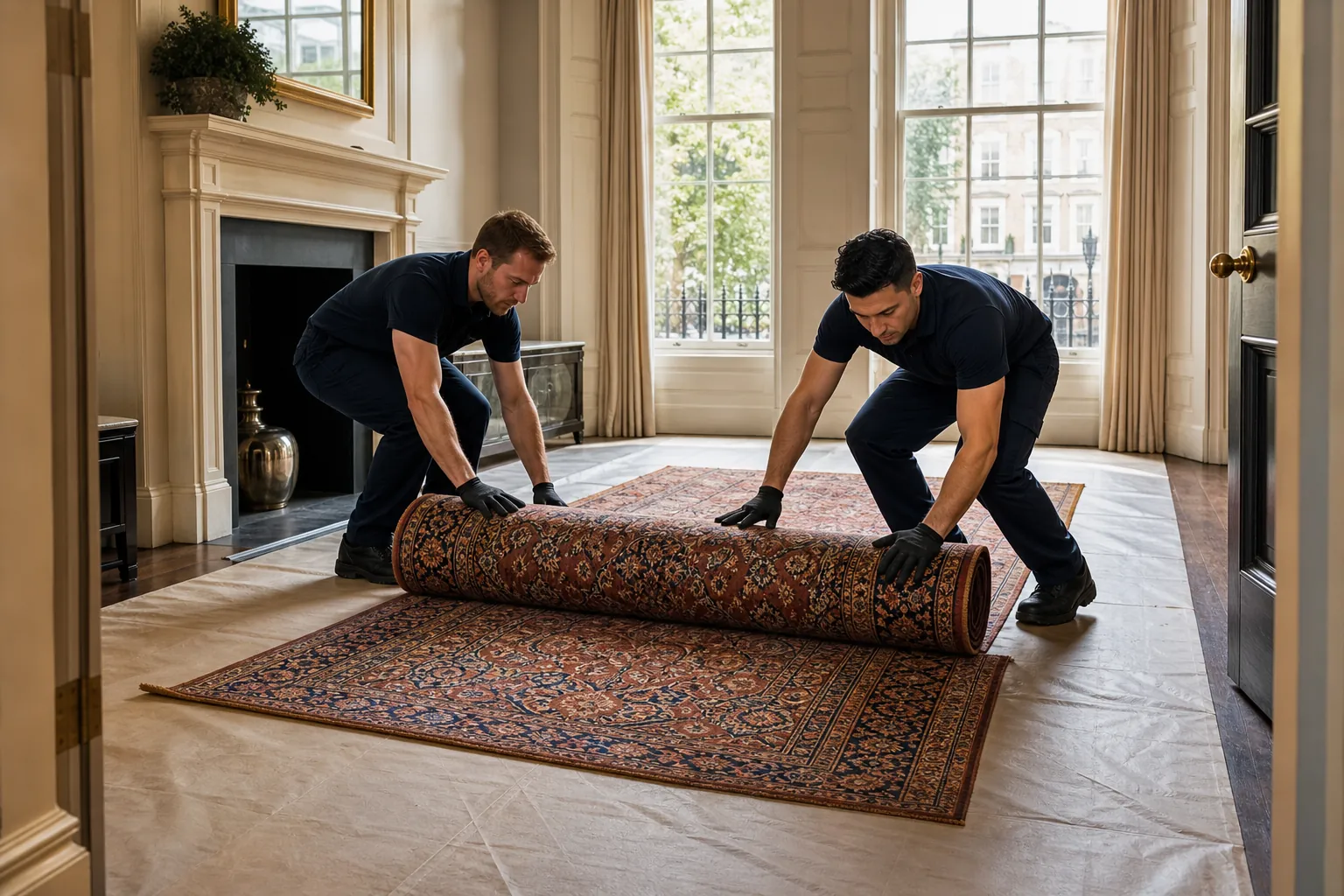
A SEQUENCE FOR MULTIPLE PIECES
Keep every Banstead rug traceable
Numbered records follow each textile from first review through final placement advice.
- A
Tag
Match the room, measurements and concern to one identifier.
- B
Expose
Agree furniture movement and view previously covered areas.
- C
Assess
Check construction, colour behaviour and existing weaknesses.
- D
Separate
Remove appropriate loose matter before moisture decisions.
- E
Treat
Work to the limits recorded for that individual textile.
- F
Reconcile
Compare each result with its own starting photographs.
- G
Position
Provide a return note for each room and supporting floor.
AREA BANDS FOR EACH RUG
Add dimensions before adding the totals
Apply the relevant starting guide to every measured item. A confirmed Banstead quote can then account for construction, condition, access and the combined visit.
DINING AREAS
Crumbs, spills and chair wear tell different stories
Dry fragments can settle deep in pile while repeated chair movement changes texture. A close-up alone cannot show whether the colour difference is removable soil, residue or physical abrasion.
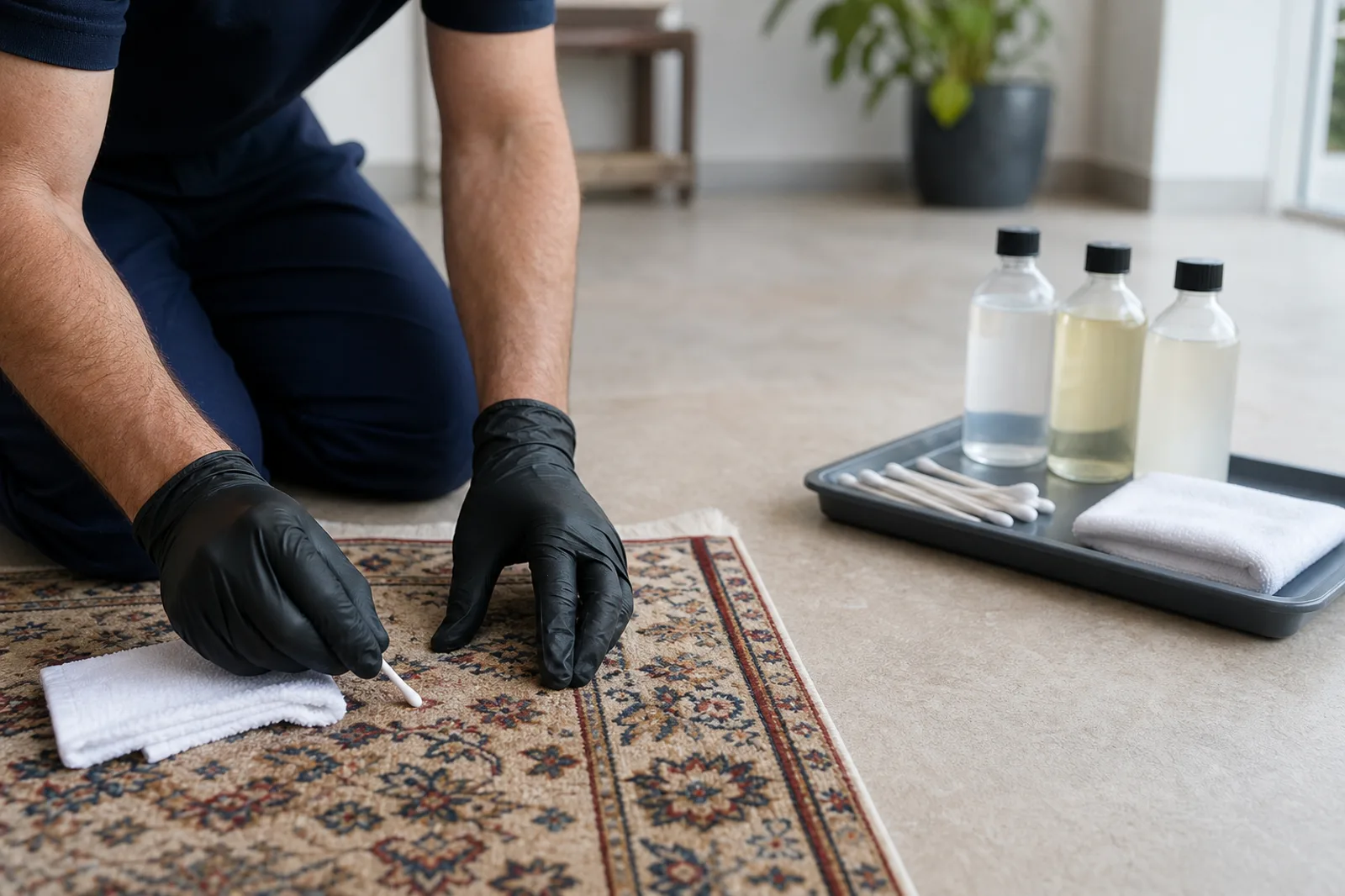
RECEPTION AREAS
Investigate one odour without labelling the whole room
Mark where it is strongest, whether it changes with humidity and what lies below. The face, foundation, underlay and floor may require distinct observations.
- Use a room plan to mark the precise zone
- List all deodorising powders or sprays
- Photograph underlay separately if lifting is agreed
- Avoid a guaranteed claim before depth is known
ASSEMBLE THE BANSTEAD PACK
One message, clearly divided
Use the same identifier in filenames, dimensions and written notes.
- Postcode, contact details and desired scope
- Number of rugs and their room labels
- Length and width for A, B, C and onward
- Full-view photograph for each item
- Label, corner, edge and reverse images
- Concern mapped to the correct rug
- Furniture resting on each footprint
- Underlay and floor descriptions
- Vehicle-to-room access summary
Four planning points
Can several rugs share one quotation?
Yes, once each textile is separately identified, measured and reviewed.
Must the dining table move?
Movement is discussed from photographs and access; it is never assumed.
Does matching colour mean matching fibre?
No. Similar-looking rugs may have different yarns, dyes, backings and histories.
Can an underlay be included automatically?
No. It is a separate material and its condition and scope must be explicit.
BANSTEAD RUG PLANNING
Questions for multi-room and open-plan homes
How should I name the photographs?
Use the rug identifier plus view, such as A-whole, A-label and A-mark.
Should measurements include fringe?
Give the textile dimensions and state the fringe length separately.
What if part of the rug is under a cabinet?
Show the arrangement and explain whether the cabinet can be moved safely.
Are chair-track lines always dirty?
No. They can combine soil, pile reversal, compression and abrasion.
Can all pieces use one drying estimate?
Not reliably; fibre, density, method and room airflow may differ.
Why record anti-slip mesh?
It may hold residue, transfer material or affect how the rug is lifted and returned.
Can a rug over fitted carpet be handled normally?
The underlying carpet changes moisture and placement considerations, so it must be declared.
What if only one rug has an odour?
Keep that observation attached to its identifier instead of generalising across the set.
Does the £68 minimum apply per rug?
It is a visit minimum, not a per-rug label; the combined confirmed scope determines the booking.
When are rugs put back?
Follow the individual handover note for the textile, floor and room conditions.
NUMBER, MEASURE, EXPLAIN
Bring your Banstead rug set into focus
Structured evidence makes a complex household request easier to assess.
