
KINGSTON UPON THAMES · PLAN THE LIFT BEFORE THE CLEAN
Rug Cleaning Planned Around Kingston Homes
Kingston homes often ask a rug to bridge busy living space and quieter rooms. Before it is moved, we establish how it sits, what lies beneath it, and whether a riverside property, stair turn or shared entrance changes the safest working plan.
- Photograph the rug in place before lifting any corner
- Give the woven field dimensions, then add the fringe length
- Mark the exact corner where the pet odour is noticed
- Tell us whether collection crosses a lobby, narrow hall or staircase
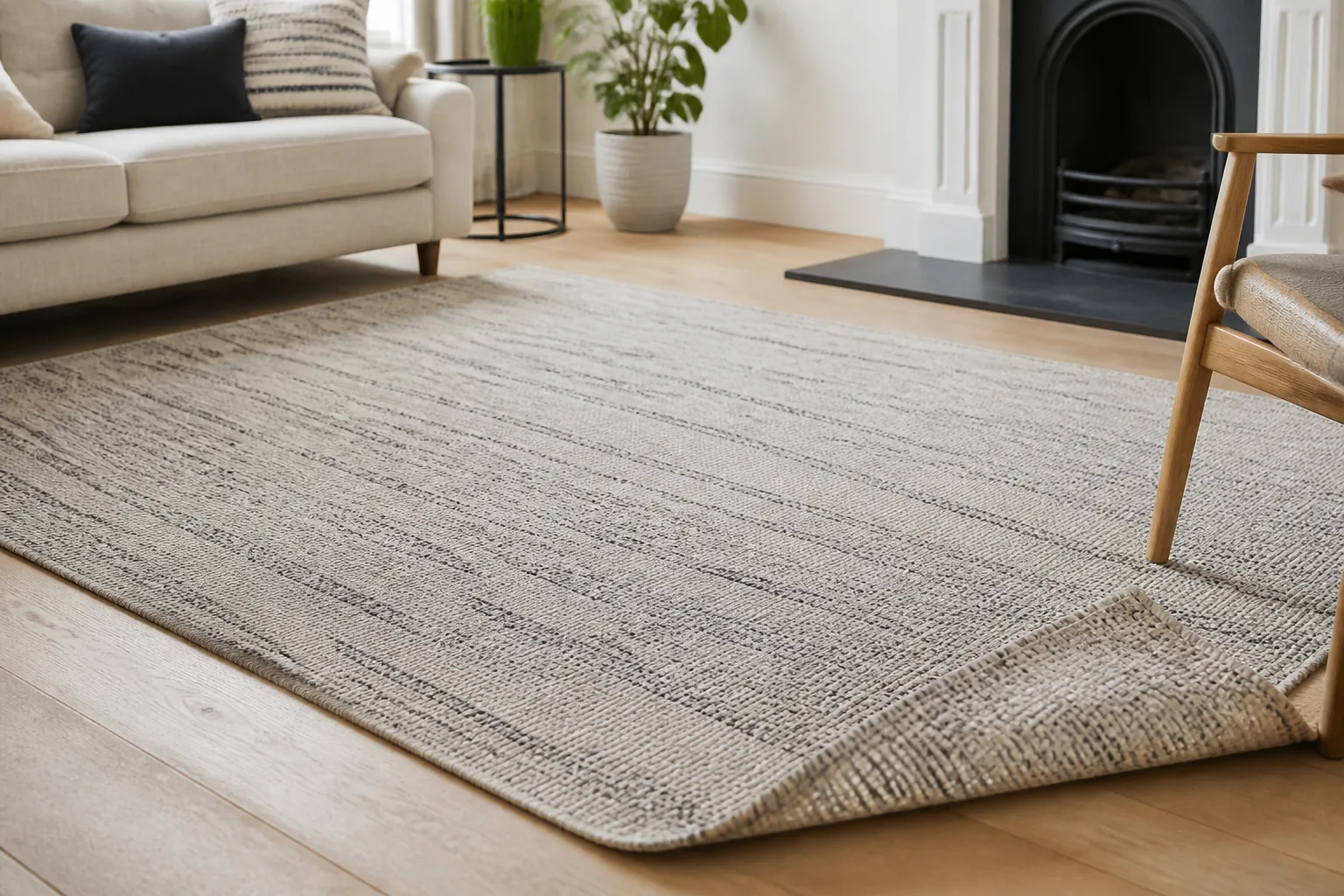
BUILD A HANDLING NOTE
Record only what can be seen before the rug moves
These choices help us ask better questions about removal and return.
FROM ROOM POSITION TO SAFE RETURN
A Kingston rug journey starts before the doorstep
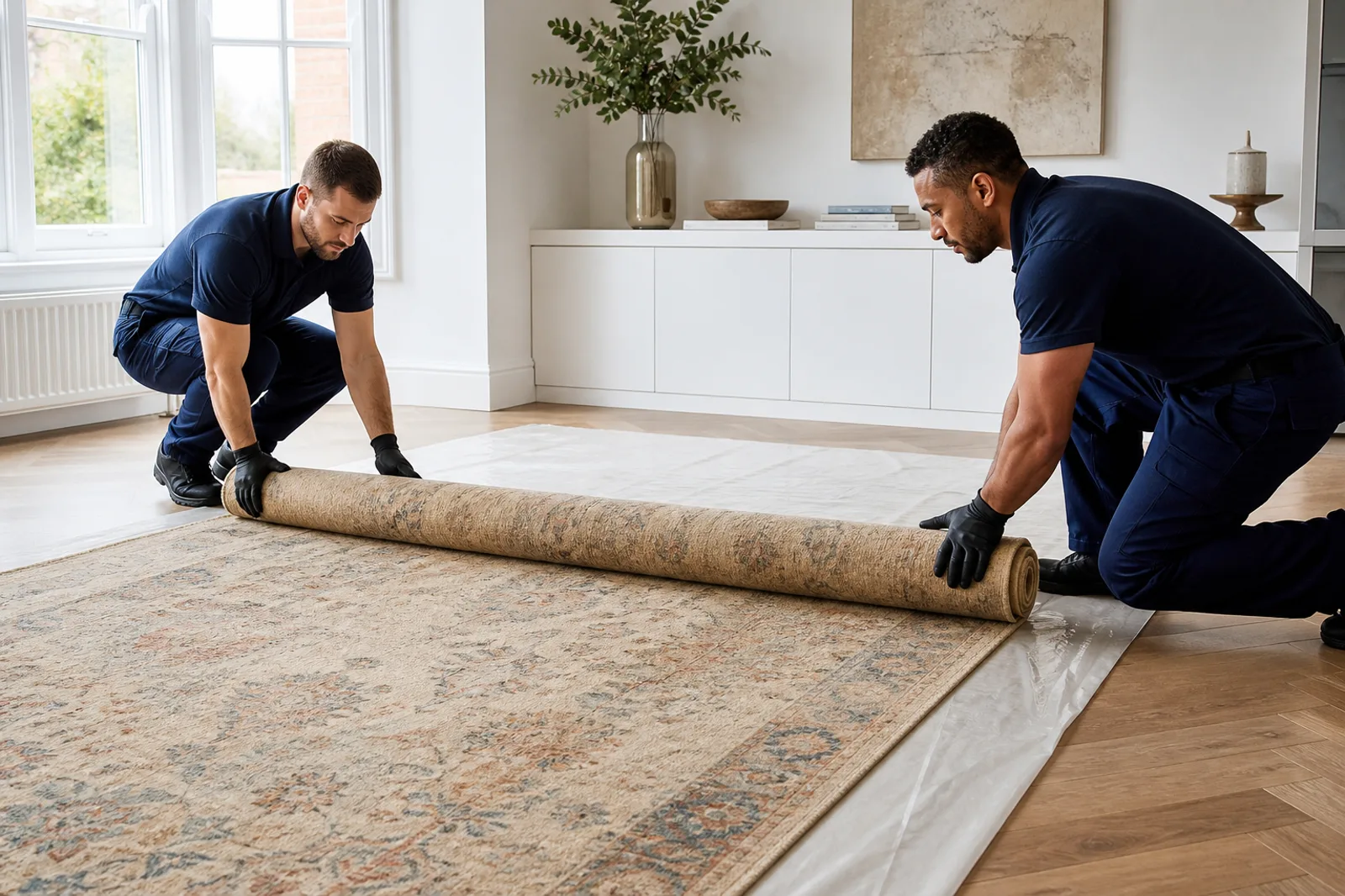
In a tall Kingston townhouse, the rug may leave a timber room, pass a tight landing and reach a vehicle through a controlled parking bay. Those transitions determine crew handling, surface protection and the return sequence.
Example from a split-level home. A wide room view shows the cabinet overlapping one edge. A doorway photograph records the turn, while a lifted-corner image reveals the underlay without disturbing the whole rug.
For an odour enquiry, note when it is strongest: after the room has been closed, during damp weather, or only at floor level. That observation is more useful than another household spray.
A Kingston lift-and-return file
Begin with the doorway. A portrait photograph from the threshold should show the rug’s orientation, the furniture touching it and the clearest route towards the hall.
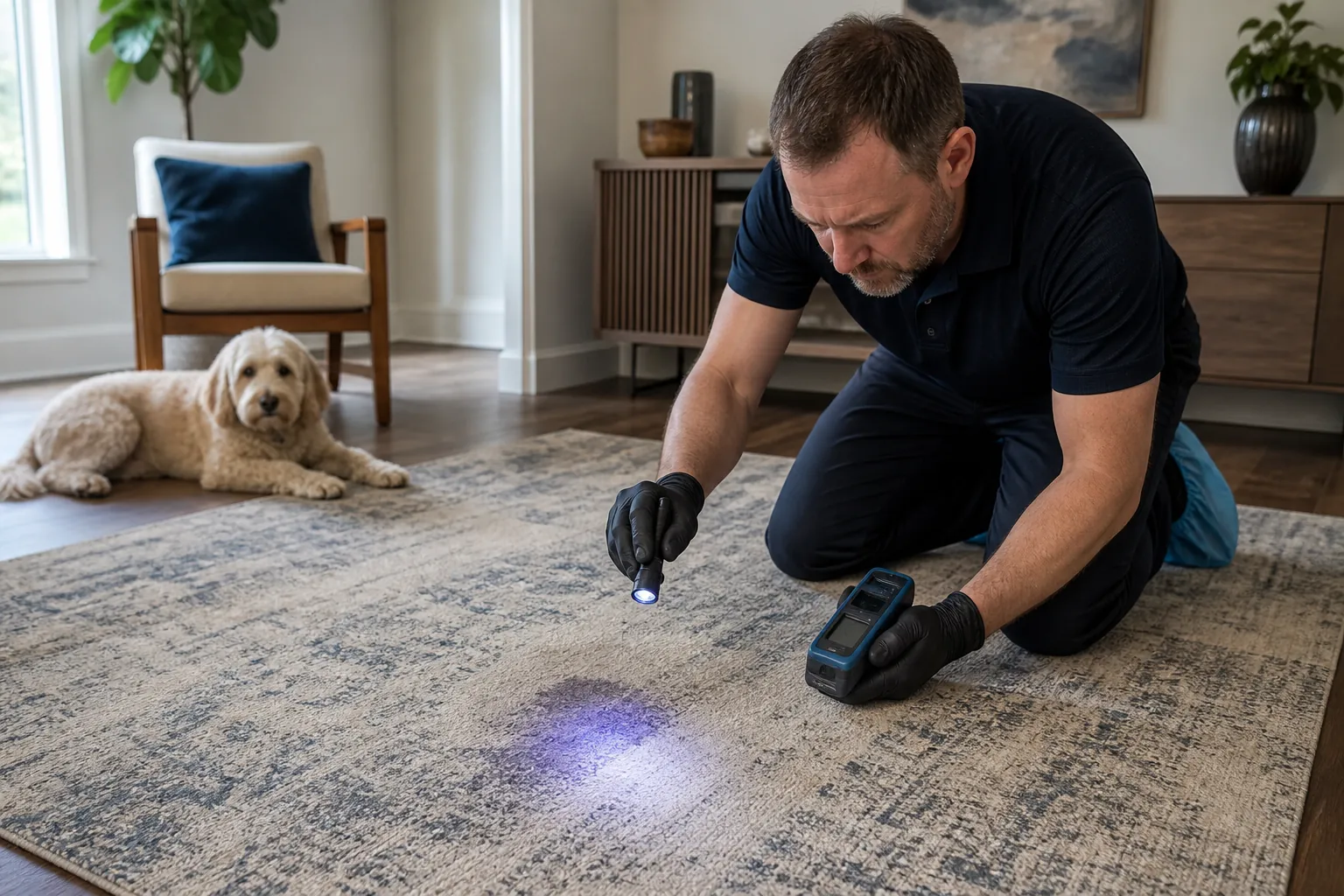
Trace the affected corner. Place a removable paper marker nearby, never on the damp or altered area, so the same position can be recognised in wider and closer images.
Compare the layers. If the rug can be lifted safely by one corner, photograph the lower face, loose pad and floor as three distinct surfaces.
Describe the smell in time. Say whether it appears continuously, after the room is closed, during humid weather or only when close to the textile.
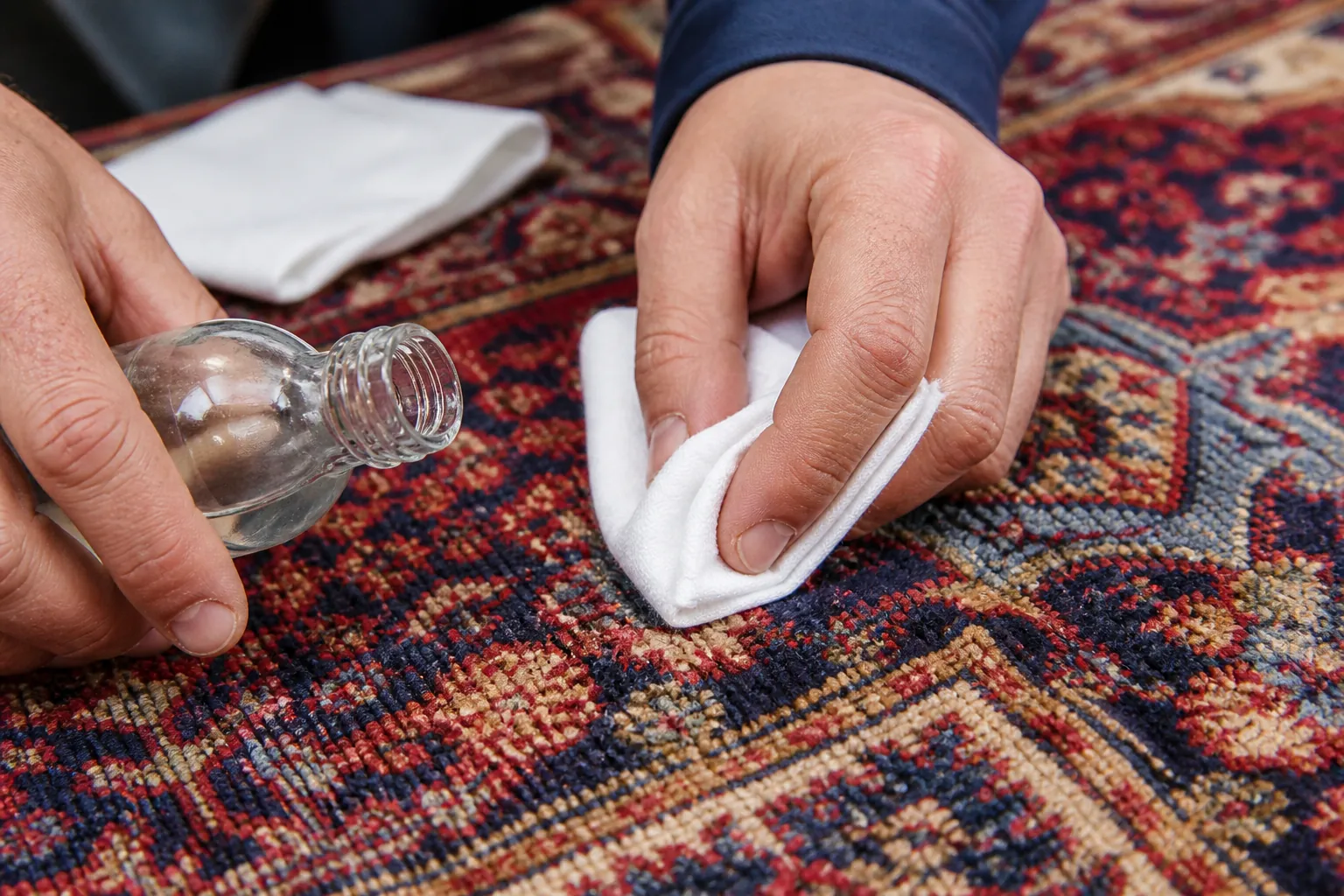
Keep a product history. Photograph bottles or packets from any enzyme treatment, deodoriser, powder or hired-machine detergent previously used.
Record the true field. Measure woven edge to woven edge, then list tassels separately so decorative length does not distort the size calculation.
Identify fixed obstacles. A bookcase, piano or filled cabinet overlapping the border needs to appear in the plan rather than being moved without agreement.
Check the departure path. Note narrow turns, split-level steps, delicate wall finishes and the smallest door opening between room and street.
Explain the loading point. Kingston permit bays and timed access can influence crew planning, particularly when a dense rug cannot be carried far while rolled.
Protect the supporting finish. Tell us whether the room has sealed boards, wax, stone, fitted carpet or a separate anti-slip layer.
Plan the return orientation. A small sketch or photograph with one edge labelled “window” helps the household restore the original layout.
Separate the objectives. Local odour assessment, visible mark reduction, routine soil removal and physical repair are different conversations.
READING ONE CORNER
Odour location is a clue, not a promise
A smell concentrated at the edge may involve face yarn, foundation, underlay or the supporting floor. Checking each layer prevents the visible surface from being treated as the whole story.
BEFORE ADDING ANYTHING ELSE
Keep the evidence readable
Ventilate the room if practical, but avoid masking fragrance. Photograph packaging from earlier treatments and say whether the rug was rinsed, blotted, extracted or simply left to dry.
- Source and approximate date
- Area affected above and below
- Products, rinsing or extraction used
- No complete-removal promise before review
WHAT THE LIFT CAN REVEAL
Four observations shape the Kingston plan
The upper face describes appearance; the edge and reverse reveal how the textile may behave when moved.
Material response
Helps exclude incompatible options.
Colour behaviour
Testing informs risk around strong shades.
Structural limits
Pile and foundation guide moisture control.
Edges and repairs
Existing faults enter the pre-work record.
A KINGSTON ROOM-TO-ROOM SEQUENCE
Seven decisions from first image to reinstatement
The job plan follows the actual route through the home, then the textile evidence.
- 01
Map
Record size, wear, repairs and concerns
- 02
Check
Examine fibre, colour and construction
- 03
Reduce particles
Remove compatible accessible dry soil
- 04
Work selectively
Stay within the assessed limits
- 05
Manage moisture
Support pile, backing and finish
- 06
Inspect again
Review field, edges and fringe
- 07
Explain return
Give placement and drying guidance
KINGSTON SIZE GUIDES
Measurements open the conversation, not close it
The final scope also reflects the lift, odour depth, rug build and any separate pad or floor concern.
SEND A ROOM-READY BRIEF
Let us see the rug and the journey it must make
A useful Kingston message joins scale, access and the affected corner in one short record.
- Kingston upon Thames postcode
- Maximum length and width
- Complete rug photograph
- Close view of pet odour reported near one corner
- Label and reverse
- Fringe and repair details
- Earlier products
- Floor and furniture position
- Entrance and carrying route
Four points before booking
Can a photo identify the fibre?
It can guide questions, but material and dye response may still need checking.
Is every patch removable?
No. Some patches are colour or fibre changes rather than soil.
Is drying time fixed?
No; construction, moisture, airflow and room conditions determine advice.
When can furniture return?
Follow the handover for this rug rather than a generic timetable.
KINGSTON RUG PLANNING QUESTIONS
Answers for lifting, odour and return
Which photograph should I take first?
Stand in the doorway and include the entire rug, furniture overlap and the route out of the room.
How should I describe the odour corner?
Mark its position on the overview, then say when the smell is strongest and whether it reaches the underlay.
Do you need the Kingston parking arrangement?
Yes. A timed bay, permit zone or distant loading point changes how a large textile can leave the property.
Should I roll the rug before the visit?
Leave it in its normal position unless specifically advised; the undisturbed setting contains useful handling evidence.
What if a cabinet rests on the border?
Photograph the overlap and tell us whether the piece can be emptied or moved safely by the household.
Why photograph the landing and doorway?
Their width and turning space help establish the crew and protection needed for removal.
Can deodoriser be added while I wait?
Avoid masking the evidence. Retain earlier product containers and ventilate only when it is safe to do so.
Does odour always remain in the rug?
Not necessarily. The face yarn, foundation, loose pad and floor are separate possible locations that need comparison.
When can the rug return to its room?
Reinstatement follows the actual condition, drying guidance and an agreed orientation rather than a fixed clock.
How does the minimum visit work?
The £68 eligible minimum applies to the confirmed booking; compatible work can contribute once every item is scoped.
READY TO MAP THE KINGSTON ROUTE?
Start with one room view and one affected-corner close-up
We will use those details to shape the next questions.
