
LEATHERHEAD · RIVER AIR, COUNTRY TRACKS AND TEXTILE DETAIL
Measured Rug Care for Leatherhead Interiors
Leatherhead homes sit between town streets, river paths and wooded ground. That variety reaches the rug as fine dry particles, damp footwear and seasonal debris. We build the enquiry like a textile field note: source, distribution, construction and safe handling are recorded independently.
- Compare the sheltered portion beneath furniture with the exposed field
- Show rippling, fringe weakness or backing changes at their true scale
- Describe damp-earth odour by timing and location, not by assumption
- Give rolled dimensions and the route from room to vehicle
MAKE THE OBSERVATIONS USEFUL
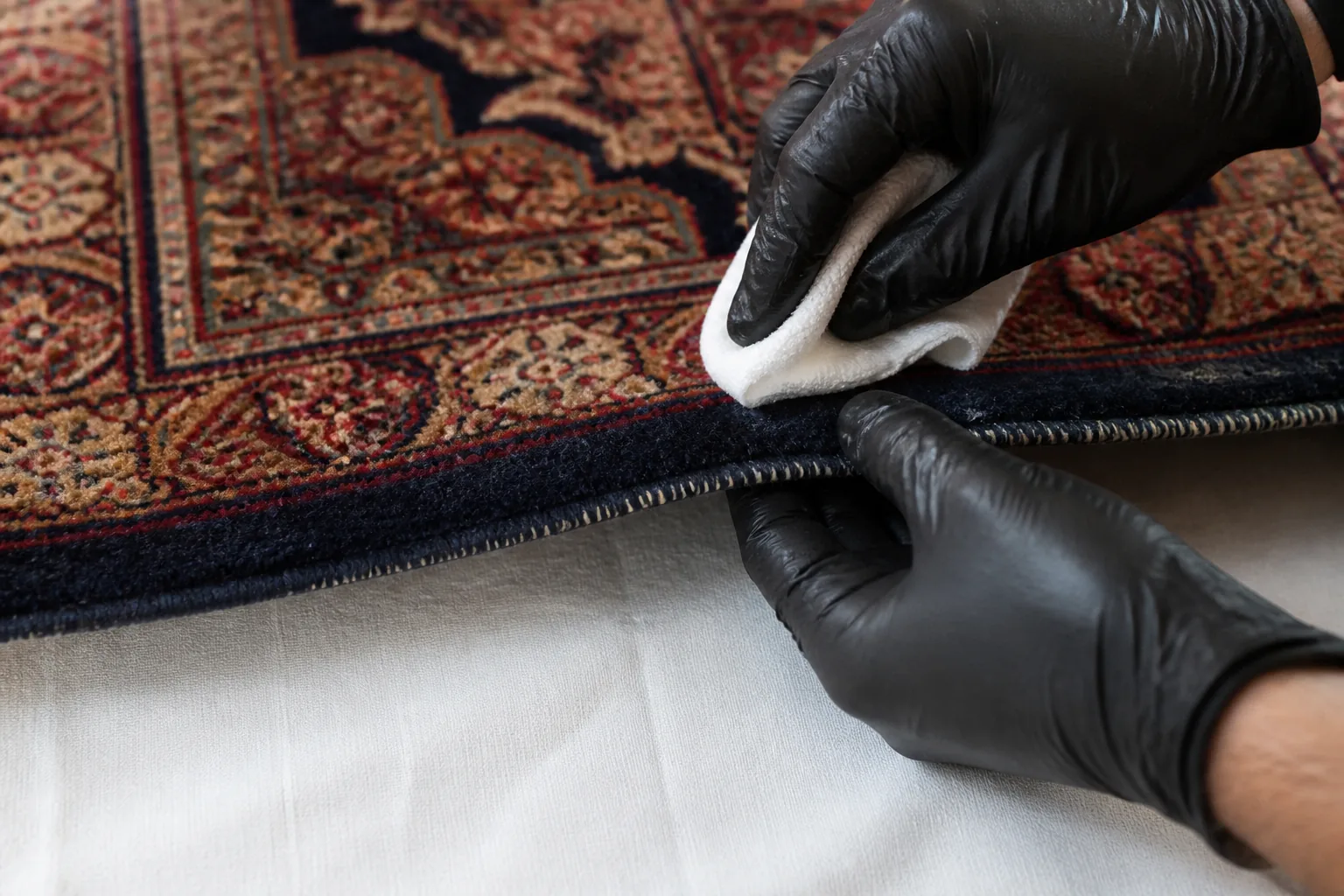
The Leatherhead contrast study
A protected reference zone can reveal how the exposed field has changed. The note-maker groups observations by contrast, structure, moisture history and transport rather than choosing a treatment remotely.
QUESTIONS FROM A LEATHERHEAD CONTRAST CHECK
Clear answers before the visit is shaped
Why photograph beneath furniture?
That quieter area can act as an internal reference for colour, pile and accumulated change elsewhere on the rug.
Does a damp-earth smell prove mould?
No. Odour alone is not a diagnosis. Its timing, depth, room conditions and any moisture history need separate consideration.
Can a loose fringe be included?
It must be shown first. Weak attachment may change handling and cleaning limits, and repair is not implied by cleaning.
What if the rug has an irregular outline?
Measure the longest and widest points, then photograph the complete shape so area and handling are not based on a rectangle alone.
Do gravel paths matter to the booking?
For a bulky piece they may. Distance, steps and the surface between the room and vehicle help establish a safe carrying plan.
Will pale pile return to its original shade?
Cleaning can address accessible soil, but fading, abrasion and historic colour change may remain. The protected comparison helps explain the distinction.
Should I roll the rug before arrival?
Only if it rolls easily and no weak edge will be stressed. Otherwise leave it flat and describe the available space.
Can an old water line be removed?
It requires assessment. Dye movement, residues, foundation change or previous treatment can all influence what is safely achievable.
When is the rug ready to go back?
Return follows its actual dryness, stability and the room guidance given at handover, not a postcode timetable.
What does the £68 visit minimum cover?
It is the starting minimum for an agreed visit. Other suitable tasks contribute only when they form part of the confirmed booking.
LOCAL EVIDENCE, NOT POSTCODE FILLER
Protected and exposed areas tell different parts of the story
In Leatherhead properties near the Mole or towards the wooded edge of town, outdoor material can arrive in several forms. The valuable comparison is often inside the same rug: under a table, beside a doorway and along a turning route. Recording those zones avoids treating every colour difference as the same problem.
A within-rug comparison. A pale rug appears dull near the entrance, while the rectangle beneath a side table is brighter and softer. Both zones are photographed in the same daylight before conclusions are drawn.
The handling boundary. A loosened fringe and an old raised repair are protected during movement. The quotation keeps textile cleaning separate from restoration.
Leatherhead comparison ledger
Movement. Place a neutral ruler beside a close-up for scale.
Reference. Photograph an area normally covered by light furniture.
Distribution. Compare the doorway edge with the quietest corner.
Viewpoint. Note whether an odour appears only during humid weather.
History. Show the underside without pulling on a weakened fringe.
Boundary. List flood, leak or damp-storage history even when it is old.
Measure. Separate tide marks from changes in pile lay.
Drying. Measure projections, tassels and irregular outlines independently.
Arrival. State whether the rug can be rolled without resistance.
Identity. Describe steps, gravel approaches and long carrying distances.
Residue. Photograph repairs in raking light so raised areas remain visible.
Furniture. Reserve a flat, protected position for the final return.
A MEASURED STARTING GUIDE
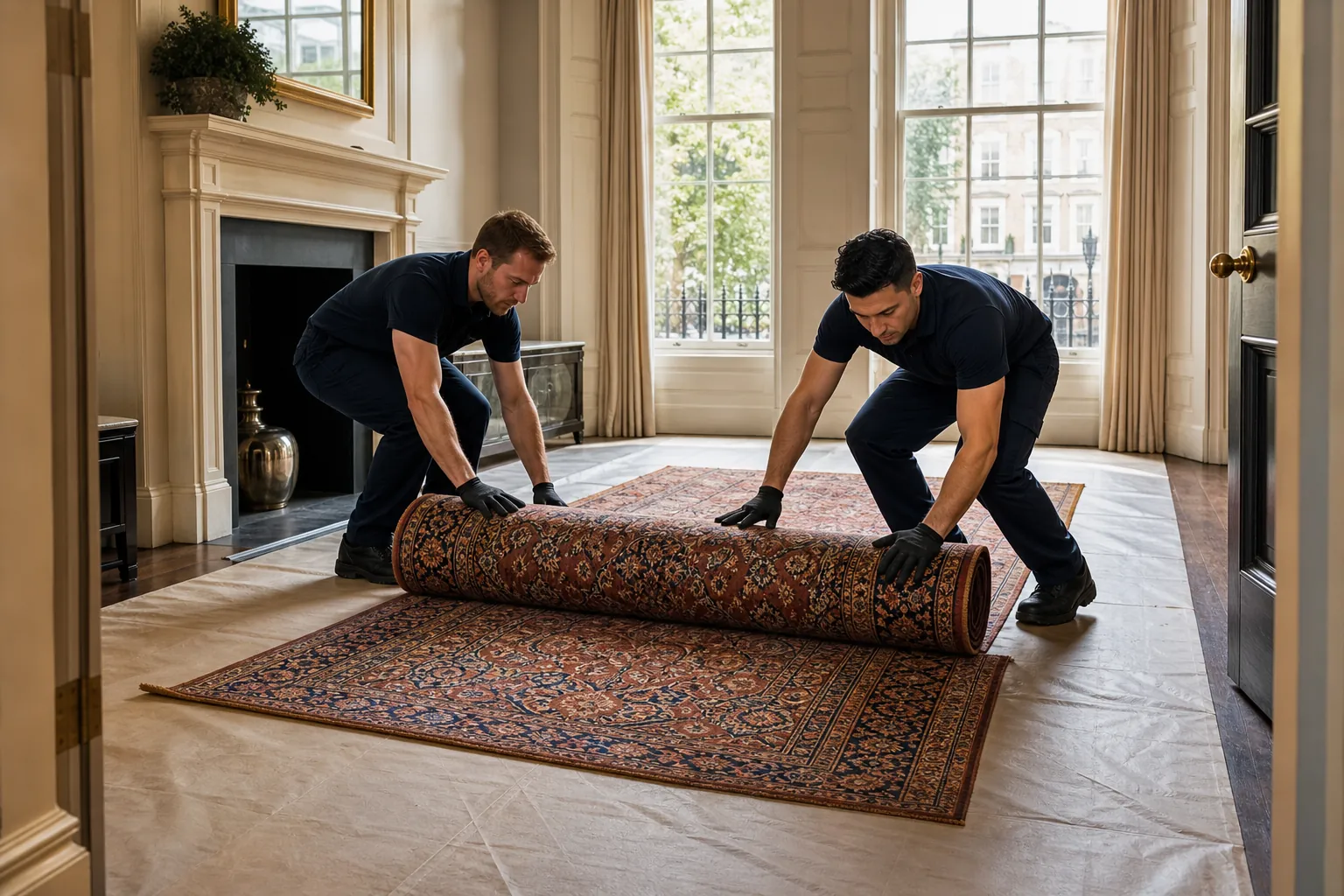
Size opens the Leatherhead quote; condition shapes it
The guide band comes from measured area. The confirmed brief then considers a loose fringe, density, moisture history, access over steps or gravel and any specialist discussion that the evidence makes necessary.
READ FOUR DIFFERENT SIGNALS
Contrast meets construction
The protected patch, exposed field, underside and edge each contribute different evidence.
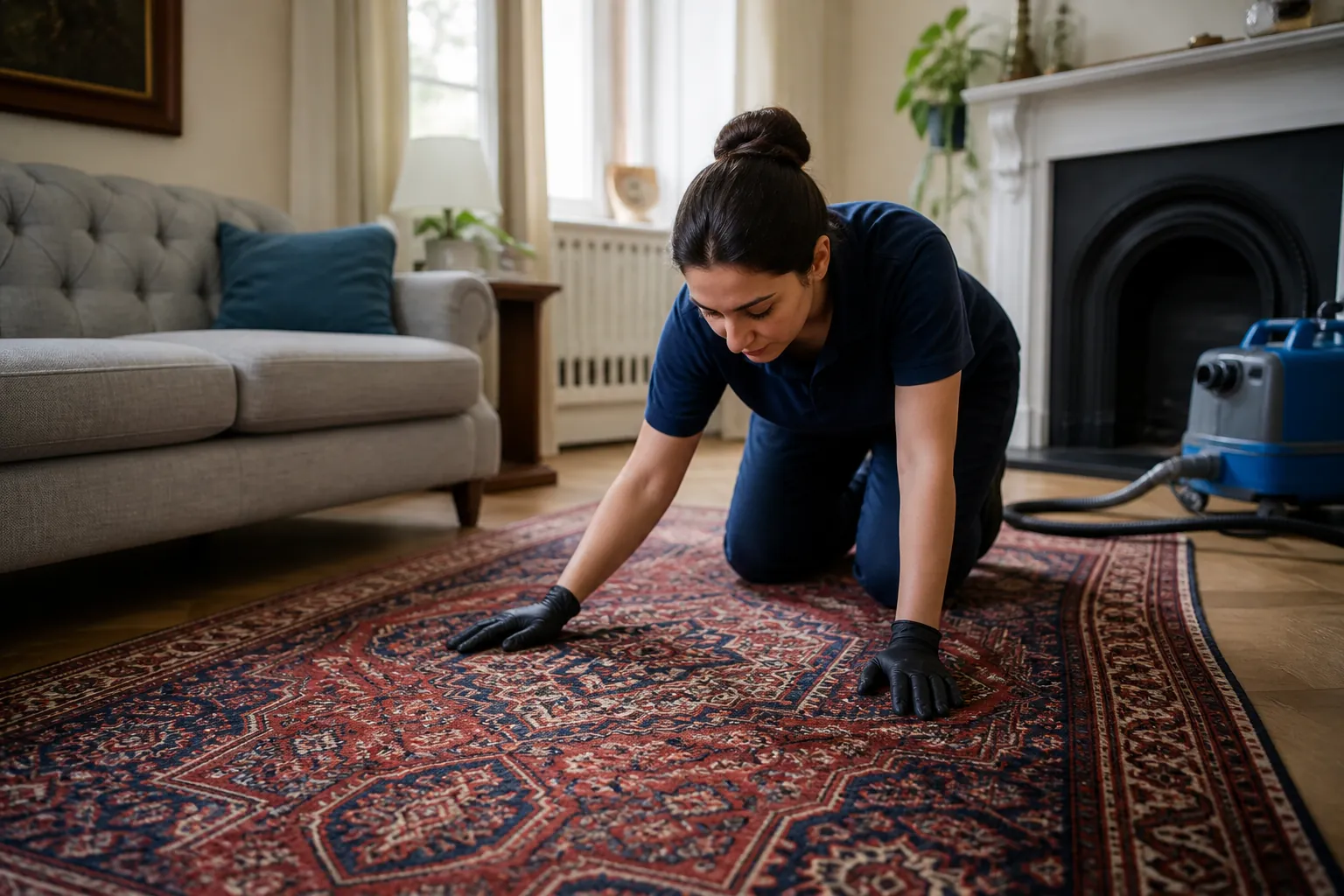
Covered versus exposed pile
A protected zone provides a useful colour and texture reference.
Seasonal or historic damp
Timing and underside evidence help define the investigation.
Foundation and fringe
Weak attachment may narrow handling before cleaning begins.
Roll, lift and approach
Irregular size and an outdoor route affect preparation.
ASSEMBLE THE REQUEST
Send matched comparison views
For Leatherhead, photograph the reference and changed zones at the same distance and in the same light.
- Place a neutral ruler beside a close-up for scale.
- Photograph an area normally covered by light furniture.
- Compare the doorway edge with the quietest corner.
- Note whether an odour appears only during humid weather.
- Show the underside without pulling on a weakened fringe.
- List flood, leak or damp-storage history even when it is old.
- Separate tide marks from changes in pile lay.
- Measure projections, tassels and irregular outlines independently.
- State whether the rug can be rolled without resistance.
Before the booking is fixed
Why photograph beneath furniture?
That quieter area can act as an internal reference for colour, pile and accumulated change elsewhere on the rug.
Does a damp-earth smell prove mould?
No. Odour alone is not a diagnosis. Its timing, depth, room conditions and any moisture history need separate consideration.
Can a loose fringe be included?
It must be shown first. Weak attachment may change handling and cleaning limits, and repair is not implied by cleaning.
What if the rug has an irregular outline?
Measure the longest and widest points, then photograph the complete shape so area and handling are not based on a rectangle alone.
A SEQUENCE WITH A REASON
Seven stages from comparison to handover
Reference zones and weak details stay visible throughout the Leatherhead plan.
- 01
Compare
Set protected and exposed zones side by side
- 02
Document
Map edge, reverse and repair evidence
- 03
Screen
Consider moisture history and colour response
- 04
Prepare
Protect loose details for handling
- 05
Proceed
Apply only the assessed cleaning scope
- 06
Observe
Review drying across field and border
- 07
Handover
Explain return position and continuing care
A PROTECTED PATCH IS NOT A PROMISE
Use contrast to ask better questions
An area beneath furniture may reveal earlier colour and texture, but it does not prove the exposed field can return to that state. Sunlight, abrasion, oxidation and soil can overlap. The comparison sets context without becoming a guarantee.
MOISTURE HISTORY NEEDS A TIMELINE
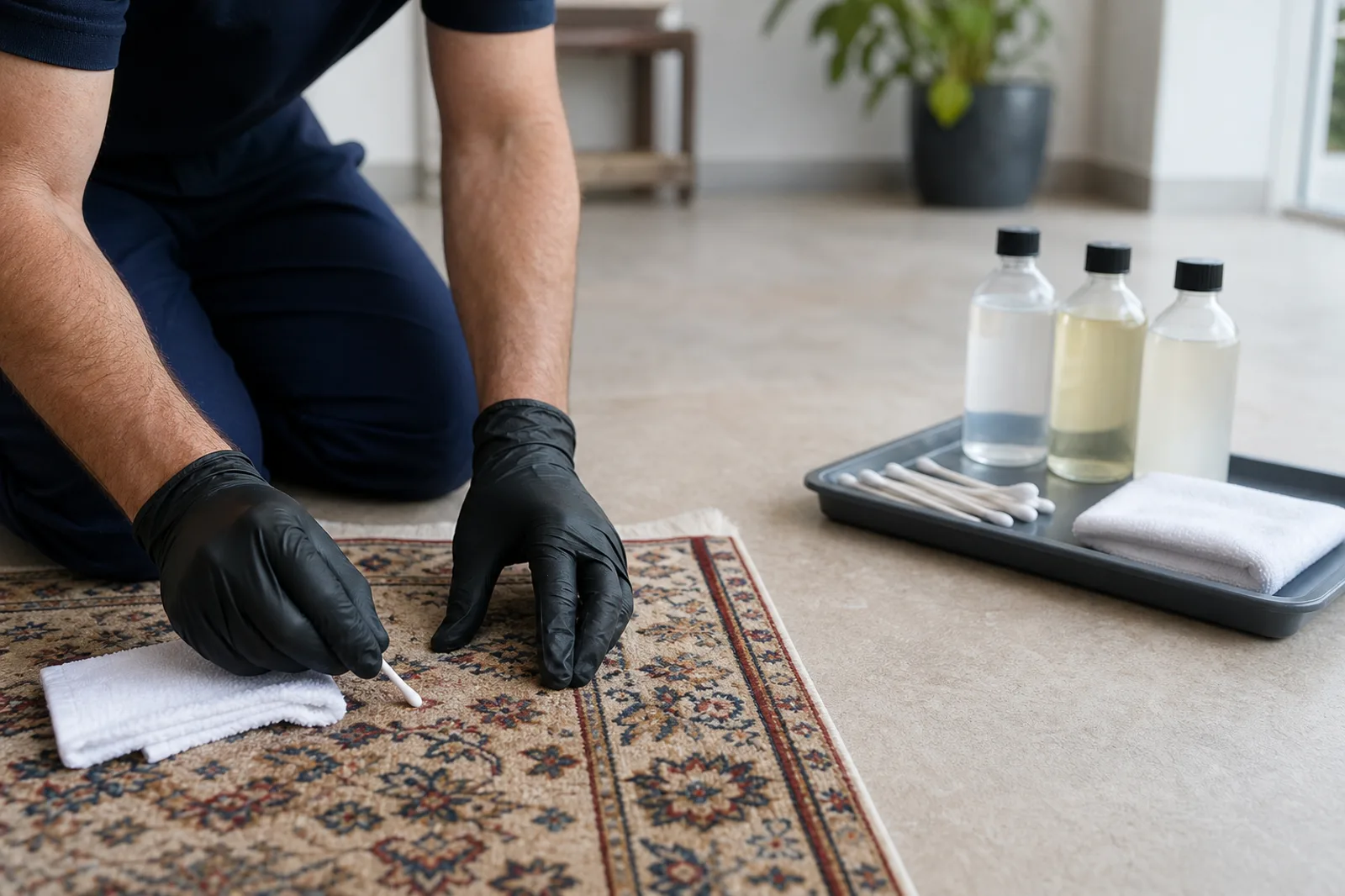
Record when the change appears
A seasonal odour, old leak and temporary damp storage are distinct facts. Record dates, weather patterns and the face and reverse locations. The account supports assessment; it does not diagnose mould or guarantee odour removal.
- Show the underside without pulling on a weakened fringe.
- List flood, leak or damp-storage history even when it is old.
- Separate tide marks from changes in pile lay.
- Measure projections, tassels and irregular outlines independently.
BEGIN WITH EVIDENCE
Build a contrast-led Leatherhead rug brief
Show the quiet reference area, the exposed change and every handling weakness before asking for a quotation.
