
Repeatable maintenance
- The confirmed kitchen surface list
- Bathroom areas included this time
- Dusting accessible household furniture
- Room-by-room agreed vacuuming
- Floor methods matched to materials
Fulham / Make the family table available for everyday care
A useful routine starts after the homework is put away.
Meals, schoolwork and planning can share the same kitchen table. Clear that working surface before the visit, retain the used bathrooms and floors in the brief, and give optional display areas a lower priority.
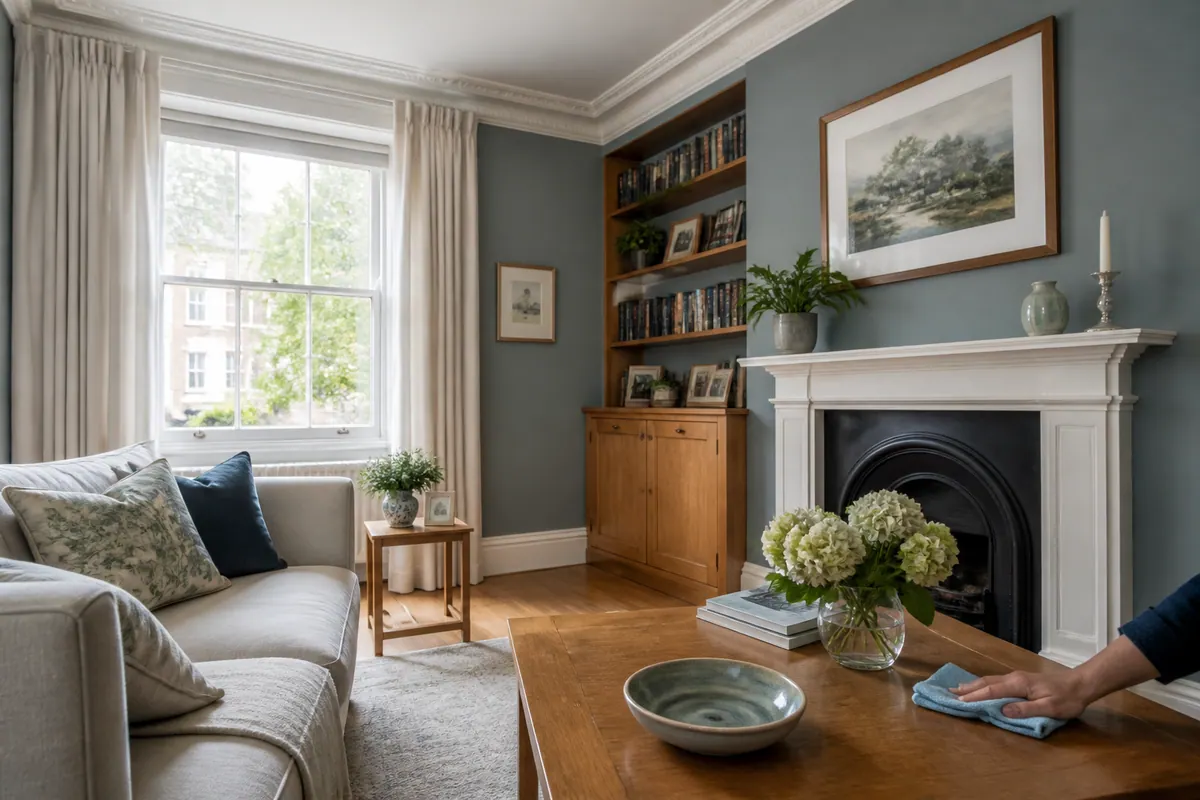
Kitchen · Bathroom
Living areas · Bedrooms
Turn preferences into a clear request
Use the options to explain the kind of domestic routine you want to discuss. They do not establish a price, reserve time or replace confirmation with the team.
Fulham / a household scenario
A useful routine starts after the homework is put away.
The table may be central to household life, but cleaning it does not include sorting schoolwork. A clear handover protects personal items and makes the intended surface accessible.
For a Fulham enquiry, explain how the kitchen is used and when it can be released. The cleaner can discuss the room order without requiring the whole family to stop using the home.
Bathrooms and used floors still need a place in the recurring plan. A busy table should not turn into an unlimited kitchen task that consumes the rest of the visit.
Choose a selected detail only after agreeing the core. A shelf or internal glass panel can be discussed for available time, rather than quietly replacing everyday maintenance.
The basis of a repeatable clean
Kitchen and bathroom upkeep, reachable dusting and the agreed floors provide the foundation. Other work should be identified explicitly rather than inferred from a room being included.
Review the optional list as the home changes. If its demands increase, agree a revised scope instead of letting the basic routine become progressively harder to complete.
A realistic indoor brief
Room selection is only the beginning. Discuss what can be reached, what needs a specialist and what the visit is intended to maintain before the room list is finalised.
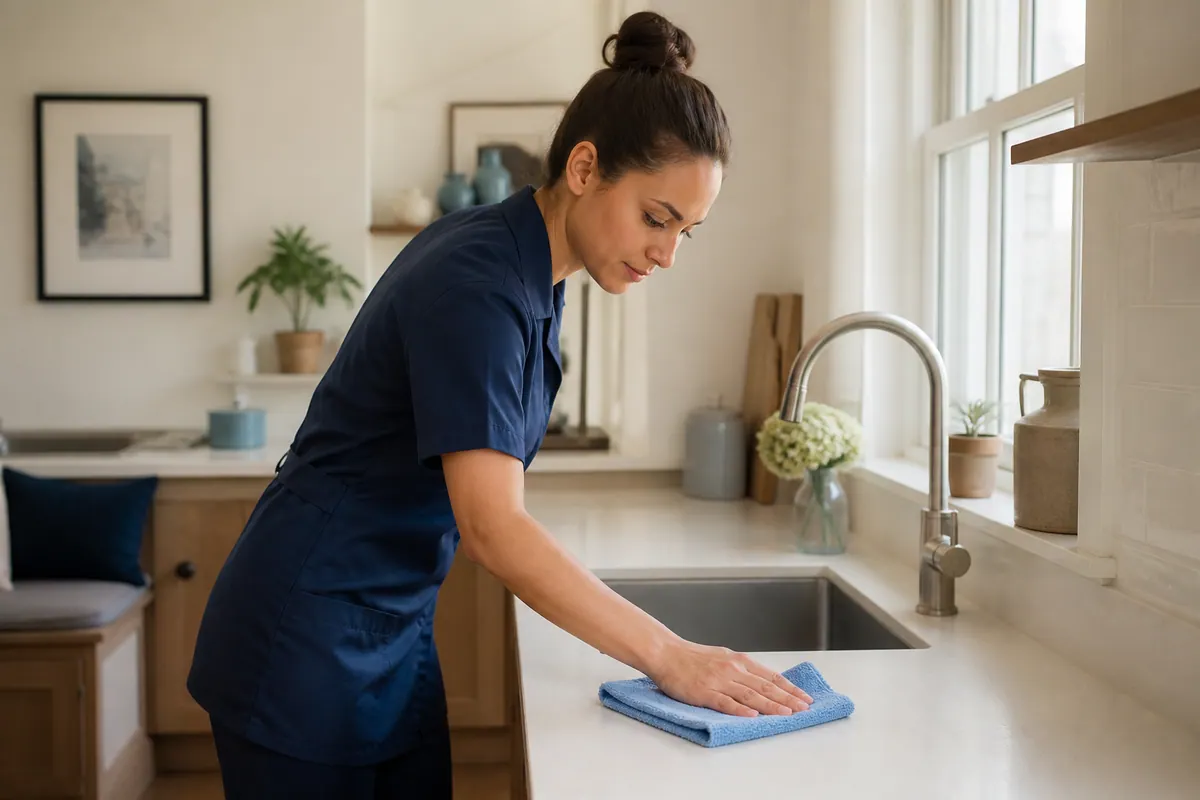
Kitchen
Kitchen upkeep may include the sink, available worktop, splashback and selected exterior fronts. Confirm the appliance surfaces you want wiped rather than treating the appliance as an all-in task.
Remove items covering the work area. Oven interiors do not follow automatically from kitchen inclusion.
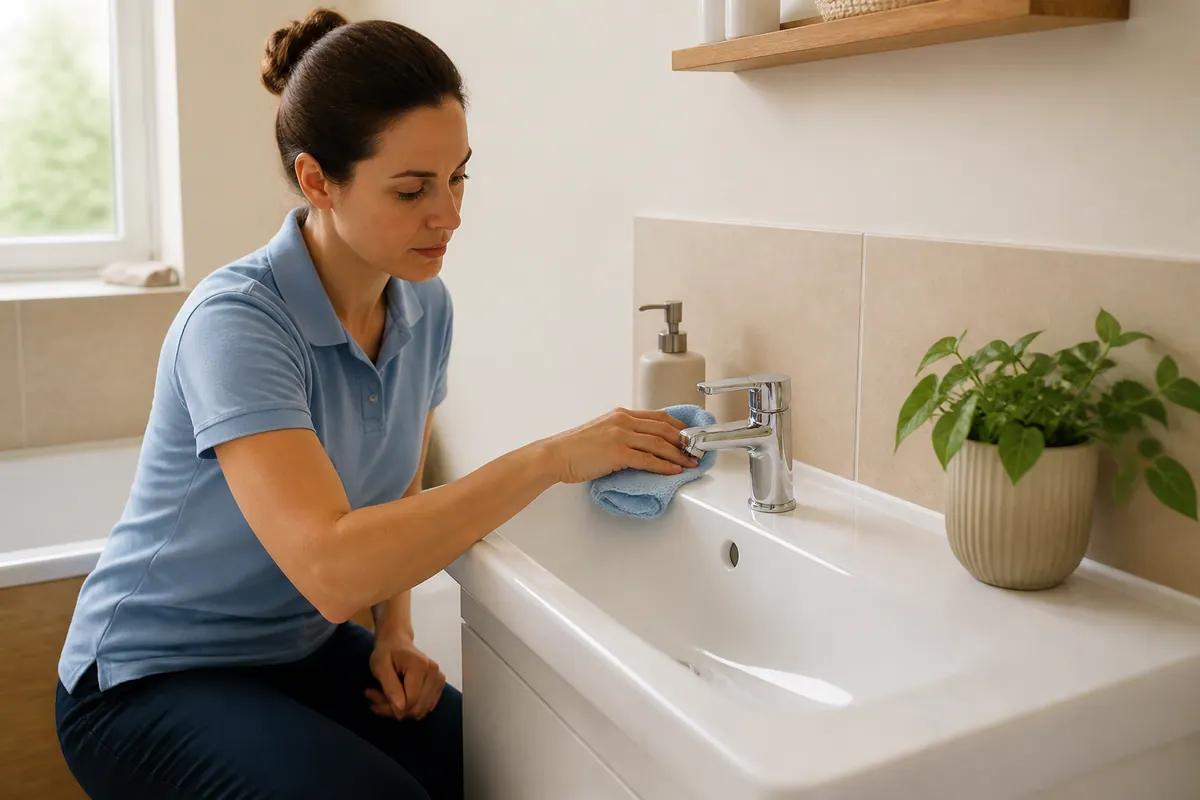
Bathroom
The bathroom brief can bring together mirrors, taps, showers, sanitaryware and reachable tiles. Share material instructions where ordinary assumptions would be unreliable.
Flag stone or damaged seals before the cleaner selects products for the area.
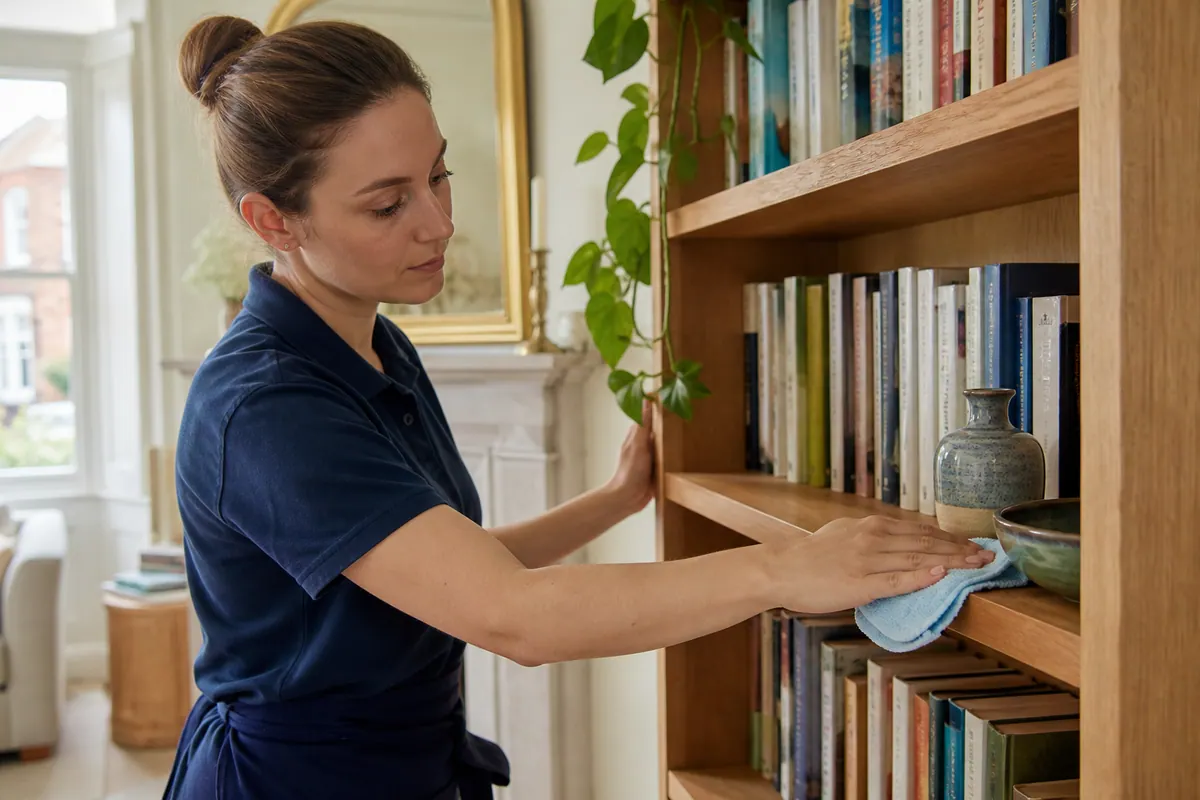
Living areas
Dust reachable furniture before attention moves to the agreed living-room floors. Vacuuming and suitable floor cleaning belong within a prepared, accessible space.
Keep fragile objects and papers safely elsewhere; identify any furniture or belongings that should not be moved.
Bedrooms
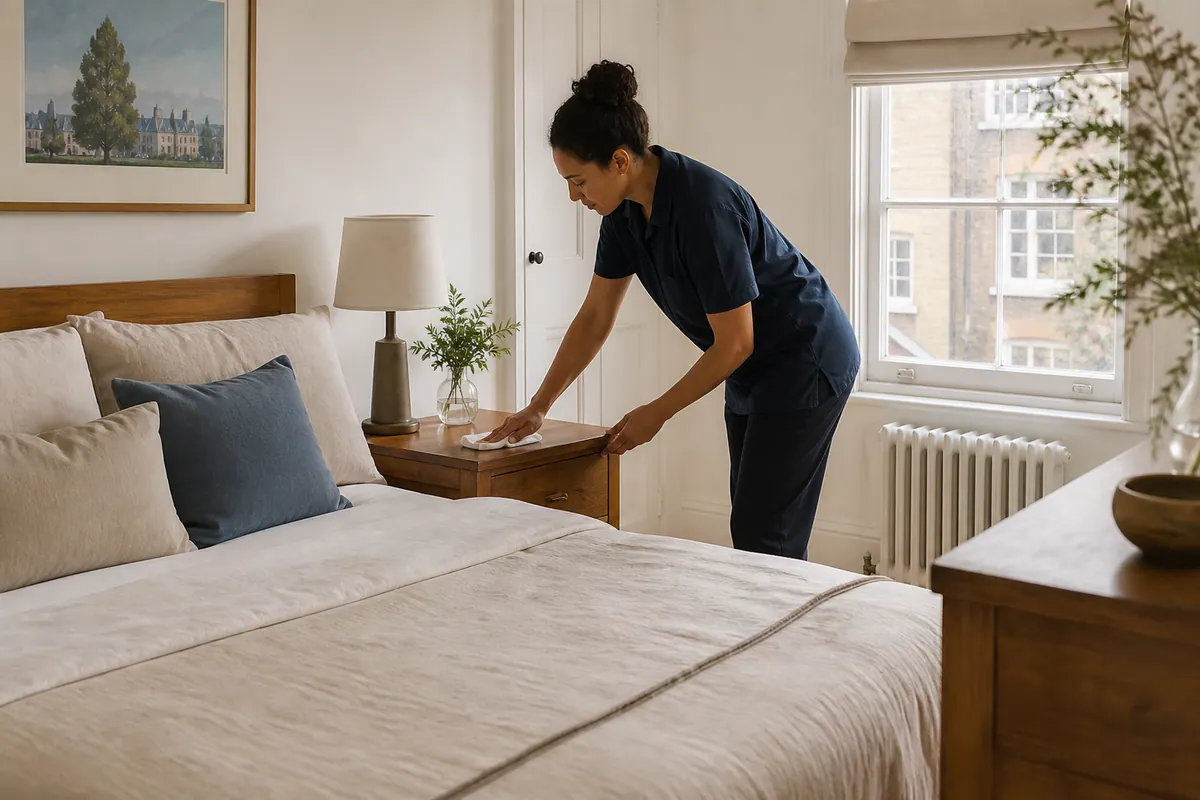
Bedroom care can cover accessible furniture surfaces and the floors in named rooms. The scope is household maintenance rather than a reorganisation of sleeping spaces.
Put medication out of the work area and make excluded bedrooms clear before arrival.
Frequency follows use
A calendar interval only helps when it matches the household. Consider how quickly the used rooms need attention and how much practical preparation is possible before each booking.
| Planning point | Weekly | Fortnightly |
|---|---|---|
| Best suited for | Households wanting a shorter gap between maintenance visits | Households discussing care every other week |
| Core focus | Regular attention through the included daily-use rooms | Prioritise the work waiting after two weeks |
| Priority planning | Keep the repeat list focused and achievable | Allow for a different level of accumulation |
| Visit scope | Scope agreed for the actual home | Scope agreed for the actual home |
Treat the first visit as a starting-condition conversation. A home returning to regular care may need additional time, with priorities chosen before assuming a settled recurring pattern.
Later maintenance can be more consistent because the essentials are known. Review them whenever the household or room list changes; a recurring booking is not an unlimited scope.
People, pets and room use
Describe the actual arrangements rather than selecting a label and assuming the rest. The team still confirms scope, time and availability for your home.
A working household can identify the rooms needing care and arrange an unattended handover if suitable. Availability must be checked rather than inferred from a preferred day.
Family routines often change during the week. Explain what will be cleared and which essential rooms should retain priority when extra requests arise.
Pets need an agreed place during the work. Share door instructions and excluded areas so access is not left uncertain.
A workstation may occupy part of another room. Identify its boundary, prepare the equipment and discuss when the area can be released.
Rental upkeep is about the household living there now. Keep any later tenancy handback task separate and confirm the contact authorised to change the list.
If a manager coordinates the booking, establish how current instructions are passed on. The room list and keys should not depend on conflicting messages.
Material information matters
Share existing care guidance and identify known damage. Stone, wood and coated surfaces can respond differently to moisture or products, even when they are in the same room.
Name the stone if known and provide any manufacturer’s care guidance.
Timber needs its finish identified before a method or moisture level is assumed.
Point out lacquered furniture so its coating is considered during dusting and cleaning.
Agree the stainless-steel exterior area; internal appliance work is a different scope.
Show flaking paint or damaged fittings before work, not as a cleaning expectation afterwards.
Separate work, separate planning
Keep high access, heavy movement and restoration outside the assumed domestic scope. These service links help distinguish additional requirements from ordinary room maintenance.
Routine vacuuming does not provide the extraction process a carpet may separately need.
Oven interior work has its own scope even when exterior appliance surfaces are on the list.
Mould concerns require assessment rather than being treated as ordinary household dirt.
Glazing outside the property needs a separate service and suitable access discussion.
After-building residue should be described for a specific clean, not hidden in a maintenance request.
For an intensive starting task, discuss a one-off scope independently from the recurring room list.
The main questions, briefly
Set the scope before the total
The regular and initial prices are starting points rather than a guarantee for every home. The booking conversation confirms included supplies, minimum visit and the room priorities.
| Service | Price | Main factors |
|---|---|---|
| Regular domestic cleaning | From £20/hour | Minimum time, home size, frequency and supplies plus postcode/access |
| First / one-off domestic visit | From £90 | Current state and included rooms, with initial task priority and time |
| Specialist / intensive scope | Quoted separately | Specialist surfaces or heavy soil, equipment and separate access planning |
Explain the present condition and size of the property, preferred frequency and access arrangements. Products, parking and added services may affect the final figure; ask about time rather than assuming it from the guide.
First things first
The arrows change only this illustration. Use the result to explain a preference, not as proof that an existing booking or its available time has been altered.
The visit in context
Explain the areas needing care and the circumstances affecting their availability during the visit.
Set a realistic core list while discussing weekly, fortnightly or first-visit arrangements.
Check who supplies products and equipment, and confirm private entry instructions directly.
The cleaning route works through the agreed tasks with material-compatible methods.
Use the handover to flag limitations and decide what requires a separate conversation next time.
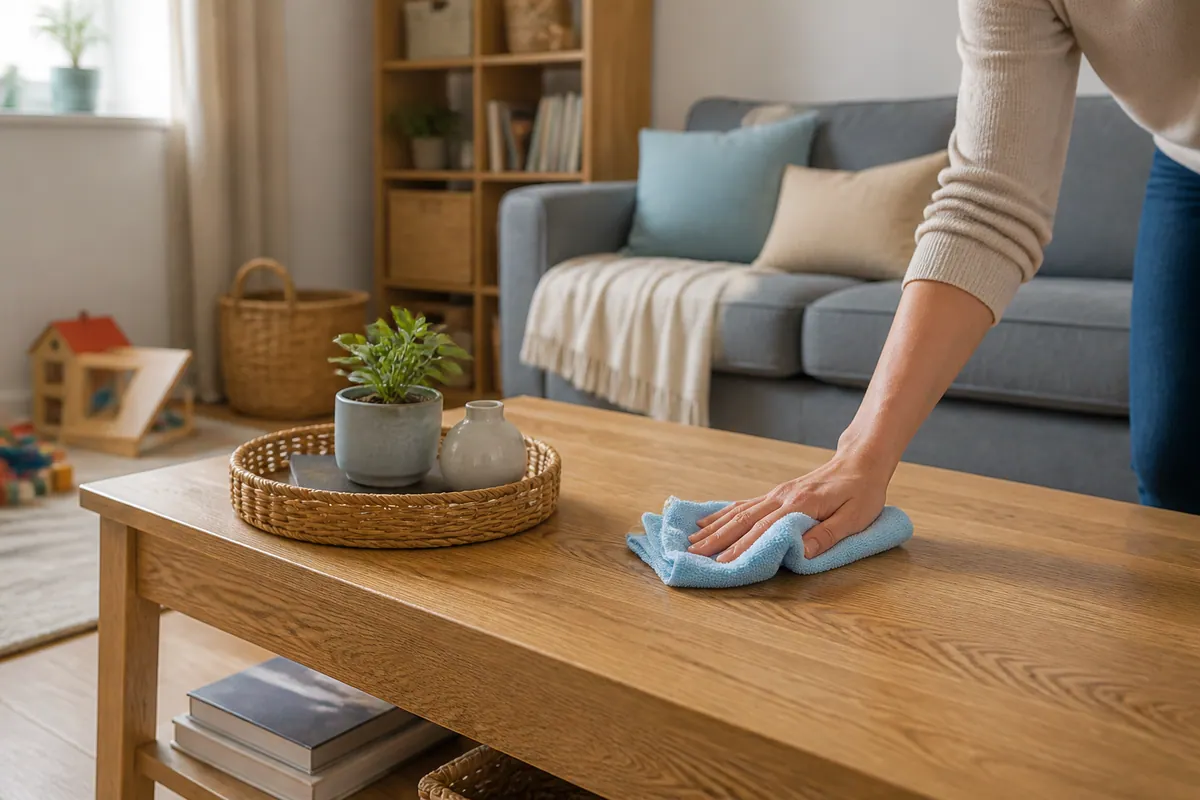
The household brief established.
The confirmed room work carried out methodically.
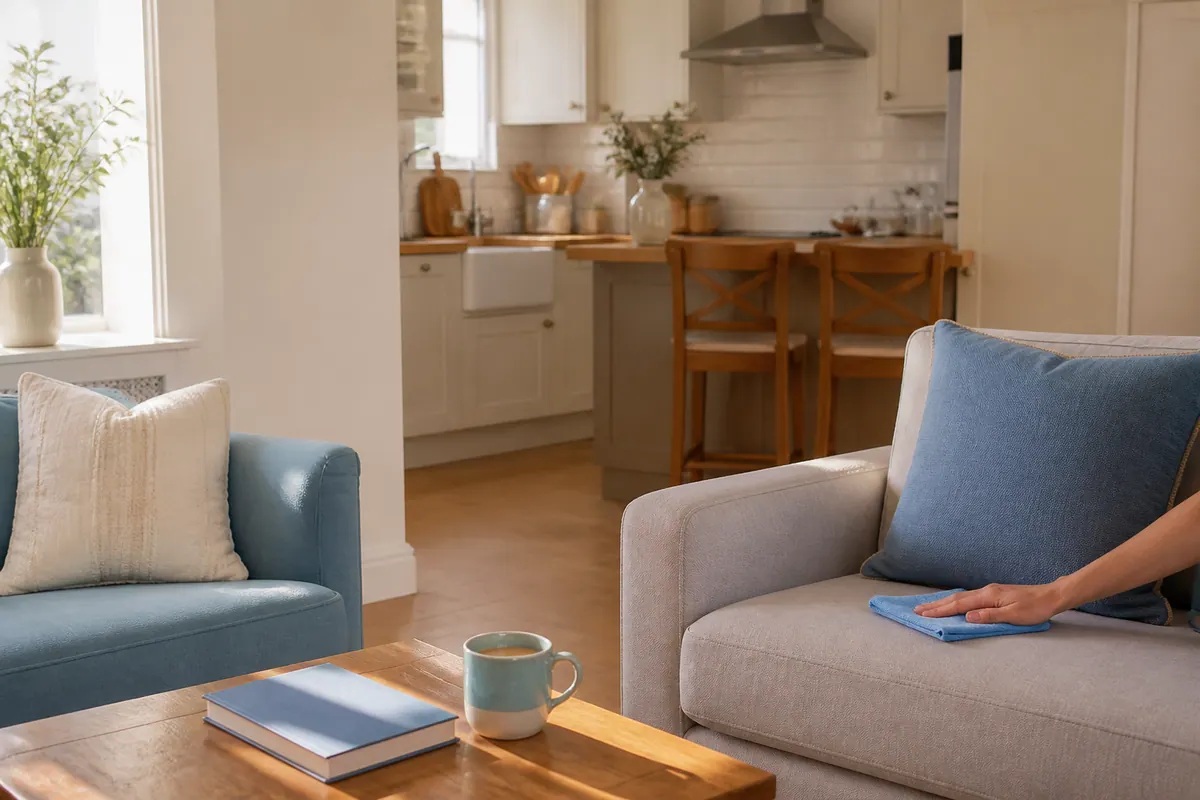
An informed plan for continued upkeep.
The scenes are illustrative, with no claim that they record an actual customer outcome.
Before arrival
Agree who hands over the key and how it comes back; share the details only with the appropriate contact.
A building reception is not an automatic entry solution. Confirm the process and permissions involved.
Provide necessary alarm instructions privately for the whole visit, including departure.
Explain pet boundaries and where the animal will remain while rooms are cleaned.
Identify quiet working periods and the room that can be considered first.
Pass on any parking or loading restriction that could affect the proposed arrangement.
State which rooms and belongings are not included so the boundary is unambiguous.
Good preparation makes the agreed cleaning accessible. Products, room priorities and entry should be settled together, with separate work identified rather than added by assumption.
Clarify the details
Put schoolwork, stationery and personal papers in their intended place before the surface is cleaned. The visit is not a sorting service, and a table still covered with work should not be treated as fully accessible.
Explain your preference, but review how it affects the agreed core tasks. An occasional shelf detail should have a named place and suitable time rather than quietly replacing maintenance the household needs every visit.
Regular work starts from £20/hour. The final price requires a defined minimum visit, property details, supply arrangement and access information; the hourly guide is not a fixed whole-home total.
Household use can change, so the frequency can be reviewed. Describe what is happening between visits and discuss a suitable weekly or fortnightly arrangement, with timing subject to availability.
Mention the request before arrival wherever possible. A new detail or room may change the workload, so its effect on the core list and time should be agreed rather than assumed.
The figure is a starting point for first or one-off domestic visits. It does not define a fixed duration or promise that all accumulated work fits; the initial condition and agreed priorities are considered.
Share known finishes, existing damage and any care instructions you already hold. Product and equipment arrangements should be confirmed so compatible care is planned rather than assumed.
Explain the affected room and timing beforehand. An alternative ready area or clear handover can be discussed, but do not assume the cleaner will interrupt work or add waiting time.
No. Carpet extraction and detailed oven internals have separate processes and scope. The domestic room list may instead include vacuuming and the exterior appliance surfaces expressly agreed.
Only once availability has been confirmed directly. Give Alesta the postcode, preferred rhythm and household arrangements; selecting an option here is not a commitment from the scheduling team.
Fulham / enquiry area
For Fulham, send the postcode and describe the included rooms, condition and entry plan. The team confirms the available arrangement for that address; the map is an area reference, not a booking guarantee.
For the wider service scope, see Domestic Cleaning, or ask the team about your address.
Location reference
Use the map as a reference when explaining the approach to your home.
Open map in a new tabFulham / the next conversation
Tell us about the rooms in your Fulham home, their condition and the routine you want to arrange. Plan our family-home clean: share your preferred frequency and access details directly with the team.
