
Black Mould on a Bathroom Ceiling: Causes, Safe First Steps and Prevention
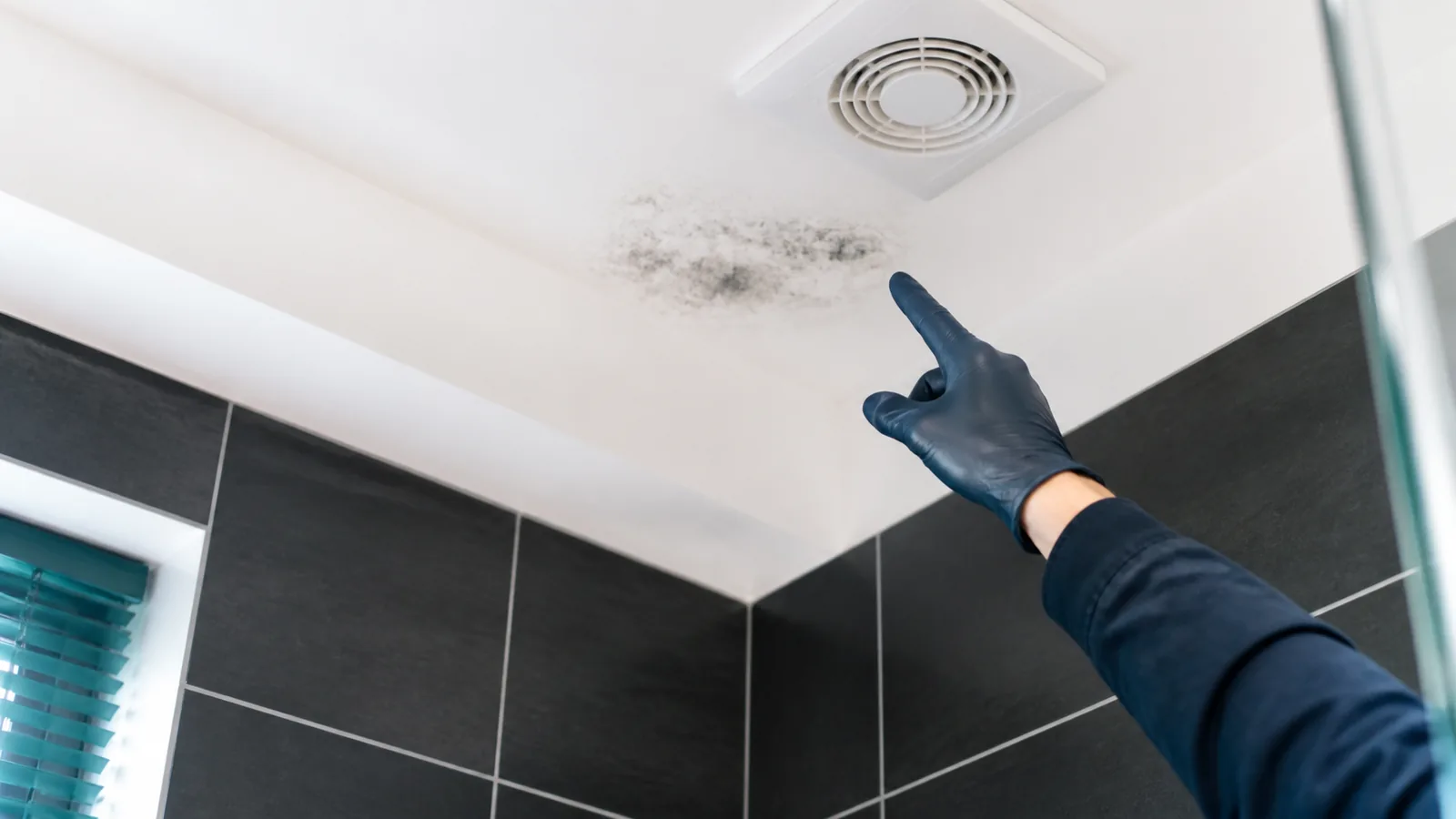
Bathroom ceiling mould usually develops where repeated steam, slow extraction and a cold surface keep paint damp. Small surface patches can be cleaned cautiously, but recurring or extensive growth needs the moisture pattern and the ceiling material assessed. This guide explains the safest useful checks, the mistakes that can make the situation worse and the point at which a trained specialist should take over.
Why this problem happens
- an extractor fan that is undersized, dirty or switched off too soon
- a cold ceiling below an unheated loft or roof space
- steam escaping from the shower area
- paint that is not suitable for repeated condensation
- a leak above the room or around a roof junction
Safe checks you can make now
- check whether the marks follow the coldest corner or a water route
- run extraction from the start of a shower and after the room is used
- dry visible condensation rather than allowing it to sit
- keep the bathroom door closed while steam is produced
- inspect loft insulation, seals and pipework when the pattern is localised
- allow treated surfaces to dry fully before any redecoration
Mistakes to avoid
- dry brushing mould and spreading particles
- mixing bleach with any other cleaning product
- covering active growth with fresh paint
- assuming every dark mark is only surface condensation
How to document the problem clearly
Take a wide photograph showing the room or appliance position and a closer image showing the affected detail. Record the date, recent weather or appliance use, any smell or sound, and whether the symptom changes after check whether the marks follow the coldest corner or a water route. If it is safe, repeat the observation at the same time on the following day. A short, accurate timeline is more useful than guessing at a diagnosis.
Preparing for a professional visit
When professional help is the better choice
Arrange an assessment when the source is uncertain, the issue returns, access requires dismantling or there is a safety concern. In particular, seek help when the ceiling is soft, flaking or persistently wet; growth covers a large area or returns quickly; anyone in the home is vulnerable or has respiratory concerns.
For related help, view Alesta’s professional mould removal service, or call 020 3608 3976 to discuss access and availability.
Frequently asked questions
When should I stop and call a professional?
Professional help is sensible when the ceiling is soft, flaking or persistently wet.
What is the most common cause?
The common causes include an extractor fan that is undersized, dirty or switched off too soon, a cold ceiling below an unheated loft or roof space, steam escaping from the shower area. The pattern and timing usually provide the best clues.
Can I deal with a small problem myself?
How can I prevent it returning?
Prevention starts with keep the bathroom door closed while steam is produced, inspect loft insulation, seals and pipework when the pattern is localised, allow treated surfaces to dry fully before any redecoration. Address the source rather than repeatedly hiding the symptom.
