
Mould Behind a Wardrobe: Why It Happens and How to Prevent It Returning
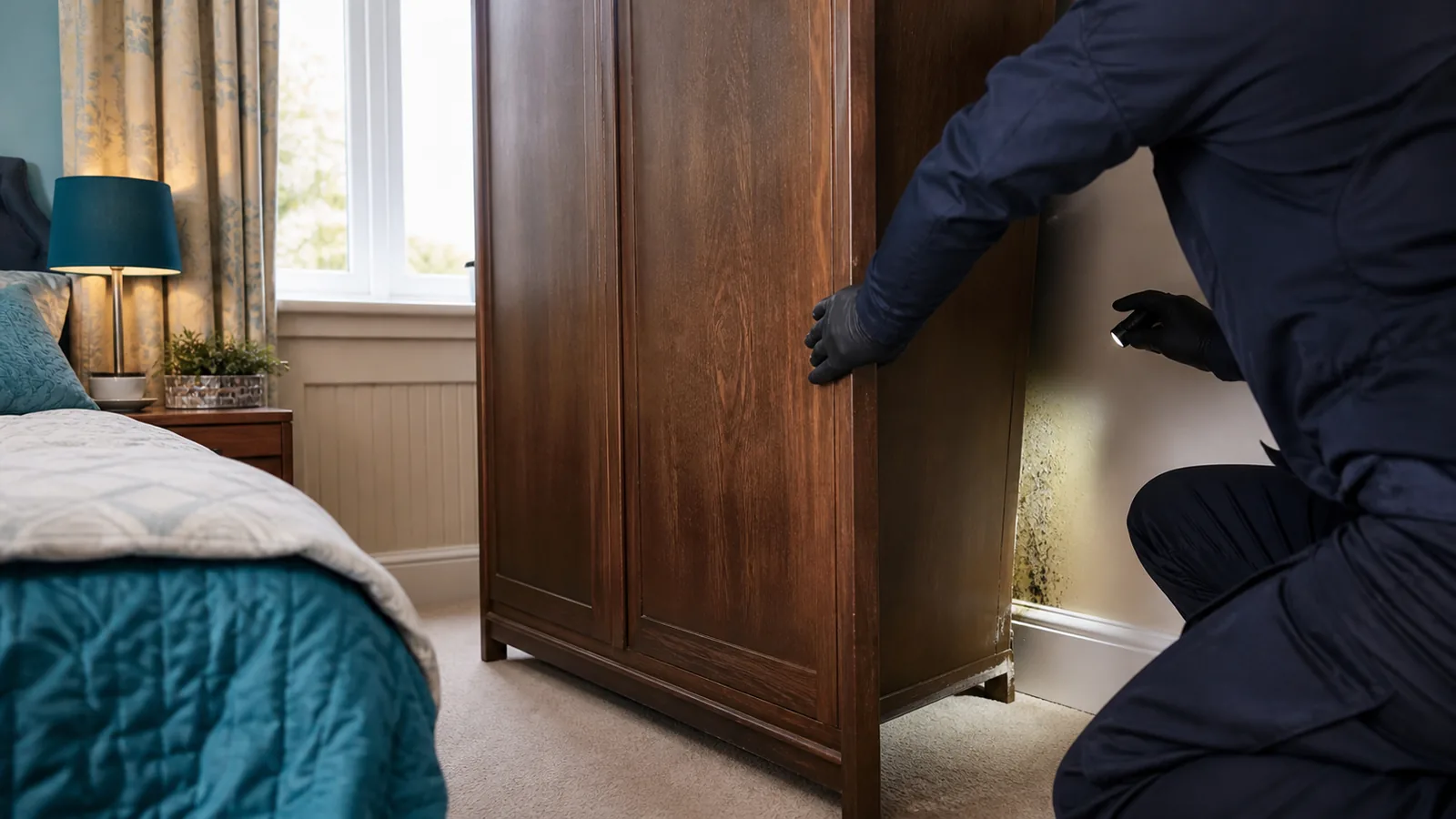
Mould behind a wardrobe is commonly linked to restricted airflow against a cold external wall. Move the furniture carefully, check whether the wall is damp or merely cold, dry the area and address ventilation or defects before replacing belongings. This guide explains the safest useful checks, the mistakes that can make the situation worse and the point at which a trained specialist should take over.
Why this problem happens
- a large wardrobe pressed tightly against an external wall
- cool air trapped behind furniture
- humid bedroom air and overnight breathing
- wet clothing stored before it is fully dry
- penetrating damp or a leak concealed by the furniture
Safe checks you can make now
- photograph the pattern before cleaning or moving items
- empty and inspect the wardrobe contents for odour or marks
- create a safe air gap between furniture and wall
- ventilate the room in short effective bursts
- check the outside wall, guttering and nearby pipe routes
- avoid returning furniture until the wall and flooring are dry
Mistakes to avoid
- dragging heavy furniture without checking stability
- putting affected textiles straight into another cupboard
- using fragrance to hide a musty smell
- repainting before confirming why the area stayed damp
How to document the problem clearly
Take a wide photograph showing the room or appliance position and a closer image showing the affected detail. Record the date, recent weather or appliance use, any smell or sound, and whether the symptom changes after photograph the pattern before cleaning or moving items. If it is safe, repeat the observation at the same time on the following day. A short, accurate timeline is more useful than guessing at a diagnosis.
Preparing for a professional visit
When professional help is the better choice
Arrange an assessment when the source is uncertain, the issue returns, access requires dismantling or there is a safety concern. In particular, seek help when plaster is damaged or moisture readings remain high; the pattern follows rainfall or a plumbing route; growth affects a large area or valuable contents.
For related help, view Alesta’s mould treatment service, or call 020 3608 3976 to discuss access and availability.
Frequently asked questions
When should I stop and call a professional?
Professional help is sensible when plaster is damaged or moisture readings remain high.
What is the most common cause?
The common causes include a large wardrobe pressed tightly against an external wall, cool air trapped behind furniture, humid bedroom air and overnight breathing. The pattern and timing usually provide the best clues.
Can I deal with a small problem myself?
How can I prevent it returning?
Prevention starts with ventilate the room in short effective bursts, check the outside wall, guttering and nearby pipe routes, avoid returning furniture until the wall and flooring are dry. Address the source rather than repeatedly hiding the symptom.
