
Integrated kitchen
List fixed appliances and panels that cannot simply be moved for inspection.
PEST CONTROL / CHELSEA
Evidence behind fitted kitchens.
Describe the fittings before moving them.
Pest evidence beside a fitted oven can raise questions that a photograph of the room cannot answer. Tell us where the signs sit, what is fixed in place and whether any recess is safely accessible. A Chelsea booking should distinguish inspection from dismantling or kitchen repairs.
04 / AT A GLANCE
05 / PROPERTY BRIEF
List fixed appliances and panels that cannot simply be moved for inspection.
Explain what is accessible without disconnecting supplies; do not assume heavy items are safe to shift.
Obtain the relevant contact before authorising changes to cabinetry or appliances.
Mention recent installation or repair work as chronology, not proof that it caused the pest concern.
Discuss the household’s use of the room and any restrictions the proposed method may require.
Discuss your homeConfirm service suitability directly. This residential guide does not establish commercial kitchen treatment or food-safety documentation.
Check the premises requirements01 / START WITH THE EVIDENCE
The type of evidence matters more than the appliance beside it.
Food packets damaged inside base cabinetry.
Mice controlA substantial rodent or unexplained activity near an outside connection.
Rats controlAn insect or spotting at bedroom furniture joints.
Bed bug treatmentInsects repeatedly seen near kitchen equipment.
Cockroaches controlName the storage bay and whether the marks are inside it or beneath its edge. Avoid pulling out an integrated appliance to search behind it.
Report both the indoor observation and any visible outside opening. Do not assume that kitchen pipework proves a drainage defect.
If the concern is beside a bed rather than kitchen units, describe that setting directly. A biting complaint is not enough to identify bed bugs.
Give the appliance name, sighting times and any nearby dampness. Share details of products already used before another treatment is considered.
CHELSEA / PROPERTY CONTEXT
A removable item on a shelf and a plumbed-in appliance create different access questions. Explain the difference when you describe the room.
If the affected corner is concealed by a plinth, photograph only what is visible from a safe position. Ask whether the proposed assessment can examine the relevant area without altering the installation.
Tell the assessor about hot surfaces, electrical connections, water supplies and heavy equipment that restrict movement. A pest booking should not be read as an appliance-disconnection service.
Where a repair or opening-up is recommended, establish who will perform it and when. The sequence should support assessment rather than erase useful evidence beforehand.
07 / SCOPE BEFORE A QUOTE
A starting treatment price does not include unlimited opening-up of kitchen furniture. Ask which reachable areas and preparatory tasks the proposal assumes.
from £120
See published service pricingfrom £150
See published service pricing| Service | Pricing basis | Price |
|---|---|---|
| Mice control | Mouse findings and reachable zones | Quoted following assessment |
| Rat control | Rat concern and route investigation | Scope-specific quotation |
| Proofing / repairs | Cabinet alteration or plumbing work | Separate agreement required |
The 27 August 2026 service guides list targeted cockroach treatment from £120 and targeted bed bug treatment from £150. Confirm Chelsea availability and all exclusions before booking.
03 / OBSERVATION CHECKLIST
Position the observation against a named fitting.
Never reach behind connected equipment or disturb suspect contamination for a better picture.
Record its cabinet and when the damage was found. That is more useful than labelling the entire kitchen affected.
Say whether they are visible at the front edge or within an accessible gap.
Give the timing and location. The cabinet can transmit sound, so the apparent source may be misleading.
Keep a separate account if the observation concerns sleeping furniture; do not fold it into the kitchen report.
State whether insects reappear at the same edge and whether prior sprays were applied there.
Describe it from a safe position, without removing grilles or making the opening larger.
06 / SIGNS → LOCATION → NEXT STEP
| Pest problem | Signs to describe | Areas to mention | Next step |
|---|---|---|---|
| Mice | Damaged stored food | An identified cabinet shelf | Describe accessible mouse evidence without dismantling units. |
| Rats | Possible rodent movement at a connection | Kitchen perimeter and visible exterior edge | Request assessment of the report, not an assumed drain repair. |
| Bed bugs | Spotting at a furniture joint | Bedroom frame or headboard | Keep the sleeping-area concern distinct from kitchen activity. |
| Cockroaches | An insect near equipment | Named appliance and nearby moisture | Supply sighting history and earlier product use. |
MAKE THE ENQUIRY SPECIFIC
Provide its position and explain that it is fixed. The assessor can discuss limitations without you attempting disconnection.
Give the known details and any scheduled repair date, keeping suspected cause separate from confirmed maintenance facts.
Mention the timing and what was observed before replacement; avoid reopening it merely to recreate the scene.
Disclose the product information and location where possible. Previous intervention can affect the next advice and should not be omitted.
08 / THE CONTROL PLAN
The installation sets practical boundaries, not the pest diagnosis.
A useful assessment distinguishes visible marks from concealed areas that remain unexamined behind fixed equipment.
The method follows the identified problem and the household’s circumstances. Clarify how cupboards and appliances should be used during the work.
If moisture or openings need attention, coordinate the relevant trade and the pest plan instead of assuming a surface clean resolves the concern.
09 / FROM FIRST CONTACT
Each stage should account for equipment that cannot safely be moved.

Use a simple description such as the sink base or oven-side cabinet, plus the evidence found there.
Tell the booking team about fixed fronts, connected appliances and gaps that cannot be viewed.
Ask what is included if the source remains inaccessible and which additional tasks need another agreement.
Do not disconnect services or remove panels unless an appropriate arrangement has been made.
A fresh observation at a different cabinet may change the assessment; identify it precisely.
If a leak or joinery defect is noted, clarify who deals with it and how it fits the review plan.
10 / PROBLEM → TREATMENT → CONTROL
Aftercare should track the relevant findings. A clean worktop or freshly painted plinth does not show whether concealed activity persists.
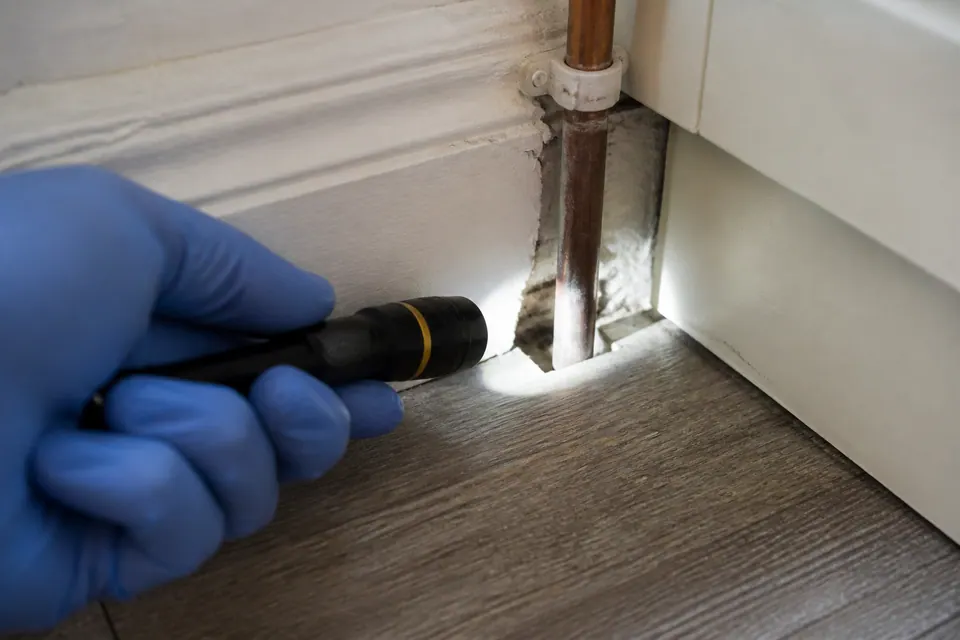
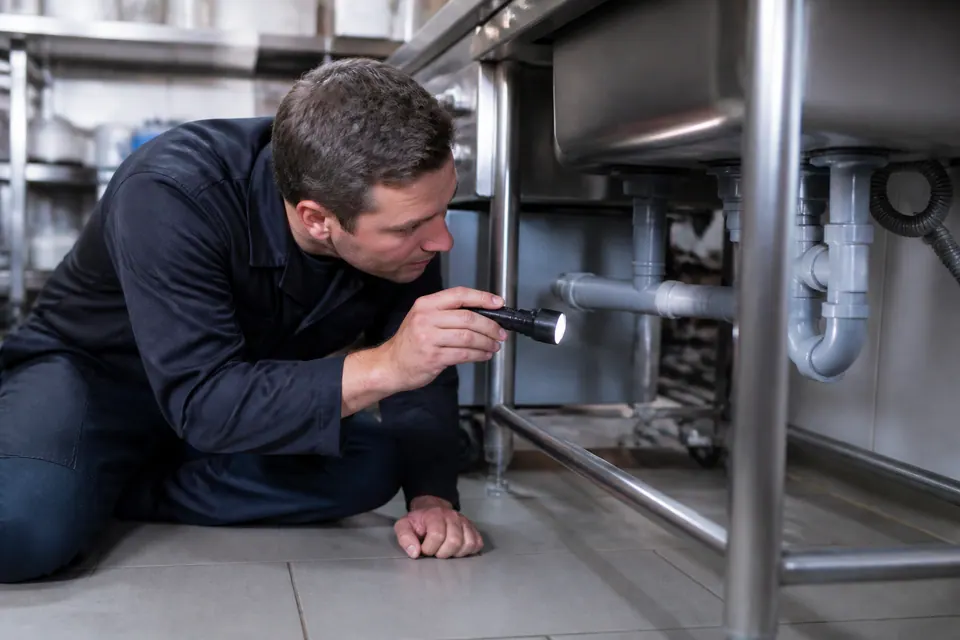
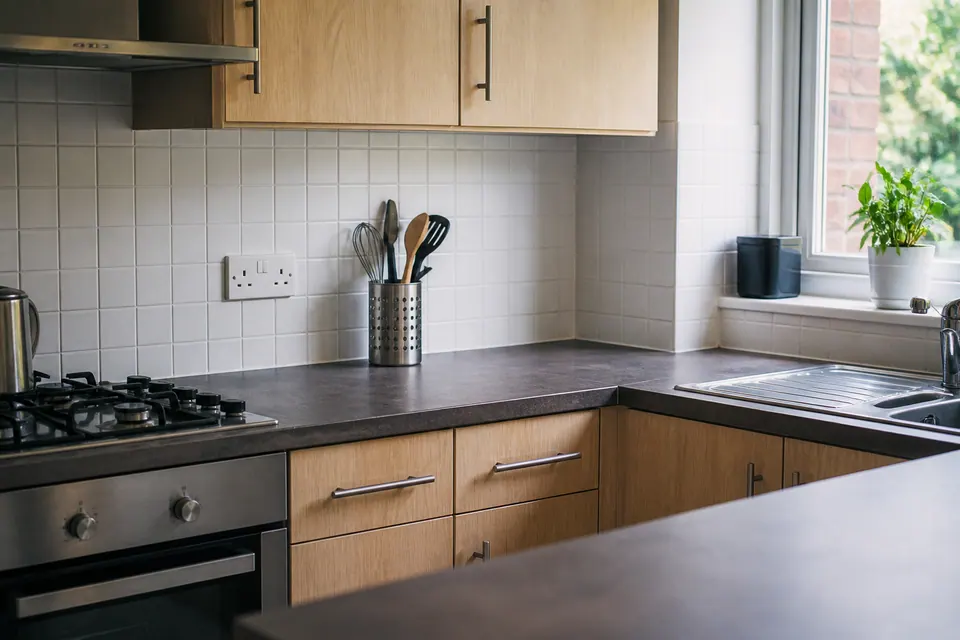
Generated kitchen scenes explain inspection stages and are not Chelsea before-and-after evidence.
13 / CLEAR EXPECTATIONS
Ask which inspection points can be reached without modifying fittings.
Separate any proposed disconnection, joinery or plumbing task from the pest quotation.
Get instructions for cupboard use, cleaning and any monitoring associated with the chosen method.
ADDRESS AND AVAILABILITY
Send the postcode, entrance and the kitchen concern when asking about attendance.
Mention if a tenant, owner or caretaker must be present for the appointment. The map provides location context only, not an on-site office.
Open Chelsea in Google Maps ↗CHELSEA / QUESTIONS
Explain that the plinth is fixed. A technician can discuss what can be assessed and any limitation without you removing it in advance.
Not by assumption. Identify the connected equipment and ask whether an appropriate separate arrangement is needed.
A photograph can show position but may not reveal the species or hidden conditions. Include when the mark appeared and what else was noticed.
Keep the repair date and the pest chronology available. An association in timing should not be presented as a proven cause.
Describe the suspected material and location, then request preparation advice. Do not clear contamination simply to make the room look ready.
Say which cupboards share the same appliance recess if you know. Avoid dismantling the installation to discover the answer.
Supply the name or packaging information if available and where it was applied. Tell the assessor if the product is unknown.
No. The published starting amount concerns a treatment scope, not replacement panels, plumbing or electrical work.
Ask for restrictions linked to the selected method. No smell or visible residue is not a reliable basis for deciding to resume normal use.
Identify the new cabinet separately and state whether the original location has also shown fresh signs. That distinction helps a review.
15 / TAKE THE NEXT STEP
Have the fitting names, access restrictions and observation history ready. Ask what can be assessed and confirm availability before rearranging the room.
