
Separate street doors
Identify the door serving your home so attendance is planned correctly.
PEST CONTROL / NOTTING HILL
Converted homes and separate entrances.
Start with the door that belongs to your home.
A converted building can contain more than one entrance and several separately occupied floors. For a Notting Hill pest enquiry, explain how to reach your accommodation and where the findings sit within it. That avoids an assessment being planned around the wrong part of the address.
04 / AT A GLANCE
05 / PROPERTY BRIEF
Identify the door serving your home so attendance is planned correctly.
Explain the route to your private accommodation and who controls shared access.
Describe which internal level contains each observation rather than only giving the building floor.
Disclose the limitation and responsible owner; do not assume it can be opened during the appointment.
The enquiry should follow the home occupied by the household, with its actual rooms and restrictions.
Discuss your homeAny business or other premises needs a suitability check and distinct authority, not automatic inclusion.
Check the premises requirements01 / START WITH THE EVIDENCE
Select the pest concern without extending it to every floor.
Chewing or droppings in your occupied rooms.
Mice controlAn observed larger rodent at a defined position.
Rats controlPhysical findings at a particular bed.
Bed bug treatmentInsects recurring around your kitchen fittings.
Cockroaches controlName the room and floor you occupy. Noise in an adjoining void does not establish that another household shares the same problem.
Say which entrance and whether it serves only your accommodation. Any wider access should be discussed with the responsible person.
Describe the actual bed findings. A neighbour’s concern or a skin reaction does not confirm the species in your bedroom.
Identify your kitchen and previous interventions there. Do not merge another flat’s reports into a single whole-building history.
NOTTING HILL / PROPERTY CONTEXT
A street number may identify the building but not the way into your home. Give the entrance position, floor and any internal door needed to reach the affected room.
If stairs or a landing are communal, state that explicitly. An area you pass through is not necessarily one you may authorise for assessment or treatment.
Explain any locked cupboard, unused room or inaccessible void relevant to the report. Its existence can be noted without assuming it is the source or opening it without consent.
Where another occupier has information, retain their account separately. Clear attribution is more useful than a building-wide claim assembled from uncertain recollections.
07 / SCOPE BEFORE A QUOTE
A building address is not a room list. Confirm which private and shared areas are included before comparing targeted starting guides with the proposal.
from £120
See published service pricingfrom £150
See published service pricing| Service | Pricing basis | Price |
|---|---|---|
| Mice control | Mouse concern within defined rooms | Assessed scope quotation |
| Rat control | Rat findings and authorised access | Programme-based quote |
| Proofing / repairs | Opening-up or building repairs | Separately authorised work |
The service guides checked on 27 August 2026 are starting amounts. Confirm coverage, the accommodation reference and total; another floor is not included simply because it shares the street number.
03 / OBSERVATION CHECKLIST
Give another person enough detail to locate the observation.
Avoid entering separate accommodation or opening building fabric to investigate.
Name the cabinet and floor, not just the building’s street address.
Say where you were when it was heard. Apparent sound direction does not identify a species.
Distinguish your private threshold from the communal entrance.
Record physical signs at that resting place independently of another household’s concern.
Keep the fitting and unit reference with each event.
State why it cannot be reached; do not describe unobserved conditions as findings.
06 / SIGNS → LOCATION → NEXT STEP
| Pest problem | Signs to describe | Areas to mention | Next step |
|---|---|---|---|
| Mice | Mouse-like damage in storage | Room, cabinet and occupied floor | Request assessment of your own findings. |
| Rats | A larger animal observation | Named private or communal entrance | Clarify witness and access permission. |
| Bed bugs | Physical marks around a bed | Specific sleeping room | Seek evidence-based identification. |
| Cockroaches | Kitchen insect recurrence | The affected flat’s fitting | Report products and inaccessible recesses there. |
MAKE THE ENQUIRY SPECIFIC
Identify yours before attendance rather than expecting the street number to resolve access.
State the ownership boundary when describing evidence there.
Report where it was heard without treating the hidden source as established.
Attribute it and keep their dates distinct from your own observations.
08 / THE CONTROL PLAN
A divided layout needs description, not assumptions about the whole building.
Accessible observations can be assessed while any private or communal spaces outside scope remain identified as limits.
Treatment should be suited to the established concern and household, not selected solely because another unit reported activity.
Where a shared route or fabric issue needs discussion, identify the appropriate owner or manager before widening the work.
09 / FROM FIRST CONTACT
Expand each stage to prepare the divided-property brief.

Give the entrance, floor and unit reference alongside the postcode.
Keep your room findings distinct from sounds or accounts elsewhere.
Name the contact for a relevant locked or shared space before assuming access.
Do not use the common landing as storage for moved belongings without appropriate advice and consent.
Later findings should retain the same floor and room references as the original account.
Ask what additional consent and scope would be needed before another unit or common part is included.
10 / PROBLEM → TREATMENT → CONTROL
The findings in your accommodation need their own review. Another floor appearing quiet or receiving treatment is not proof of the result in your rooms.
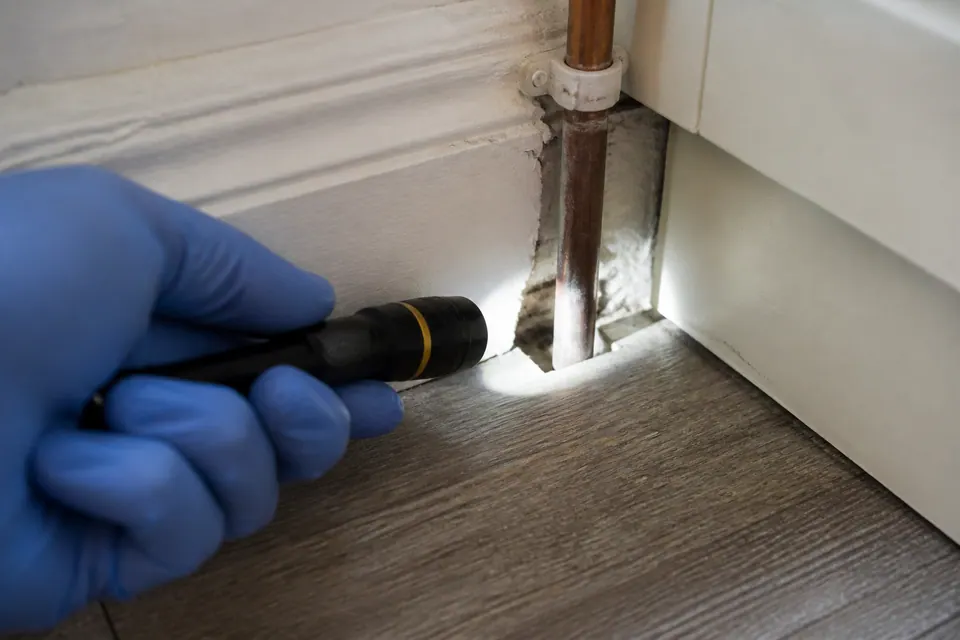
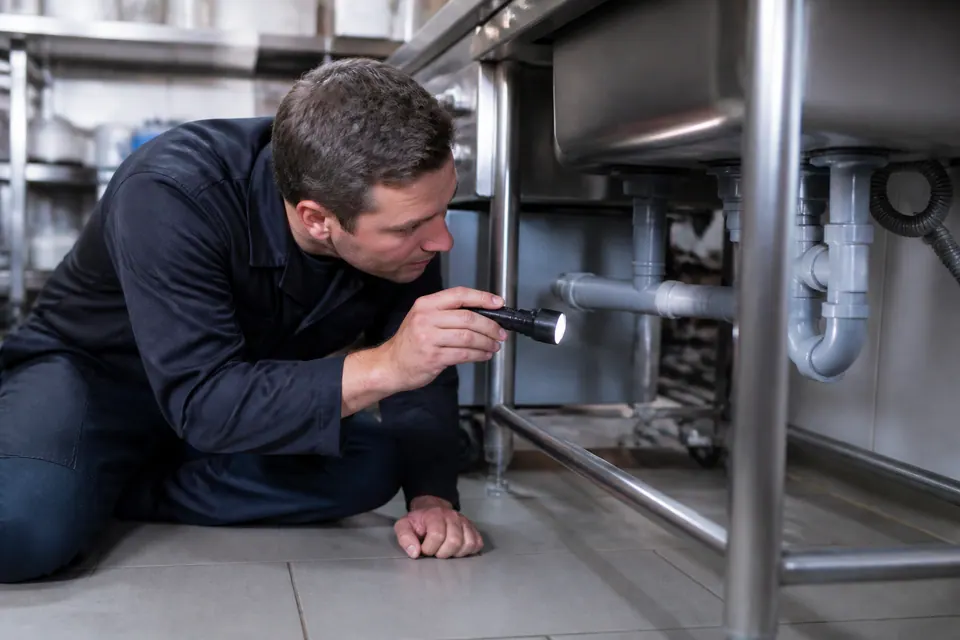
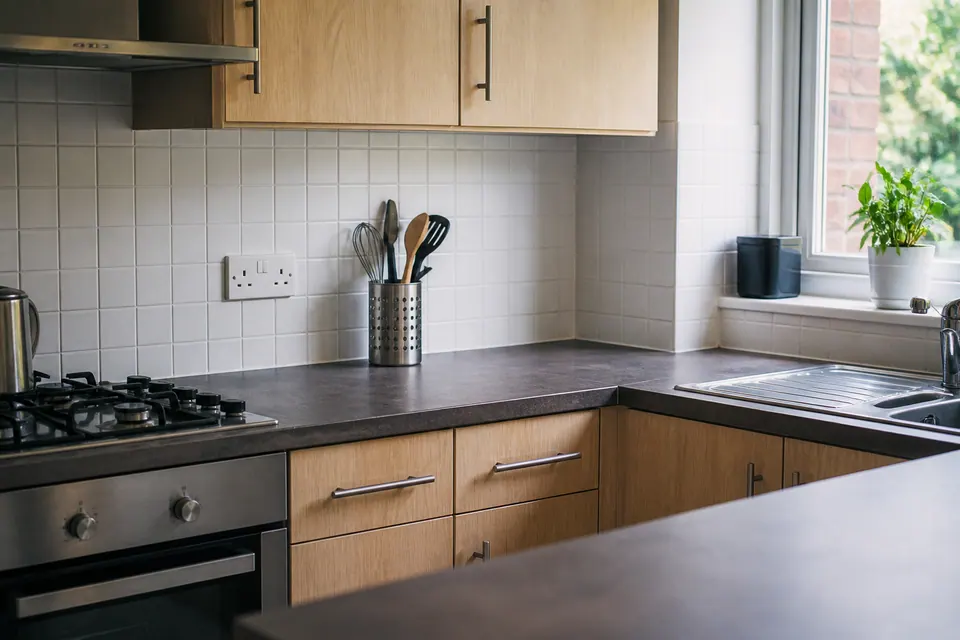
These generated inspection scenes do not document a Notting Hill conversion or any customer’s outcome.
13 / CLEAR EXPECTATIONS
Access instructions should lead to the actual accommodation involved.
Passing through a shared space does not necessarily authorise treatment there.
Each household’s report should retain its source and location.
ADDRESS AND AVAILABILITY
Give the postcode with the floor or flat reference and describe any separate doorway.
Check availability before arranging common-access permissions. The area map does not mark an Alesta branch or confirm attendance.
Open Notting Hill in Google Maps ↗NOTTING HILL / QUESTIONS
Include the door position, floor and unit reference. Explain another entrance if it could be confused with yours.
State that it is communal and identify who controls access. Do not describe it as part of the private flat by default.
Give the room where you heard it and the timing. An apparent direction cannot establish the animal or precise route.
Only if the relevant permission and scope are agreed. Access from your home does not settle who can authorise work elsewhere.
Keep their account attributed with its own dates. It may be useful context without proving a connection.
Explain the actual internal levels and which room contains each finding, even if the flat uses one postal reference.
Avoid opening fabric or forcing access. Describe the known limitation and responsible contact.
No such inclusion should be assumed. The quoted work needs an explicit area list.
Follow the booking guidance and any shared-space rules rather than moving belongings into a common landing automatically.
Report its location separately and ask how it relates to the agreed review; do not fold it into your treated room history.
15 / TAKE THE NEXT STEP
Call with the correct doorway, room findings and access boundaries. Confirm the assessment scope before involving other parts of the building.
