
A ground-floor flat
The space below may not be within the occupant’s control; establish the relevant authority.
PEST CONTROL / LEYTON
A concealed sound needs a
careful brief, not lifted floorboards.
Movement heard below a room leaves important questions unanswered. Note where the sound is clearest and whether physical signs exist elsewhere. Do not open the floor simply to turn a suspicion into a photograph.
05 / PROPERTY BRIEF
The space below may not be within the occupant’s control; establish the relevant authority.
Coverings and fitted elements can restrict examination without authorising their removal.
A tenant should clarify any permission needed for work beyond ordinary accessible inspection.
Communal or structural areas require their own access arrangement and responsible contact.
The home’s accessible evidence can be discussed even where concealed spaces remain unexamined.
Discuss your homeCommercial premises and specialist access are separate suitability questions, not implied by a residential enquiry.
Check the premises requirements01 / START WITH THE EVIDENCE
The linked services concern identified pest problems. They are not interchangeable responses to every noise below a floor.
Packet damage or droppings elsewhere may be relevant.
Mice controlPossible rodent signs require assessment of their own.
Rats controlSleeping-area traces belong in a separate report.
Bed bug treatmentVisible kitchen insects need direct identification.
Cockroaches controlFor suspected mice, include any actual cupboard or surface evidence rather than relying entirely on the concealed sound.
A rat enquiry should distinguish the audible report from exterior findings and any known drainage concern. Do not open covers yourself.
Bed bugs cannot be inferred from under-floor noise. Physical signs near resting furniture are a different inspection question.
Cockroach observations near equipment should be described separately, even where the appliance stands over the reported sound.
07 / SCOPE BEFORE A QUOTE
Clarify what the quotation can examine and what remains concealed. Opening a floor, repairing it and treating an identified pest should not be bundled together by assumption.
from £120
See published service pricingfrom £150
See published service pricing| Service | Pricing basis | Price |
|---|---|---|
| Mice control | Activity, access and programme | Quote after assessment |
| Rat control | Internal / external routes and visits | Quote after assessment |
| Proofing / repairs | Surveyed openings and separate work | Quoted separately |
Guides checked 27 August 2026. Confirm postcode coverage, the assessment boundary and any separately arranged access or repairs.
LEYTON / PROPERTY CONTEXT
Check the postcode and available assessment first. An under-floor report needs a description of what is audible and what remains concealed.
A simple room reference and position relative to a doorway can orient the account. A guessed route under the entire house adds certainty the evidence may not support.
Mention known floor coverings, restricted rooms or previous building work only as context. They do not establish that a hidden pest is present.
Any lifting of boards or other structural intervention needs a separately considered scope and authority. A pest appointment should not be booked on the assumption that it includes destructive access.
08 / THE CONTROL PLAN
A concealed area is a limitation to acknowledge, not a detail to overlook.
The report is considered alongside accessible signs, with the unexamined void stated clearly.
Any treatment follows a supported pest problem and agreed working area rather than noise alone.
Later observations help determine the next step; separate structural recommendations need their own arrangement.
09 / FROM FIRST CONTACT
The enquiry can progress without pretending the concealed space has already been inspected.

Locate the sound by room and position and give its approximate timing.
Identify any visible evidence elsewhere without claiming a proven connection.
Clarify safe access, authority and exclusions before agreeing the assessment.
Follow any preparation issued for the selected method; remain within the agreed boundary.
Record whether the audible pattern or accessible findings change over time.
Refer any separate opening or repair recommendation to the responsible property contact.
06 / SIGNS → LOCATION → NEXT STEP
| Pest problem | Signs to describe | Areas to mention | Next step |
|---|---|---|---|
| Mice | Surface droppings or packet damage | Accessible storage above the void | Discuss the actual finding |
| Rats | Possible external rodent evidence | Building edge or separately reported area | Keep it distinct from the concealed noise |
| Bed bugs | Spotting beside a bed | Resting furniture | Request a relevant physical assessment |
| Cockroaches | Recurring kitchen insect sightings | Visible appliance edge | Provide direct observations and product history |
03 / OBSERVATION CHECKLIST
The distinction matters when deciding whether and how pest control is appropriate.
Do not lift flooring or disturb suspected contamination to obtain evidence.
Droppings or tracks above the floor need their own location and discovery time.
Scratching beneath a room should be recorded as sound, not confirmed species.
Gnawed packets or material damage can be described without assigning it to the unseen source.
Bed-frame spotting or shed material is more relevant to a bed bug assessment than a skin reaction alone.
Repeated insects near equipment should have a direct sighting record.
Outside movement or nesting material needs a safe observation account and a check of species suitability.
04 / AT A GLANCE
10 / PROBLEM → TREATMENT → CONTROL
Under-floor sounds can be intermittent. Compare the available observations using the agreed review process instead of treating a quiet spell as a complete result.
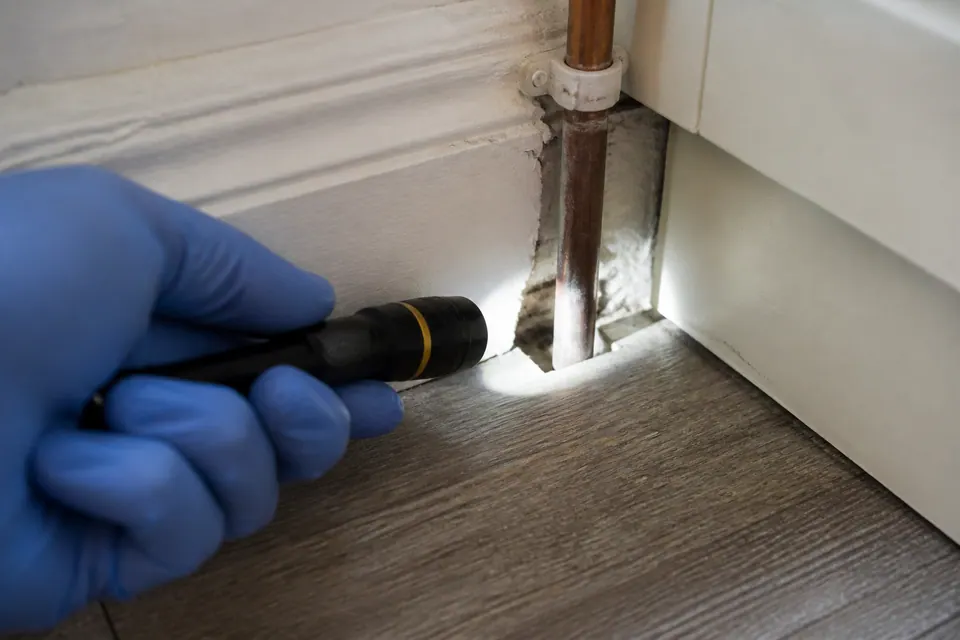
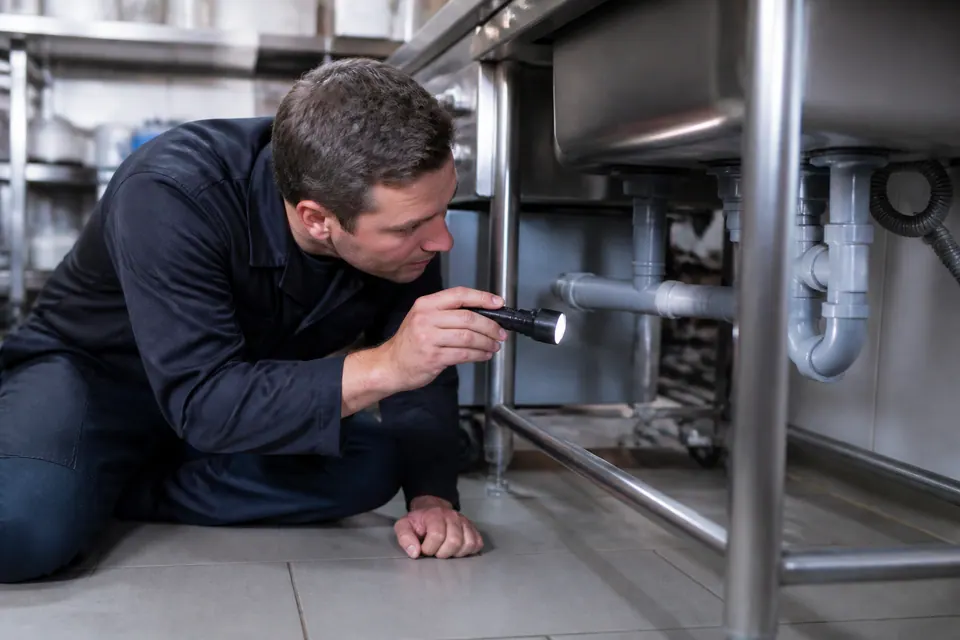
These explanatory images are not photographs of a Leyton under-floor investigation or its outcome.
MAKE THE ENQUIRY SPECIFIC
Record each occasion separately rather than drawing a definitive hidden route.
Say so plainly. An assessment discussion should not invent a physical finding to support the noise report.
Establish permission before assuming any structural access can be part of the work.
Include that background without presenting it as proof of the cause; the sound still needs appropriate assessment.
ADDRESS AND AVAILABILITY
Provide the full postcode and identify the room involved in the enquiry.
Coverage needs confirmation. Mention who can authorise access beyond the normally occupied areas, if that becomes relevant.
Open Leyton in Google Maps ↗13 / CLEAR EXPECTATIONS
The audible account remains a report until supporting findings establish more.
Structural access and repairs require explicit consideration.
Progress is reviewed through the agreed programme rather than a fixed claim about one visit.
LEYTON / QUESTIONS
It is enough to start a discussion, not to confirm the species or appropriate treatment. Supply any independent physical signs as well.
Avoid speculative structural opening. Discuss what accessible examination is appropriate and what separate work would require agreement.
Use accurate language: a repeated sound with no physical identification, if that is the situation.
Do not assume repair work is included. Any opening and reinstatement needs a separately defined arrangement.
Clarify the responsible management contact and permission before including that space in the expected scope.
It can accompany the room and time details, but it cannot on its own establish a pest species.
They may explain the layout if available, but a drawing does not confirm present activity or safe access.
Do not alter a suspected route merely to test a theory. Discuss assessment and the appropriate sequence for any proofing.
No universal guarantee should be inferred where concealed areas or uncertain evidence limit examination.
Report that change accurately with dates. Review should consider the pattern alongside any physical findings and the original programme.
15 / TAKE THE NEXT STEP
Check availability with the postcode, the audible pattern and the limits of what has been seen. That supports a considered next step instead of a premature treatment label.
