
The resident’s rooms
The household can describe its findings and available access. The proposal should identify the areas actually included rather than the building generally.
PEST CONTROL / KILBURN
Separate flats and shared service spaces.
Start with a clear account.
In a building containing several homes, an individual report needs a precise address within the property. Explain which signs belong to your flat and which have only been reported in shared spaces.
04 / AT A GLANCE
05 / PROPERTY BRIEF
The household can describe its findings and available access. The proposal should identify the areas actually included rather than the building generally.
Relevant reports can be passed on with their source, but another home is not an extension of the resident’s booking.
Name the contact responsible for keys and authorisation. A cupboard can be nearby without being available or appropriate for residential inspection.
Explain how the dwelling is reached. Entry through a common hallway does not mean that hallway forms part of the treatment.
Disclose the people and pets using the affected rooms. Household instructions need to reach them even if an agent is organising the enquiry.
Discuss your homeDescribe any concern separately and check suitability. Residential work does not establish a commercial service or authority over another premises.
Check the premises requirements01 / START WITH THE EVIDENCE
The suspected species matters, but so does the distinction between something in your flat and something reported elsewhere.
Damage in storage within the occupied flat.
Mice controlA rodent observation outside the dwelling boundary.
Rats controlMarks on bedroom furniture belonging to the household.
Bed bug treatmentRepeated kitchen insects at an identifiable unit.
Cockroaches controlKeep cupboard findings under the flat’s own record. Similar reports from another dwelling may be relevant without establishing one connected route.
An outside report can be raised without claiming the private booking includes the yard or service enclosure. Identify the responsible building contact.
Explain physical observations from the room concerned. A neighbour’s suspected bed bug problem does not identify the cause of irritation in another home.
State whether insects were actually seen inside the kitchen or only described in a shared space. The distinction belongs in the assessment.
KILBURN / PROPERTY CONTEXT
When a building contains several homes, “the address” can mean more than one interior. Use the flat number or recognised door designation consistently in every enquiry.
Confirm availability for the precise Kilburn dwelling and requested service. An area page does not establish an accepted appointment or a whole-building programme.
Create a private-room account for your own observations. Communal findings can be listed separately with the source and location, rather than merged into a claim about the entire property.
If a service cupboard becomes relevant, identify who controls it. Its proximity to a room does not make it accessible under a resident’s permission or prove that it caused the finding.
07 / SCOPE BEFORE A QUOTE
A Kilburn resident’s quote needs to name the work under discussion. Shared address details should not turn a private proposal into an unstated block-wide programme.
from £120
See published service pricingfrom £150
See published service pricing| Service | Pricing basis | Price |
|---|---|---|
| Mice control | Activity, access and programme | Quote after assessment |
| Rat control | Internal / external routes and visits | Quote after assessment |
| Proofing / repairs | Surveyed openings and separate work | Quoted separately |
Confirm rooms, included attendance and any separate recommendations before booking. Published guides checked 27 August 2026. Inspection, rodent work and building alterations are not priced by these two targeted guides.
03 / OBSERVATION CHECKLIST
A building-wide summary should not erase which observations were direct and which locations remain unexamined.
Avoid entering another dwelling or utility enclosure to verify a report. Obtain appropriate arrangements through the responsible contact.
Name the unit and record the actual finding. Include its flat designation if the account will be forwarded to management.
Attribute the account to the person and dwelling concerned. Similar wording does not make it your own physical evidence.
Give the landing or position, not simply the street address. State whether you observed it yourself.
Report the visible location of concern without opening utility equipment. Relevant access may need another person and a separately defined task.
Keep the garden or bin-area note independent of interior signs. A connection needs evidence rather than a shared postcode.
Clarify whose kitchen or bedroom is meant. Otherwise several messages can appear to describe one dwelling when they concern different ones.
06 / SIGNS → LOCATION → NEXT STEP
| Pest problem | Signs to describe | Areas to mention | Next step |
|---|---|---|---|
| Mice | Food-storage damage reported by the flat occupant | The named private kitchen unit | Use the dwelling’s record for a mice enquiry |
| Rats | A rodent sighting relayed from outside | The actual external area and reporting source | Identify the relevant access contact separately |
| Bed bugs | Marks around a bed inside one dwelling | That sleeping area, not neighbouring bedrooms by assumption | Request assessment of the physical finding |
| Cockroaches | Insects seen at a private kitchen fitting | The accessible domestic location | Distinguish this from any shared-service report |
MAKE THE ENQUIRY SPECIFIC
Keep their dwelling identifiers attached to the messages. The wording may be identical while the physical findings are entirely separate.
Describe its position and any direct evidence, but leave causation open. Permission and appropriate access must be addressed independently.
Ask whether the observation date is known. A recently forwarded message can describe an old event rather than current activity.
Clarify whether it is merely the route to the dwelling or part of a separately agreed assessment. Passing through it does not settle that question.
08 / THE CONTROL PLAN
A clear division between dwelling evidence and building information helps prevent an enquiry from becoming an unsupported accusation about a neighbouring space.
Separate room, dwelling and communal reports preserve their meaning. The same address is not enough to establish a single pest route.
Accessible signs guide the private proposal. A restriction or unexamined area should remain explicit rather than silently absorbed into a general conclusion.
If findings raise a question beyond the flat, involve whoever controls the relevant space. Further inspection or repairs need their own arrangements.
09 / FROM FIRST CONTACT
The process below describes information and responsibility. It is not a commitment to treat the whole building or resolve the concern in one attendance.

Use the designation on the actual entrance where possible. Include a clear explanation if postal and internal labels differ.
List the rooms and dates belonging to the household. Avoid mixing forwarded observations into the resident’s own account.
Name the location and source of an outside or shared-space report. Leave any suspected connection qualified.
Confirm which available areas the proposal concerns and who can approve the work. A management contact may be needed for anything beyond them.
Record subsequent findings against their dwelling or communal location. That keeps an apparent recurrence from becoming an untraceable building-wide claim.
Explain recommendations to the responsible contact without treating them as already authorised work. Separate repairs or shared-space assessment may follow.
10 / PROBLEM → TREATMENT → CONTROL
Any review should reflect the spaces and evidence actually considered. Absence of fresh signs in one room does not establish the condition of every adjoining dwelling.
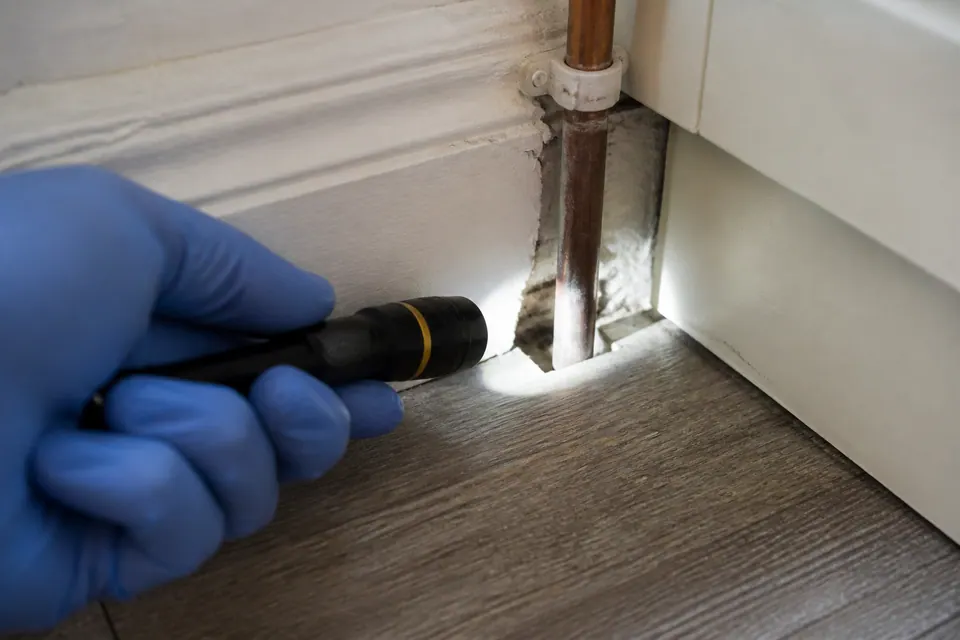
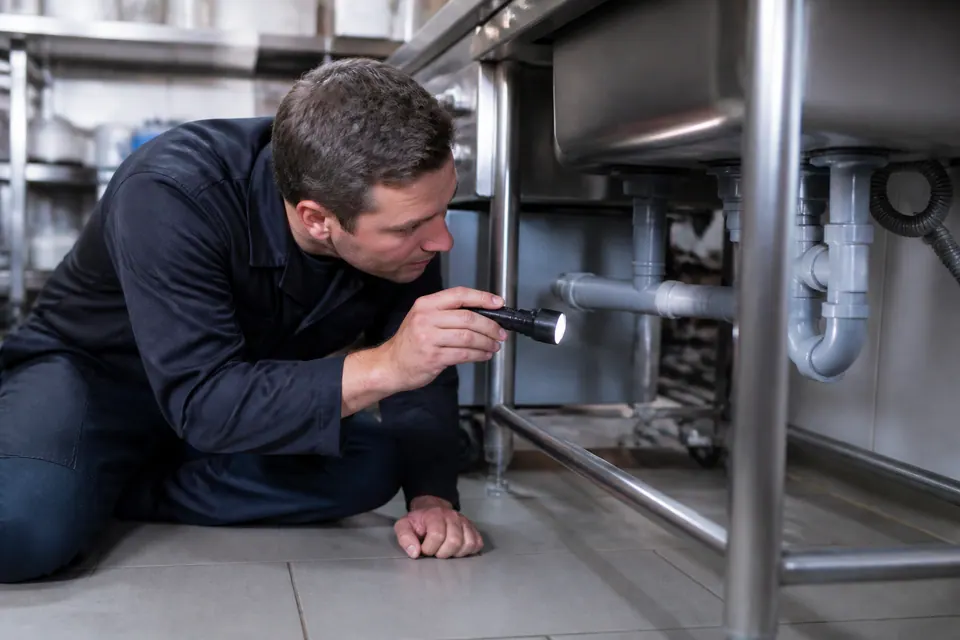
The illustrative scenes are not Kilburn job records or proof that a shared building has been cleared of pests.
13 / CLEAR EXPECTATIONS
The account should distinguish one household’s evidence from a report about another flat or communal area.
A suspected route should not be described as confirmed merely because it lies close to the affected room.
A resident can raise a wider concern without taking authority over facilities controlled by another party.
ADDRESS AND AVAILABILITY
Send the postcode with the flat designation when checking service availability. Add the entrance used to reach the actual home.
Describe communal access arrangements separately from the proposed treatment area. The map supplies area context, not permission for neighbouring or shared spaces.
Open Kilburn in Google Maps ↗KILBURN / QUESTIONS
Use a clear, consistent label recognised at the entrance, and explain any difference from the postal address. That avoids confusing several homes at one location.
Yes, with its source and dwelling clearly stated. Do not present it as a finding you independently made inside your own flat.
No. It is relevant context, not proof of a connecting route or the condition of every occupied unit.
Do not open restricted utility spaces for investigation. Identify the responsible contact and discuss whether appropriate access is relevant.
A private enquiry can be discussed on its own terms. Its scope still needs to be clear, and it does not imply conclusions about unavailable adjoining homes.
Identify the person who observed it and the responsible building contact. Keep permission questions separate from the observation itself.
No automatic inclusion follows from using an entrance route. Shared-space work needs explicit consideration and authorisation.
Reconcile the labels before combining reports. “Rear kitchen” may refer to a different dwelling from the one you occupy.
Ask for the proposed areas and authority to be made explicit. Do not infer multiple-dwelling coverage from a general price or street address.
Keep the dwelling, room and date on the report. Forwarded photographs without those details can lose the distinction between old and new findings.
15 / TAKE THE NEXT STEP
Give the dwelling identifier and private-room findings first. Add any communal context as a separate account so the team can discuss the right boundaries.
