
Mice
Droppings or damaged storage packets.
Mice controlPEST CONTROL / WEYBRIDGE
Give each room its
actual status, not an assumption.
An empty room is not automatically unaffected, and occupied rooms do not all require identical work. Identify evidence, checked areas and inaccessible spaces before discussing the scope and price.
01 / START WITH THE EVIDENCE
Room use does not establish the pest or the extent of work.
Droppings or damaged storage packets.
Mice controlPossible rodent evidence at a named location.
Rats controlPhysical traces near sleeping furniture.
Bed bug treatmentRecurring kitchen insects.
Cockroaches controlMouse concerns need actual storage signs rather than a list of every empty cupboard.
Rat reports should retain direct locations and separate exterior information.
Bed bug assessment needs physical bedroom evidence; unused beds and symptoms alone cannot establish the extent.
Kitchen insects need specific appliance sightings and previous-product history.
09 / FROM FIRST CONTACT
Keep the categories clear through the visit.

Supply postcode and evidence locations.
List unchecked or locked areas separately.
Agree access and included rooms.
Follow preparation for the selected method.
Report new locations accurately during review.
Keep additional repairs or tasks separately defined.
08 / THE CONTROL PLAN
An accurate status list supports the assessment.
Accessible evidence is considered with unexamined areas acknowledged.
The chosen scope names the rooms and method included.
Later findings can prompt review of the areas without automatic expansion.
05 / PROPERTY BRIEF
Identify each relevant room in the flat.
Distinguish occupied floors from closed spaces.
Identify who can approve and unlock unused areas.
Communal rooms need separate authority.
The residential programme should reflect evidence and actual use.
Discuss your homeCommercial vacant space requires separate suitability confirmation.
Check the premises requirementsWEYBRIDGE / PROPERTY CONTEXT
Confirm coverage with the postcode, then distinguish rooms with findings from those merely not in use.
An area that has not been entered should be called unchecked. That avoids presenting absence of observation as absence of activity.
Occupied rooms may have different practical restrictions. Explain essential use and any preparation limitations.
Keys and permission matter for closed rooms. A proposed assessment should not silently assume they will be available.
07 / SCOPE BEFORE A QUOTE
Room count alone does not define the programme. Confirm the included spaces, access and method rather than assuming a whole-home price.
from £120
See published service pricingfrom £150
See published service pricing| Service | Pricing basis | Price |
|---|---|---|
| Mice control | Activity, access and programme | Quote after assessment |
| Rat control | Internal / external routes and visits | Quote after assessment |
| Proofing / repairs | Surveyed openings and separate work | Quoted separately |
Guides checked 27 August 2026. Confirm coverage, total scope and review arrangements.
06 / SIGNS → LOCATION → NEXT STEP
| Pest problem | Signs to describe | Areas to mention | Next step |
|---|---|---|---|
| Mice | Cupboard droppings | Specific room with findings | Describe actual signs |
| Rats | Possible rodent evidence | Located indoor or exterior area | Avoid assumptions about unused rooms |
| Bed bugs | Physical bed traces | Identified sleeping room | Request evidence-based assessment |
| Cockroaches | Recurring insects | Named kitchen equipment | Give dates and products |
04 / AT A GLANCE
03 / OBSERVATION CHECKLIST
Evidence should retain its own room reference.
Avoid disturbing suspect contents or concealed spaces to complete the list.
Droppings or tracks need the precise location.
Scratching needs time and position without species certainty.
Damaged packets retain their storage reference.
Bed-frame spotting or shed material differs from irritation alone.
Repeated insects need dates and prior products.
An outside finding belongs in a separate entry from the occupied-room list. Do not disturb nesting material; an unidentified species needs a suitability check.
10 / PROBLEM → TREATMENT → CONTROL
Progress should be judged from relevant evidence and review, not occupancy alone or the appearance of unused space.
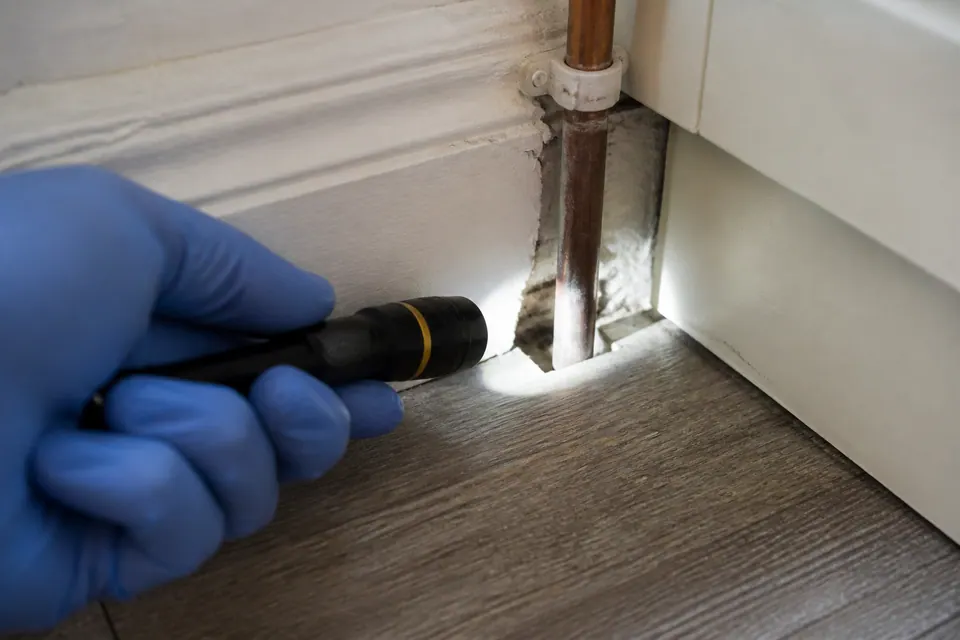
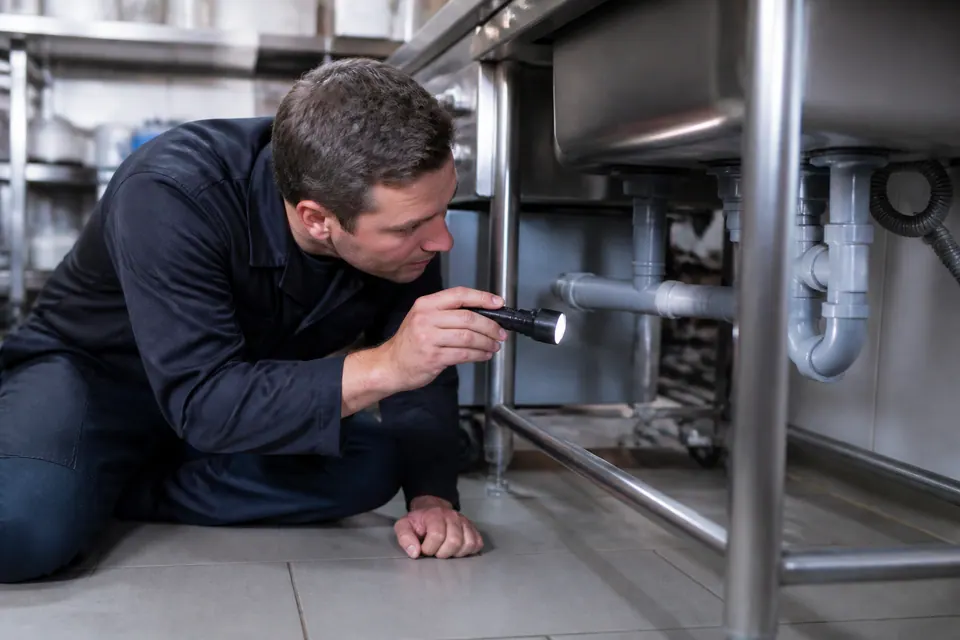
Illustrations do not document a Weybridge home or verified outcome.
MAKE THE ENQUIRY SPECIFIC
Call it unchecked rather than clear.
Disclose practical preparation requirements.
Arrange access before examination is assumed.
Give the new location for scope review.
ADDRESS AND AVAILABILITY
Provide the full postcode and relevant area list.
Coverage and attendance need confirmation with closed-room access discussed.
Open Weybridge in Google Maps ↗13 / CLEAR EXPECTATIONS
Unused and unaffected are not interchangeable.
Locked areas should remain visible as limits.
Included rooms should be explicit.
WEYBRIDGE / QUESTIONS
Not simply because it is empty.
The findings and agreed scope determine work.
Disclose the limit and identify the keyholder.
The programme and access also matter.
Only describe actual evidence or uncertainty.
Yes, state their status accurately.
Everyone affected by the selected method.
Request scope review rather than assuming.
Yes, where details are available.
Give the room, new observation and date.
15 / TAKE THE NEXT STEP
Check coverage with the postcode and distinguish evidence, occupancy and unchecked areas before agreeing scope.
