
Mice
A small animal glimpsed along an internal edge.
Mice controlPEST CONTROL / MAIDA VALE
Communal corridors and apartment entry.
Start with a clear account.
An observation in a corridor can raise a different access question from one inside an apartment. Record each location and involve the responsible building contact before assuming shared areas are included.
01 / START WITH THE EVIDENCE
Record what was seen in the shared area without assuming every apartment requires the same response.
A small animal glimpsed along an internal edge.
Mice controlA larger suspected rodent noticed near an entrance.
Rats controlA concern raised after an insect is seen near a dwelling door.
Bed bug treatmentInsects noticed repeatedly at one shared-area position.
Cockroaches controlDescribe where the animal appeared and disappeared if that was visible. Do not turn an uncertain glimpse into a confirmed route through a particular home.
Give the floor or entrance position and whether the sighting was indoors or outside. Size remembered from a brief view may not establish the species.
An insect in a corridor does not diagnose bed bugs in a nearby bedroom. Physical resting-area evidence needs its own assessment.
Several dated observations at the same point are different from one passing sighting. Include any independent kitchen findings separately.
09 / FROM FIRST CONTACT
These steps organise the enquiry. They do not confirm a pest species, a source apartment or a guaranteed attendance.
Include the position and time while the memory is clear. Qualify anything about direction or appearance that you could not see properly.
Tell the person responsible for the common area, rather than arranging entry to restricted facilities informally.
Describe only signs genuinely noticed inside rooms. Do not encourage an account that assumes every household shares the same problem.
Ask whether the request is for a residential assessment or a shared-area concern requiring other arrangements. Confirm availability directly.
Separate a new sighting from a forwarded copy of the original one. A message count is not an incident count.
When information is relayed to residents, retain its limits. A recommendation for further investigation is not a confirmed explanation of origin.
08 / THE CONTROL PLAN
A useful shared-area enquiry neither dismisses the sighting nor expands it into a conclusion about every resident.
The account records what was visible, where and when. It can remain incomplete without being filled in from assumptions.
The relevant parties discuss whether and how the space can be considered. A private resident’s access rights do not settle every communal task.
Subsequent information should stay attributable to its location. Wider recommendations need the responsible contact and a clear distinction from completed work.
05 / PROPERTY BRIEF
Say that the concern arose outside. It is still possible to ask questions without presenting an unobserved indoor infestation as fact.
Keep those findings under the room where they occurred. Assessment can consider both accounts without assuming that one proves the source of the other.
Describe the exact location and involve the building contact. A private booking should not be interpreted as permission to work on common facilities.
Mention a cupboard only as relevant context unless evidence was directly visible. Utility access needs the appropriate arrangements.
Clarify whether the request concerns the home or advice about the shared observation. The distinction affects the service being discussed.
Discuss your homeDo not assume residential work covers that use. Commercial suitability and any shared-access issue need separate clarification.
Check the premises requirementsMAIDA VALE / PROPERTY CONTEXT
Seeing something outside your front door can be unsettling without demonstrating activity inside the home. The enquiry should preserve that distinction instead of treating proximity as proof.
Check the requested service and Maida Vale address directly. A residential appointment and assessment of communal facilities may involve different arrangements.
Use landmarks such as the lift entrance or a numbered door to describe the corridor position. Avoid attributing the source to the nearest apartment merely because it is the closest reference.
Let the responsible building contact know about the shared-area concern. Meanwhile, describe any signs actually found within your own rooms as an independent account.
07 / SCOPE BEFORE A QUOTE
The figures below concern targeted services, not automatic treatment of a Maida Vale corridor or every apartment it serves.
from £120
See published service pricingfrom £150
See published service pricing| Service | Pricing basis | Price |
|---|---|---|
| Mice control | Activity, access and programme | Quote after assessment |
| Rat control | Internal / external routes and visits | Quote after assessment |
| Proofing / repairs | Surveyed openings and separate work | Quoted separately |
Confirm suitability, authority and the area of work before accepting a price. Published starting guides checked 27 August 2026; an inspection or rodent proposal follows assessment.
06 / SIGNS → LOCATION → NEXT STEP
| Pest problem | Signs to describe | Areas to mention | Next step |
|---|---|---|---|
| Mice | A brief small-rodent glimpse along a corridor | Viewing point and last visible position | Discuss identification without naming an apartment as source |
| Rats | A larger animal near an entrance | Inside or outside position clearly distinguished | Record the observation and relevant contact |
| Bed bugs | An insect noticed near a bedroom flat entrance | Shared-area sighting, separate from resting-area evidence | Avoid diagnosing a bedroom from corridor proximity |
| Cockroaches | Repeated insects at one common-area edge | The fixed landmark and dated occurrences | Ask about suitable authorised assessment |
04 / AT A GLANCE
03 / OBSERVATION CHECKLIST
A corridor report can be useful even when it contains uncertainty. Clear limits make it more informative, not less credible.
Do not pursue an animal or enter another resident’s space to complete the description.
Your viewing point helps explain the angle and any obstruction. It may be different from the position where the animal or insect was seen.
Tie the sighting to a fixed feature without naming that feature as the source. A doorway reference is not an accusation about its occupants.
Describe only what remained visible. Disappearing around a corner does not establish entry into the nearest dwelling.
Retain separate dates for repeat observations. Several people forwarding one message do not create several incidents.
Ask whether their account is direct or relayed. A building conversation can circulate a single sighting many times.
If no signs have been noticed indoors, say so. That is more accurate than extending the corridor concern to rooms that have not shown evidence.
10 / PROBLEM → TREATMENT → CONTROL
Review needs the relevant observations and assessed scope. Neither a single sighting nor its apparent absence should be turned into a building-wide diagnosis.
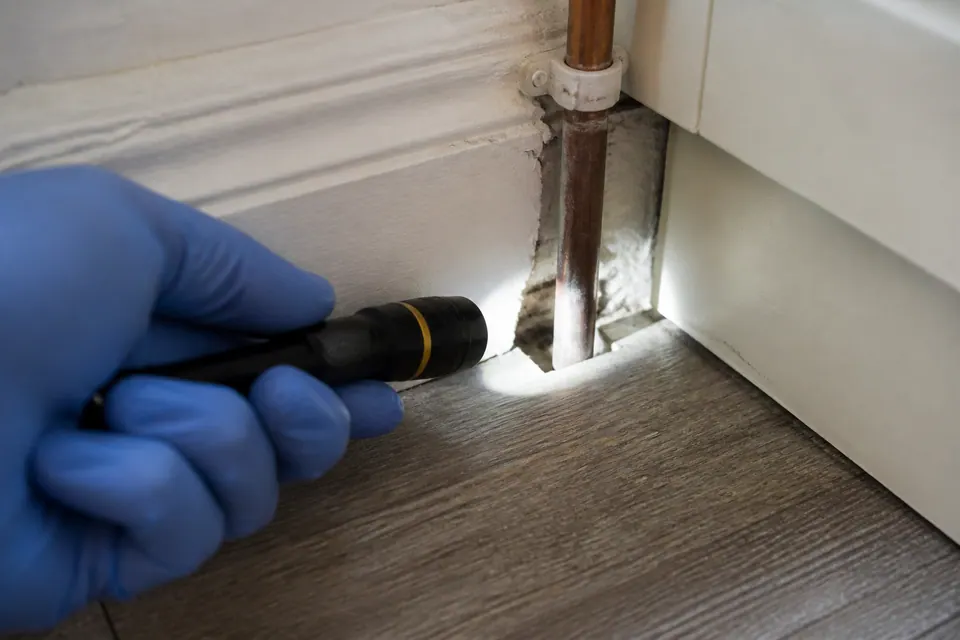
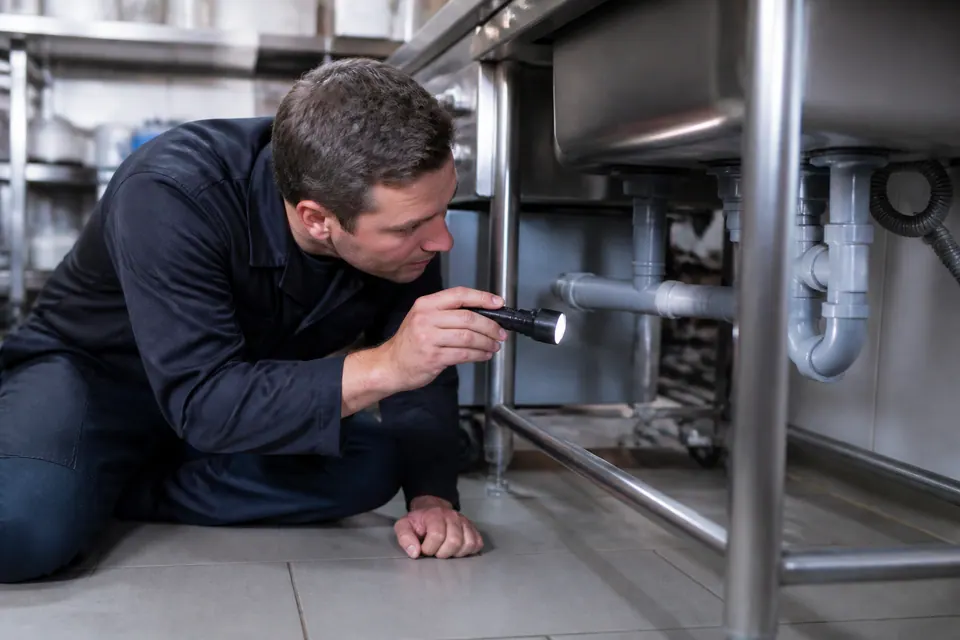
These illustrative inspection images are not Maida Vale corridor records or proof of results in any apartment.
MAKE THE ENQUIRY SPECIFIC
A door can be a reference point without being the origin. Describe the last visible location and leave the unseen movement unknown.
Check whether the messages describe independent incidents. Repetition of a report should not inflate the apparent frequency.
A short observation cannot establish concealed activity or the state of private rooms. Review should remain connected to the actual assessment.
Keep your own physical observation separate. Another suspected problem is context, not identification of the insect you saw.
ADDRESS AND AVAILABILITY
Use the postcode for the coverage conversation, then explain the floor and relevant landmark inside the building.
The map cannot identify a corridor or establish authority over it. Provide the responsible contact and distinguish the common-space concern from your dwelling address.
Open Maida Vale in Google Maps ↗13 / CLEAR EXPECTATIONS
An observation near a dwelling should not become a statement that its occupants caused the concern.
Forwarded messages should remain connected to the original report unless they document genuinely separate observations.
The agreed work should identify the relevant location rather than imply every space reached from the corridor is included.
MAIDA VALE / QUESTIONS
No. Use the door as a location reference if helpful, but proximity alone does not establish origin or responsibility.
Say where visibility ended. Do not fill the unseen part of its movement with an assumed route into another space.
Not by itself. A bedroom concern needs its own evidence and assessment rather than a conclusion from a nearby shared-area observation.
The responsible building contact should know about the common location. The team can discuss service suitability without assuming private authority covers that area.
Separate messages are useful only if they contain independent information. Otherwise preserve the original account and its date instead of inflating the apparent incident count.
State that clearly. The enquiry can still concern the corridor without claiming evidence in your apartment that you have not observed.
Yes, with an accurate description and uncertainty. Confirm whether the relevant service can help rather than applying a species label from a guess.
Not automatically. Shared facilities need an explicit scope and the appropriate authority, even if they are passed on the route to a flat.
Give its own time and fixed location, and explain what was directly visible. Link it to the earlier report without assuming the same route.
Only if that is genuinely supported by the assessment. A suspected location or recommendation for investigation should not be rewritten as a confirmed source.
15 / TAKE THE NEXT STEP
Describe the shared-area sighting and any separate apartment findings. Keep uncertainty explicit so the next step addresses the evidence rather than an assumed building-wide problem.
