
Mice
Possible small-rodent evidence in an accessible spot.
Mice controlPEST CONTROL / KEW
Garden-facing storage and inspection limits.
A hidden wall edge is an inspection limit, not a conclusion.
Stored items beside a garden-facing wall can restrict what an inspection reveals. Explain the position of signs and the accessible edges without treating the garden as the confirmed source.
01 / START WITH THE EVIDENCE
The position of stored belongings can explain limited visibility without identifying the pest or its origin.
Possible small-rodent evidence in an accessible spot.
Mice controlA sighting or larger suspected traces.
Rats controlPhysical signs around sleeping furniture.
Bed bug treatmentRepeated insects around indoor kitchen fittings.
Cockroaches controlDescribe the visible edge and what remains behind the items.
Keep an animal seen outside distinct from indoor storage evidence.
Identify the furniture and physical findings rather than relying on symptoms.
Explain recurrence without moving or opening fixed equipment.
09 / FROM FIRST CONTACT
Start with information rather than an assumed full clear-out.
Confirm the requested service is available.
Use the room and wall as references.
Keep facts separate from possible sources.
Mention fixed units and bulky items.
Do not move suspect belongings between rooms without guidance.
Distinguish newly exposed findings from earlier observations.
08 / THE CONTROL PLAN
A useful brief can acknowledge incomplete access without inventing conclusions.
Identify visible edges and obstructions.
Ask what can safely be prepared for the proposed work.
If access changes, explain where and when additional signs were found.
05 / PROPERTY BRIEF
Describe the exposed edges and blocked area.
Report what is visible without removing panels.
Keep physical furniture findings distinct from symptoms.
Request its inclusion explicitly rather than assuming one scope.
Check commercial suitability before including stock-related work.
Check the premises requirementsKEW / PROPERTY CONTEXT
Check postcode coverage, then describe where the stored items sit in relation to the room and wall.
Explain which edges can be seen from inside. A concealed area should remain recorded as unexamined rather than being called affected or clear.
Keep observations from the garden in a separate note. The orientation of a wall does not prove that outside activity caused indoor signs.
Ask what preparation is appropriate before shifting boxes or bulky belongings. Moving suspect items elsewhere can change the evidence and is not automatically required.
07 / SCOPE BEFORE A QUOTE
The proposal should not imply that pest attendance includes moving every stored item or examining inaccessible edges.
from £120
See published service pricingfrom £150
See published service pricing| Service | Pricing basis | Price |
|---|---|---|
| Mice control | Activity, access and programme | Quote after assessment |
| Rat control | Internal / external routes and visits | Quote after assessment |
| Proofing / repairs | Surveyed openings and separate work | Quoted separately |
Guides checked 27 August 2026. Confirm current coverage and charges. Clearance, heavy lifting, disposal and repairs are not automatically part of the pest scope.
06 / SIGNS → LOCATION → NEXT STEP
| Pest problem | Signs to describe | Areas to mention | Next step |
|---|---|---|---|
| Mice | Possible small-rodent traces | Exposed storage edge | State the viewing limit |
| Rats | Larger signs or sighting | Exact accessible position | Keep outside observations separate |
| Bed bugs | Bedroom physical evidence | Named furnishing | Describe without unnecessary relocation |
| Cockroaches | Recurring insects | Cupboard or fitting | Identify fixed obstructions and prior products |
04 / AT A GLANCE
03 / OBSERVATION CHECKLIST
Be precise about the viewpoint instead of trying to complete a hidden picture by guesswork.
Avoid handling suspect contamination, unsafe lifting or dismantling fitted storage.
Name the edge and nearby fixed reference.
Describe the item and where it was kept.
State timing without claiming the concealed source.
Identify the physical marks and furniture.
Report repeated sightings at the accessible point.
Keep the external position separate from indoor findings.
10 / PROBLEM → TREATMENT → CONTROL
The response should reflect what has actually been examined and what remains concealed.
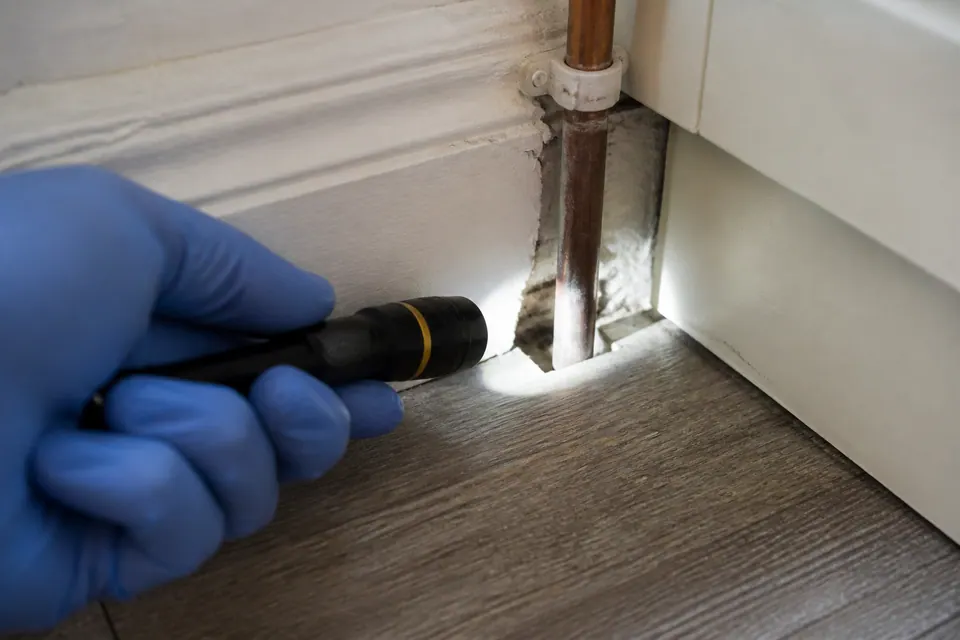
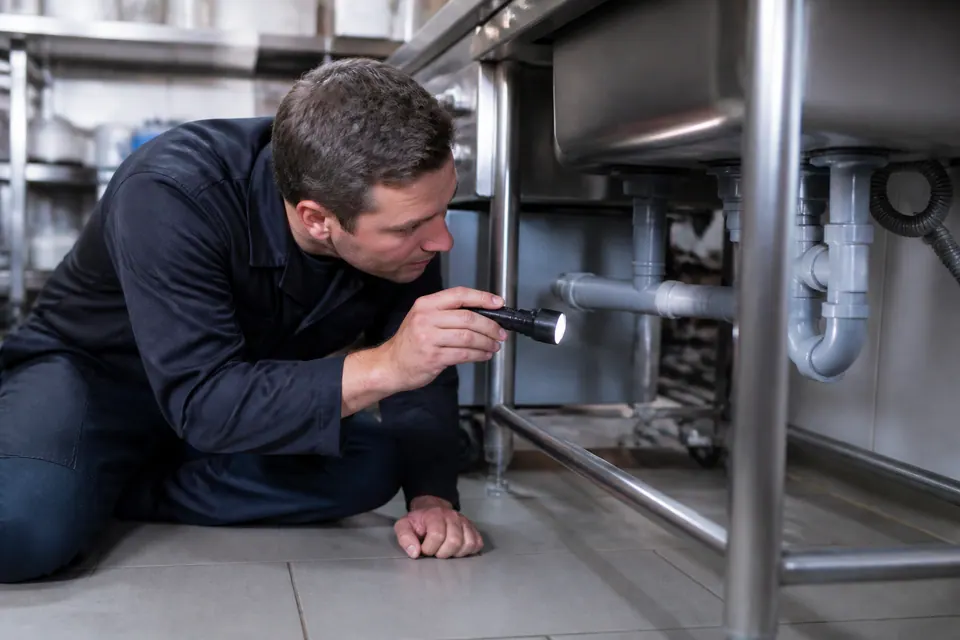
Illustrative scenes are not records of a Kew storage-area treatment.
MAKE THE ENQUIRY SPECIFIC
Do not treat orientation as proof of the source.
Describe the unseen area as a limitation.
Explain that restriction before arrangements are agreed.
Record the newly exposed position and when it became visible.
ADDRESS AND AVAILABILITY
Confirm the full postcode and requested service before arranging a visit.
The map cannot show hidden wall edges or determine whether outdoor activity is connected to indoor evidence.
Open Kew in Google Maps ↗13 / CLEAR EXPECTATIONS
Describe the viewpoint rather than filling gaps with guesses.
A garden-facing wall is context, not causation.
Movement should follow a practical agreed need.
KEW / QUESTIONS
No. Keep outdoor and indoor observations separate.
Wait for specific preparation advice rather than assuming a full clear-out.
No. Unexamined is different from examined without findings.
Describe visible evidence without removing panels.
Yes, as independently located observations.
Do not assume so; clarify responsibilities and safe access.
Record the newly exposed location and timing.
Ask explicitly about its inclusion.
No. Findings and response still determine any next steps.
The room, storage position, visible evidence and limits on access.
15 / TAKE THE NEXT STEP
Give a clear account of the evidence and access limits before deciding what should be moved.
