
A neighbour reports an insect
Keep their account separate from your own evidence. It does not establish identification or activity inside your dwelling.
PEST CONTROL / ISLEWORTH
Private rooms beside communal facilities.
Start inside the home, then explain what adjoins it.
A home adjoining shared facilities needs a report that respects both evidence and permission. Explain what was found inside the dwelling and who controls any neighbouring space relevant to assessment.
MAKE THE ENQUIRY SPECIFIC
Keep their account separate from your own evidence. It does not establish identification or activity inside your dwelling.
Describe the observation and limitation. Seeing an area does not provide permission to inspect or treat it.
Explain the proposed arrangements before attendance is agreed so the scope matches the access actually available.
Give the exact location and date. Ask how it should be considered rather than assuming the private programme covered that area.
06 / SIGNS → LOCATION → NEXT STEP
| Pest problem | Signs to describe | Areas to mention | Next step |
|---|---|---|---|
| Mice | Possible traces in a private cupboard | The cupboard and any visible adjoining service edge | Keep the household finding distinct from shared reports |
| Rats | Animal sighting in a common or outside area | Exact position and direct or second-hand witness | Identify who controls access before extending the scope |
| Bed bugs | Physical signs around an occupied bed | The particular bedroom and furniture | Do not infer spread from another resident’s concern |
| Cockroaches | Repeated insects near household fittings | The kitchen position and any known shared services | Describe connections without assuming a confirmed route |
09 / FROM FIRST CONTACT
The existence of a shared facility does not make every nearby property part of one booking.

Name the room and date before introducing assumptions about surrounding areas.
Explain their relationship to the home and who controls access, where known.
Ask which parts of the property the proposal actually covers.
Preparation and occupancy advice should reflect the selected method in the dwelling.
A new observation should state whether it falls inside or outside the original area.
If another party’s involvement is suggested, establish what question or work requires their decision.
08 / THE CONTROL PLAN
A useful programme separates what is known from what might require a wider enquiry.
The available household evidence is considered alongside relevant context, with inaccessible spaces recorded as limitations.
Treatment is selected for the identified problem, occupants and agreed area. Common parts require their own appropriate approval.
Later findings may prompt coordination with a manager or another party. Monitoring, further treatment and maintenance should remain distinguishable.
05 / PROPERTY BRIEF
Describe the rooms and entrance belonging to the flat, with common parts identified separately.
Mention observations from the passage without assuming it is the route or part of the private booking.
State what was found inside the dwelling and what was reported near the storage facility.
Keep reports attributable to each household rather than combining all observations into one undated account.
Disclose occupancy and access restrictions for the home that is actually being considered.
Discuss your homeCheck suitability for the business separately. A residential enquiry does not confirm commercial provision or authorise treatment in another premises.
Check the premises requirementsADDRESS AND AVAILABILITY
Provide the full postcode, home reference and entrance used for the residential enquiry.
Describe nearby facilities separately and confirm availability. The map shows the area rather than a local Alesta office or an authorised inspection boundary.
Open Isleworth in Google Maps ↗07 / SCOPE BEFORE A QUOTE
An adjoining facility can add a permission or assessment question. It should not be silently included in a residential treatment price or treated as the proven source.
from £120
See published service pricingfrom £150
See published service pricing| Service | Pricing basis | Price |
|---|---|---|
| Mice control | Activity, access and programme | Quote after assessment |
| Rat control | Internal / external routes and visits | Quote after assessment |
| Proofing / repairs | Surveyed openings and separate work | Quoted separately |
Guides checked 27 August 2026. Confirm current prices and coverage, the precise areas included, and any separately proposed communal work or repairs.
ISLEWORTH / PROPERTY CONTEXT
The first boundary concerns where signs were observed. The second concerns where you can authorise an assessment. They may not be the same.
For example, a resident may see activity near a communal facility but only be arranging work inside the dwelling. Keep the observation in the account without implying permission to treat the facility.
Identify the responsible contact for adjoining spaces where relevant. A building manager’s involvement can clarify access; it does not establish responsibility for the pest problem.
Confirm the address and service availability before arranging attendance. The proposed residential scope should state which areas are included and which require a separate decision.
03 / OBSERVATION CHECKLIST
A precise position prevents a building-wide assumption from replacing the actual observation.
Take no risks to gather proof: avoid suspect contamination, restricted spaces and disturbance of unknown nests or animals.
Describe traces or damage with the cupboard position. Mention any products or cleaning already used there.
Give the timing and position of sounds separately from physical signs. Sound alone cannot reliably identify the animal.
Record the location and witness. A common-passage sighting should not become evidence in every nearby home.
Describe spotting or an insect rather than diagnosing from irritation. Keep bedroom findings distinct from communal reports.
Note recurring insects against the particular fitting and mention known moisture without treating it as a species identification.
Describe outside observations independently and state whether access is private, shared or unavailable.
01 / START WITH THE EVIDENCE
A nearby facility can be relevant context without being the established source of a problem.
Possible traces inside a particular household cupboard.
Mice controlAn animal sighting whose location needs to be specified.
Rats controlPhysical evidence around a bed or nearby furniture.
Bed bug treatmentRecurring insects beside kitchen fittings.
Cockroaches controlGive the exact room and position of the finding before discussing adjoining spaces. Do not attribute activity to another area solely because it is close.
State whether you witnessed the animal and whether it was inside your home, in a common part or outside. Each location may involve a different permission boundary.
Describe the physical signs in the resting area. A report elsewhere in the building does not establish the condition of your bedroom.
Mention visible service connections and actual sightings separately. A shared pipe route is a question for assessment, not proof of how insects arrived.
04 / AT A GLANCE
10 / PROBLEM → TREATMENT → CONTROL
Conditions outside the dwelling and findings within it should be reviewed on their own evidence, not judged solely from photographs or appearance.
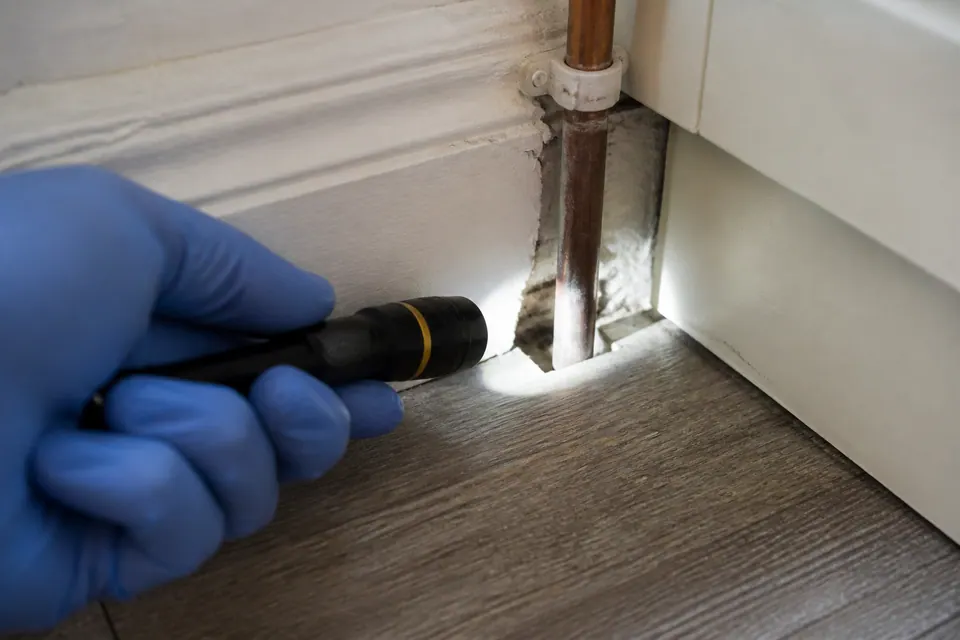
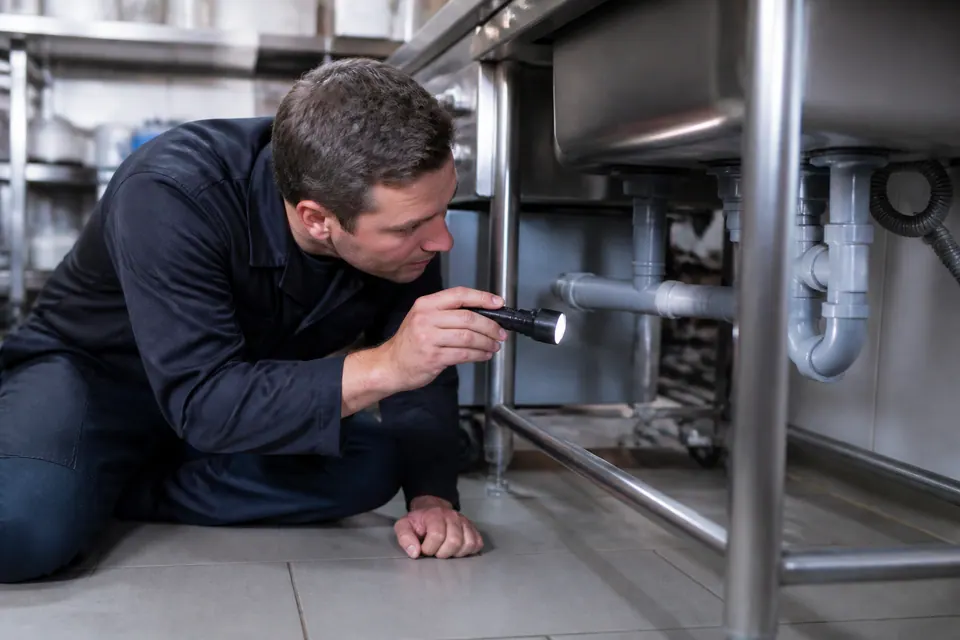
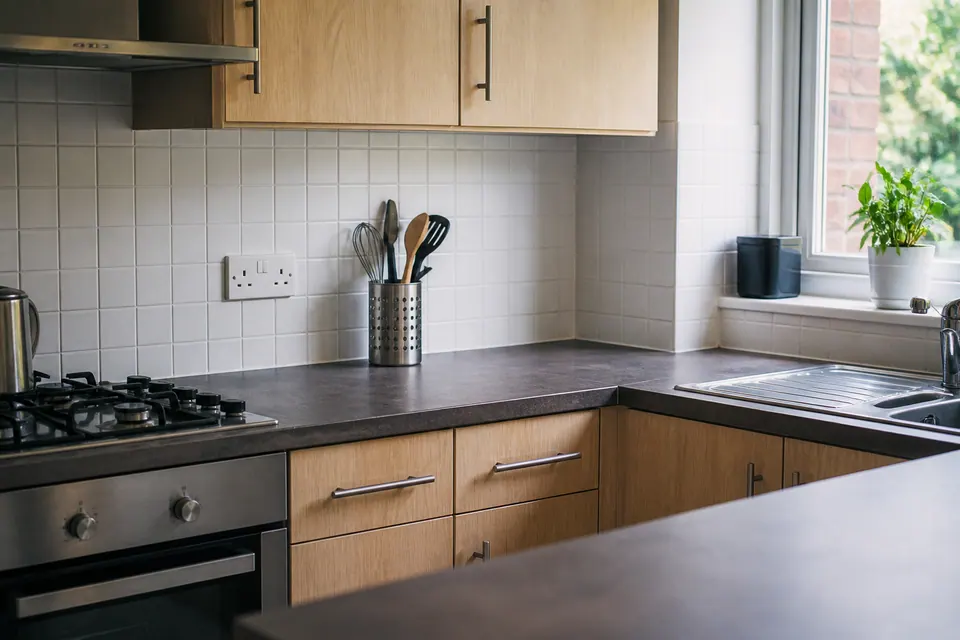
These are illustrative stages, not photographs proving a result in an Isleworth home or communal facility.
13 / CLEAR EXPECTATIONS
Proximity can be useful context, but it does not establish a route or source.
The proposal should identify the areas included rather than rely on whatever can be opened.
Work beyond the dwelling needs clarification, permission and any relevant separate arrangement.
ISLEWORTH / QUESTIONS
Not without supporting assessment. Describe both the household findings and the outside observation without assigning a cause.
Begin with the home’s evidence and explain any limitations. The suitable scope and availability need confirmation.
They may provide context if the original dates and locations are clear. Do not present them as evidence observed in your own home.
A key alone does not define authorisation or the agreed service. Clarify who can approve the proposed communal work.
Say that it is unknown or inaccessible. A concealed route should not be presented as established merely because it appears plausible.
Only where explicitly proposed and appropriately authorised. A private appointment is not automatically a multi-household programme.
Instructions depend on the actual method and occupants. A neighbour’s booking is not necessarily a preparation plan for your dwelling.
Identify the person responsible for those spaces. The recommendation should explain what needs consideration without assuming it has already been commissioned.
State that clearly and check the appropriate service. Do not add an indoor infestation to the account without independent evidence.
Not by location alone. Report the observation with its position and let it be considered alongside the original scope and findings.
15 / TAKE THE NEXT STEP
Call with what was found inside the home and any separate nearby observations. Confirm coverage, permissions and the scope before arranging a wider programme.
