
Do timed photographs replace an assessment?
No. Existing images can add context, but material suitability, extent and any repair questions still need review before treatment is agreed.
MARYLEBONE / OBSERVATION OVER TIME
A photograph captures the mark; a short history adds the context.
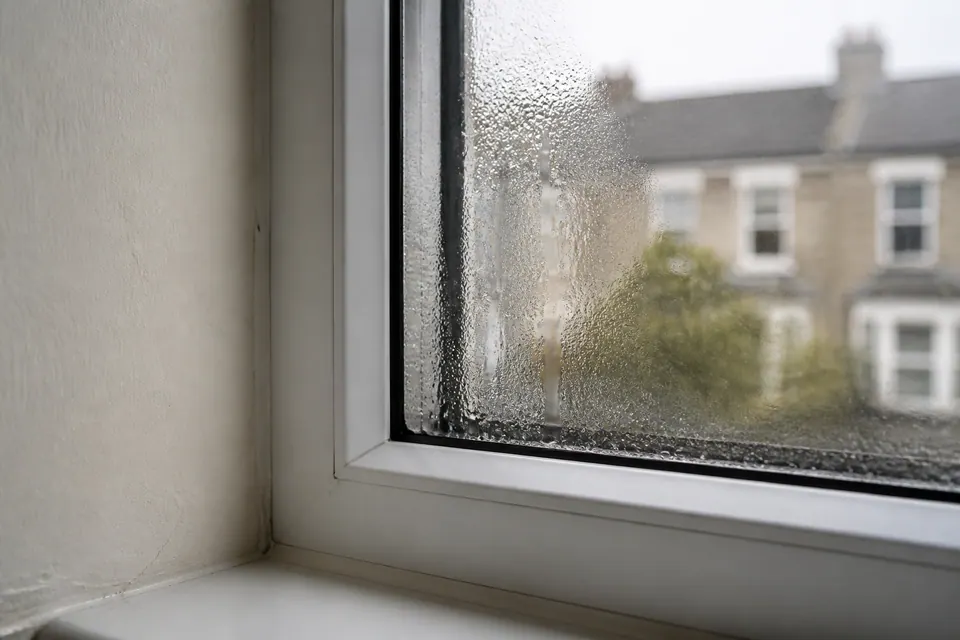
If water at a Marylebone sash window varies through the day, describe when it is noticed and where it sits. Keep that account separate from the visible growth on a frame or reveal. A useful enquiry records changes without turning a morning observation into a confirmed moisture diagnosis.
When · where · which finish
Marylebone / SASH-WINDOW OBSERVATIONS
A short factual note can be more useful than a technical guess.
Describe whether moisture is generally noticed first thing, after room use or at another time, and identify the pane or surrounding surface involved. Existing photographs taken at different times can help explain the account. You do not need to create an elaborate monitoring exercise or infer a frame defect. The marked finish, present condition and any confirmed repairs remain separate parts of the assessment.
02 / DIRECT ANSWERS
No. Existing images can add context, but material suitability, extent and any repair questions still need review before treatment is agreed.
Paint does not resolve a moisture condition or replace treatment of suitable growth. Assess the current finish before planning decoration.
It is relevant observation, not proof of a complete explanation. Keep other known events and repair details available without assuming one cause.
An elaborate record is not required to start an enquiry. Give the information already available and identify what is unknown.
Describe their everyday role and ask about preparation and return instructions for the agreed work. Do not infer unrestricted use from a short visit estimate.
Include wet-room use and the actual affected material. Sealant, frame coatings and ceiling paint should not be assumed identical.
No servicing or repair should be inferred. Describe access problems and known work separately from the visible surface enquiry.
No. A period without noticed water is not a repair certificate. Supply confirmed repair information and report any subsequent change.
Marylebone / ACCESS & PEOPLE
Use the times you naturally notice the window. Do not describe intermittent observations as continuous monitoring or measured performance.
Retain the available repair description and date. Painting, sealing and treatment should not be merged into one statement that it was fixed.
Identify the visibility limit rather than opening or dismantling fittings for evidence. Access may need another arrangement.
Share visible observations and relevant records through the booking contact. You do not need to diagnose the window or establish legal responsibility.
Provide confirmed maintenance details that complement the occupant account. Avoid substituting an assumed explanation for missing records.
Use the history to frame questions about treatment and any further investigation. It should not become a promise that one surface visit repairs the opening.
04 / A CONTROLLED APPROACH
Compare present material condition with the reported timing and known work. Identify which accessible finishes are suitable for treatment.
Clarify curtains, shutters and room-use arrangements. No special observation exercise or unplanned dismantling is needed to prepare the enquiry.
Carry out the appropriate method within the named scope. Joinery repair and other building questions remain separate unless explicitly arranged.
Clarify remaining marks and applicable room guidance. Retain the work description so later changes can be reported accurately.
The sequence does not certify the cause of every moisture observation.
Identify the marked section and available history.
Treat suitable accessible material as specified.
Separate remaining stains from later observed changes.
Illustrated stages are not customer outcome evidence. Continuing moisture may allow renewed growth.
05 / QUOTATION, NOT GUESSWORK
For a Marylebone window quotation, provide current photographs, marked dimensions and the observations already available. Small suitable accessible areas may be quoted from photos; recurrence, several areas or damaged material can require assessment or specialist quotation.
Read how the service is scoped ↗| Current enquiry | Quotation basis | Helpful context |
|---|---|---|
| A limited suitable accessible area | Photographs may support quotation | The material and visible extent today |
| Recurring marks at one or more openings | Assessment of history and condition | Earlier treatment and ordinary observations |
| Damaged joinery or complex moisture concern | Specialist quotation as appropriate | Known repairs and unresolved questions |
Confirm the included finishes and exclusions. A treatment quote does not include a window survey or certify the interpretation of your observations.
06 / ROOM-BY-ROOM CONTEXT
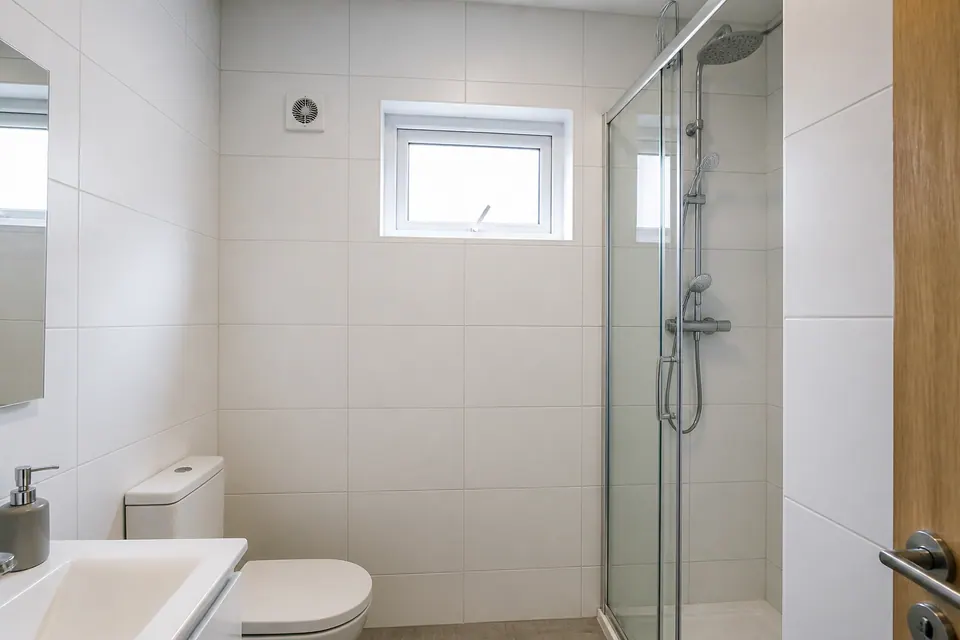
Describe what is normally noticed after use and later. Keep the affected coating distinct from the glass where water is seen.
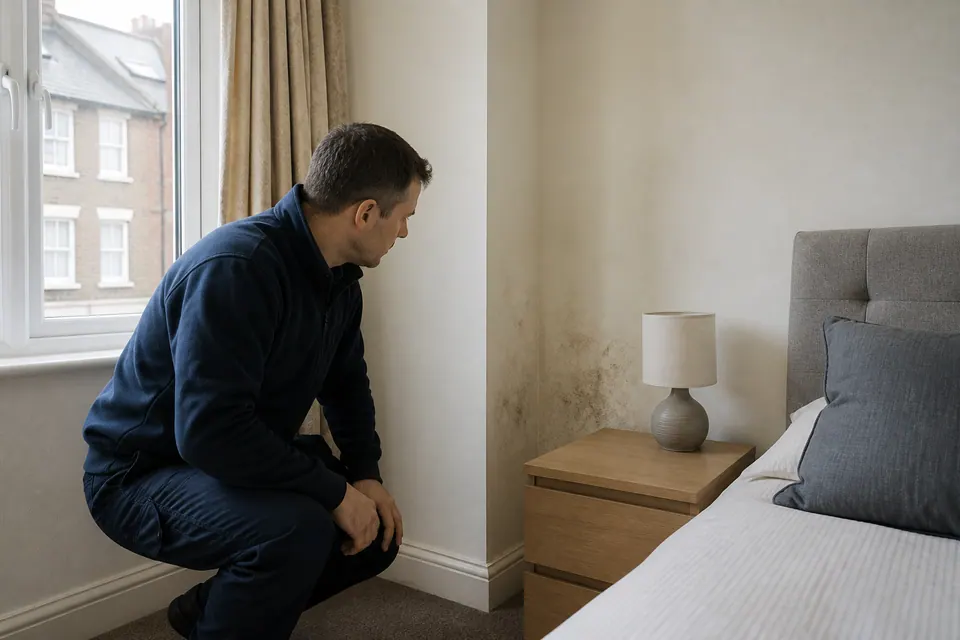
Morning observations can add context, but show the current finish and furniture clearance as well.
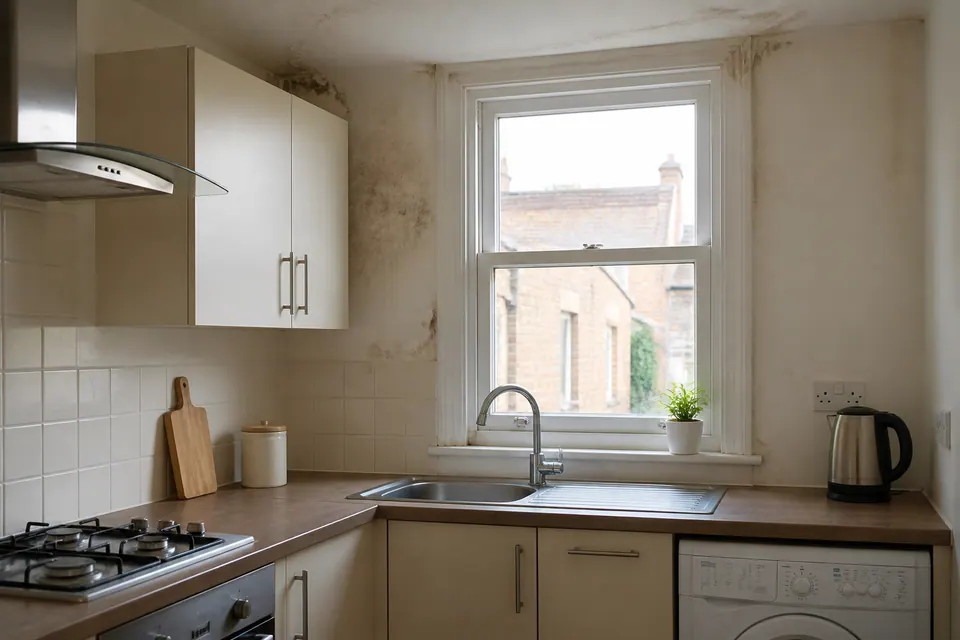
Distinguish cooking-related observations from confirmed leaks. A water event and ordinary surface moisture are different history entries.
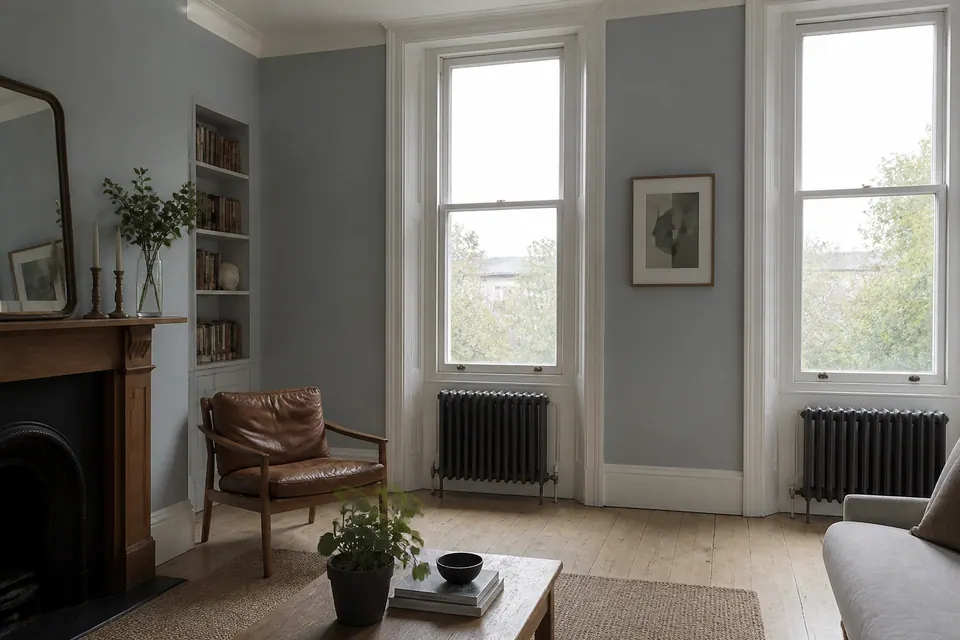
Report the pattern actually noticed rather than a presumed all-day condition. Include curtains or fittings restricting the approach.
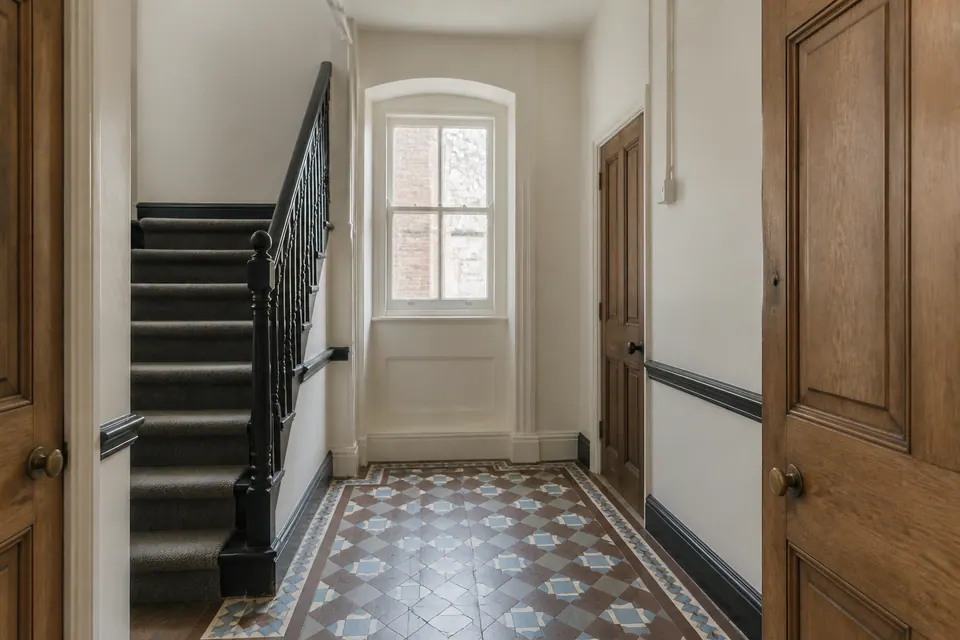
Clarify who can provide relevant records and authorise work. A common-area observation does not automatically belong in a private-flat quote.
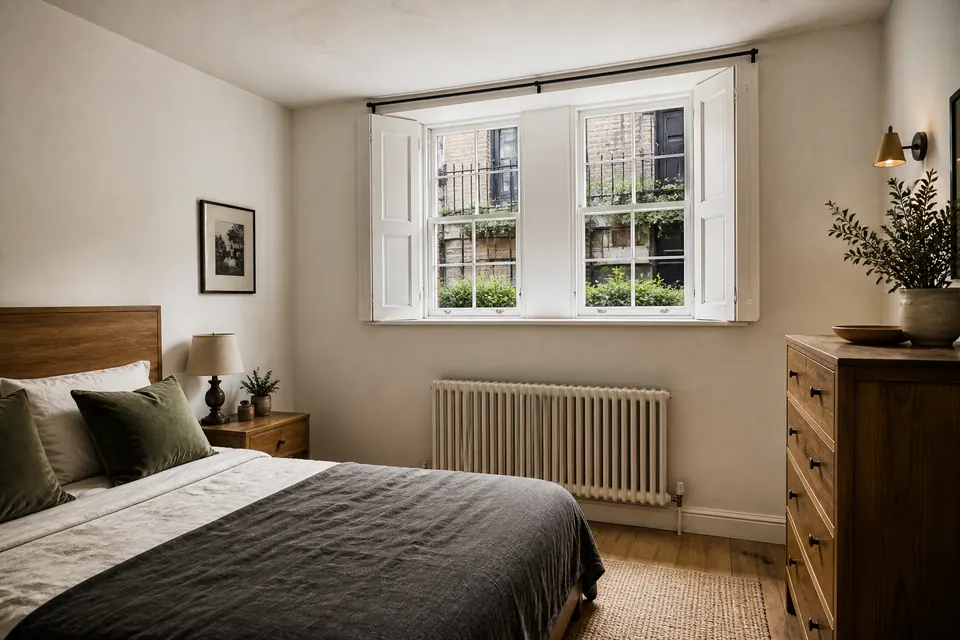
State level and visible water history without diagnosing damp from location. The material still needs suitability assessment.
07 / WHEN IT COMES BACK
Report the location and interval rather than simply saying the window is wet again. Moisture on glass and growth on a reveal are different observations and may not appear together.
Keep the previous treatment scope and any later repair details. The new assessment should use the actual sequence without assuming that a single morning photograph proves recurrence or a failed repair.
Use ordinary dated observations already available. Mark uncertain timing as uncertain instead of creating an overly precise account.
08 / SEPARATE THE QUESTIONS
Observed water and reported repairs should be considered alongside the actual affected material.
| Observation | Possible context | Useful clarification |
|---|---|---|
| Beads noticed on glazing early in the day | Condensation around the opening | Which adjacent finish has visible marks |
| Moisture after bathroom use | Repeated wetting and drying pattern | Whether the affected surface remains visibly wet later |
| Change after a documented frame repair | Residual condition or continuing moisture | The actual repair scope and subsequent observations |
| The same sill corner repeatedly marked | A persistent condition at that location | Previous treatment and material condition |
It can support an enquiry, but it does not certify glazing, joinery, ventilation or building fabric. Any investigation or repair of those items must be agreed separately from suitable surface treatment.
A water observation can be useful without proving why the visible growth appeared.
| Question | Mould | Moisture / damp |
|---|---|---|
| What is described? | Fungal growth on the named affected finish | Excess moisture seen or reported at the opening |
| What to record | Present extent, material and recurrence | Position and ordinary timing of visible water |
| How they relate | Growth may persist where conditions remain suitable | Moisture may need attention beyond removing the growth |
| Next assessment step | Confirm suitability and accessible treatment extent | Clarify any need for separate investigation |
09 / LOCATE THE ISSUE
The two positions may differ. Use the setting to describe the material and keep the observation record tied to the correct surface.
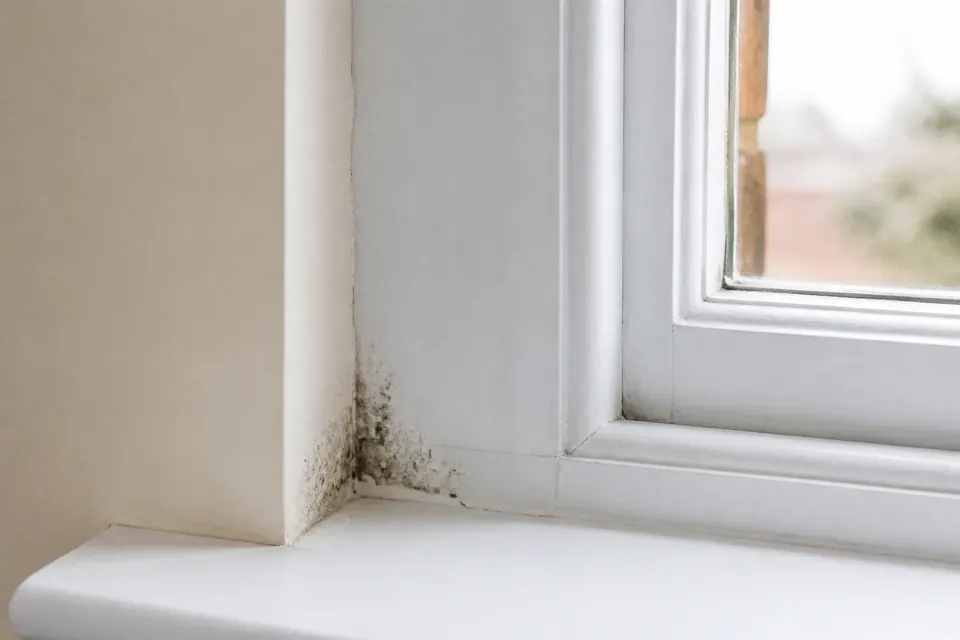
Identify each separately in a wider view. Water beading on glass may be relevant to nearby marks, but does not establish why the plaster or timber is affected.
Explain ordinary room-use timing and whether moisture remains visible afterwards. Avoid assuming that every mark at the opening is explained by bathing.
Say what is normally observed when the room is used and show nearby furniture. One morning image is evidence of that moment, not proof of a continuous condition.
Describe water on glazing separately from any known pipework event or surface splash. Keep the affected finish clearly identified in the photo set.
Show the complete opening, curtains and adjacent wall. An occasional observation should not be described as a measured humidity or temperature result.
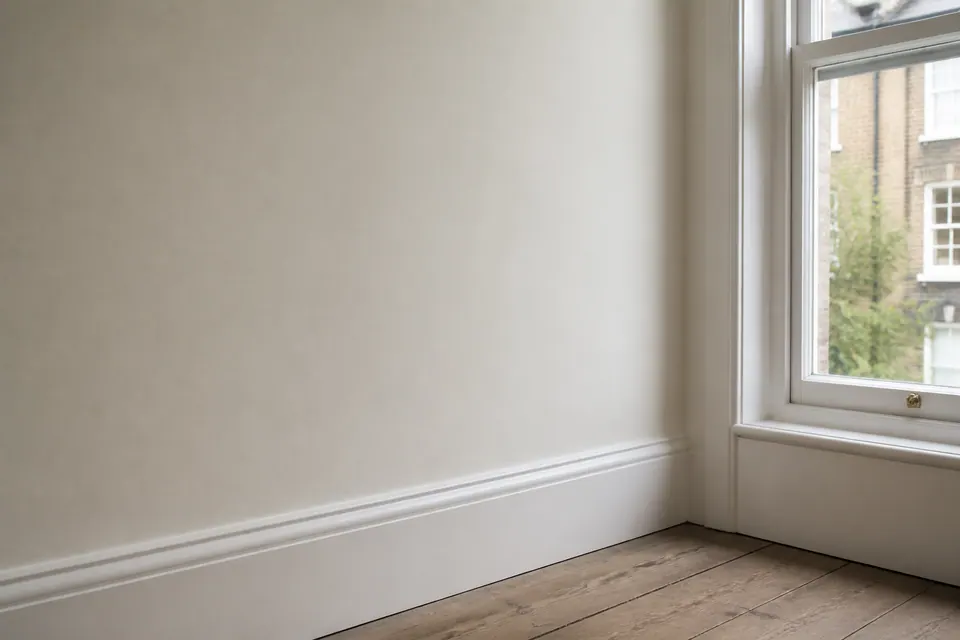
Record the coating condition from a safe position. A high stain cannot be diagnosed from its position, and unstable material may require work beyond treatment.
Explain which section is visible without dismantling fittings. An inaccessible sash edge remains unassessed even if another part of the opening is clear.
Keep the language factual. Timing and location help the enquiry but do not identify a moisture mechanism on their own.
Marylebone / PLAN THE APPOINTMENT
Send the Marylebone postcode with current images and a short factual account of visible moisture. Confirm availability after access and affected finishes are understood.
If sash servicing or another repair is already arranged, identify it separately so the treatment discussion does not assume its completion.
Use the local map when explaining the property position.
Marylebone / BEFORE BOOKING
Helpful history should remain clear about what was actually seen.
No monitoring routine is required to begin. Give the observations and images already available, with their approximate timing.
No. It can document visible water or marks at a moment, but does not confirm the route or source of moisture.
Show the affected finish and describe earlier observations honestly. Do not recreate wetness for a photograph.
Yes, identify both materials clearly and include a wider view. Their suitability and condition may differ.
Not necessarily. State what the record says was done rather than treating all window work as the same service.
Describe the access limit and ask for guidance. Do not dismantle fittings just to provide enquiry evidence.
Follow the instructions for the agreed method and room. Attendance ending is not a universal instruction for every activity.
Provide the previous scope and present condition. Repeated areas may require assessment rather than a new first-patch photo price.
Name the same section, give the date and distinguish visible moisture from new surface growth or an old remaining stain.
A CLEAR WINDOW HISTORY
Include the postcode, affected material and the timing you actually know. Keep repair records separate so the next assessment starts from a reliable account.
The window imagery is illustrative, not a record of a customer monitoring or treatment outcome.
