
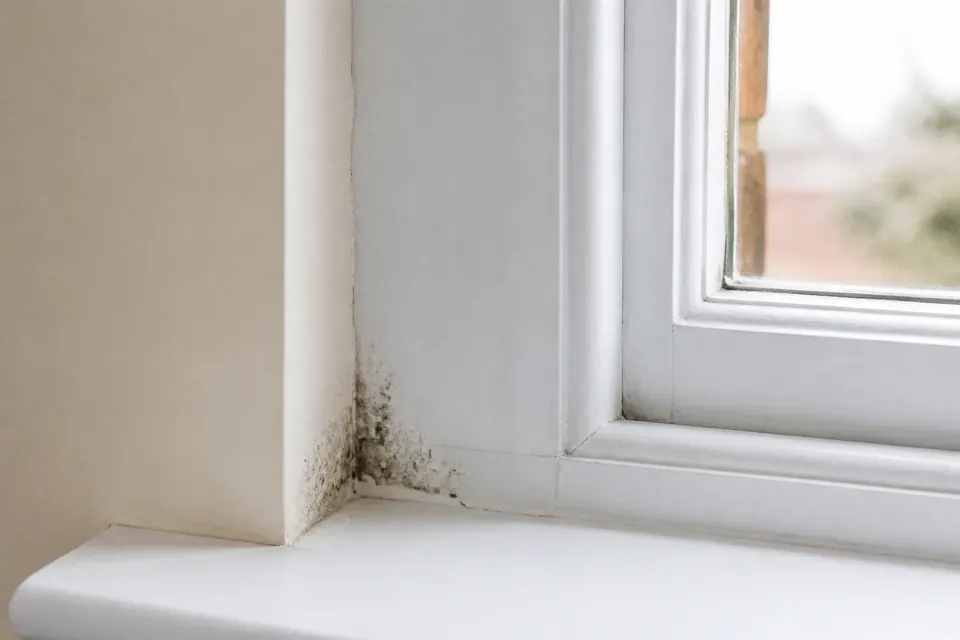
Paper beside a window opening
Show whether the seam meets timber or painted plaster. The materials and their edges should remain identifiable; moisture near the opening does not establish the hidden backing condition.
NOTTING HILL / COVERED SURFACES
The visible paper is not the whole wall.
A lifting seam can tempt you to look behind it, but an initial enquiry does not require peeling anything back. Show the visible Notting Hill covering, its edges and the surrounding room. Explain which parts remain concealed so assessment starts with an accurate limit rather than a guessed hidden extent.
Seams · exposed marks · uninspected backing
01 / LOCATE THE ISSUE
Choose the room to explain the setting. The selector does not turn a small exposed edge into an assessment of the concealed wall.
Show whether the seam meets timber or painted plaster. The materials and their edges should remain identifiable; moisture near the opening does not establish the hidden backing condition.
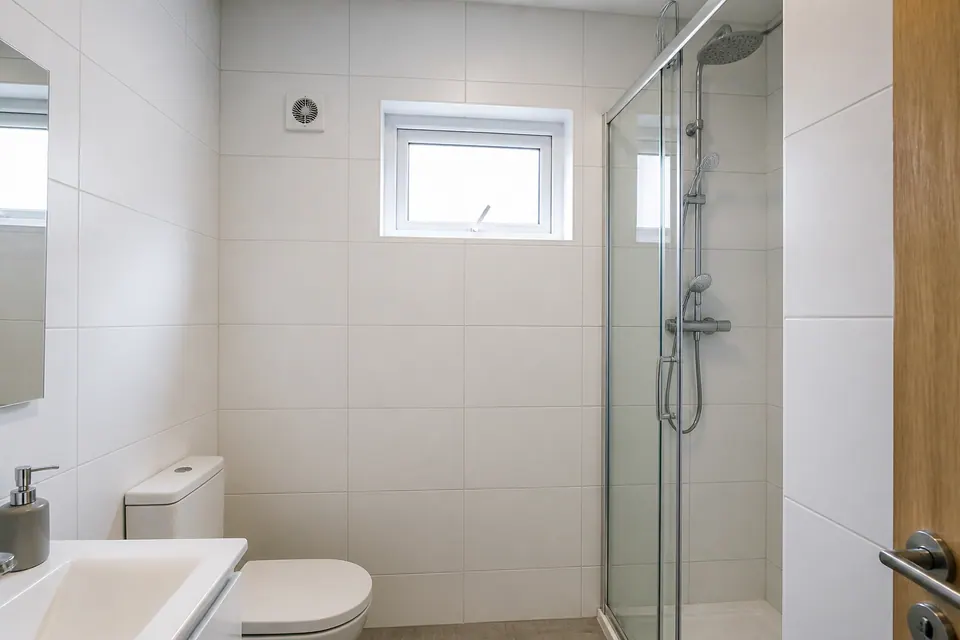
Identify the actual covering and how it appears near the wet-use area. Do not assume a papered surface is suitable for the same method as intact bathroom paint.
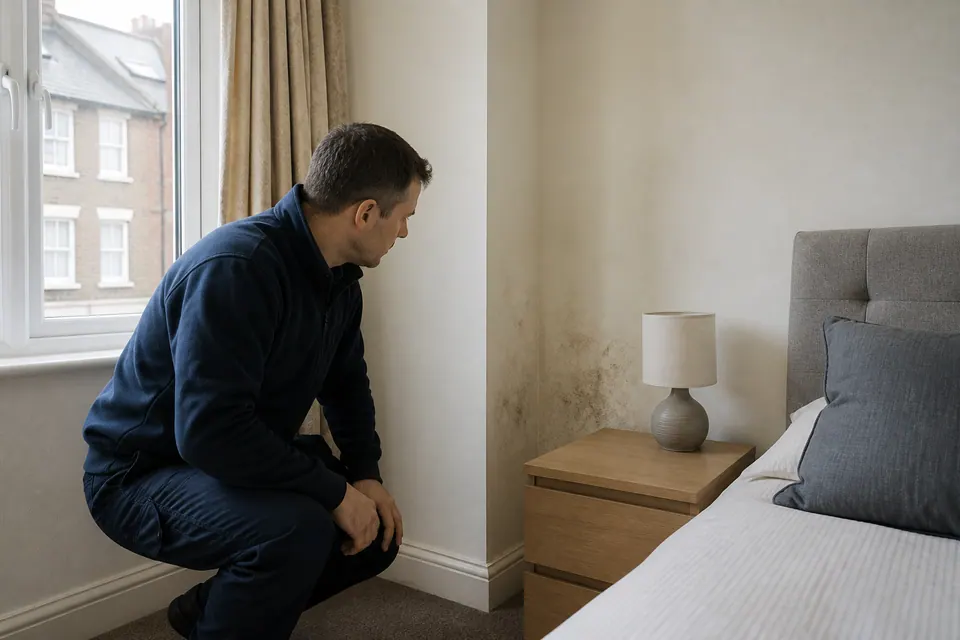
Record the available view and any furniture obstruction. Pulling a bed away and peeling a seam are separate actions that should not be improvised for the enquiry.
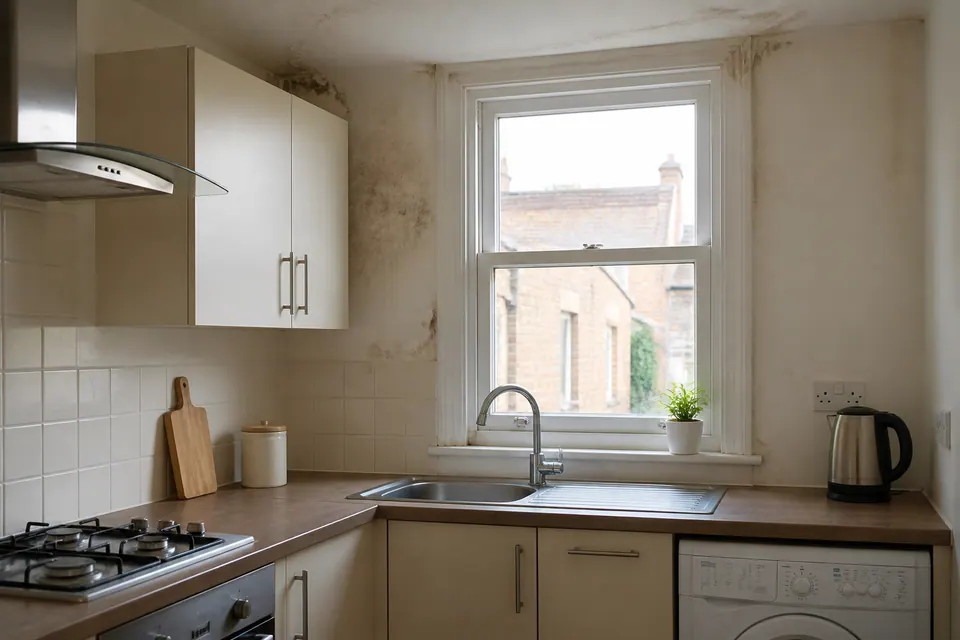
Show the border between paper, tiles and units. Water or cooking observations may help the history, but do not prove that all material behind the covering is affected.
Add a wide image because pattern can make the scale of a patch unclear. Identify any earlier repairs without removing paper to reveal them.
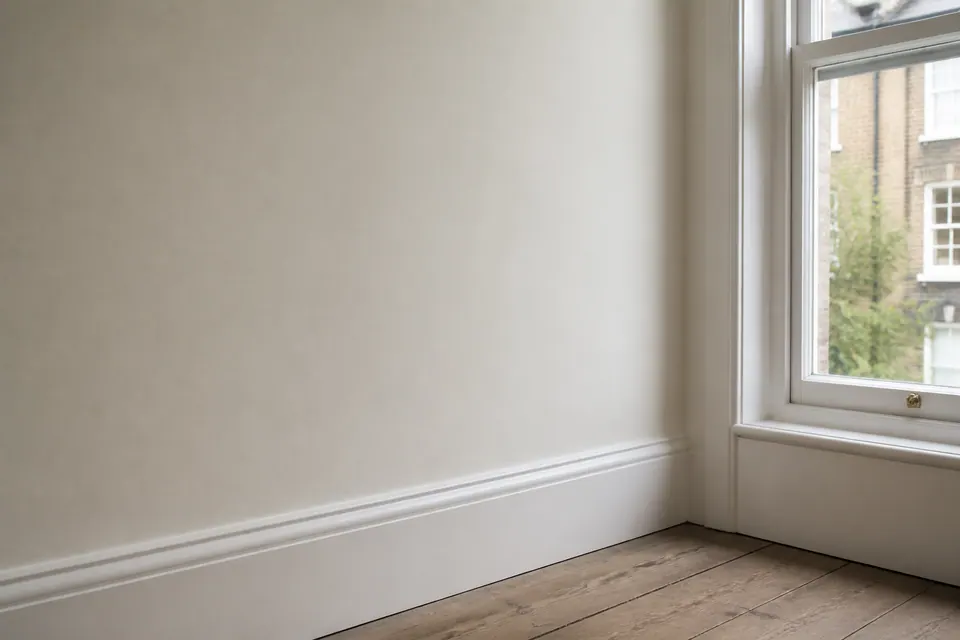
A loose layer may indicate a material problem requiring another decision. Surface treatment does not reattach wallpaper or establish the condition of the entire substrate.
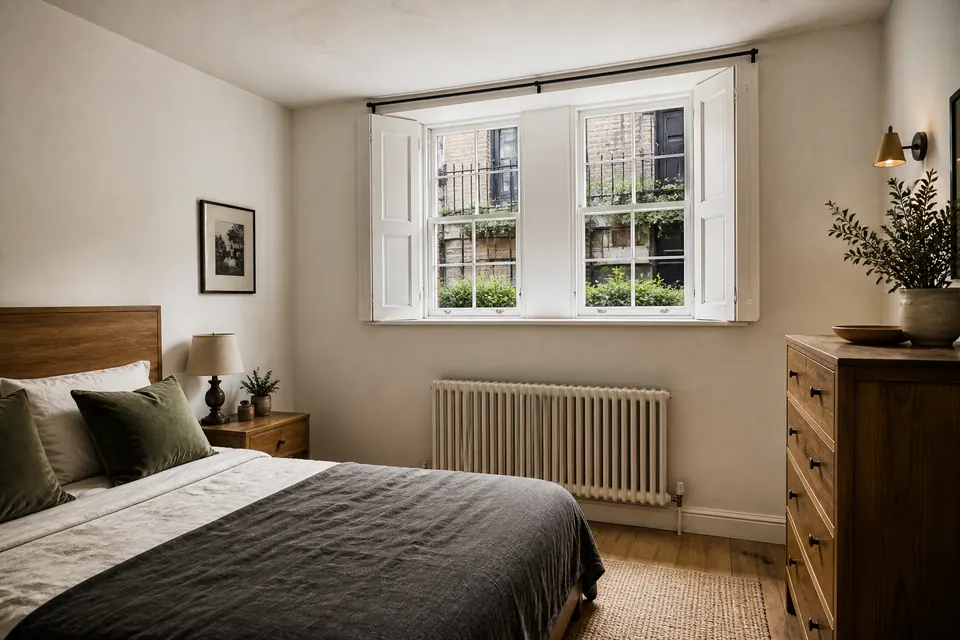
Explain shelves and panels that restrict the view. A smell or small visible mark cannot confirm what is concealed behind the backing or fixed fittings.
Keep observations at the visible layer separate from conclusions about the material behind it.
Notting Hill / ACCESS & PEOPLE
Document existing loose edges without widening them. The next step should establish whether the material is suitable or requires a separately planned investigation.
Provide the known reason and date for that work. Replacing a panel does not itself confirm that moisture or substrate condition was resolved.
Describe panels, shelves and furniture that limit access. Uninspected backing remains unknown rather than automatically included in treatment.
Supply visible evidence and seek appropriate booking arrangements. Do not strip a rented finish to create evidence or establish repair responsibility.
Share known covering and repair information. Clarify whether earlier work concerned decoration alone or an assessed material problem.
Discuss retention and replacement realistically. Treatment cannot promise that already weakened paper remains undamaged or that a new panel will be matched.
Notting Hill / WALLPAPERED SURFACES
A loose edge is evidence of condition, not permission to investigate.
Include the wallpaper pattern, nearby seam and any visible bubbles in a wider image. Say whether the change is on the paper itself or at an already exposed edge. Do not infer the state of plaster behind the covering from a small opening. If further access or replacement is needed, its extent and reinstatement should be discussed separately from treatment of suitable accessible material.
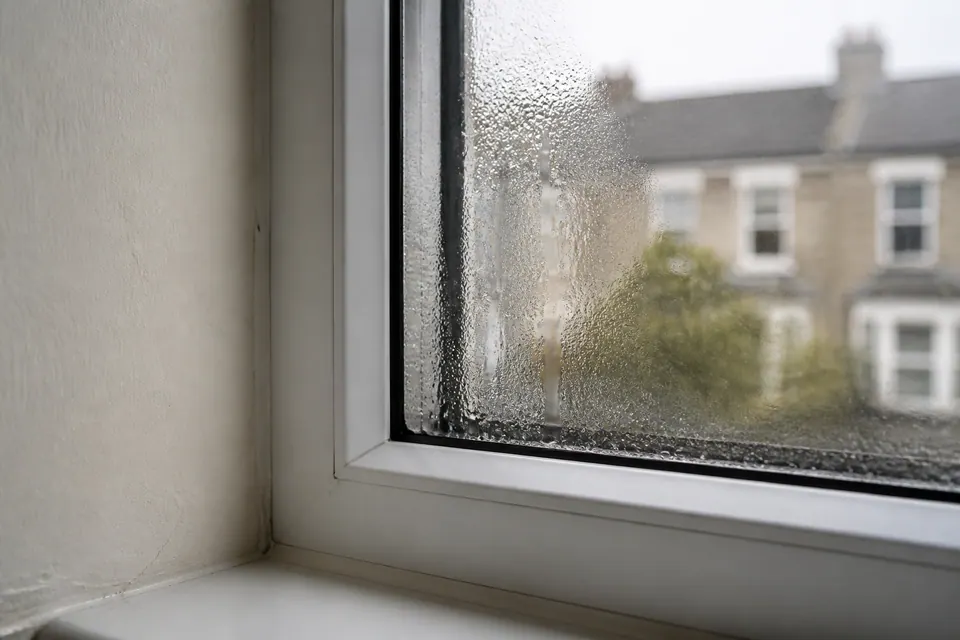
04 / WHEN IT COMES BACK
Record what the earlier work involved and whether the same seam or another panel is affected. A new covering can alter visibility without resolving every underlying condition.
Do not peel back the replacement to confirm a theory. Retain existing photographs, describe current attachment and report any known moisture event. Further assessment should determine the appropriate next scope.
Use an adjoining trim or opening to identify the location in later images. Different pattern sections should not be confused with a changing patch.
05 / A CONTROLLED APPROACH
Identify the exposed material, attachment and observed extent. Acknowledge what cannot be assessed from the available view.
Confirm clearance without unplanned peeling or stripping. Any work to expose the substrate needs a separately understood arrangement.
Carry out the agreed accessible work where appropriate. Material instability should prompt discussion rather than an assumed extension into replacement.
Clarify remaining marks, covering damage and any reason another investigation or decorative scope is needed.
The stages do not promise preservation or replacement of an unstable covering.
Show the seam and panel without enlarging the opening.
Treat suitable accessible material only as defined.
Distinguish residual marks from attachment or substrate issues.
The sequence is illustrative rather than customer evidence. Moisture that persists can allow growth to return.
06 / QUOTATION, NOT GUESSWORK
For a Notting Hill covering enquiry, send images showing the seam and surrounding panel as well as the mark. Alesta can quote small suitable accessible areas from photographs; uncertain material condition, recurrence or complex damp may require further assessment or specialist quotation.
Check the main treatment description ↗| Visible situation | Quotation consideration | Limit to make clear |
|---|---|---|
| A suitable accessible marked layer | Photographic quotation where appropriate | The confirmed visible extent only |
| Recurring marks or uncertain covering condition | Assessment before work is defined | What the paper conceals and what is observable |
| Damaged substrate or complex moisture concern | Specialist quotation as needed | Any separate investigation or repair already proposed |
Confirm the boundary before arranging a decorator. Wallpaper removal, new materials and reinstatement are not automatic parts of mould treatment.
07 / SEPARATE THE QUESTIONS
Visible changes may justify further questions, but opening-up is a separate scope rather than an assumed part of a photo enquiry.
| Observed change | Possible context | Information still needed |
|---|---|---|
| Seam lifting near a reveal | Moisture or attachment changes at the edge | Where water is observed and which material is visible |
| Spotting on a wet-room covering | Repeated wetting and surface suitability | Known covering type and current attachment |
| Bubbling after a water event | Moisture affecting the covering or substrate | Repair status and any existing material assessment |
| Marks returning on a replaced panel | An unresolved condition or another material issue | What the earlier replacement addressed |
Removing coverings, investigating the substrate, repairing plaster and replacing wallpaper must be separately defined where needed. Do not assume that a suitable surface treatment includes any of those steps.
Neither should be inferred solely from the other without assessment.
| Question | Mould | Damp / moisture |
|---|---|---|
| What is described? | Fungal growth affecting the visible material | Excess moisture involving the covering or substrate |
| What may be seen? | Spots on the face or an exposed edge | A changed covering or reported wetness |
| Why separate them? | Visible growth does not reveal all concealed extent | Moisture may affect attachment without confirming growth |
| What needs deciding? | Suitability of the accessible layer | Whether separate investigation beneath it is appropriate |
08 / ROOM-BY-ROOM CONTEXT
Explain repeated wetting and the actual material. An unstable covering may need another decision beyond accessible growth removal.
Show the wall and furniture relationship without pulling seams open. Bedding and wall treatment are separate handling questions.
Identify edges beside tiles and fixed units. Do not combine different materials under one wallpaper-area estimate.
Use a wider view to make scale clear. Patterned marks and material damage should be described without a hidden-wall diagnosis.
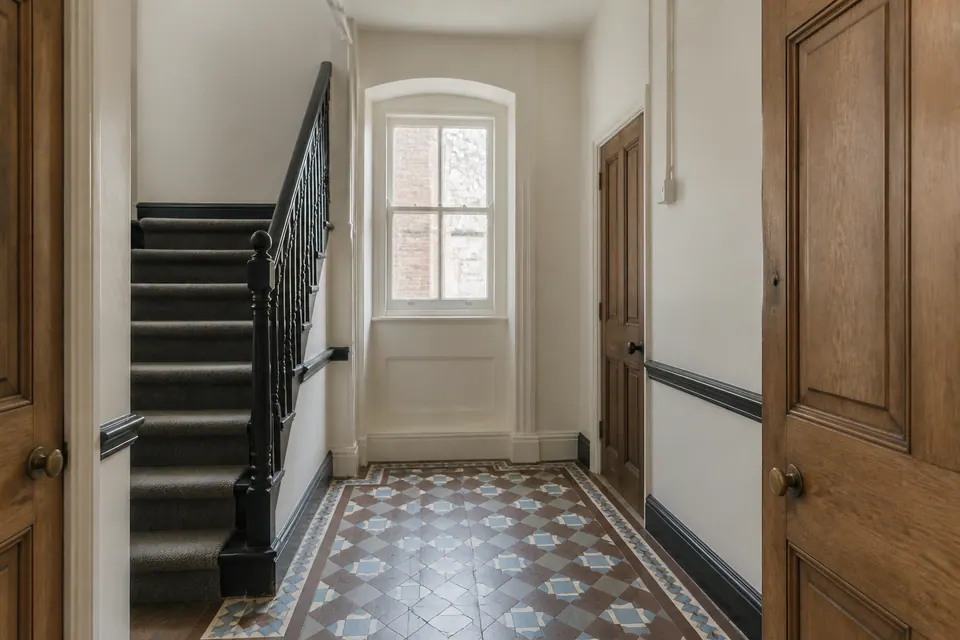
Confirm who can authorise any work on the common-area finish. Entry permission alone does not include alteration of its covering.
Report level and known water events. Paper condition does not establish a particular damp mechanism beneath it.
09 / DIRECT ANSWERS
Photos can begin the discussion, but the covering and concealed limits may require assessment. Do not assume the small visible patch represents the whole material condition.
Covering the appearance is not a substitute for assessing growth or moisture. It can also hide useful evidence about seams and attachment.
No. It is a material observation that needs context. Do not turn a raised panel into a confirmed diagnosis of concealed growth.
Only a separately agreed scope would establish that. Accessible treatment and stripping a covering are different operations with different implications.
Show its position and ask for preparation guidance. Avoid making the plan depend on unagreed movement or disturbance of the covering.
Identify the material and current condition. Suitability cannot be inferred from the room name or from a method used on paint elsewhere.
It can be described for assessment, but the narrow view does not establish what lies behind. Frame and plaster repairs remain separate questions.
No replacement or matching of decoration should be assumed. Ask what is explicitly included and what follows as separate material work.
Notting Hill / PLAN THE APPOINTMENT
Send the Notting Hill postcode, visible covering photographs and any access restrictions. Confirm availability after the material and concealed limits have been explained.
If separate paper removal or decoration is being considered, mention it without assuming that it belongs in the same attendance.
Use the map for area context if helpful.
Notting Hill / BEFORE BOOKING
The enquiry can be useful without exposing the wall beneath the paper.
No additional opening is needed for the first enquiry. Record the existing edge and ask whether separate access or investigation is appropriate.
No. Bubbling describes the covering condition, not a confirmed concealed growth diagnosis. Report it alongside visible marks and known water history.
Say that the material is unknown and provide clear images. Do not guess suitability based on appearance alone.
Do not assume so. Attachment failure and mould removal are different concerns, and replacement or repair needs separate agreement.
Only if explicitly agreed. A photograph review or accessible surface scope should not be interpreted as permission to remove the covering.
Ask for preparation advice first. Avoid obscuring the condition or mixing products, particularly where the covering and backing are uncertain.
Describe the furnishings and obtain instructions for the proposed work. There is no need to assume full clearance before the scope is known.
It may show only a small part of the material condition. Concealed extent, instability or recurrence can require assessment before quotation.
Identify that panel and retain the earlier work description. Do not assume the whole wall has the same condition or that replacement resolved the moisture question.
DESCRIBE THE COVERING AS IT IS
Send a wider panel view, the visible edge and relevant history with the postcode. Explain what remains concealed so treatment and any further material work can be distinguished.
The property illustrations are not photographs of a documented wallpaper treatment.
